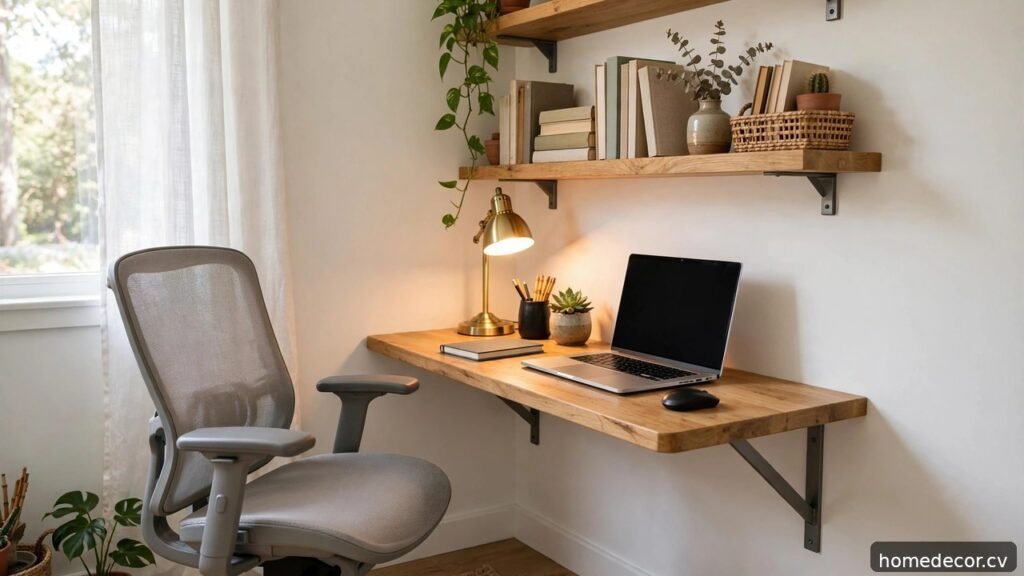
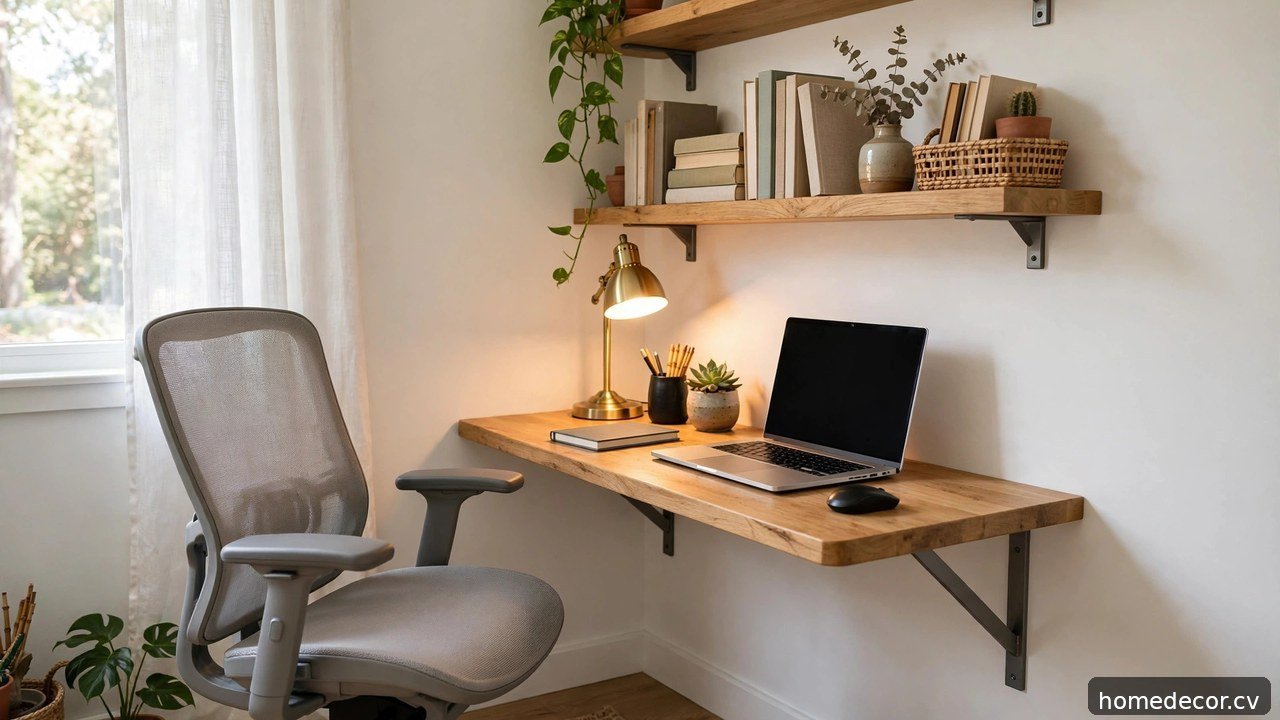
You do not need a spare bedroom to have a real home office. These clever ideas carve out productive workspaces from corners, closets, and unused walls using space-saving furniture and smart styling.
Idea 1: Wall-Mounted Drop-Leaf Desk
A wall-mounted drop-leaf desk is one of the smartest ways to create a home office in a room that cannot spare any floor space. These desks bolt directly into wall studs and fold flat when you are not working, freeing the area for walking or other activities. When opened, most drop-leaf designs give you a generous work surface of around 30 to 40 inches wide and 16 to 20 inches deep, which is plenty for a laptop, a notebook, and a coffee mug. Choose a solid wood or sturdy engineered board that can support up to 30 pounds so your setup feels rock solid. Installation takes about an hour with a drill, a level, and a stud finder. Position the desk near a window for natural light or beside an outlet so charging cables stay short and tidy.
I spend far too much time saving home ideas.
If you'd like the best ones, I'll send a short email once or twice a month.
Pair your drop-leaf desk with thoughtful accessories that make it feel like a real office instead of a temporary fix. A compact monitor riser or laptop stand lifts your screen to eye level, which protects your neck during long work sessions. Add a small desk lamp with a warm 3000K bulb to cut screen glare and make late-afternoon work feel calm. Magnetic strips or adhesive hooks mounted on the wall above the desk keep scissors, pens, and chargers within reach without eating surface space. A slim rolling drawer unit that slides under the desk when it folds up gives you hidden storage for files and stationery. These finishing touches cost under 60 dollars in total but make your fold-away workspace feel intentional and inspiring every single day.
Idea 2: Closet Office (Cloffice)
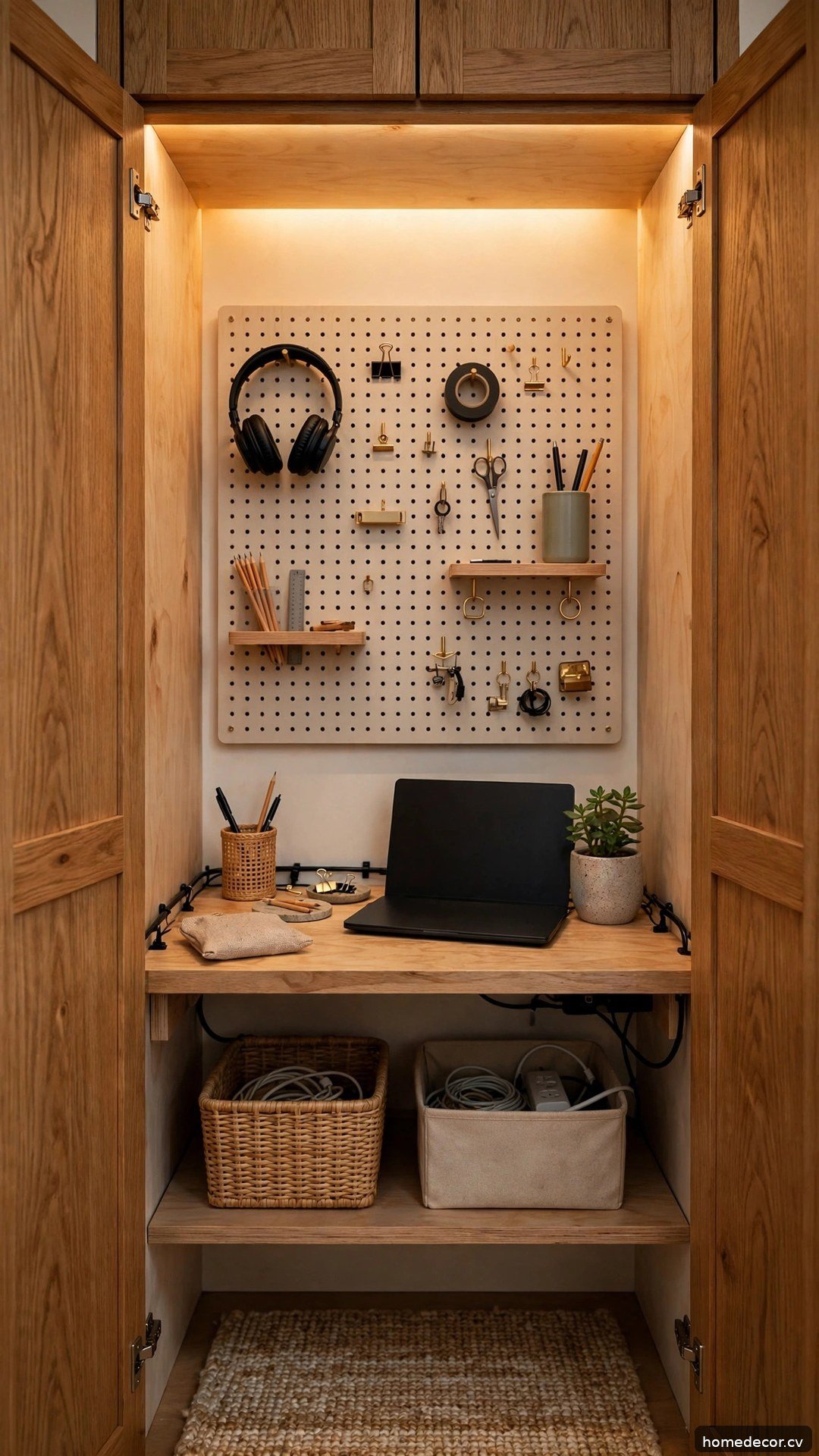
That spare closet collecting forgotten shoes and broken hangers might be the office you have been dreaming about. A cloffice, or closet office, turns an unused reach-in closet of about 36 to 48 inches wide into a surprisingly complete workstation with a built-in desk and shelving above. Start by removing the doors to open the space visually, or keep sliding doors you can close to hide work clutter in the evening. Mount a simple desktop at standard desk height of 29 to 30 inches, using sturdy brackets or a plywood board cut to fit snugly between the walls. Paint the inside of the closet a light, happy color like soft white or pale sage to reflect light and make the narrow nook feel airy. Add a small chair that tucks fully under the desk so the closet footprint stays tidy.
Lighting makes or breaks a cloffice, so plan it before you paint. A battery-operated LED puck light or a plug-in picture light under the top shelf brightens the desk surface without needing an electrician. Run a power strip along the back wall for your laptop, phone charger, and a small fan, keeping cords clipped neatly with cable ties. Above the desk, two or three narrow floating shelves hold binders, a printer, and pretty storage boxes that match your color scheme. A small pinboard or peel-and-stick wallpaper adds personality without permanent commitment. When the workday ends, simply roll your chair in, close the doors, and your office disappears completely until morning.
Idea 3: Floating Shelves Above the Desk
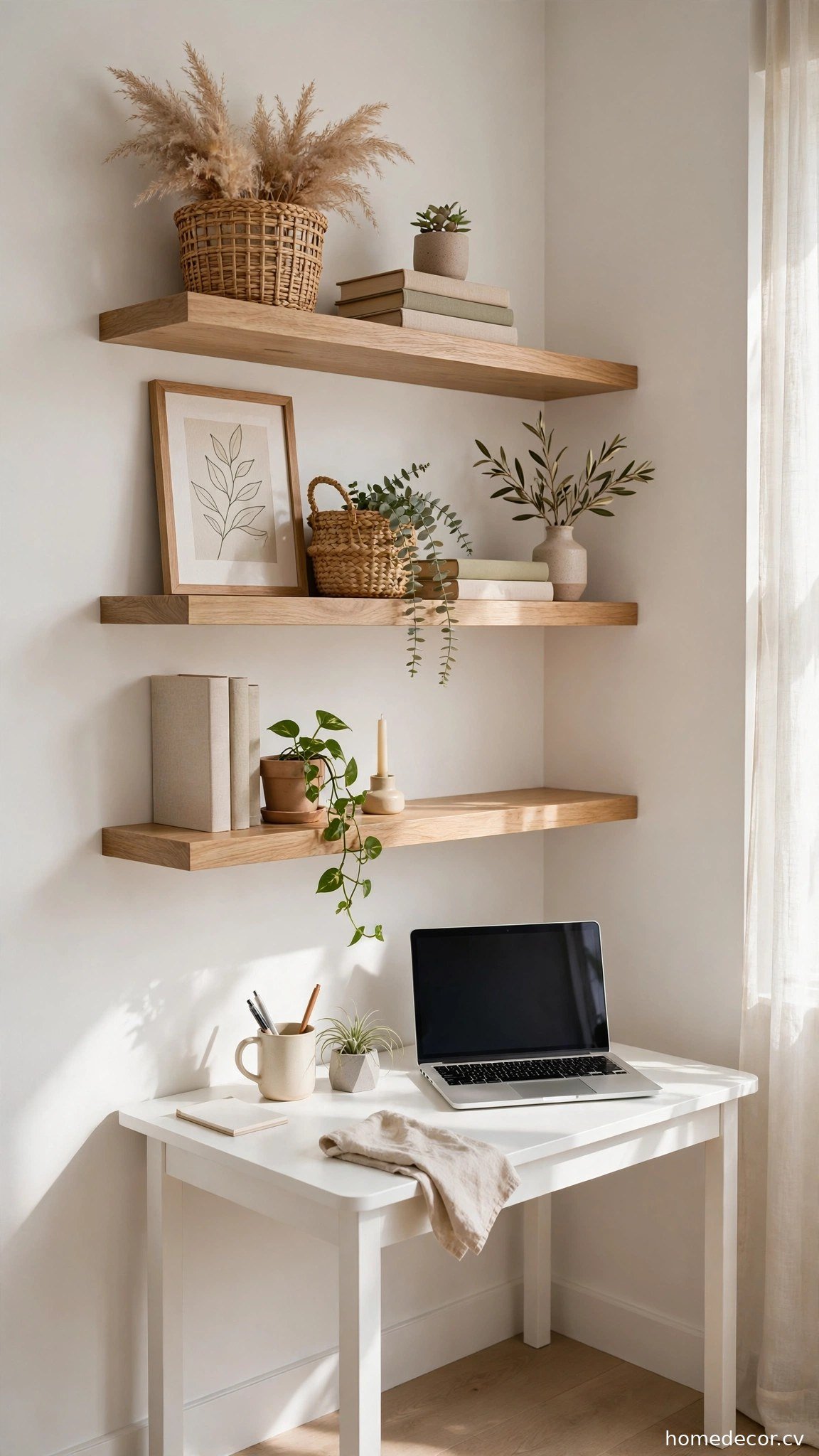
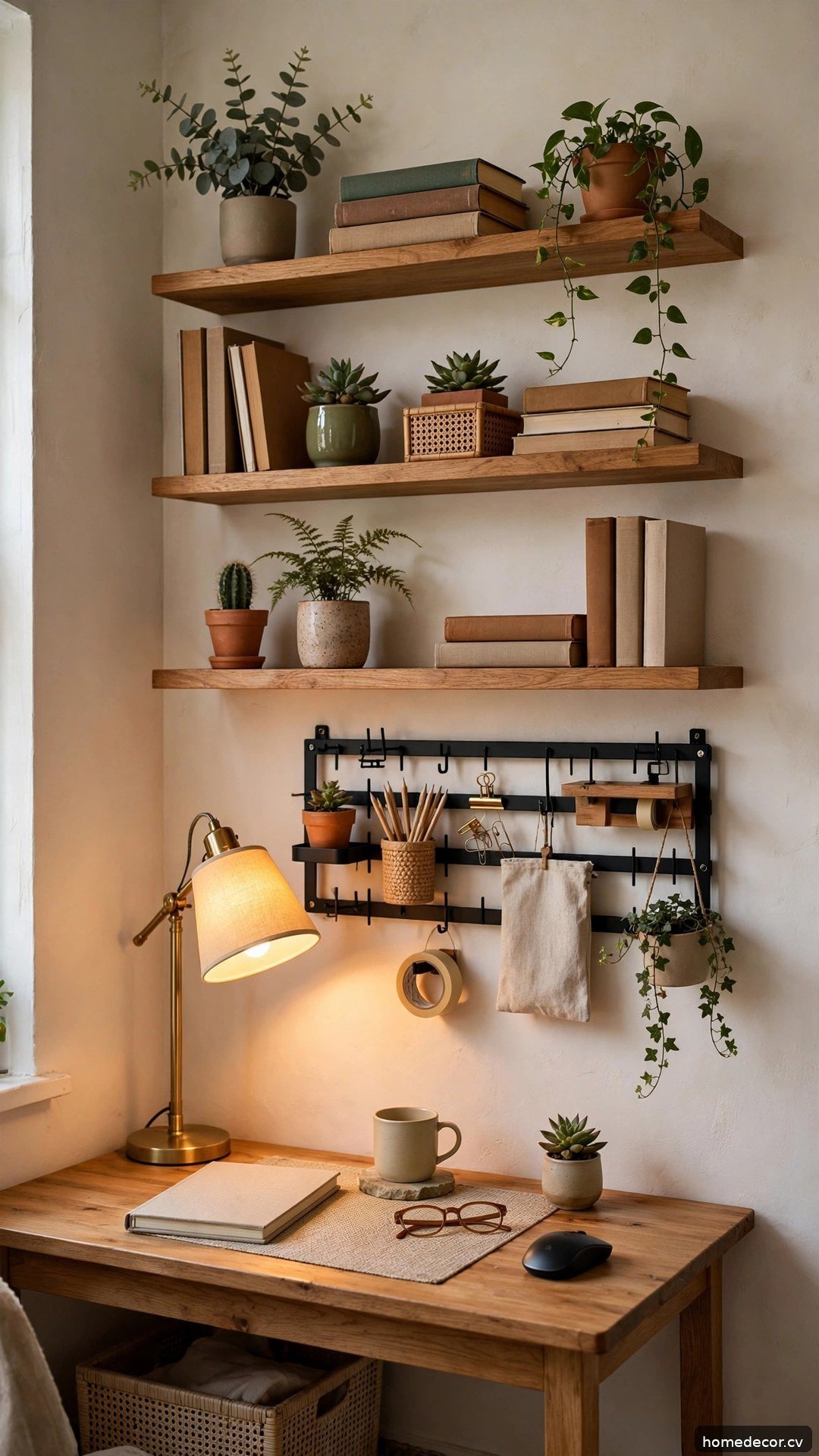
Floating shelves above your desk turn dead wall space into storage gold without touching a single inch of floor. Two or three solid wood or matte-white shelves, each 24 to 36 inches long, can hold an entire office worth of supplies, books, and decor. Mount them 16 to 20 inches above your desktop so there is comfortable clearance for your monitor and a desk lamp. Use hidden bracket hardware rated for at least 25 pounds per shelf so heavy binders and reference books stay safely in place. Style the shelves in thirds: one third for beautiful storage like matching baskets or boxes, one third for books and binders, and one third for personality pieces such as framed prints or a trailing pothos plant. Keep the lowest shelf within arm’s reach for the things you grab daily.
The secret to shelves that look curated instead of cluttered is ruthless editing and repetition. Choose two or three colors and repeat them across every shelf so the display feels intentional. Corral loose pens, chargers, and sticky notes into small trays or ceramic cups rather than letting them sprawl. A set of three matching magazine files instantly tidies paper chaos into a neat row. Add one small personal touch per shelf, like a travel photo or a scented candle, to make the workspace feel warm rather than corporate. Dust shelves weekly since eye-level clutter shows fast. With this approach, your wall storage becomes a backdrop you are proud to show on video calls.
Idea 4: Good Task Lighting
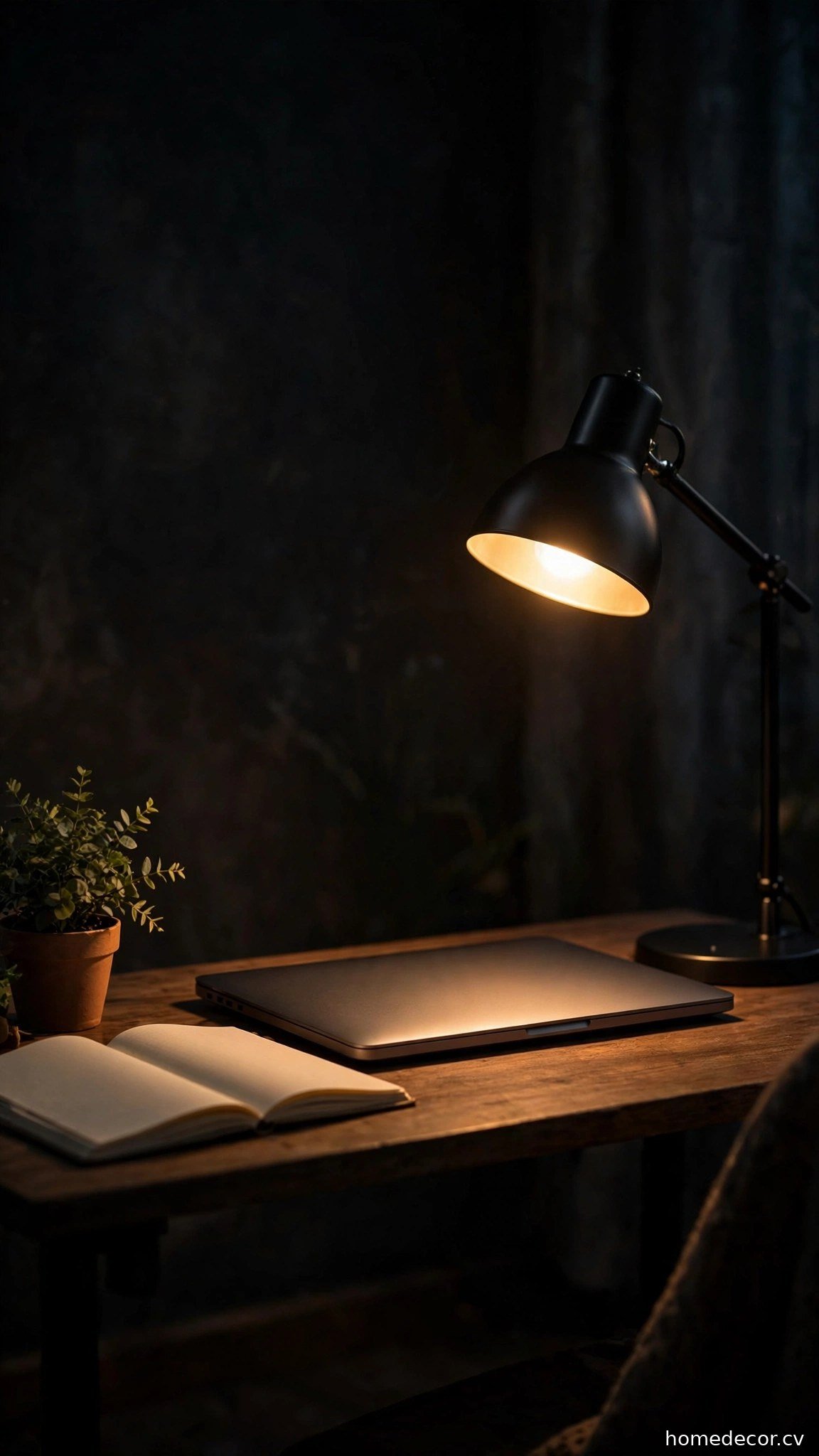
Good lighting is the difference between a workspace that energizes you and one that gives you headaches by three in the afternoon. A quality adjustable task lamp lets you direct warm, focused light exactly where you need it on documents and keyboards. Look for a lamp with a color temperature between 2700K and 3500K for a warm, eye-friendly glow, and at least 400 lumens of brightness for detailed work. An articulated arm or gooseneck design means you can swing the light away when you join video calls and pull it close for focused writing. Clip-on lamps are brilliant for tiny desks because they attach to the shelf or desk edge and leave the whole surface free. Dimmable models cost a little more but let you soften the light as evening falls.
Layer your task light with ambient lighting to eliminate the harsh contrast that causes eye strain. If your desk sits in a dark corner, add a small warm floor lamp or wall sconce behind you so the room never feels like a cave. Position your desk perpendicular to windows when possible so daylight falls across your work without glaring directly on your screen. Avoid placing a bright lamp directly behind your monitor on video calls, since it will silhouette your face. A battery-powered LED strip under a floating shelf adds a beautiful glow for about 15 dollars. With layered, warm lighting, even the smallest desk corner feels like a professional studio you love returning to.
Idea 5: Cable Management That Disappears
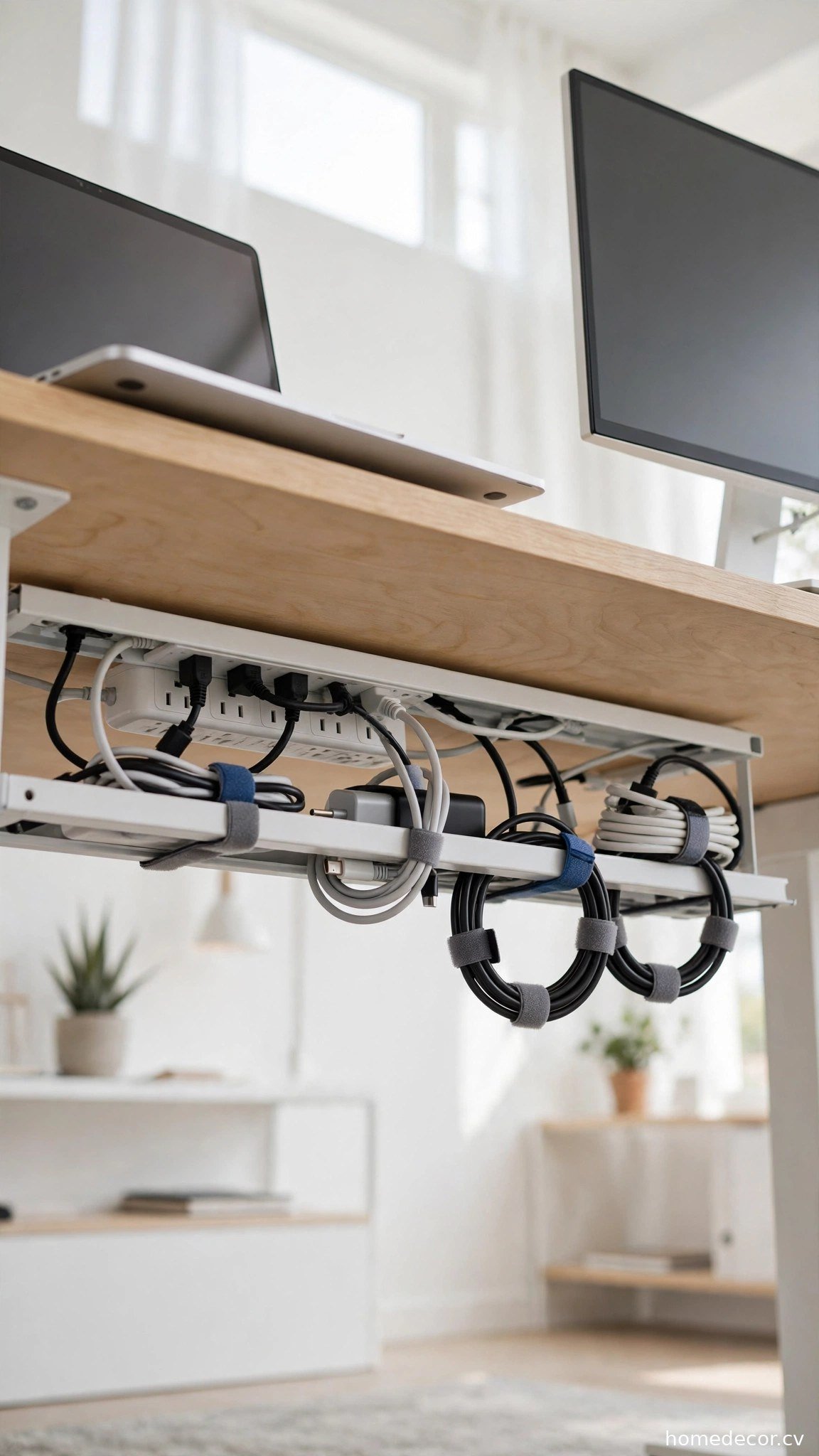
Tangled cables are the fastest way to make a small office feel messy and chaotic. A simple under-desk cable tray, usually 16 to 24 inches wide, mounts with two screws and corrals your power strip, chargers, and adapters into one hidden zone. Once cables live in the tray, only short, neat runs travel up to your laptop or monitor. Use reusable velcro ties instead of zip ties so you can rearrange cables whenever your setup changes. A cable spine or spiral wrap bundles the main power cord from the tray to the wall outlet in one tidy column. For standing-desk or fold-away setups, leave a little slack in the tray so cables flex instead of yanking when the desk moves. This whole upgrade takes about 30 minutes and costs less than 25 dollars.
Finish the look by hiding the remaining visible wires with a few clever tricks. Adhesive cable clips stuck along the back edge of the desk guide thin cords in straight, invisible lines. A fabric cord cover in white or wood tone camouflages the run from your desk to the wall outlet. Label both ends of every cable with small tags so you never unplug the wrong charger in a hurry. Keep a short USB hub or dock on the desk surface so peripherals connect in one spot instead of trailing wires everywhere. When your cables disappear, your brain stops registering visual noise and your tiny office suddenly feels twice as spacious and twice as calm.
Idea 6: Foldable Chair That Tucks Away
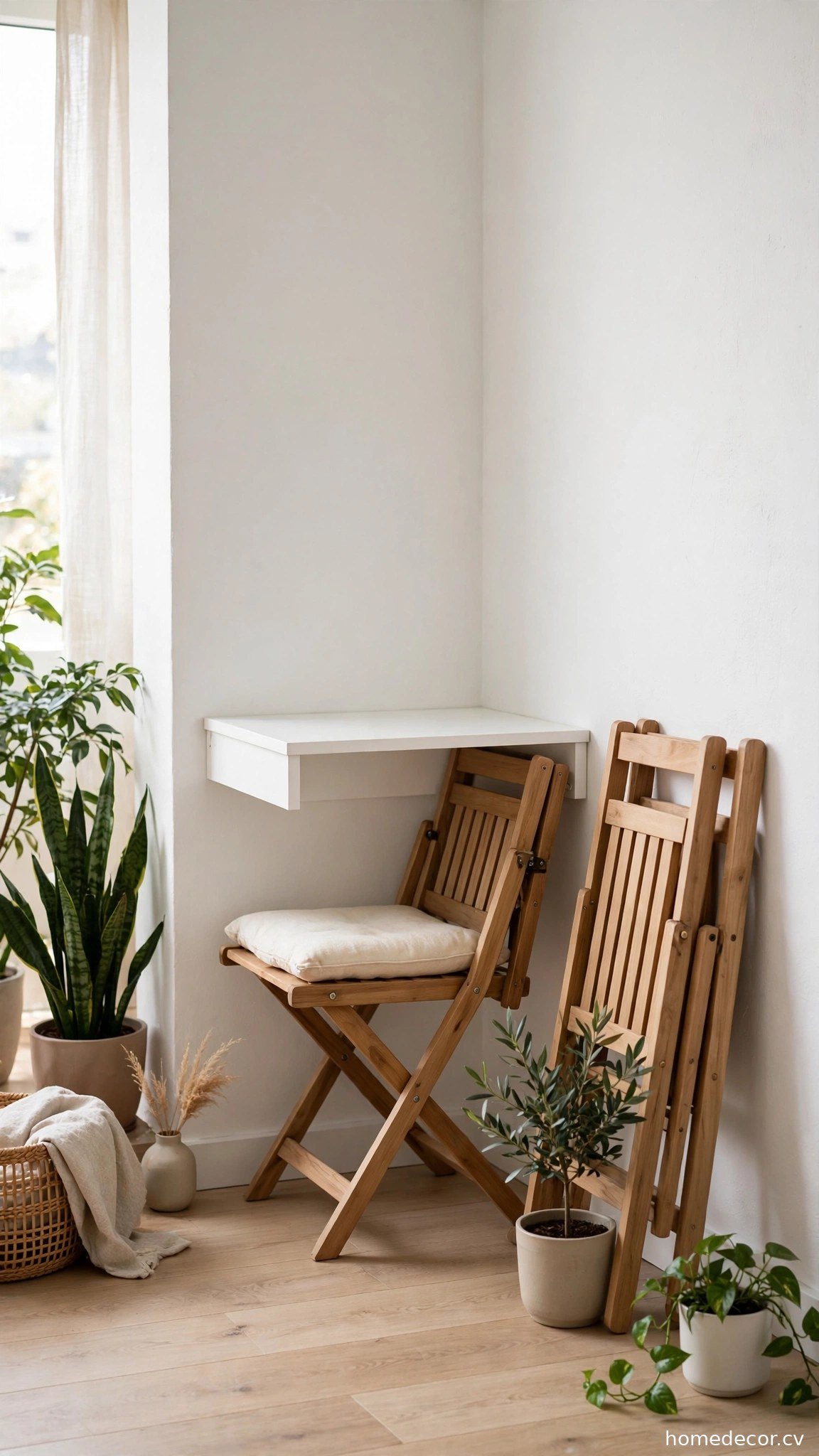
The chair is the bulkiest part of any small office, which is why a foldable or stackable chair changes everything. A well-designed folding chair collapses flat to about 4 inches thick and slides into a gap beside a bookcase or hangs on two wall hooks behind a door. Look for models with a padded seat and a contoured backrest so comfort does not suffer for the sake of storage. Ergonomic folding chairs with lumbar support now exist at reasonable prices and make eight-hour workdays genuinely bearable. Choose a chair in a color that matches your room, like oak wood or soft beige, so it doubles as extra guest seating instead of screaming office furniture. Measure your desk height first and confirm the folded chair fits your intended storage spot.
Comfort details make a folding chair work for real daily use. Add a memory-foam seat cushion of 2 to 3 inches thick to soften hard wood or plastic seats during long sessions. A small lumbar pillow strapped to the backrest supports your lower back and removes easily when you fold the chair away. Keep the chair’s weight under 12 pounds so moving it daily never feels like a chore. Place a low-pile rug under your desk area so chair legs glide quietly without scratching floors. With the right folding chair, your office setup can vanish in under a minute, turning a guest room or living corner back into a relaxing space the moment you log off.
Idea 7: Pegboard Wall Organizer
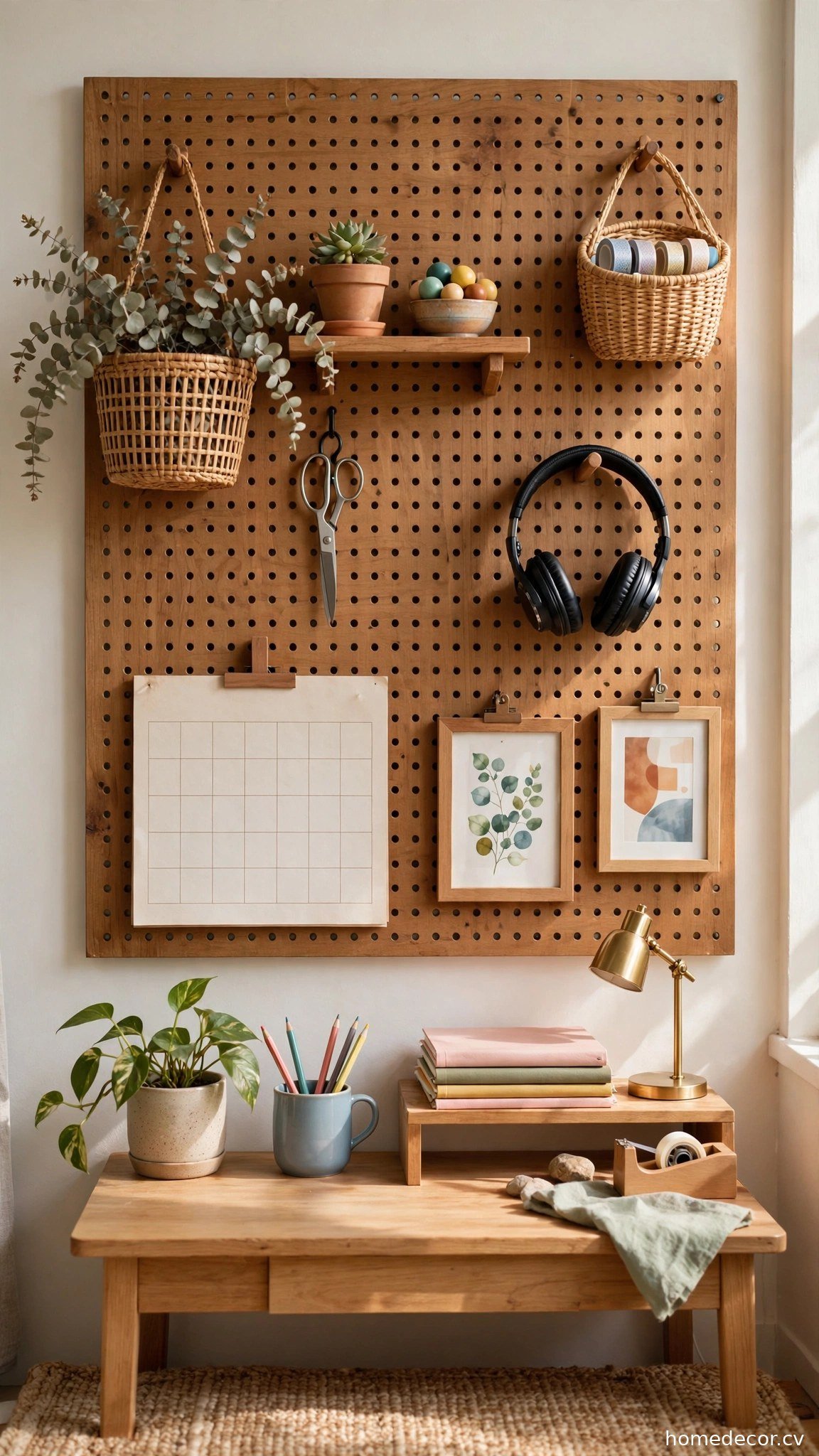
A pegboard turns an entire wall into endlessly adjustable storage that grows with your work needs. A standard 24 by 36 inch pegboard panel holds dozens of hooks, baskets, and mini shelves, replacing a whole drawer unit in zero floor space. Mount it on spacers so hooks can slide into the holes from behind, and anchor it into wall studs if you plan to hang anything heavy. Arrange your most-used tools in the center zone at arm’s reach, pretty decor toward the top, and bulkier baskets along the bottom. Metal pegboard hooks come in dozens of shapes, from simple straight pegs to deep baskets that hold notebooks and tablets. Paint the board a soft color like sage green or warm white so it reads as decor, not hardware.
The beauty of a pegboard is that nothing is permanent, so rearrange it whenever your workflow changes. Seasonal refreshes take ten minutes: swap a winter calendar print for spring art, or trade heavy reference binders for lighter project folders. Add a small magnetic strip for paper clips and a hanging mason jar for pens to free your desk surface completely. A pegboard shelf with a lip holds a small speaker or an essential-oil diffuser at perfect height. Photograph your favorite layout before rearranging so you can restore it if the new arrangement fails. With a pegboard, every office supply has a visible home, which means less time hunting and more time working.
Idea 8: Corner Desk Setup
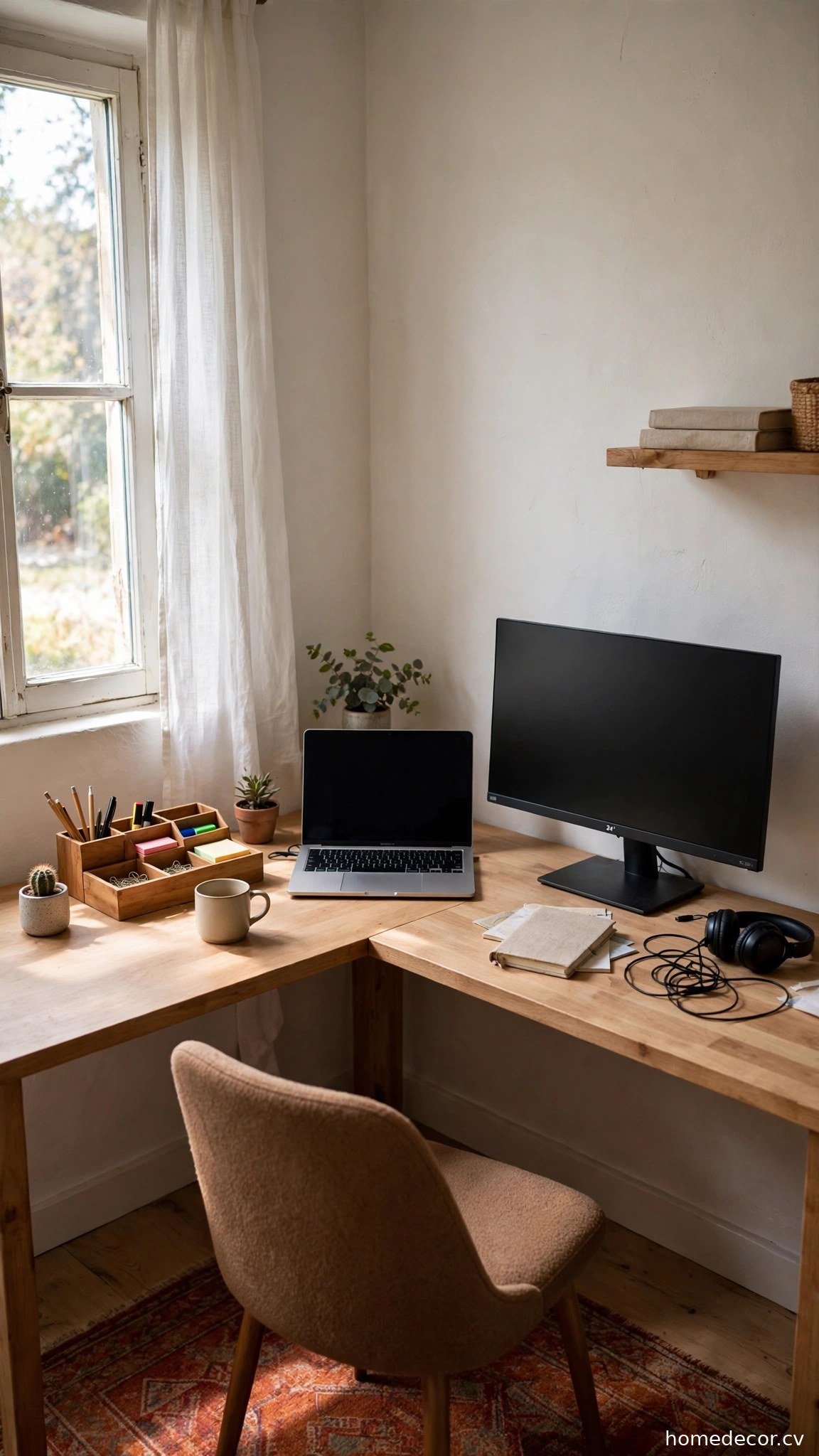
Corners are the most underused square footage in small rooms, and an L-shaped corner desk claims every inch of it. A corner desk wraps two walls, giving you nearly double the surface area of a straight desk while occupying roughly the same footprint. Standard corner units measure about 48 inches on each side, fitting neatly into bedrooms, living rooms, and alcoves. Place your main monitor in the corner’s deepest point at arm’s length, around 20 to 26 inches from your eyes, and keep the side wing clear for notebooks, coffee, and a desk lamp. A light wood or white finish keeps the wraparound shape from feeling heavy. Add a corner-shaped monitor riser to lift your screen and reclaim the space underneath for a keyboard tray or storage boxes.
Style the corner setup so it feels like a deliberate design choice rather than a squeezed-in afterthought. Hang a piece of art or a small floating shelf on each adjoining wall to balance the L-shape visually. A tall plant in the far corner softens the hard angles and improves air quality while you work. Choose a chair with a five-star base that swivels easily between the two desk wings. Keep one wing strictly for work and dedicate the other to pleasant extras like a candle, a framed photo, or your planner. This zoning trick helps your brain switch between focused tasks and creative thinking without leaving the chair.
Idea 9: Room Divider Screen
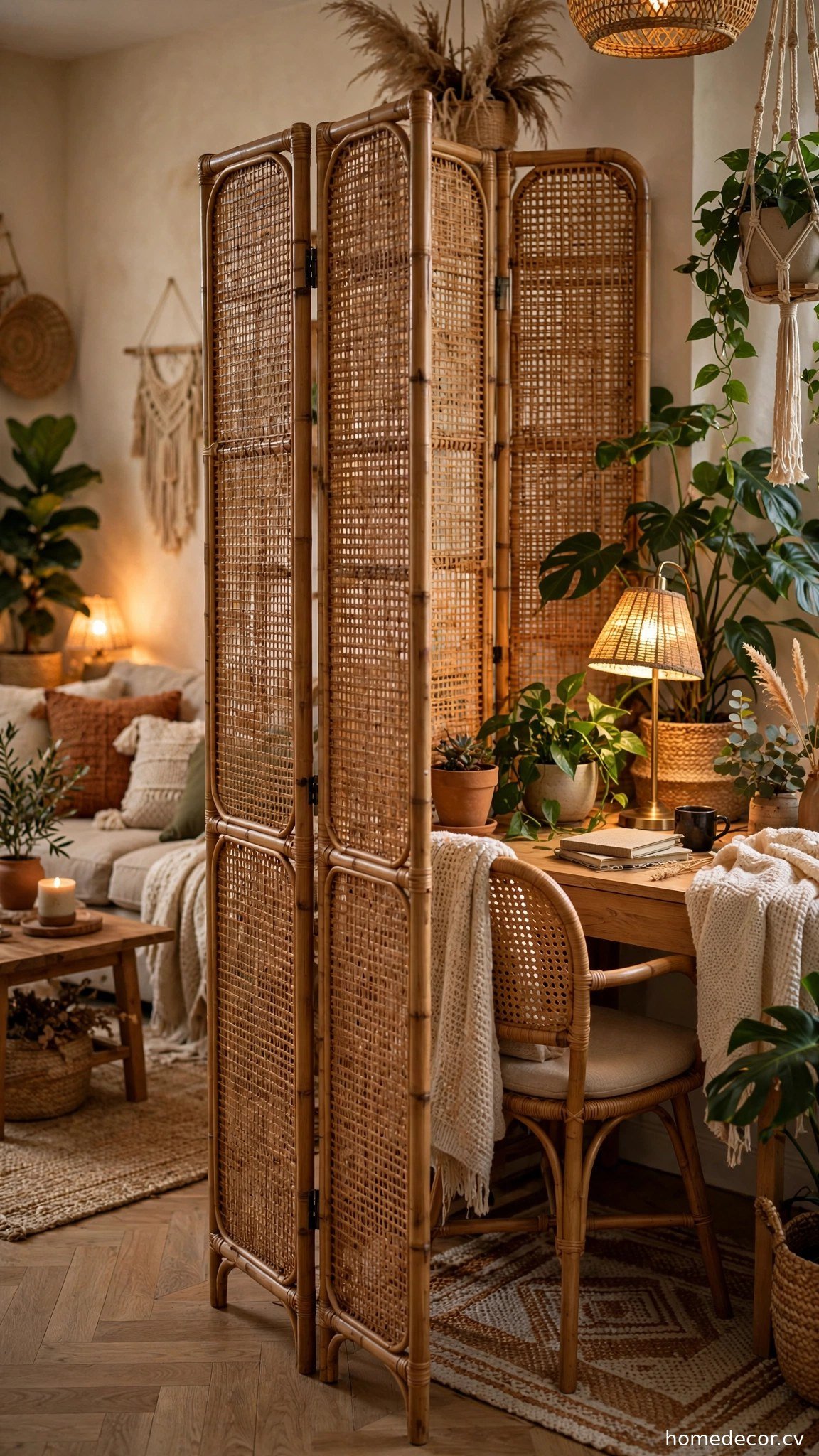
When your office shares a room with your living space, a room divider screen creates a psychological boundary that helps you focus and truly log off. A three-panel folding screen, typically 48 to 72 inches wide and 60 to 70 inches tall, stands freely behind or beside your desk with no installation required. Natural materials like rattan, woven seagrass, or light bamboo add warmth and texture while still letting some light filter through. Place the screen so it blocks your view of the television or sofa during work hours, which dramatically reduces the temptation to drift. At five o’clock, fold the screen closed and your office visually vanishes, signaling to your brain that the workday is over. This simple ritual protects your evenings better than any app.
Choose a divider that earns its footprint by doing double duty. Some screens include built-in shelves or pockets that hold mail, notebooks, or headphones. A fabric panel screen doubles as a pinboard for to-do lists and inspiration photos. Keep the screen lightweight, under 15 pounds, so one person can fold and move it easily for cleaning. Anchor tall screens with discreet furniture straps if you have curious pets or toddlers. Coordinate the screen’s color with your room’s palette so the division feels stylish rather than makeshift. With the right screen, a studio apartment corner transforms into a real office with real boundaries.
Idea 10: Rolling Cart Storage
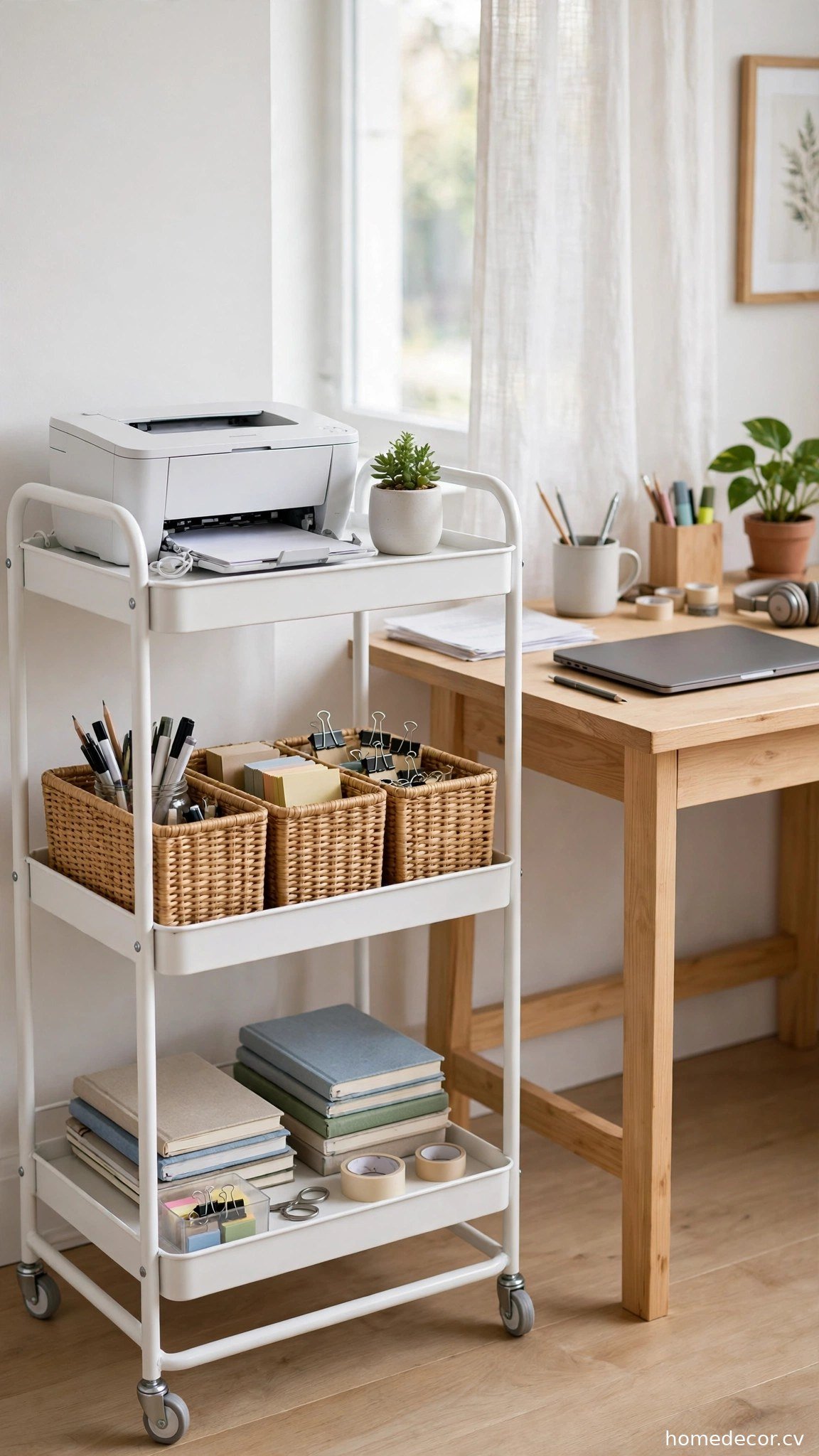
A three-tier rolling cart is the Swiss Army knife of small office storage because it goes wherever you need it. Standard carts measure about 18 inches wide and 35 inches tall, rolling on locking casters that glide from desk to closet to printer. Dedicate the top tier to daily essentials like your planner, pens, and current project folders. Use the middle tier for supplies such as sticky notes, envelopes, and spare chargers, corralling small items in labeled bins so nothing rattles around. The bottom tier handles bulkier gear like a portable printer, a paper stack, or reference books. When work ends, roll the whole cart into a closet or under a console table and your desk stays beautifully clear. This mobility is perfect for multipurpose rooms that host guests on weekends.
Make your cart work harder with a few inexpensive add-ons. A pegboard panel zip-tied to one side creates vertical storage for scissors, rulers, and headphones. Small magnetic cups stick to metal carts and hold paper clips, binder clips, and USB drives. A clip-on cup holder on the top rail keeps coffee safely away from your keyboard. Choose a cart color that matches your desk, like white, black, or pastel pink, so it looks like a coordinated set rather than a utility afterthought. Lock the casters when working so the cart stays put. For under 40 dollars, a rolling cart delivers the storage of a filing cabinet with the flexibility small spaces demand.
For more workspace inspiration, browse our [small entryway organization ideas](https://homedecor.cv/small-entryway-organization-ideas/) and see how we styled a [christmas decor ideas for small homes](https://homedecor.cv/christmas-decor-ideas-small-homes/) setup in a tight apartment corner.
Idea 11: Monitor Riser With Storage
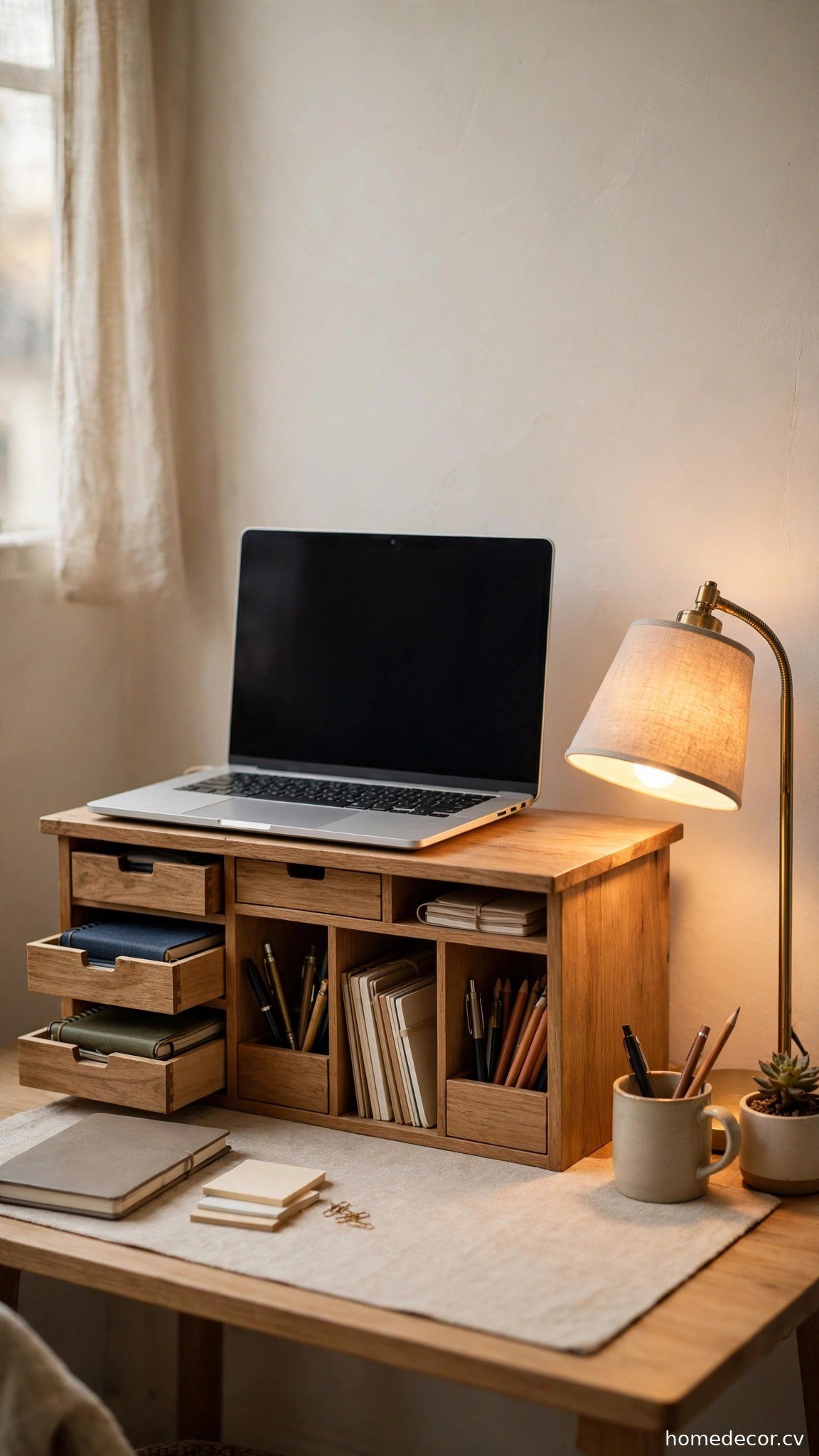
A monitor riser lifts your screen to eye level while secretly adding a whole layer of storage to a small desk. The platform raises your laptop or monitor by four to six inches, which straightens your posture and ends the neck craning that plagues low desks. The space underneath, usually wasted, becomes a shallow shelf for notebooks, a keyboard, or a slim drawer unit. Choose a riser in bamboo or light oak about twenty inches wide so it fits compact desks without crowding them. Some designs include built-in phone slots and cable cutouts that keep charging cords neatly routed and out of sight.
Match the riser to your desk style so it looks built-in rather than bolted on. Pair a wooden riser with a small stackable drawer unit underneath for pens, sticky notes, and USB drives. If you use a laptop, add a separate keyboard and mouse so the raised screen does not force your shoulders upward. Keep the top surface minimal, just the screen and perhaps a small plant, since the riser’s whole point is visual calm. This twenty-dollar upgrade delivers the ergonomic benefit of a standing desk converter at a fraction of the price and footprint, and it sets up in seconds with no tools required.
Idea 12: Acoustic Felt Wall Panels
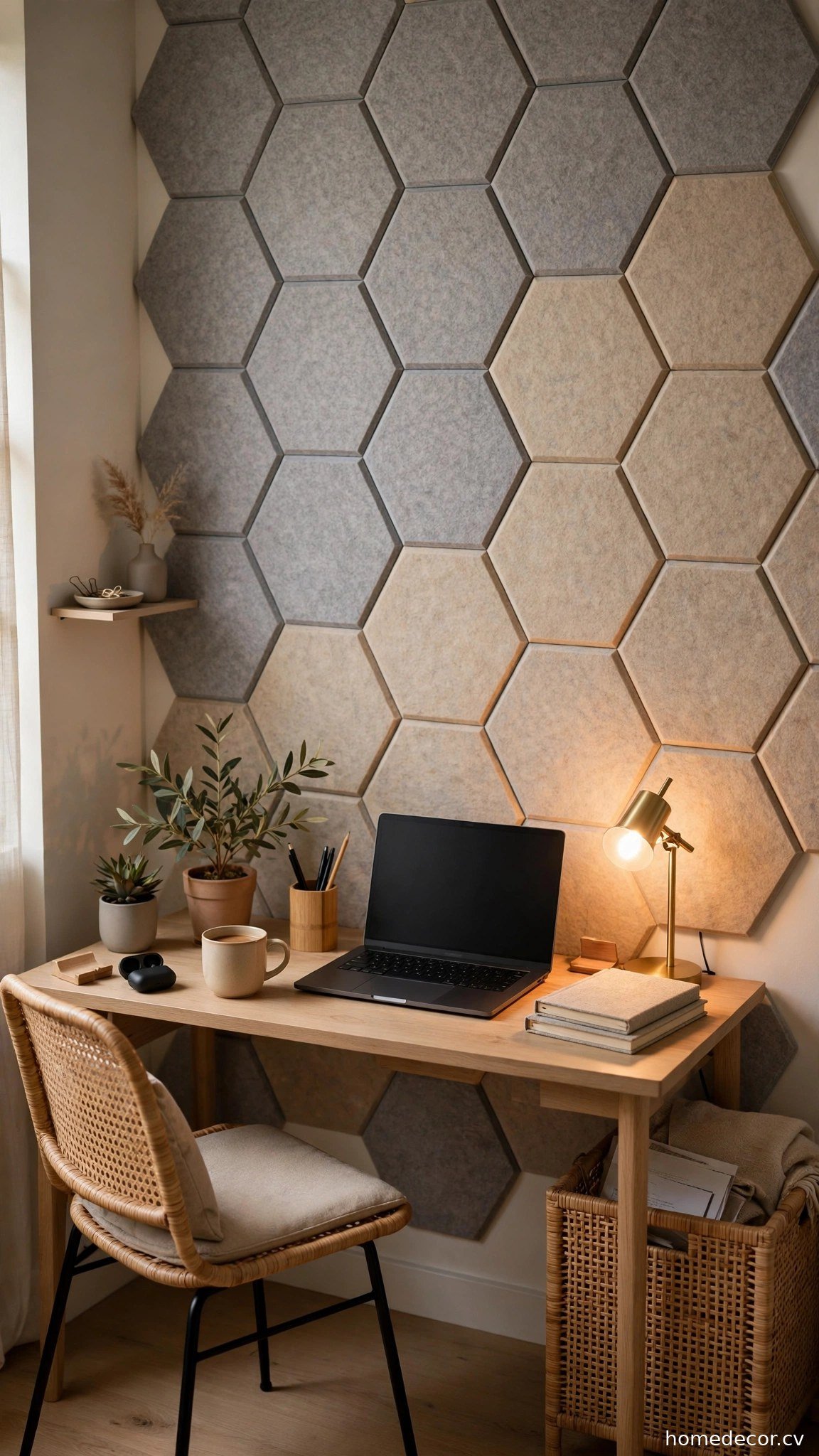
Acoustic felt panels turn a noisy corner into a focused workspace while looking like intentional wall art that guests will compliment. The dense felt tiles absorb echo and soften background noise, which makes video calls sound dramatically more professional. Arrange hexagonal or square panels in a honeycomb or grid pattern on the wall behind your desk, covering roughly a three-by-three-foot area for a noticeable effect. Choose tones like warm gray, oatmeal, or sage that complement your room rather than screaming office. The panels mount with simple adhesive strips, so renters can install and remove them without a single nail hole.
Plan the layout before sticking anything to the wall. Lay the panels on the floor first and photograph a few arrangements to find the one you love most. Leave small gaps between tiles so the wall color peeks through and the pattern breathes. If your workspace doubles as a video background, center the panel arrangement behind your chair so calls look polished and professional. Vacuum the felt quarterly with an upholstery attachment to keep dust from dulling the texture. These panels prove that sound treatment can be beautiful, giving small offices the quiet focus of a studio and the style of a design magazine.
Idea 13: Mini Whiteboard Command Center
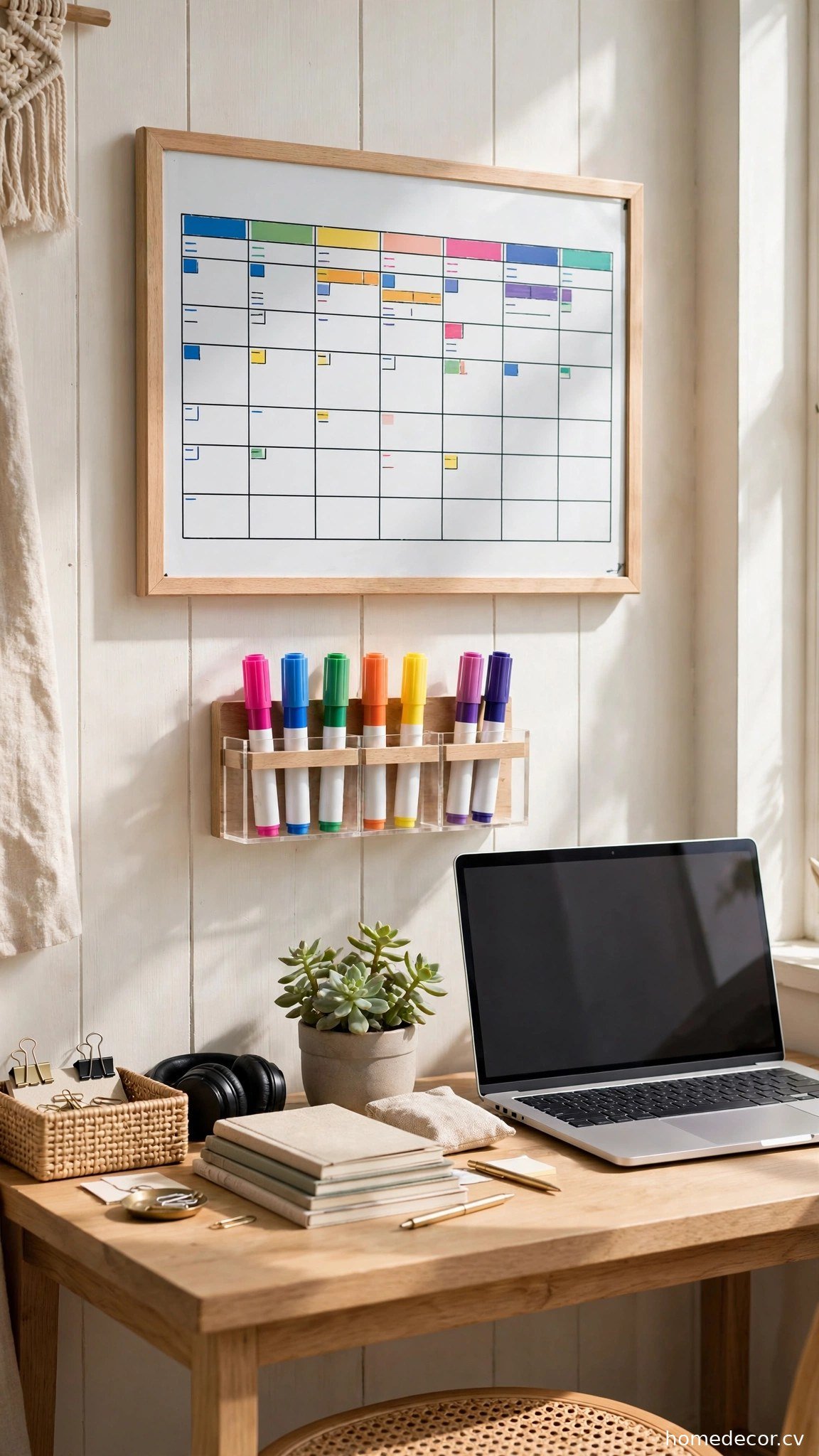
A mini whiteboard above your desk becomes the command center that keeps small-space workdays on track. A twenty-four by eighteen-inch board fits neatly over most compact desks without dominating the wall. Divide it into zones with thin washi tape: a weekly schedule on the left, a running task list on the right, and a small corner for the one big goal of the week. The physical act of writing tasks by hand and wiping them off delivers a satisfaction that apps rarely match. Choose a board with a slim wood or black frame so it reads as decor rather than classroom equipment.
Keep the board working hard without becoming visual clutter. Limit yourself to five active tasks so the list stays motivating instead of overwhelming. Photograph the board every Friday before wiping it clean for a fresh Monday start, which creates a satisfying record of finished work. Store markers in a wall-mounted cup or a magnetic tray attached to the board’s frame so they never wander off. Erase fully once a week with a proper whiteboard cleaner to prevent ghosting and staining. This simple analog tool anchors your workday and keeps priorities visible in a way no buried browser tab can, and it costs less than a takeout lunch.
Idea 14: Desk-Side Plant Shelf
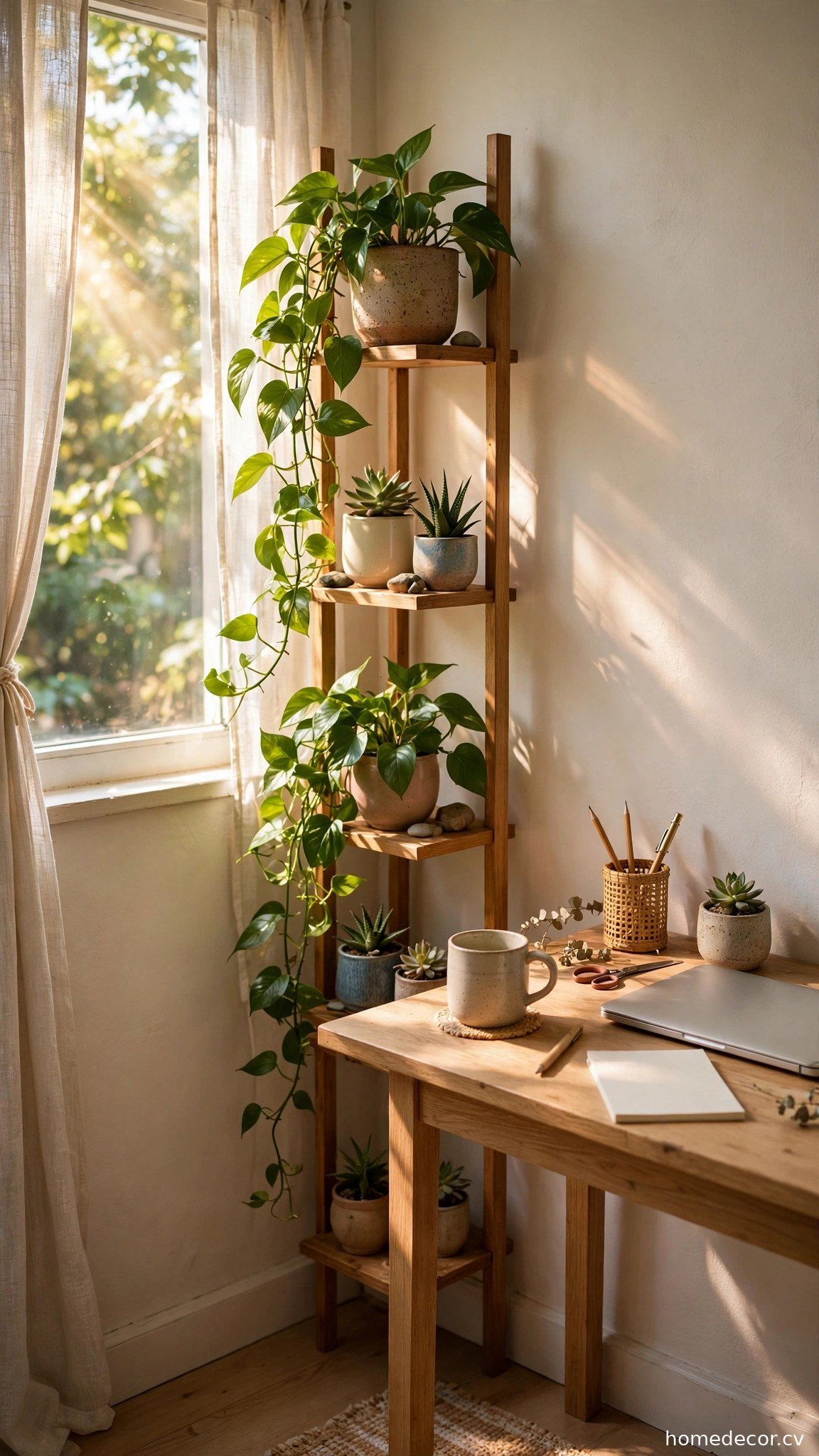
A narrow plant shelf beside your desk brings living green into the workday without stealing a single inch of desk space. A slim three-tier shelf, roughly twelve inches wide, tucks perfectly into the gap between desk and wall that usually collects dust. Fill it with low-maintenance champions: a trailing pothos on top, a snake plant in the middle, and small succulents below. The greenery softens the hard edges of monitors and filing boxes while subtly cleaning the air around you. Studies consistently link visible plants to lower stress and better focus, which makes this shelf genuine productivity equipment disguised as decor.
Choose plants that forgive the occasional forgotten watering. Pothos, snake plants, and ZZ plants thrive on neglect and low light, surviving weeks between waterings without complaint. Use cache pots with drainage trays so watering never damages floors or shelves. Rotate the shelf a quarter turn monthly if it sits beside a window so every plant grows evenly. Wipe leaves with a damp cloth every few months since dusty leaves photosynthesize poorly. Water on a fixed schedule, perhaps every other Monday, and the shelf becomes a self-sustaining ritual that marks the rhythm of your workweeks with living green color that makes Monday mornings noticeably brighter.