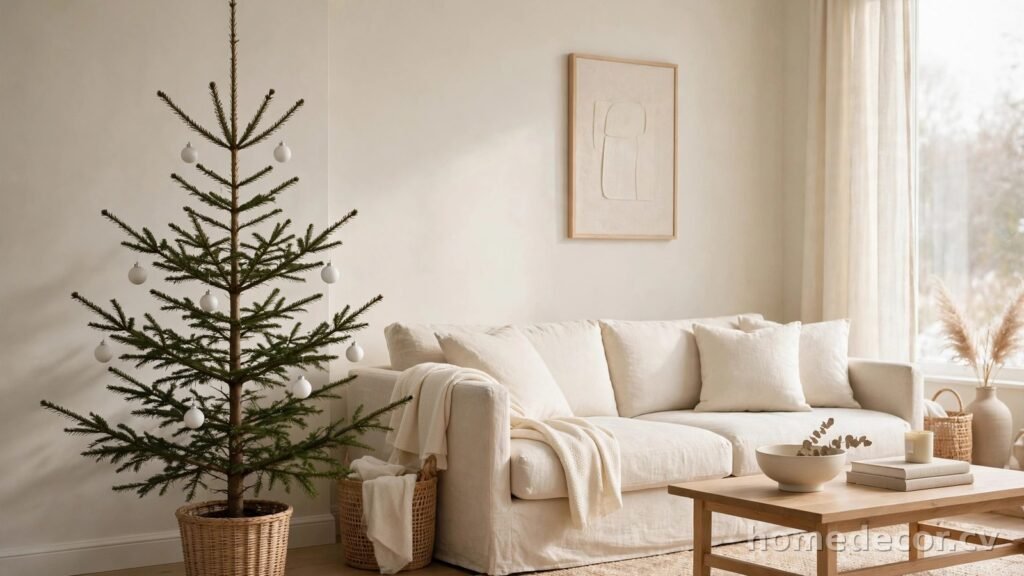
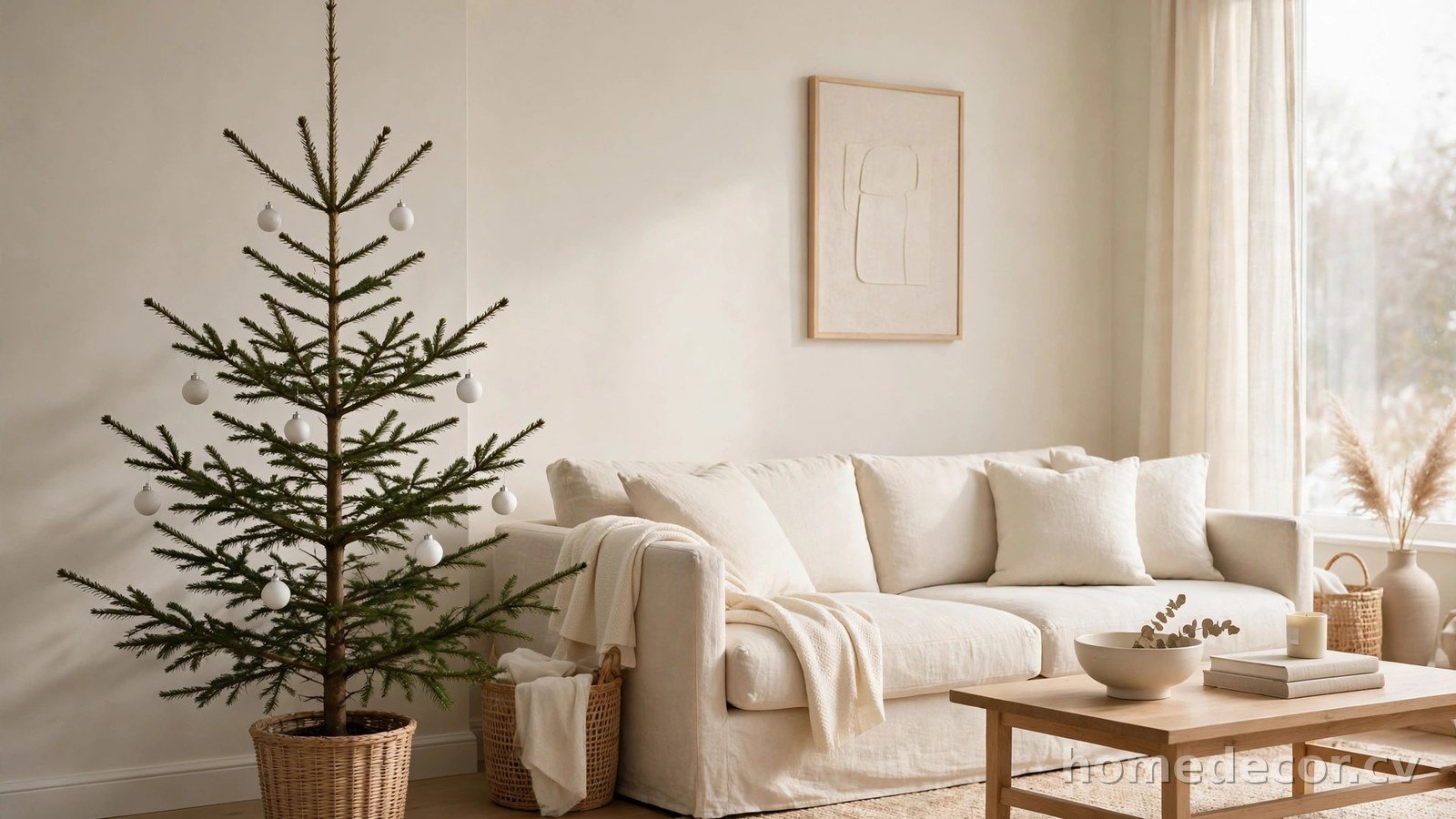
If the holidays leave your home feeling more chaotic than cozy, minimalist Christmas decor might be exactly what you need this year. Instead of bins of tinsel, flashing lights and glitter on every surface, this approach leans on simple greenery, natural textures and a calm, neutral palette. The result is a home that still feels unmistakably festive — just quieter, warmer and far more chic.
Choose One Statement Tree and Keep It Simple
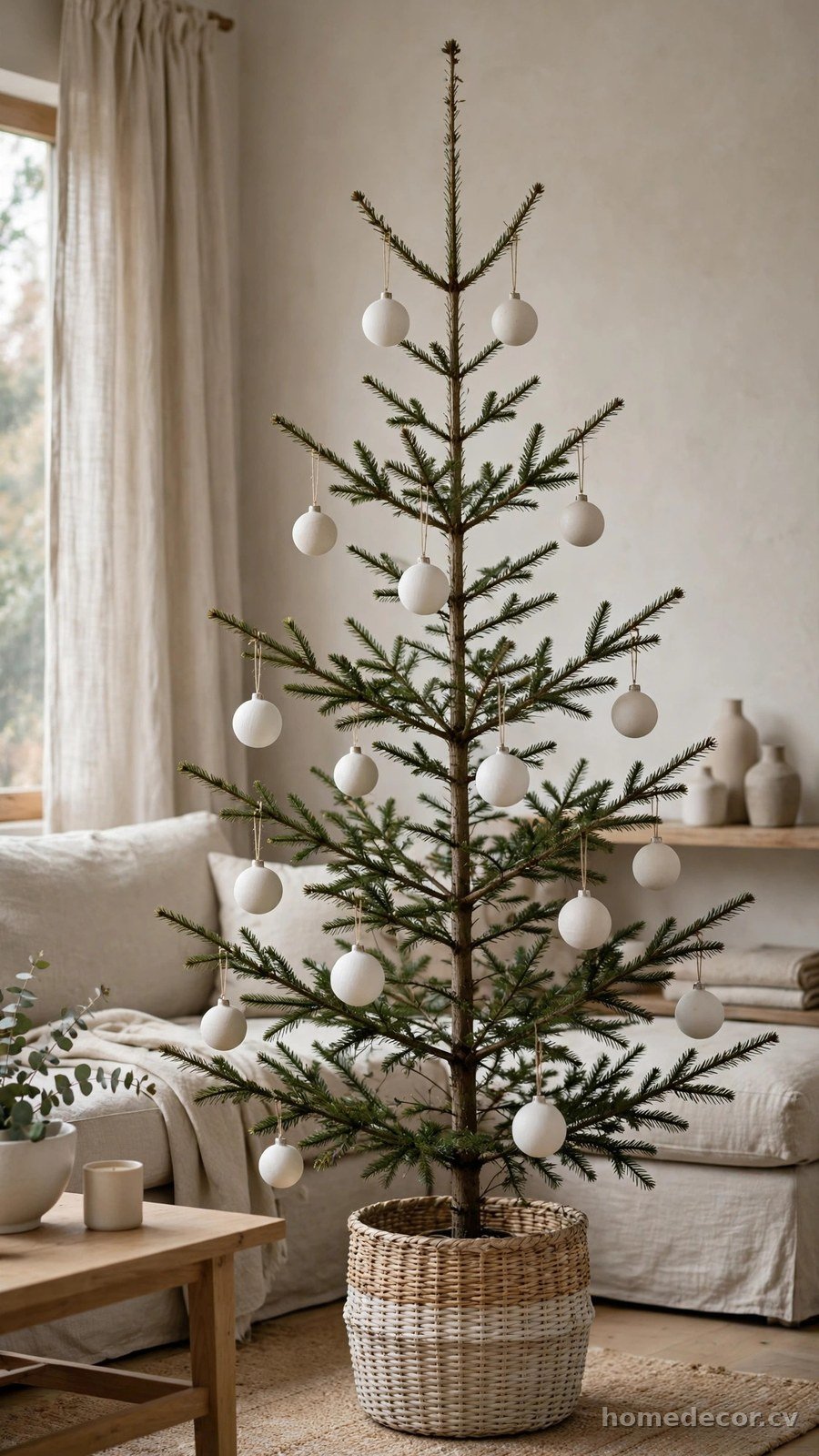
A minimalist Christmas starts with a single, beautiful tree rather than a forest of decorations competing for attention in every room. Choose a tree with a naturally elegant shape, whether that is a sparse Nordic-style fir or a high-quality faux tree with realistic, well-spaced branches. Let the silhouette do the decorating for you. When the tree itself is lovely, it needs very little help to look festive, and the whole room instantly feels calmer because there is one clear focal point instead of visual noise in every corner. Position it where it can be seen from the doorway, and let everything else in the room quietly support it.
I spend far too much time saving home ideas.
If you'd like the best ones, I'll send a short email once or twice a month.
Resist the urge to cover every branch with ornaments collected over decades. Instead, pick one material or finish — matte white ceramic, brushed gold, or simple clear glass — and space the pieces out so each one has room to breathe. Skip the tinsel and heavy garlands entirely, and hang ornaments a little deeper into the branches for subtle depth rather than crowding the tips. Finish the base with a woven basket collar or a simple linen tree skirt in an undyed, natural tone. This restrained approach is also perfect if you love the look of [white Christmas tree decorating ideas](https://homedecor.cv/white-christmas-tree-decorating-ideas/), since a light, airy palette suits minimalism beautifully and keeps the whole display feeling fresh rather than fussy.
Style a Bare Branch Arrangement in a Vase
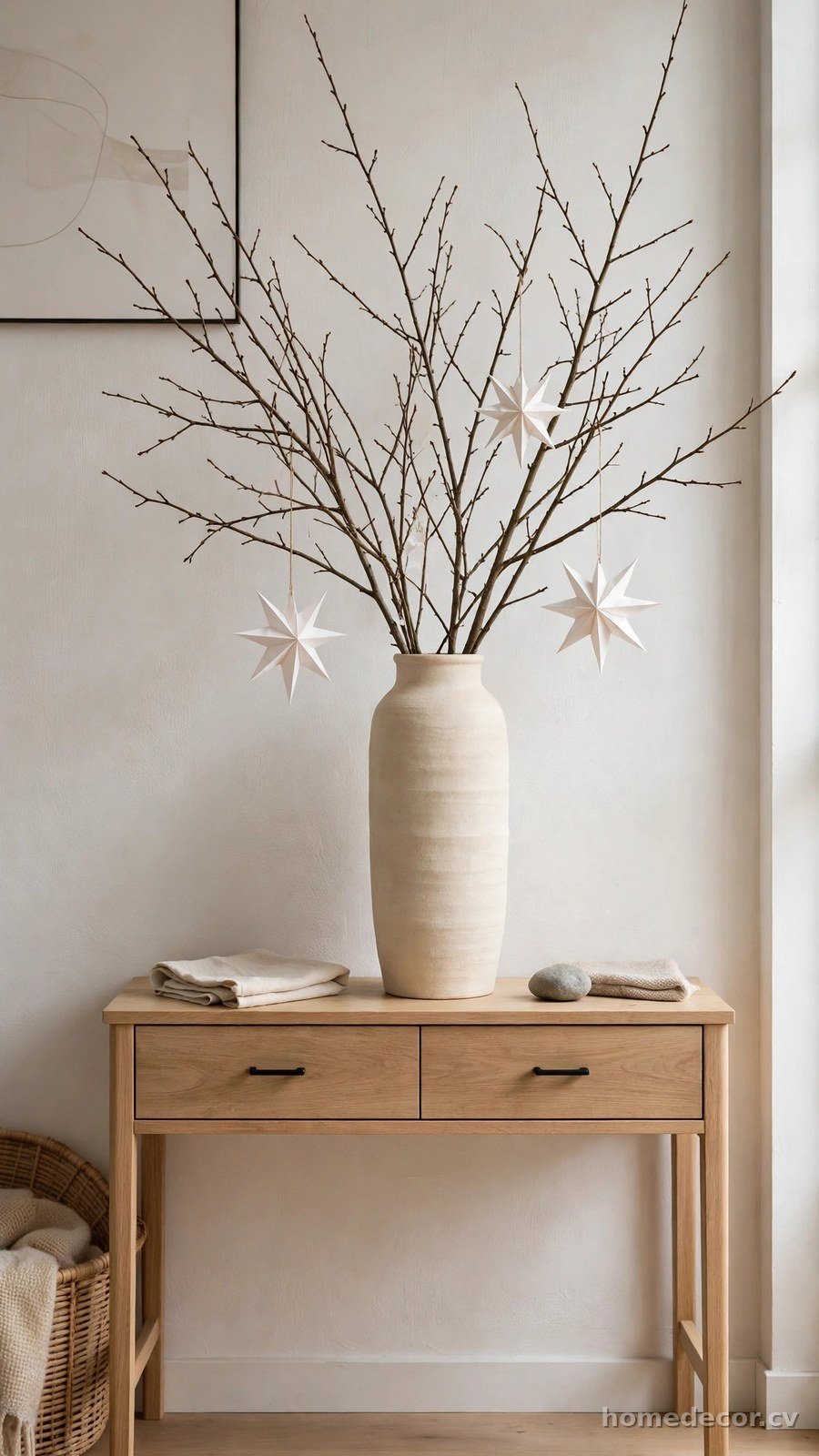
One of the most striking minimalist Christmas decorations costs almost nothing: a few bare branches arranged in a tall, heavy vase. Forage birch, willow or simple twisted branches from your garden, or buy a small bundle from a craft store for a few pounds. Their sculptural, wintery lines bring instant seasonal character to an entryway console, dining table or a quiet corner, and the look is pure Scandinavian simplicity — all structure, texture and negative space, with zero plastic or glitter involved. Because the arrangement is tall rather than wide, it delivers major visual impact while taking up barely any surface space at all.
To dress the branches just enough, hang three to five delicate ornaments from the twigs, or clip on small paper stars in white or kraft brown. Keep the palette tight so the arrangement reads as intentional rather than unfinished. A stoneware or matte ceramic vase in cream, charcoal or soft grey grounds the display and adds welcome weight, and a heavy base matters because top-heavy branches can tip a lightweight vase. Because there are no lights, plugs or fragile extras, this is a wonderful low-maintenance centrepiece that never needs watering or untangling. It looks just as good in January as it does on Christmas morning, which makes it a rare seasonal decoration with genuine staying power.
Drape a Simple Eucalyptus or Olive Garland
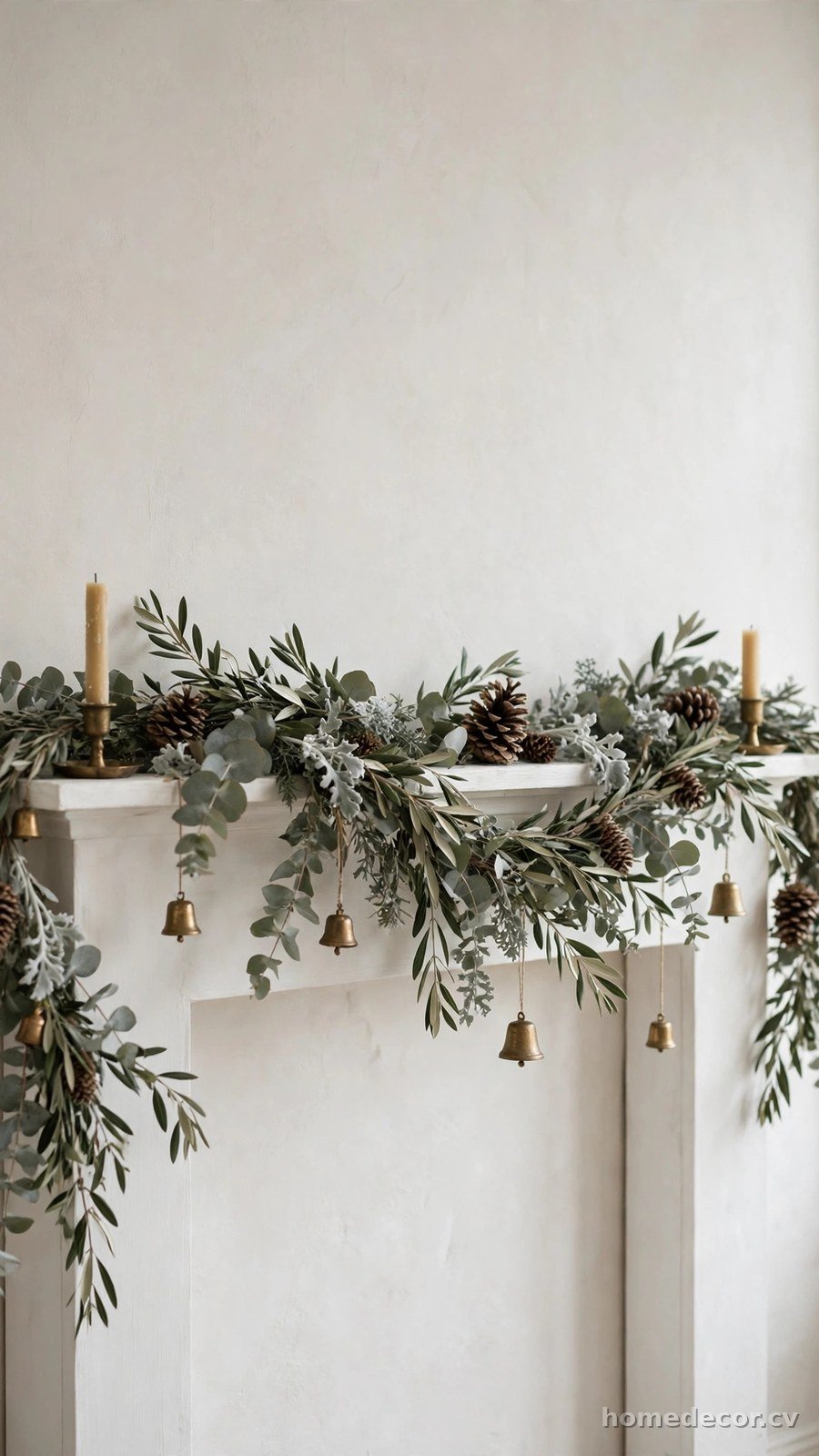
Greenery is the backbone of minimalist Christmas decor, but the trick is choosing foliage with a soft, muted tone rather than glossy, bright-green plastic garlands. Eucalyptus, olive branches and seeded greenery have that dusty, silvery finish that feels calm and modern. Drape a single strand loosely along a mantel, staircase railing or open shelf, letting it fall naturally instead of wiring it into perfect, stiff swags. The slight imperfection is exactly what makes it feel relaxed and chic. Step back and adjust only the spots that look tangled rather than artfully loose, because over-arranging greenery is how a natural look turns into a showroom look.
Leave the garland mostly bare, or tuck in just a few accents: a handful of pinecones, three small brass bells, or a thin linen ribbon tied loosely at the ends. Real eucalyptus also releases a gentle, fresh scent that quietly replaces the need for overpowering holiday candles throughout the house. If you use faux greenery, take a few minutes to fluff and bend each stem so it mimics the way real branches drape and curl. One well-chosen garland, styled with restraint, will do more for your room than five decorations fighting for the spotlight. It frames the space softly, letting everything inside the frame — your furniture, your tree, your people — stay the heroes of the room.
Swap in Neutral Linen and Wool Textiles
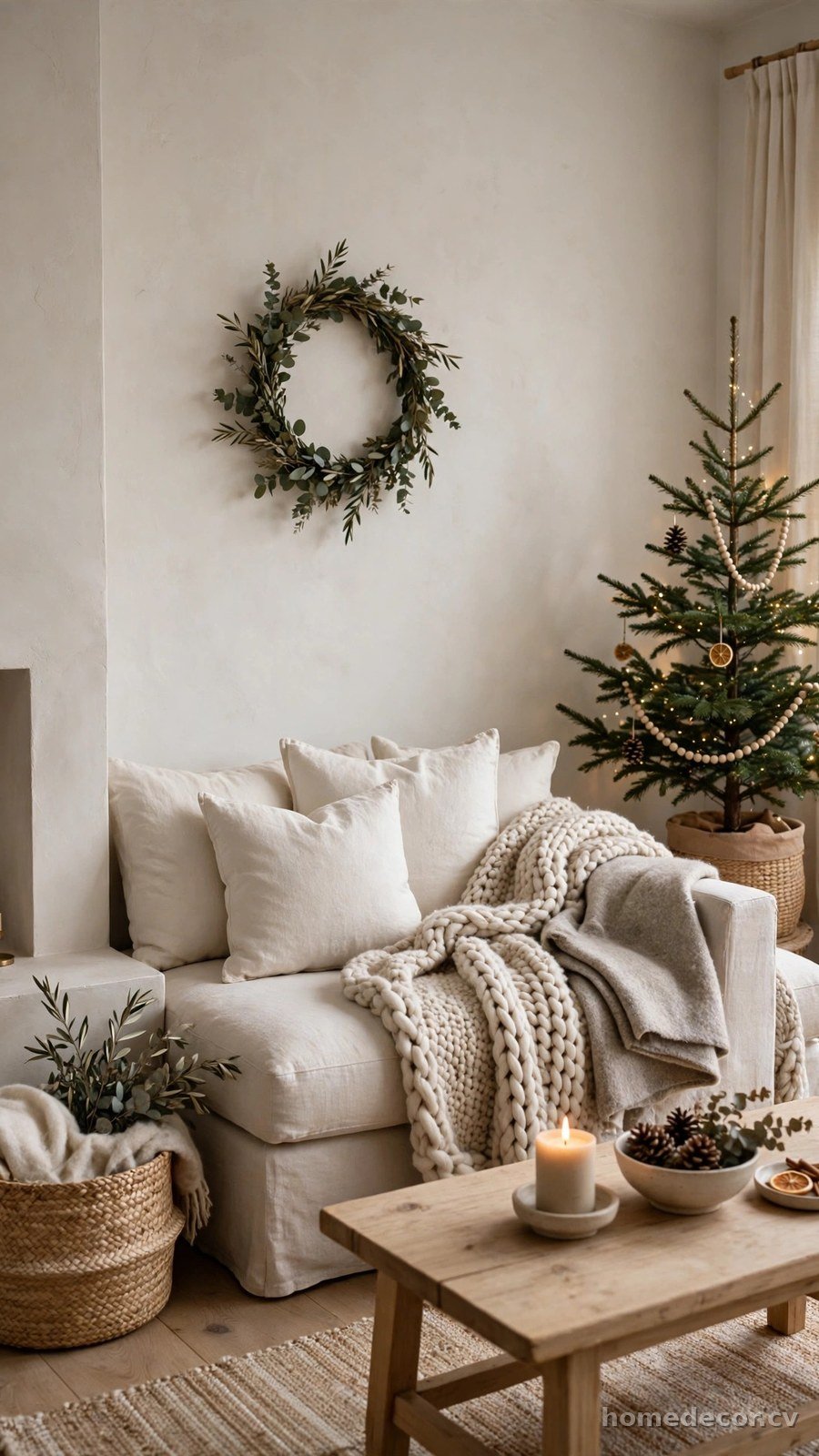
Textiles are the fastest way to make a room feel festive without adding a single novelty decoration to your home. Swap your everyday cushion covers and throws for natural fabrics in a tight, neutral palette: undyed linen, warm ivory wool, soft oatmeal and a touch of charcoal or deep forest green if you want a little gentle contrast. The textures themselves — nubby weaves, fringed edges, chunky knits — create the cozy, layered feeling that says Christmas, even though nothing is printed with reindeer, slogans or cartoon Santas. Running your hand over the sofa should feel like a tour of winter itself: smooth linen, springy wool, and one really good chunky knit.
Keep the arrangement edited: two cushions and one folded throw on a sofa is plenty for a calm scheme. Drape a wool blanket over the arm of a reading chair, add a linen runner down the centre of the dining table, and let that be enough to carry the theme. Because these pieces are not overtly seasonal, they transition seamlessly into January and February, which means less storage, less waste and less money spent on decor you use for three weeks a year. They also layer beautifully with what you already own, so there is no need to replace everything at once. Calm, practical and quietly luxurious — that is minimalist decorating at its very best.
Create Candle Clusters Instead of Light Displays
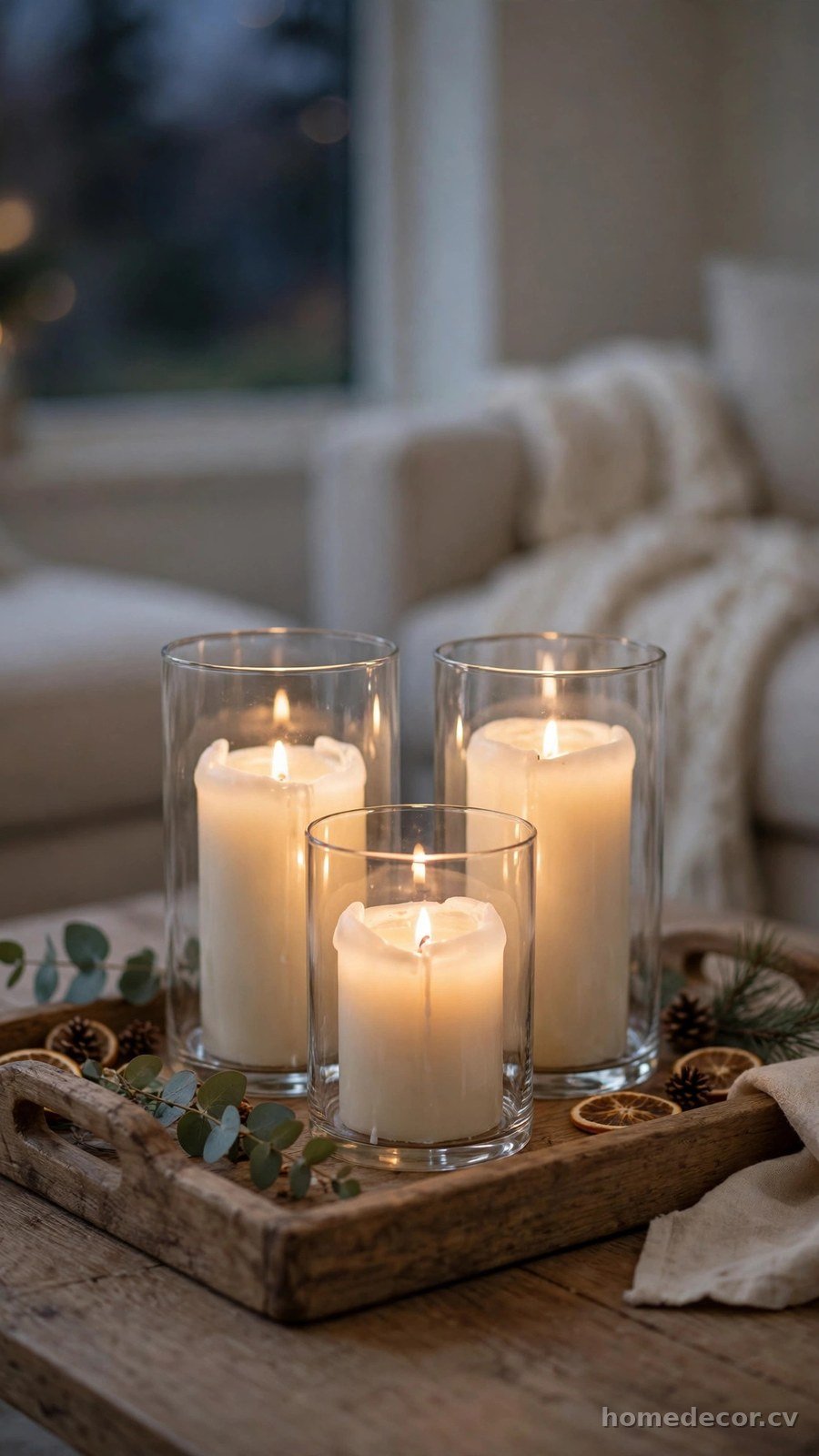
Nothing softens a minimalist Christmas scheme quite like real candlelight glowing against a calm, neutral room. Instead of outlining every window and doorway with string lights, gather candles into small, intentional clusters: on the mantel, down the centre of the dining table, or grouped on a tray on the coffee table. Mix pillar candles in two or three heights, all in the same ivory or warm white tone, and place them in simple glass hurricanes or on small wooden or stone bases for a grounded, gallery-like feel. The repetition of one colour and simple shapes is what keeps a generous amount of candlelight from ever looking busy or cluttered.
If open flames worry you — especially with children, pets or lots of guests moving around — today’s flameless LED pillars are remarkably realistic, with flickering wicks and warm-toned light that is hard to tell from the real thing. The key to keeping the look minimalist is repetition and restraint: same colour, simple holders, generous spacing between clusters. A cluster of five candles glowing in a dim room creates more atmosphere than a hundred blinking bulbs, and it photographs beautifully for anyone who loves sharing their [Christmas living room decor ideas](https://homedecor.cv/christmas-living-room-decor-ideas/) on Pinterest. When the evening ends and the candles are out, your room returns to calm in seconds, with nothing to unplug or pack away.
Hang Oversized Paper Star Lanterns
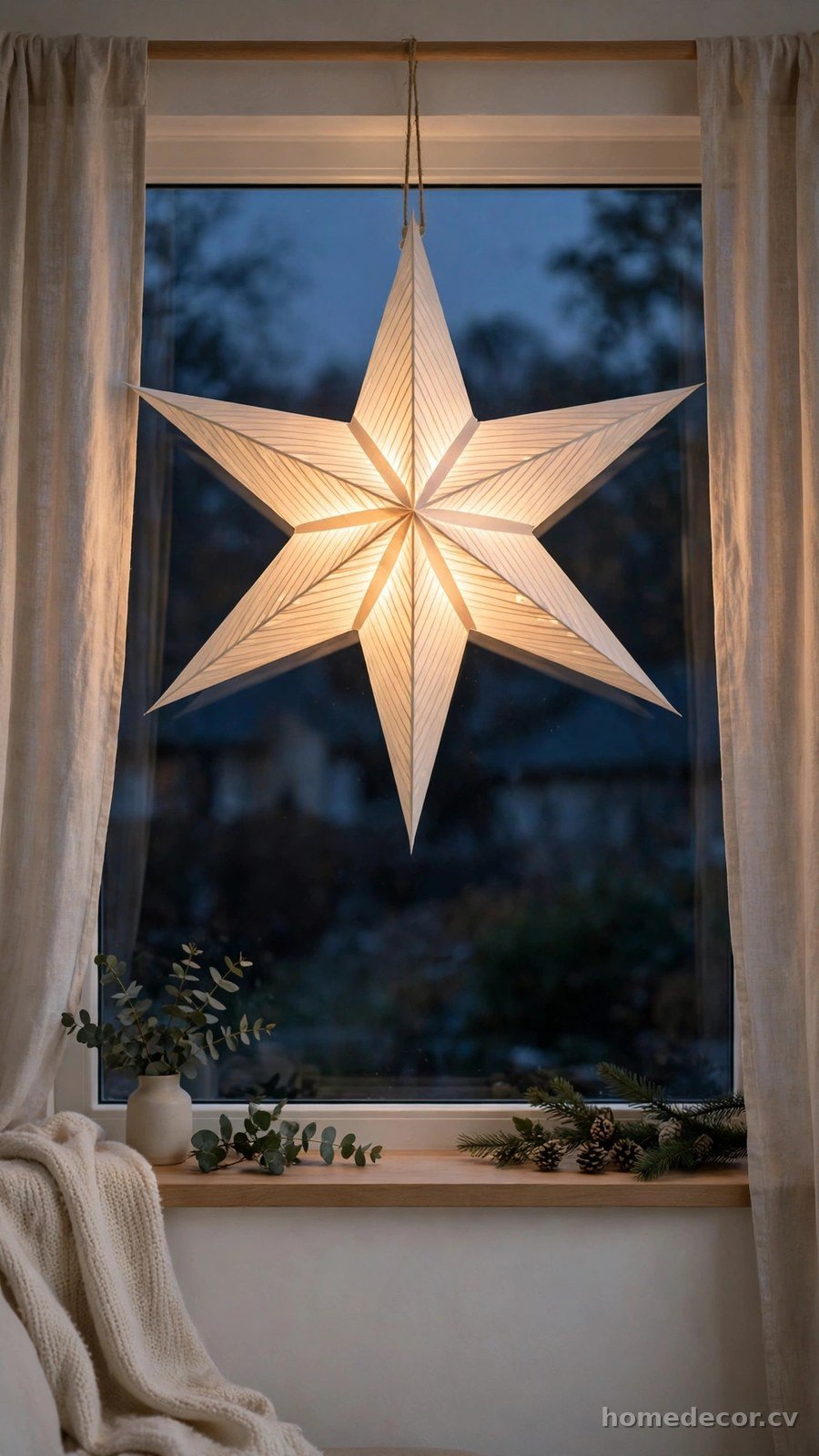
Paper star lanterns are a beloved Scandinavian Christmas tradition, and they suit minimalist homes perfectly: sculptural, inexpensive and wonderfully soft in effect. Choose one or two oversized stars in white, cream or natural kraft, and hang them in a window, over the dining table or in a quiet corner where their glow can pool gently in the evening. During the day they read as simple paper sculptures against the glass; at night, lit from within, they become the warm focal point of the whole room. In Scandinavian homes they traditionally appear in windows at the start of December, a small beacon of light during the darkest weeks of the year.
Because these stars are large, you need very few of them — one statement star often does the job of an entire box of smaller decorations. Pair them with plain linen curtains and an otherwise uncluttered windowsill for maximum impact. Most paper stars fold completely flat after the holidays, so storage is effortless and they survive for years if handled gently. If you hang a star in a child’s bedroom, use a warm LED bulb on a timer so it glows safely at bedtime and switches off after they fall asleep. It is proof that a single, well-chosen piece can carry an entire decorating scheme with grace.
Commit to a One-Colour Ornament Palette

The quickest way to make Christmas decor feel chaotic is a rainbow of unrelated colours and finishes all shouting at once. Minimalist schemes avoid that by committing to one ornament colour — and the discipline makes everything look instantly more expensive. All-white ornaments in mixed matte, glossy and frosted finishes create a snowy, serene tree that photographs like a magazine cover. Warm metallics like brushed brass or champagne gold feel elegant without shouting, while even all-clear glass ornaments can look stunning, catching candlelight like drops of ice hanging on the branches. The single palette unifies pieces bought years apart from completely different shops.
Apply the same colour rule beyond the tree: gift wrap, ribbon, stockings and table linens all echoing your chosen palette. This does not mean buying everything new each year. Sort the ornaments you already own, display only the ones that fit the palette this year, and store the rest — rotating collections keeps decorating fresh and stops the slow creep of clutter taking over your cupboards. A one-colour scheme also makes future shopping wonderfully simple, because every potential purchase has a clear yes-or-no test. If it is not your colour, it does not come home. Calm for your eyes, calm for your budget, and calm for your storage space.
Hang a Plain Evergreen Wreath
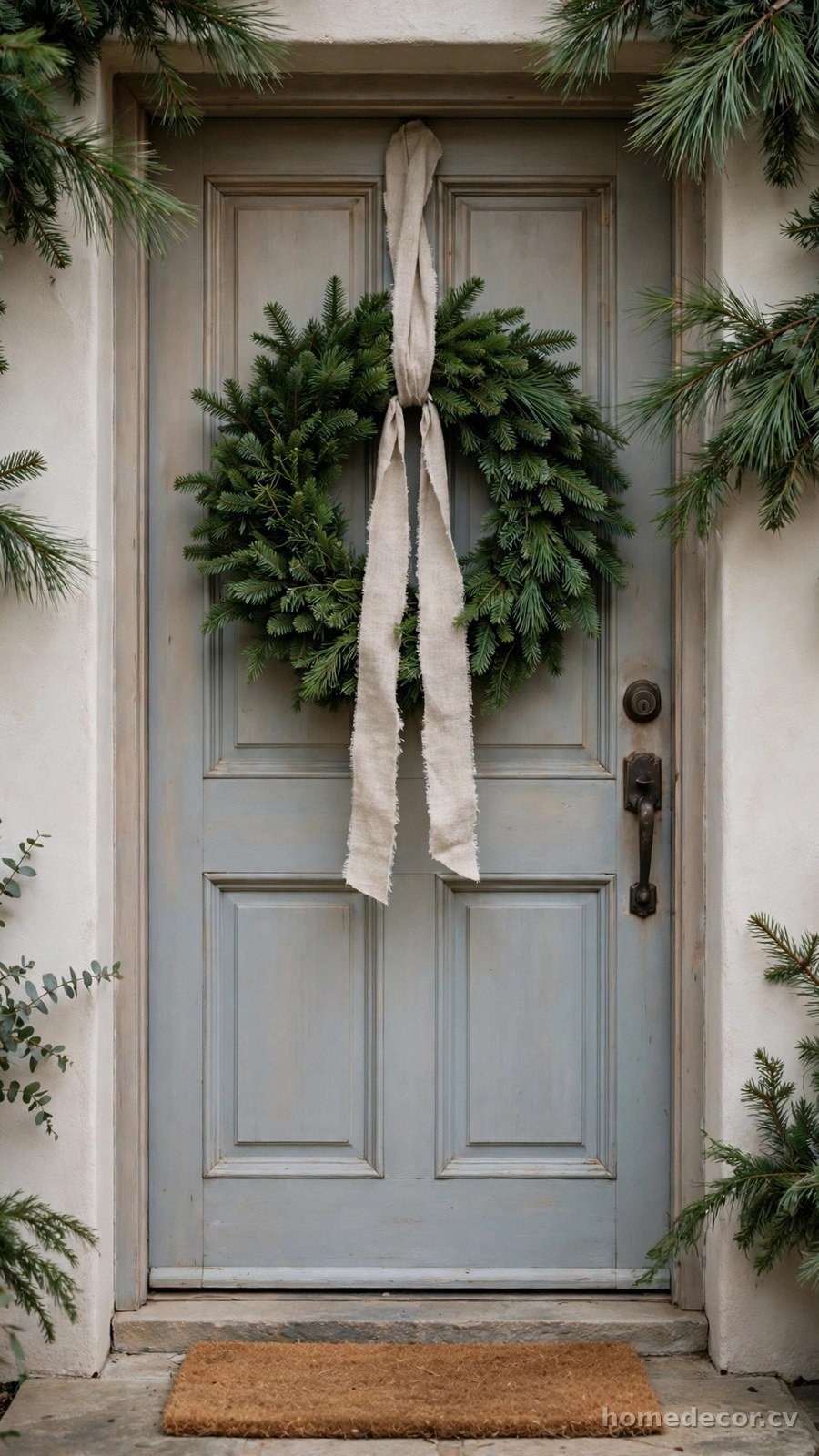
A minimalist wreath is simply a generous circle of fresh or realistic faux evergreen — pine, cedar, eucalyptus or olive — with little or nothing added to it. No baubles, no berries, no giant bow competing for attention. The beauty is in the texture of the foliage itself and the clean geometry of the ring. Hang it on your front door with a length of raw linen or velvet ribbon in a muted tone, and let that single gesture welcome guests with quiet confidence. On a plain door, a lush green circle reads as elegant from the end of the street, long before visitors notice any finer details.
Inside the house, the same plain wreath works beautifully above a mantel, on a kitchen window, or even laid flat on the dining table as a centrepiece with a pillar candle standing in the middle. If you crave one small accent, tuck in three pinecones or a few slices of dried orange — then firmly stop there. The restraint is the style, and every extra addition dilutes it a little more. Fresh wreaths have the added gift of scent, greeting everyone who walks through the door with that unmistakable smell of winter woods. Simple, natural and timeless, a plain evergreen wreath never looks dated in photographs, year after year.
Fill Clear Glass Vases with Pine and Fairy Lights
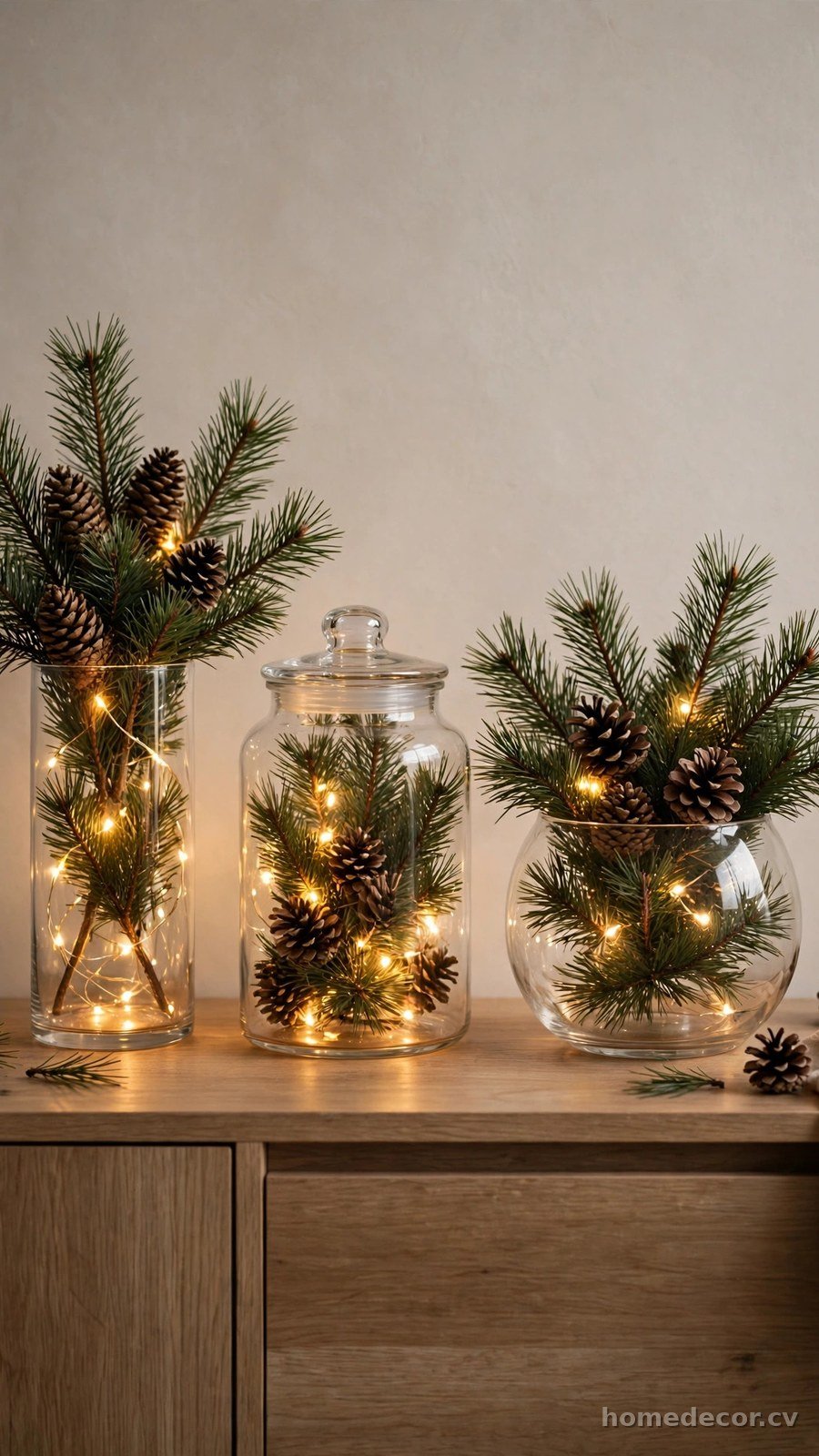
Clear glass is a minimalist’s best friend at Christmas because it decorates through transparency and light rather than colour and clutter. Take a few simple glass vases, jars or demijohns in different heights and loosely fill them with pine sprigs, cedar clippings or a generous handful of pinecones. The green shows through the glass in soft, layered tones, and the vessels themselves seem to disappear, leaving just the suggestion of a winter forest standing on your shelf or sideboard. Because you can see through the arrangement, it never feels heavy or bulky, even when the vases themselves are large and generously filled.
For evening, drop a short string of warm micro fairy lights into one or two of the vases, hiding the battery pack behind the foliage so the source of the glow stays a small mystery. The light filtering through glass and greenery is gentle and magical without a single bulb on show. Group the vases in odd numbers — three is classic — and vary the heights for a composed, still-life effect that looks arranged by a stylist. This idea is also wonderfully adaptable across the year: swap the pine for bare twigs in January, or for blossom branches in spring, and the same vessels keep working hard in every season.
Add a Wooden Bead Garland
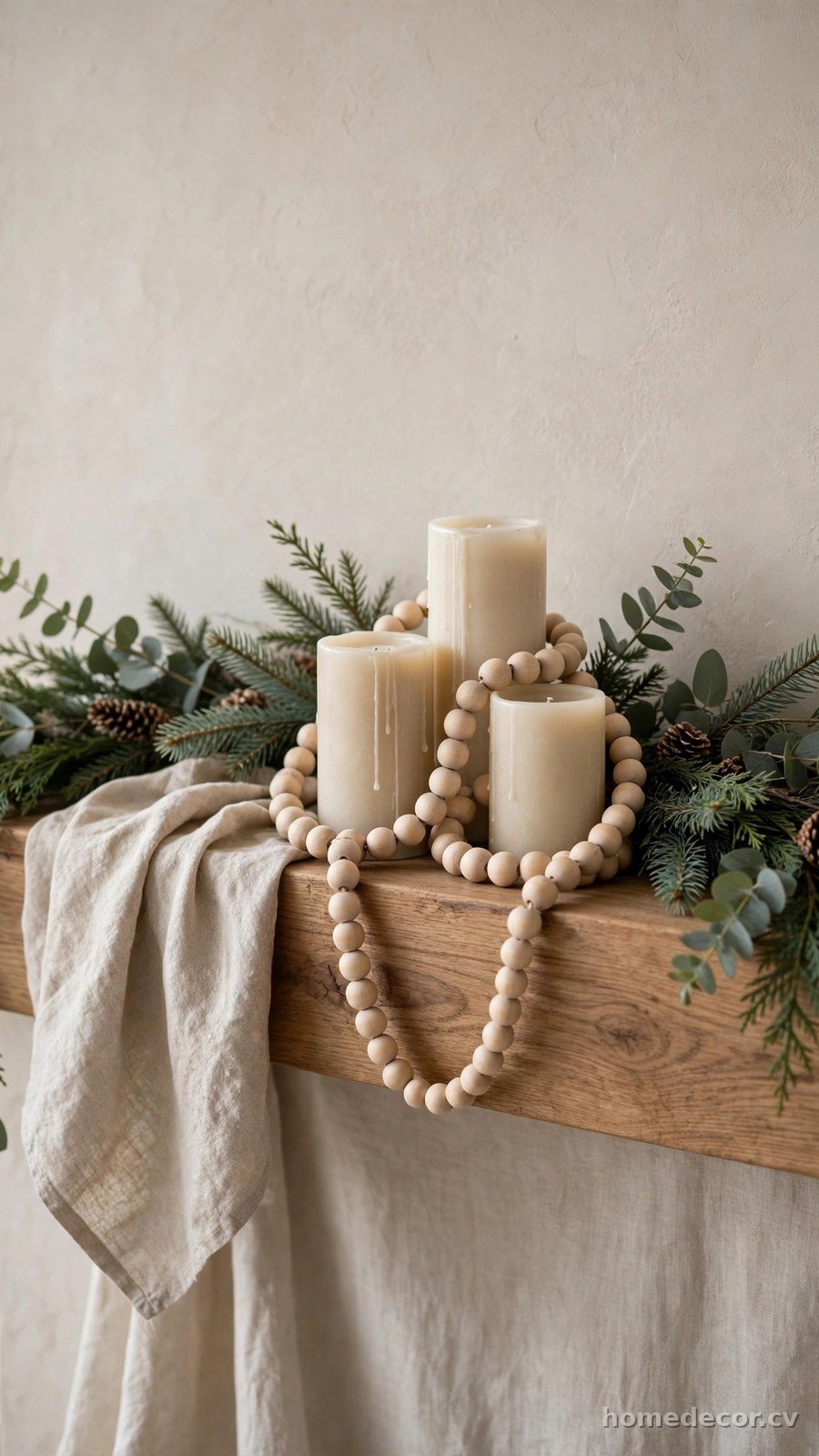
When you want texture without colour, a wooden bead garland is the perfect minimalist accent for the holidays. Strung from natural, unfinished beads, it adds warmth and a handcrafted feel while staying completely within a neutral palette. Drape one along the mantel, loop it loosely around a table centrepiece, or hang it in soft swags on the tree in place of tinsel. The matte wood tones pair beautifully with linen, stoneware and evergreen — the three materials that anchor almost every calm Christmas scheme. Because the beads are all slightly different in tone and grain, the garland has a richness that flat, uniform decorations simply cannot match.
Wooden bead garlands are also satisfyingly versatile and durable compared with most seasonal decor. Use them to soften the straight edge of a bookshelf, circle them around the base of a candle cluster, or lay them down the centre of the dining table over a linen runner for an instant centrepiece. Unlike fragile ornaments, they will not shatter, fade or date quickly, and they store away in a tiny pouch that takes up almost no room. If you enjoy making things, they are an easy afternoon DIY with beads and twine from any craft shop. One garland, used in several places across the season, beats a box of single-purpose decorations every single time.
Choose a Simple, Beautiful Advent Calendar
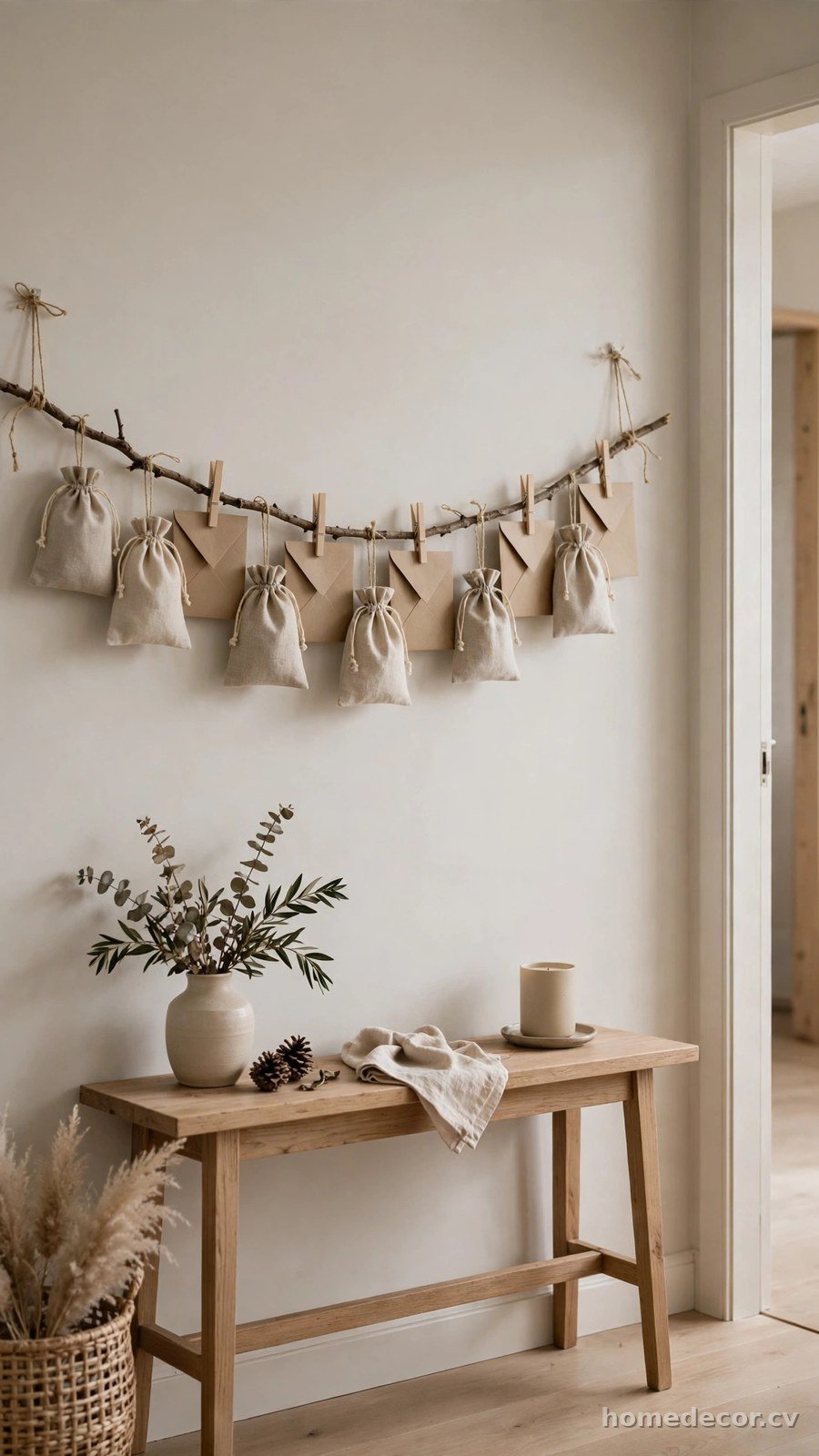
An advent calendar earns a place in a minimalist home only if it is beautiful enough to count as decor in its own right. Skip the glossy cardboard versions and choose something you will happily look at for a whole month: a row of small linen pouches pegged along a branch, a simple wooden house with tiny drawers, or twenty-four kraft envelopes strung on twine across a mantel or along a staircase. In neutral fabrics and papers, the calendar becomes a gentle seasonal installation rather than visual clutter competing with everything around it. Hung at child height in a hallway or on the staircase wall, it becomes part of the family’s daily December ritual.
Fill it with small, thoughtful things instead of plastic toys: handwritten notes, a chocolate each, a winter walk written on a card, or a tiny ornament to add to the tree each day. Children love the ritual just as much when the calendar looks special and the surprises feel personal rather than mass-produced. Hang it where the family naturally gathers so it becomes part of the room’s styling rather than an afterthought taped to a fridge. Because reusable fabric and wooden calendars store flat and last for years, this is also the sustainable choice — one thoughtful purchase, a decade of calm Decembers, and a family tradition that grows more meaningful every single year.
Use Undecorated Greenery Swags on Doors and Chairs
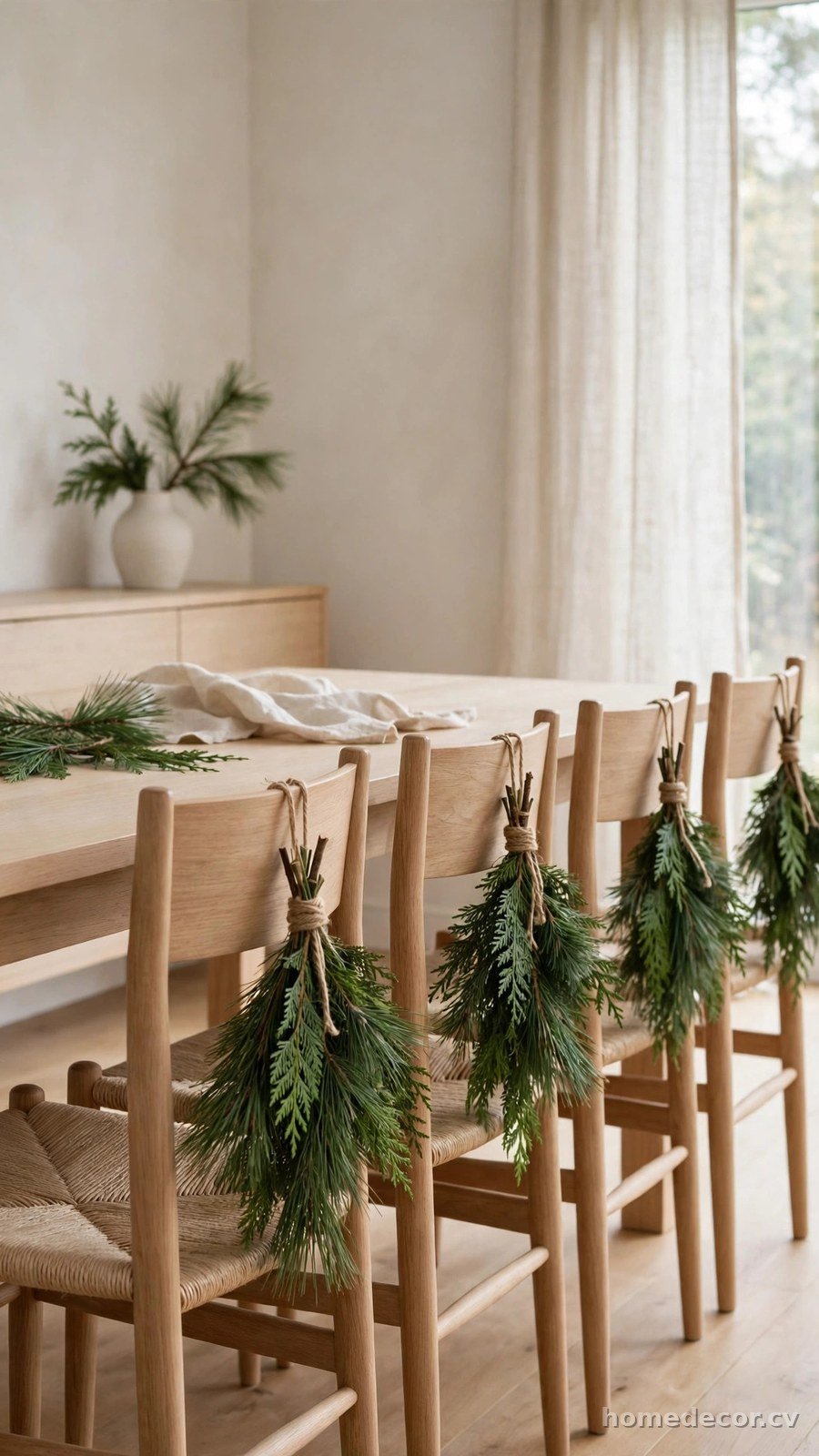
Not every surface needs a finished arrangement — sometimes a loose bundle of greenery tied with twine is decoration enough. Simple swags of pine, cedar or fir, left completely undecorated, bring scent, texture and a hint of the season to places that usually get ignored: interior doors, the backs of dining chairs, kitchen cabinet handles and the end of a banister. Their charm lies in how effortless and natural they look, like something gathered from the garden moments before guests arrived. A row of dining chairs wearing little green swags transforms an ordinary table setting before a single plate is laid down.
Make them in minutes: gather three or four short branches, layer them with the fullest at the back, bind the stems tightly with jute twine, and trim the ends neatly at an angle. Hang each swag with a small loop of the same twine so nothing shiny or plastic interrupts the natural look. A tiny sprig of rosemary or a cinnamon stick tucked into the binding adds scent without any visual noise. These swags are ideal for [small apartment Christmas decor](https://homedecor.cv/small-apartment-christmas-decor/) too, since they decorate vertically and take up no precious surface space at all. When the season ends, they go straight onto the compost heap — beautiful, biodegradable and completely fuss-free from start to finish.
Display a Village of White Ceramic Houses
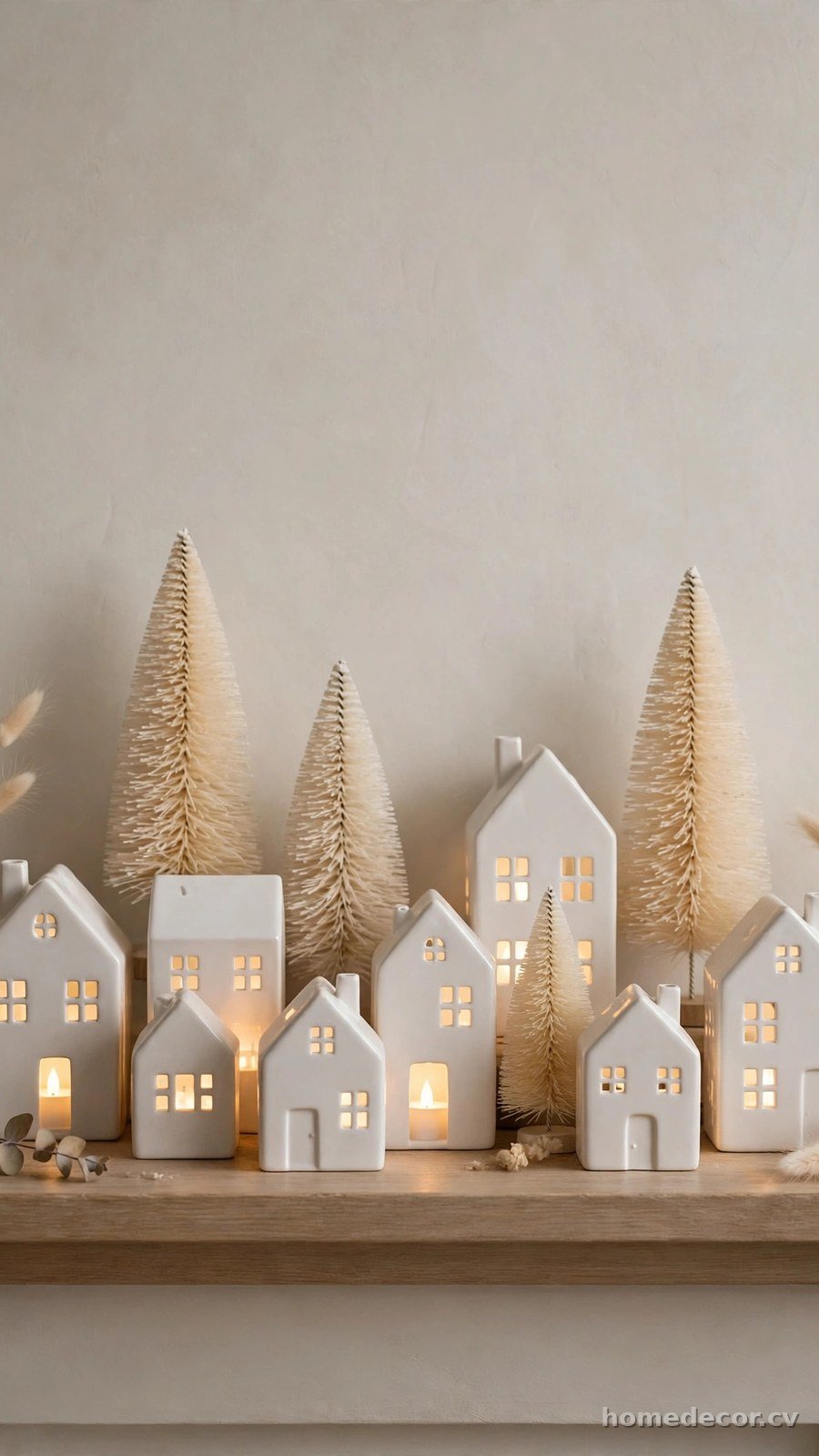
A row of simple white ceramic houses, glowing softly from within, is minimalist Christmas decor at its most charming. The unglazed or matte-white finish keeps the display sculptural and calm, while tiny cut-out windows lit by LED tea lights create that magical, storybook village feeling everyone loves. Arrange five to seven houses along a mantel, windowsill or sideboard, varying the heights slightly and leaving breathing room between small groups so the scene feels airy rather than crowded. Set them on a slight diagonal or gentle curve instead of a rigid straight line, and the village instantly feels more like a real, lived-in little street.
Ground the village with a strip of white linen or a simple wooden board underneath, and add one or two bottle-brush trees in cream or soft sage if you want a hint of landscape. Resist adding coloured figures, fake snow blankets and glitter — the restraint is what keeps the display chic instead of kitschy. Because the houses are all one colour, you can add a piece or two each year and the collection will always match perfectly. They also look beautiful unlit during the day, like a little architectural model on the shelf. Quiet, collectible and endlessly giftable, this is a display families keep and grow for decades.
Wrap Gifts in Kraft Paper and Linen Ribbon
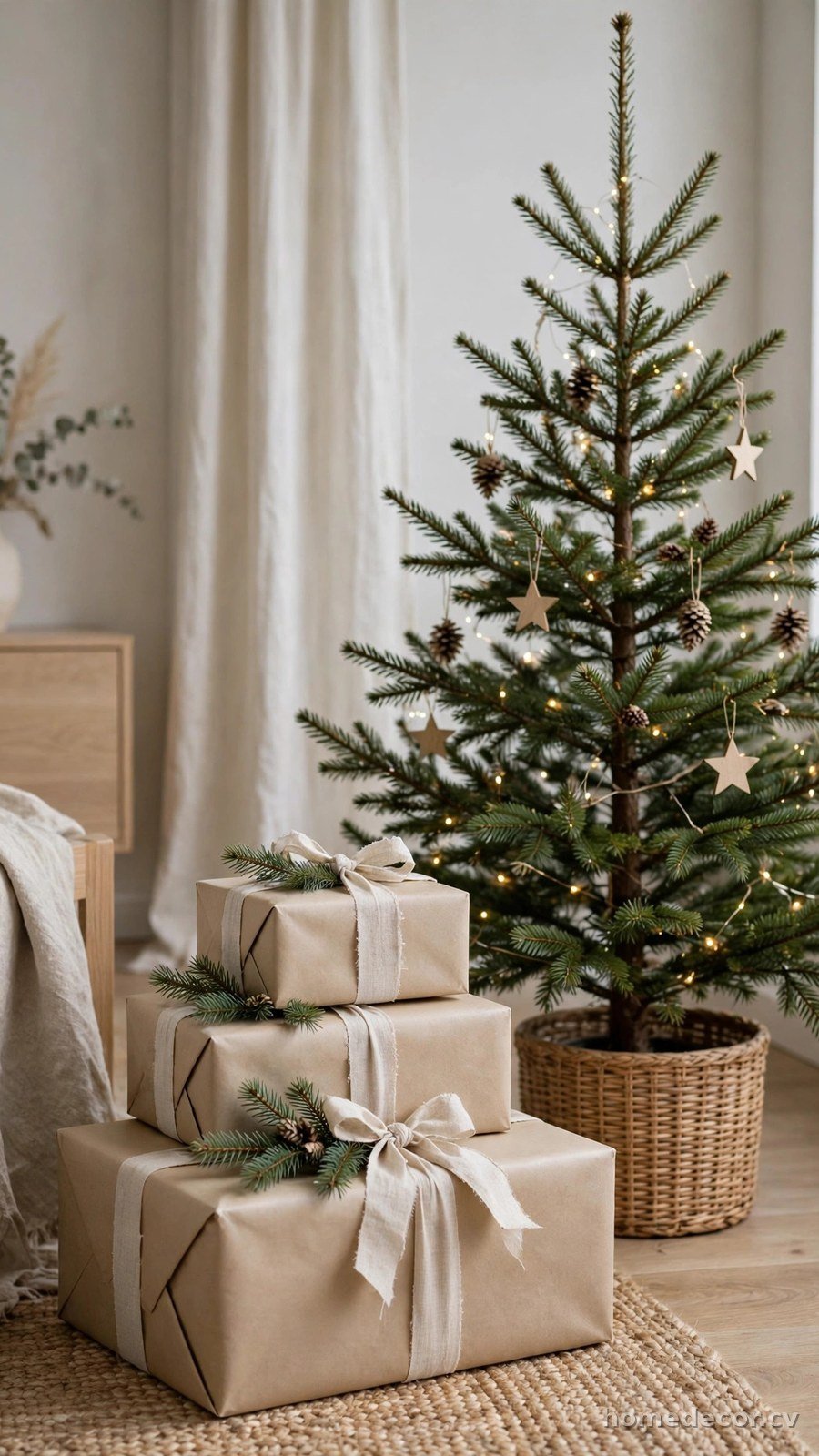
In a minimalist home, the gifts under the tree are part of the decor for weeks, so it pays to wrap them like it actually matters. Plain kraft paper, white paper or undyed linen-style wrap instantly calms the scene under the tree, especially compared with loud, glossy novelty prints all jumbled together. Tie each parcel with natural twine, linen ribbon or a strip of torn cotton fabric, and finish with a small sprig of pine, eucalyptus or dried orange tucked under the knot instead of a plastic bow. The effect is rustic, calm and quietly expensive-looking — like gifts from a beautiful Scandinavian lifestyle store.
A simple kraft or black gift tag with handwritten names keeps the look personal and unhurried, and a fine white pen on kraft paper looks especially elegant. Sticking to one wrap style also makes practical sense: one roll of paper and one spool of twine covers every gift, costs very little, and recycles or composts easily in January. Stack finished parcels neatly, largest at the back, and they become a styled still life beneath the branches rather than a chaotic pile. Guests always comment on how peaceful a tree looks surrounded by quiet, earthy packages — final proof that at Christmas, less really does give you more.