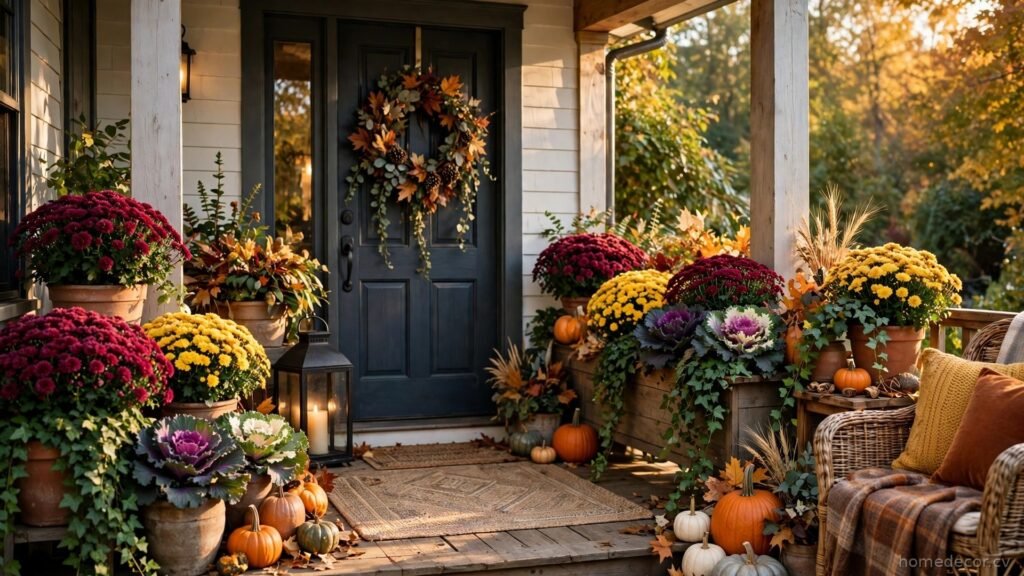
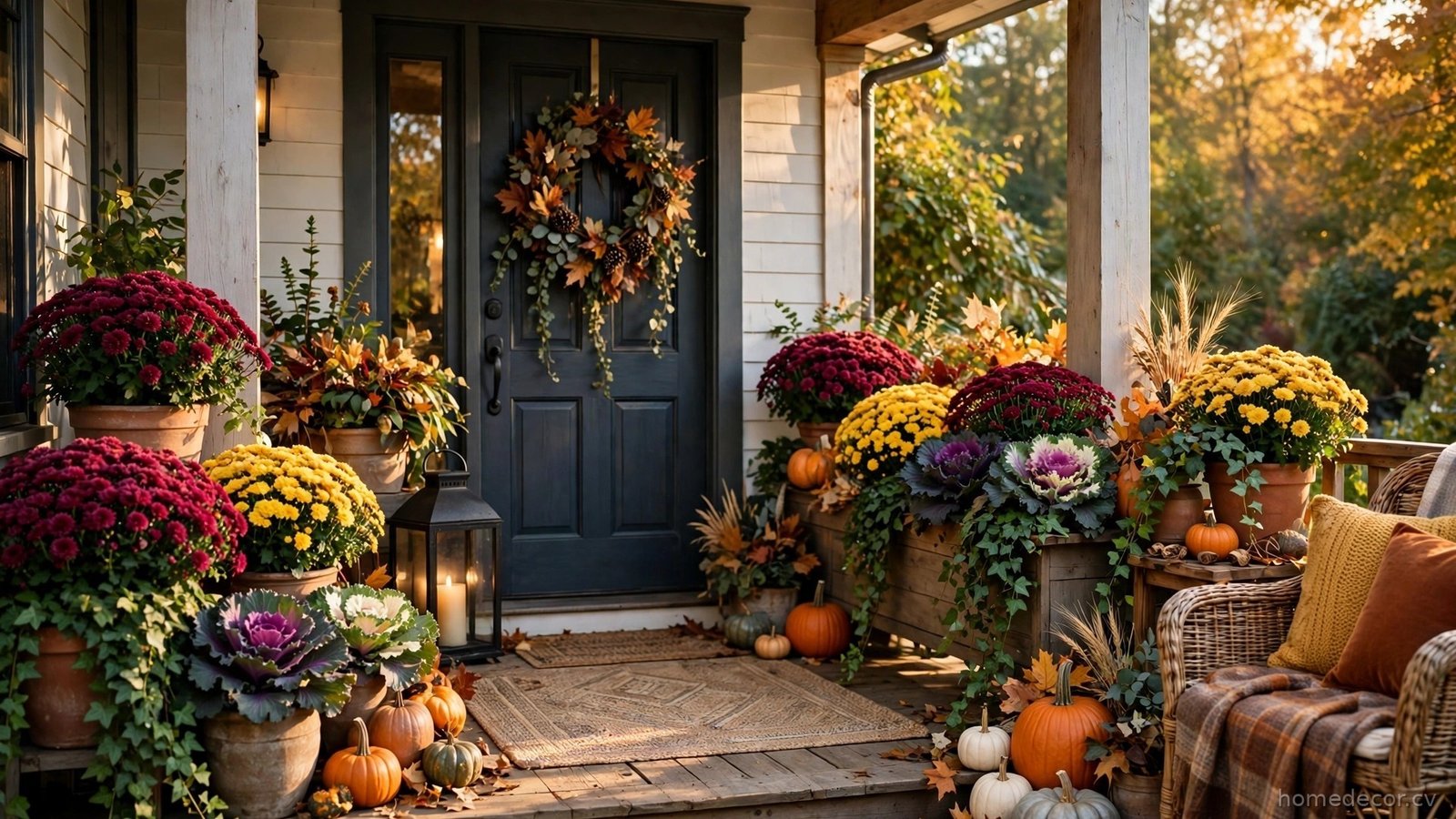
Fall is the perfect excuse to refresh your porch, and nothing does it faster than a beautiful planter overflowing with color. These fall planter ideas combine classic mums, ornamental kale, pumpkins, and trailing ivy in ways that feel warm and welcoming without costing a fortune. Most use pots you already own and plants from the garden center or grocery store. Pair a couple of planters with your favorite affordable fall porch styling ideas and your entry will look ready for the season in a single afternoon, whether your space is a wide farmhouse porch or a tiny apartment patio.
Classic Mum and Pumpkin Front Porch Planter
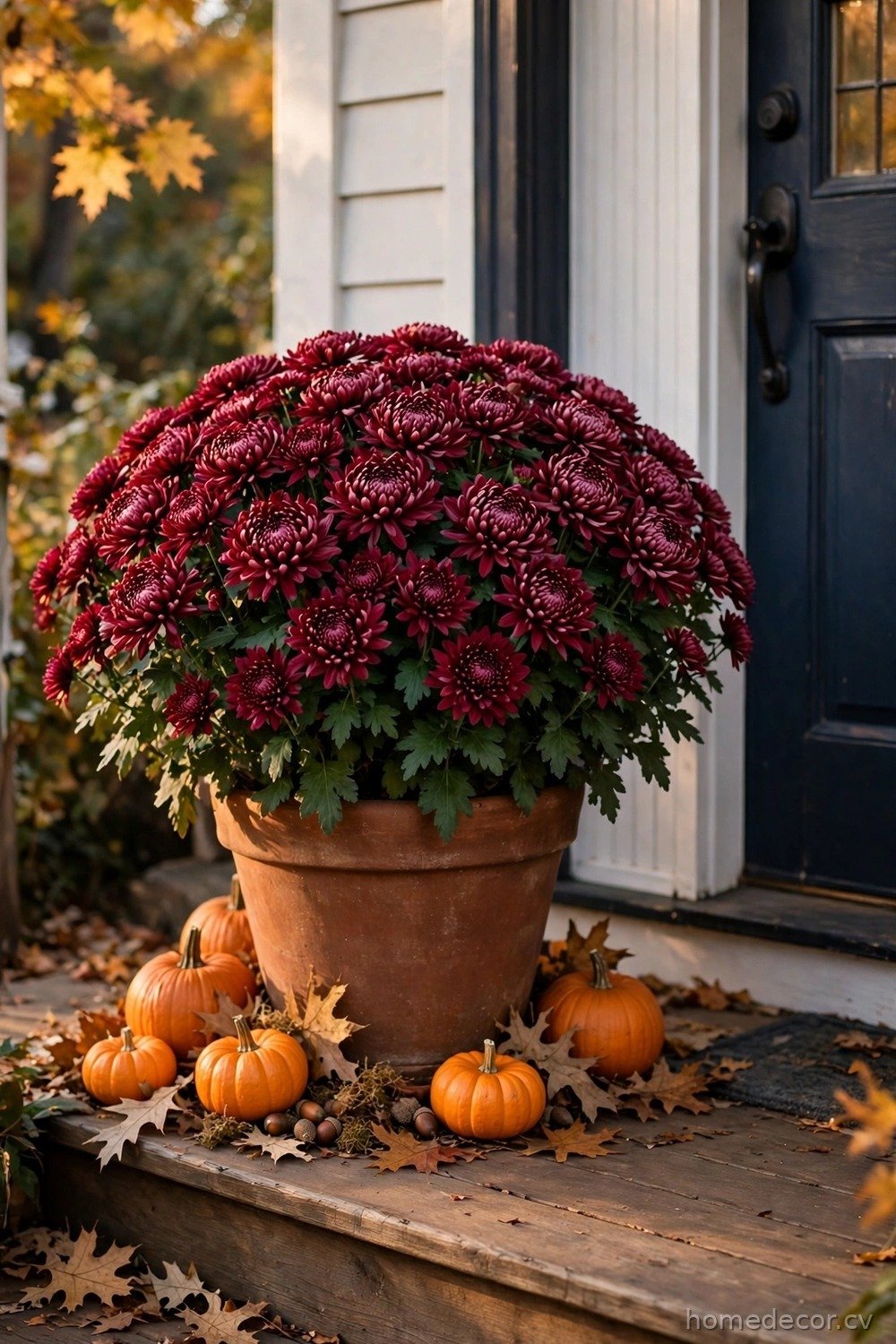
A classic mum and pumpkin planter is the easiest way to make your front steps feel instantly ready for fall. Choose a large pot in black, terracotta, or weathered zinc, fill it with one generous chrysanthemum in burgundy, rust, or golden yellow, and tuck two or three small pumpkins around the base. The full, rounded shape of the mum does most of the work, while the pumpkins add that unmistakable autumn shape everyone loves. Place one planter on each side of your front door for a balanced, welcoming look that photographs beautifully. Add a small solar lantern beside each pot if your steps get evening guests, because soft light makes the mum colors glow after sunset.
I spend far too much time saving home ideas.
If you'd like the best ones, I'll send a short email once or twice a month.
Keep this planter looking fresh by watering the mum deeply whenever the top inch of soil feels dry, since mums in pots dry out quickly on sunny porches. Deadhead spent blooms once a week to encourage new buds, and rotate the pot every few days so all sides get light. If nights turn frosty, move the pumpkins indoors overnight to prevent soft spots. This simple combination also pairs well with farmhouse fall porch decor ideas like a plaid throw, a lantern, and a coir doormat for a complete entryway in minutes. Budget shoppers can often find mums on sale in multi-packs in September, so buying the pair together keeps this classic look especially affordable.
Rustic Wooden Crate Planter with Ornamental Kale
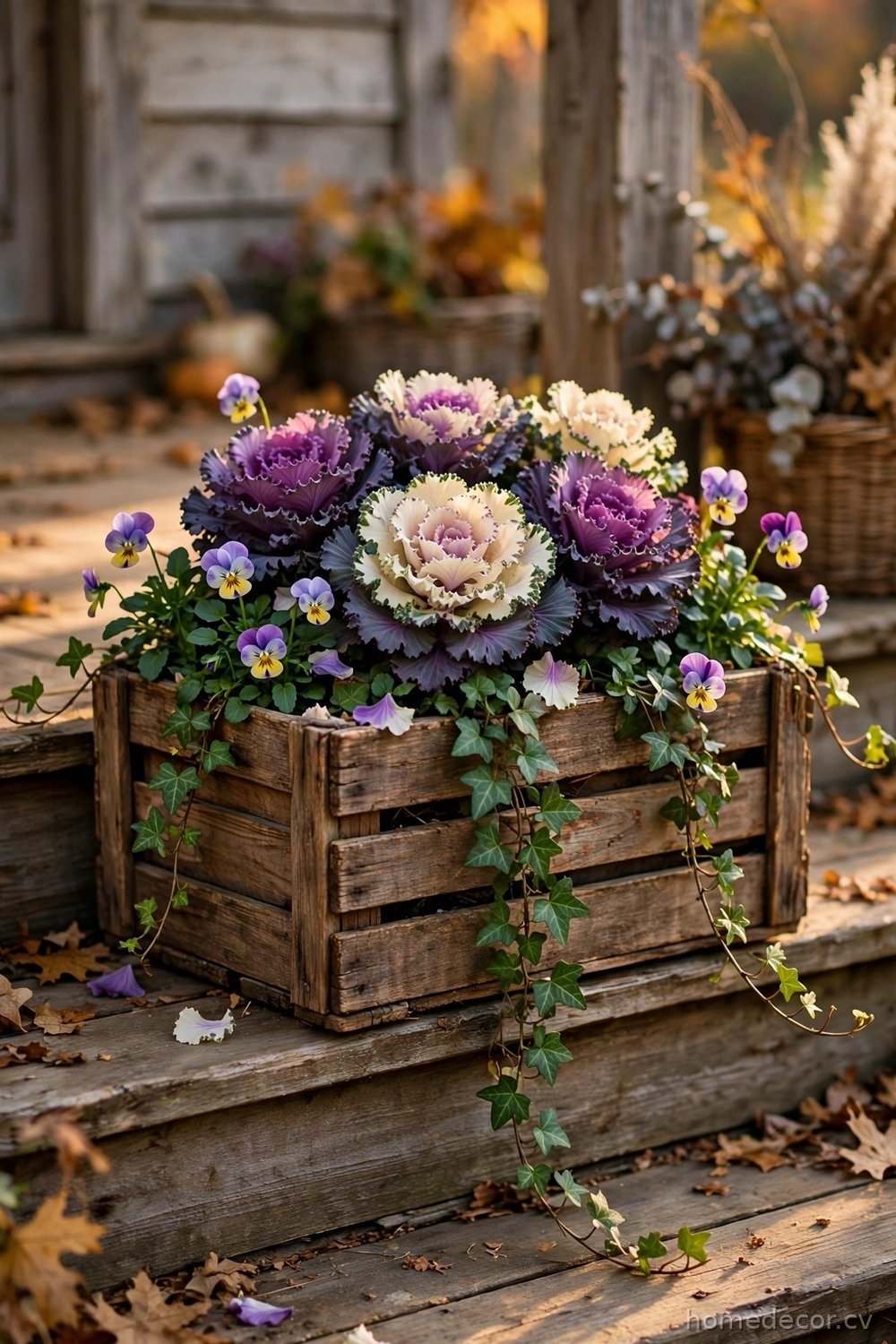
A wooden crate planter brings instant rustic charm and costs very little, especially if you find crates at a thrift store, flea market, or craft shop. Line the inside with landscape fabric or a plastic bag with drainage holes, add potting mix, and plant ornamental kale in the center. Kale is a fall superstar because its purple, pink, and cream rosettes actually get more colorful after a light frost. Surround it with small pansies or trailing ivy to soften the edges and fill every gap with living color. If your crate has wide gaps between the slats, the liner keeps soil from washing out during heavy autumn rain while still looking neat.
Set the crate on your porch steps, beside a rocking chair, or on a patio table as a centerpiece that lasts from September through Thanksgiving. Because crates are lightweight, you can easily move this planter indoors during a hard freeze and bring it back out the next morning. Water when the soil feels dry, and remove any yellowing lower leaves to keep the kale looking tidy. For extra height, stack two crates at different angles and plant the top one only, using the lower crate to hold pumpkins, pinecones, or a small lantern for evening glow. A tiny chalkboard label tucked into the soil adds a sweet market-style detail and makes this crate a favorite for fall porch photos.
Galvanized Metal Bucket Planter with Pansies
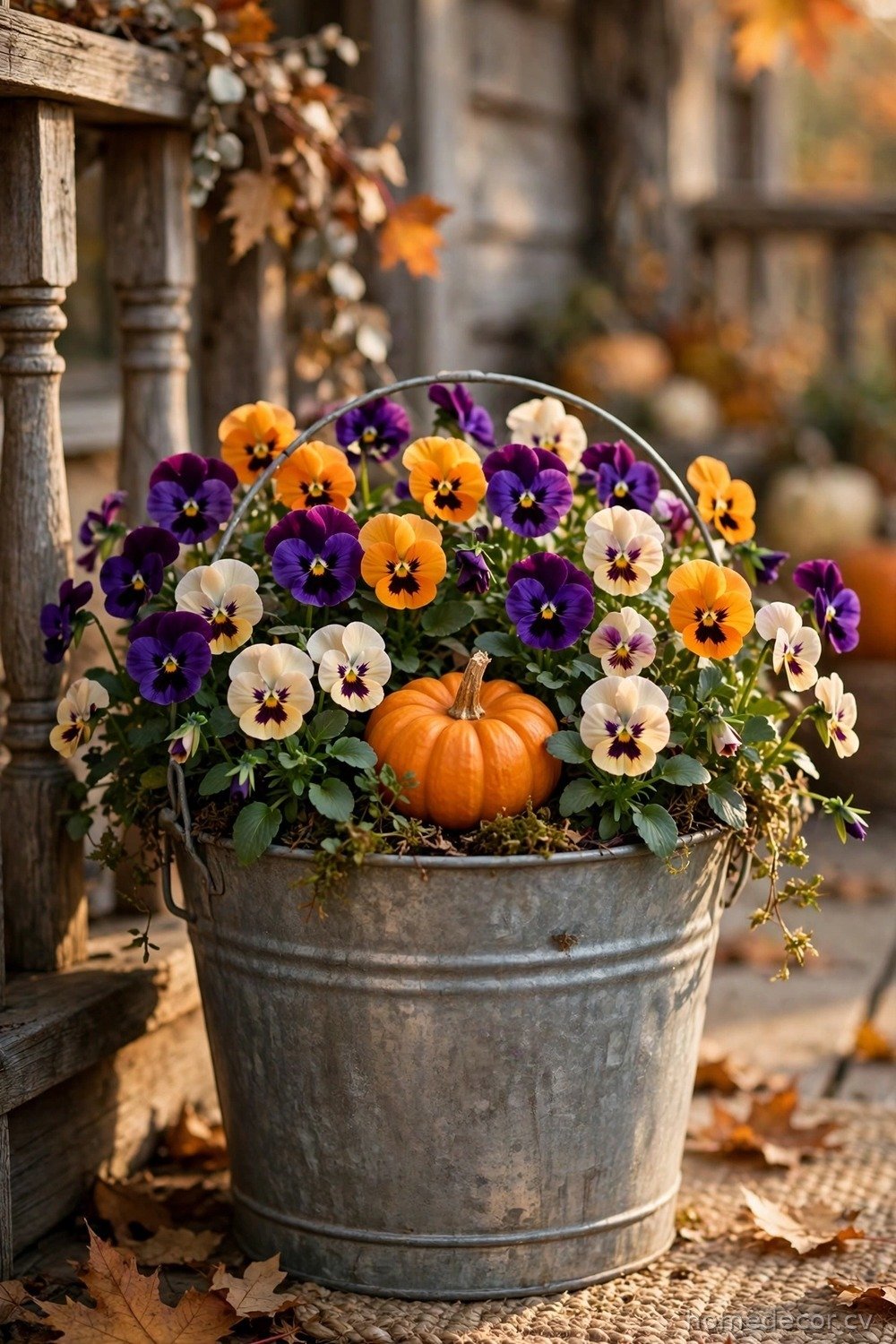
A galvanized metal bucket makes a cheerful, budget-friendly planter that suits farmhouse, cottage, and country porches alike. Drill a few drainage holes in the bottom if it does not have them, add a layer of gravel, then fill with potting soil. Plant it thickly with pansies and violas in plum, orange, cream, and deep purple, which bloom happily in cool fall weather and often return in spring. Tuck a mini pumpkin or a bundle of dried wheat in the center for height and a harvest touch. For a softer look, choose cream and blush pansies instead of orange, which pairs beautifully with white siding and light brick homes.
Buckets look best grouped in odd numbers, so try one large bucket by the door with two smaller ones on the steps below it. Keep the soil evenly moist, because metal containers dry out faster in wind and sun than ceramic pots do. Pansies are edible flowers, but keep this planter purely decorative and away from sprays. When the season ends, the same bucket transitions beautifully into winter greenery, and later into the christmas planter ideas you use for the holidays, making it one of the hardest-working containers you can own. Wipe the outside of the bucket with a damp cloth every week or so, since galvanized metal shows dust and water spots quite quickly.
Layered Terra Cotta Pot Trio
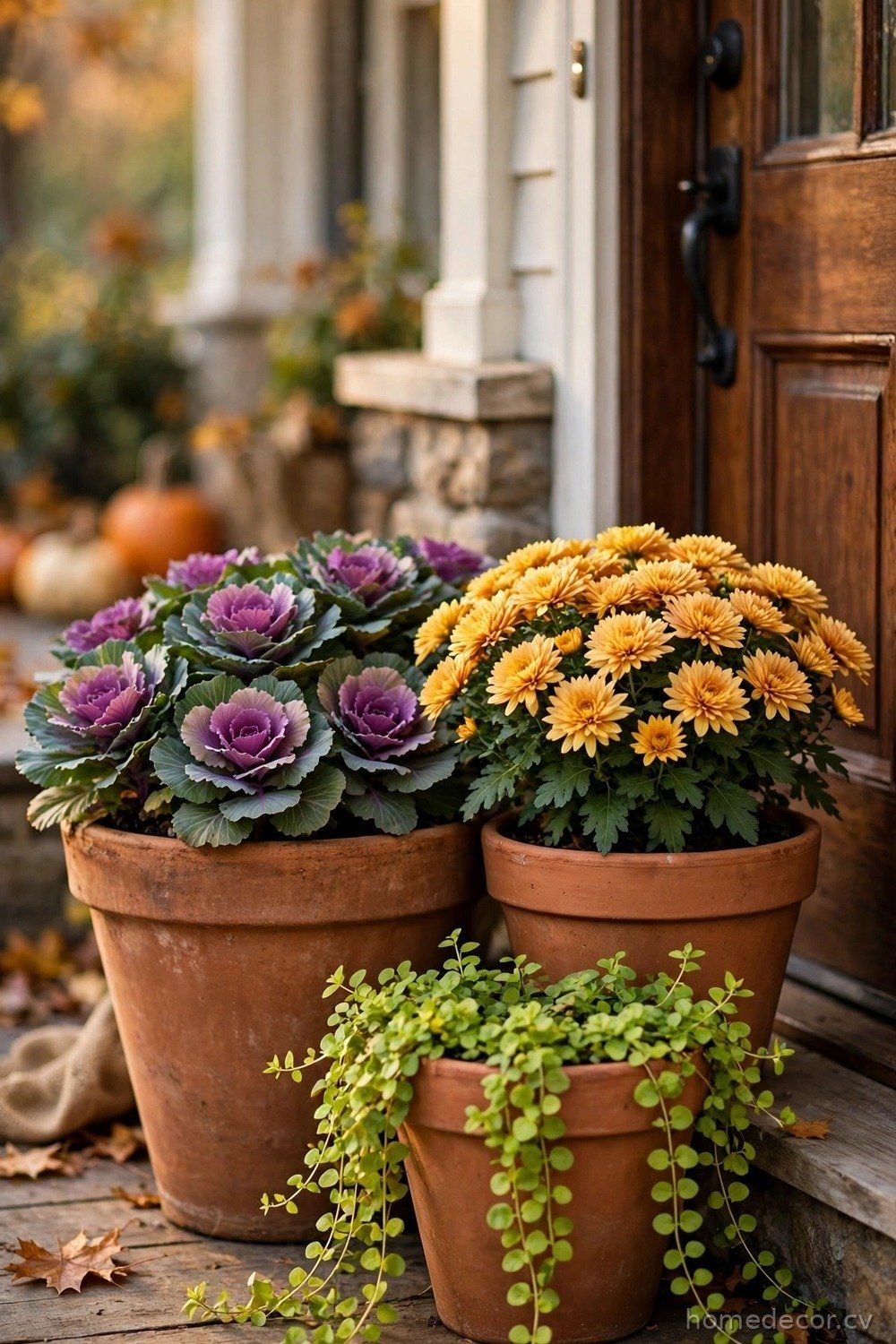
A layered trio of terra cotta pots is a timeless look that works on any porch and gets better as the pots weather. Use three sizes, large, medium, and small, and plant each one with a different texture: a mum in the largest, ornamental cabbage in the medium, and trailing creeping jenny or ivy in the smallest. Terra cotta’s warm orange tone already feels like fall, so even simple green plants look seasonal in it. Cluster the pots tightly together on one side of the door rather than spreading them out, which creates a fuller, more designed effect. If you only own matching pots, vary the heights with a small stool, stacked bricks, or an overturned pot hidden under the smallest one.
Terra cotta is porous, so water a little more often than you would plastic pots, especially on warm afternoons. Before the first hard freeze, remember that wet terra cotta can crack outdoors in very cold climates, so move these pots into a garage or shed for winter storage. In the meantime, elevate the largest pot on small pot feet or bricks to improve drainage and prevent water rings on wood porches. Add a few fallen leaves or pinecones scattered around the base to blend the trio naturally into the autumn landscape. Group a small pumpkin and a lantern next to the trio on busy weekends, then return to the clean three-pot look for everyday calm.
Window Box with Heuchera and Ivy
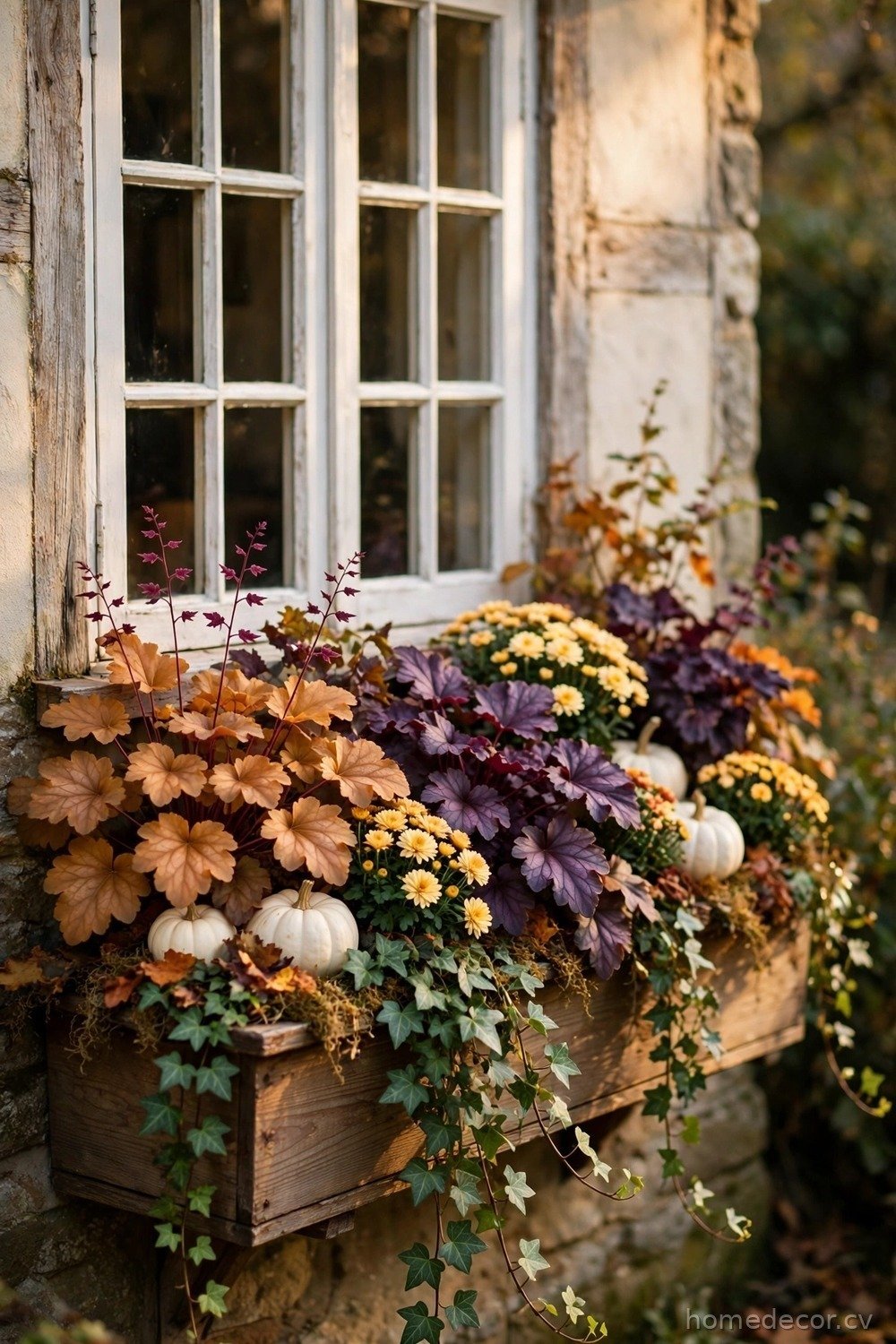
A fall window box lets you enjoy color from both inside and outside the house, and heuchera is the perfect star for it. Heuchera, also called coral bells, comes in caramel, plum, lime, and deep burgundy foliage that looks rich all season without needing flowers. Plant two or three heuchera in a row, fill the gaps with small mums or pansies, and let English ivy or vinca vine trail over the front edge. The layered foliage looks lush through the window while you are having morning coffee inside. Choose a box that matches your trim color if you want a built-in look, or pick black for a crisp contrast against brick.
Window boxes dry out quickly, so check moisture every other day and water slowly until it runs from the drainage holes. Choose a box with a reservoir if you travel often, or add water-retaining crystals to the soil at planting time. Heuchera is perennial in many zones, so you can transplant it into the garden in spring instead of throwing it away. Add three small white pumpkins nestled between the plants for October, then swap them for pinecones in November for an easy refresh that takes less than five minutes. Photograph your window box each week, because watching the ivy lengthen and the kale deepen in color is one of fall gardening’s quiet pleasures.
Tall Urn Planter with Ornamental Grass
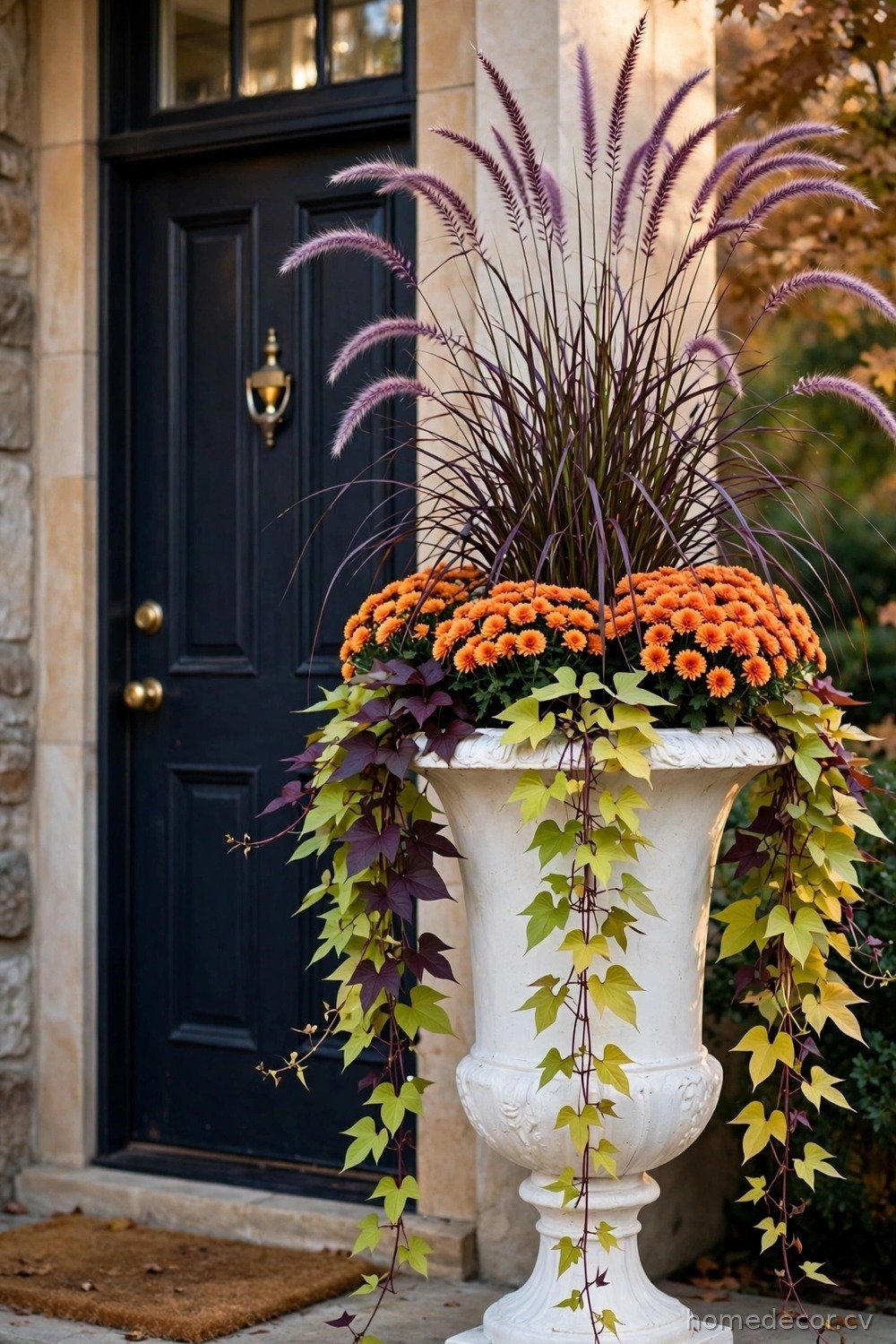
A tall urn planter adds instant elegance and height, making even a small porch feel grand and intentional. Start with the thriller, filler, spiller method: plant a fountain of ornamental grass, such as purple fountain grass or a golden millet, in the center for dramatic height. Ring it with mums or asters as the filler, then add trailing sweet potato vine or ivy around the rim to spill over the sides. The contrast between the airy grass plumes and the dense flowers is what makes this arrangement look professionally designed. If purple fountain grass is not hardy in your zone, treat it as an annual and enjoy its burgundy plumes right up until hard frost.
Place urns in pairs flanking a front door, garage, or patio entrance for the most classic effect, and use lightweight resin urns if you need to move them often, since real cast iron and concrete are very heavy once filled. Ornamental grass needs little water once established, but the mums around it need regular drinks, so water at the base of the flowers. In late fall, leave the dried grass standing for winter texture, or cut it back and fill the urn with evergreen branches and berries until spring planting returns. Fluff the arrangement weekly by turning the urn a quarter turn, which keeps growth even and prevents one side from looking flat or thin.
Hollowed Pumpkin Planter Centerpiece
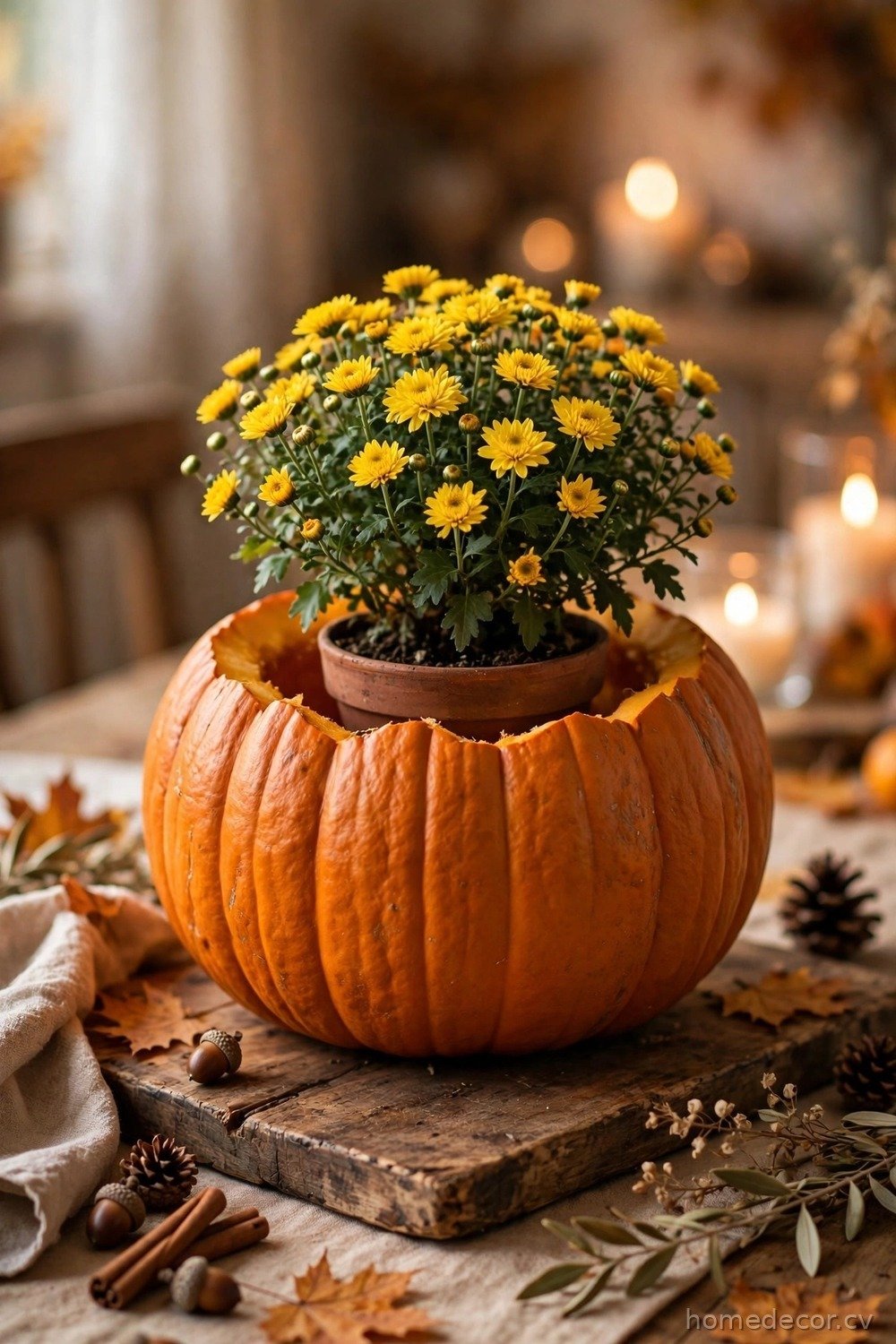
A hollowed pumpkin planter is the most festive centerpiece you can make for a fall table, and it takes less than thirty minutes. Choose a medium, flat-bottomed pumpkin, cut off the top, and scoop out the seeds and pulp just as you would for carving. Set a small nursery pot of mums, pansies, or a succulent arrangement inside so the plant stays in its own container, which keeps the pumpkin from getting soggy too quickly. Place the finished planter on a cake stand, wooden board, or charger for a polished table display. Set the pumpkin on a folded cloth napkin in rust or plaid to catch any moisture and add another layer of fall pattern underneath.
A real pumpkin planter lasts about one to two weeks before softening, so make it a few days before a gathering for the best appearance. Keep it in a cool spot away from direct heat, and remove the inner pot for watering so excess moisture does not collect inside. Save the scooped seeds for roasting, and compost the pumpkin when it fades. For a longer-lasting version, use a faux craft pumpkin from the craft store, which you can reuse every year and store with your other seasonal decorations without any worry. Children love helping scoop the pumpkin, so turn the making into a small family activity and let them choose which plant goes inside.
Barrel Planter with Chrysanthemums and Asters
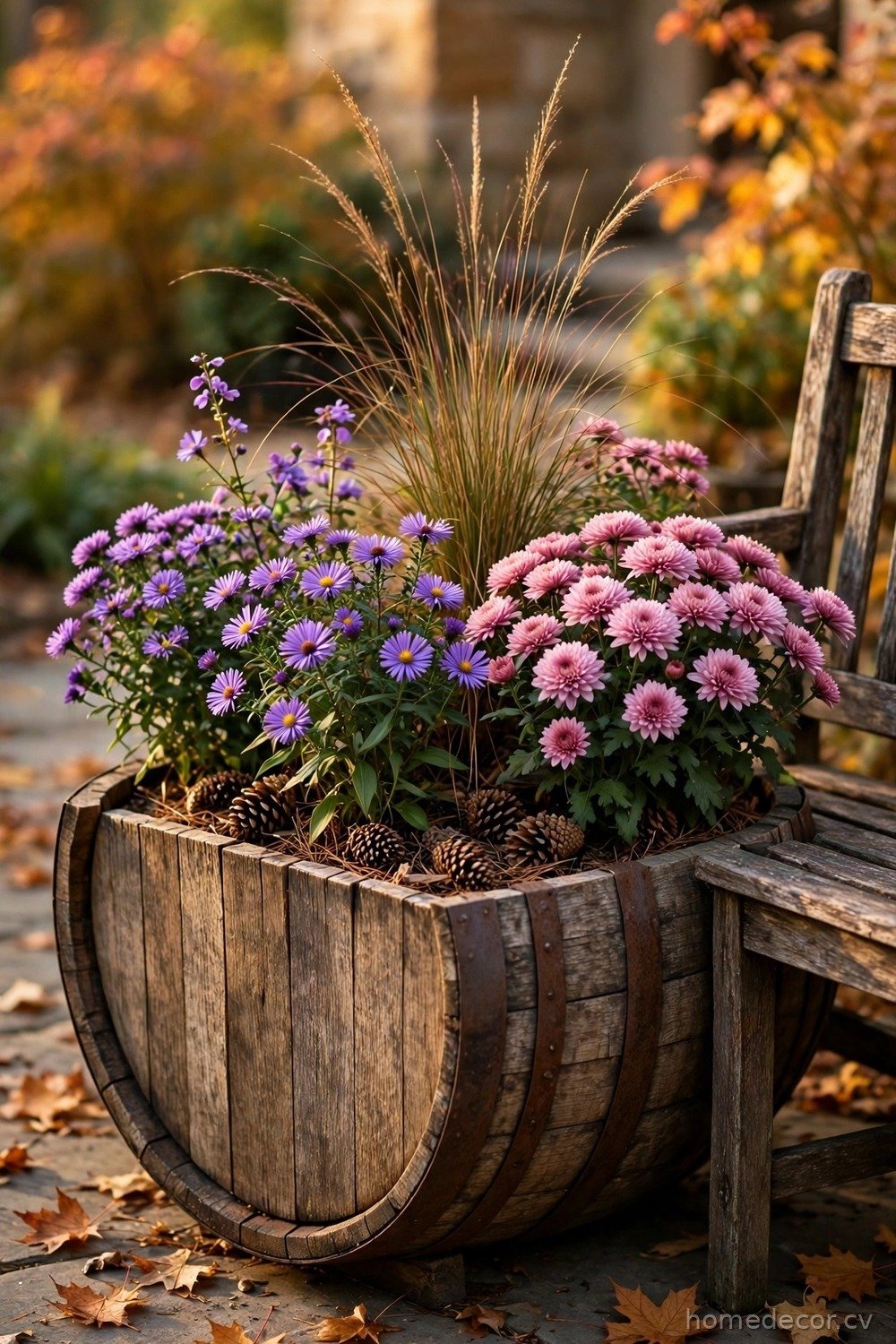
A half whiskey barrel planter gives you a big planting area and a warm, rustic look that suits porches, patios, and garden corners. Fill it with a mix of chrysanthemums and fall asters in purple, pink, and white, which bloom at the same time and attract late-season butterflies and bees. Because the barrel is wide, you can add a small ornamental grass or a short cornstalk bundle in the center for height. Finish the soil surface with a mulch of pinecones, acorns, or bark to keep moisture in and weeds out. Leave a few inches of soil below the rim so water stays inside the barrel instead of running over the sides onto your patio.
Barrels hold a lot of soil, so they stay moist longer than small pots, but check that yours has drainage holes drilled in the bottom before planting. Position the barrel where you want it before filling, because it becomes extremely heavy once the soil is wet. This is a wonderful anchor for a seating area: add a bench, a plaid cushion, and a lantern nearby, and you have a cozy fall corner. In spring, the same barrel can hold herbs or tomatoes, making it a smart, multi-season investment for any home. Asters can grow tall, so pinch them back once in early September if needed to keep the barrel looking full rather than leggy.
Modern Black Planter with White Pumpkins
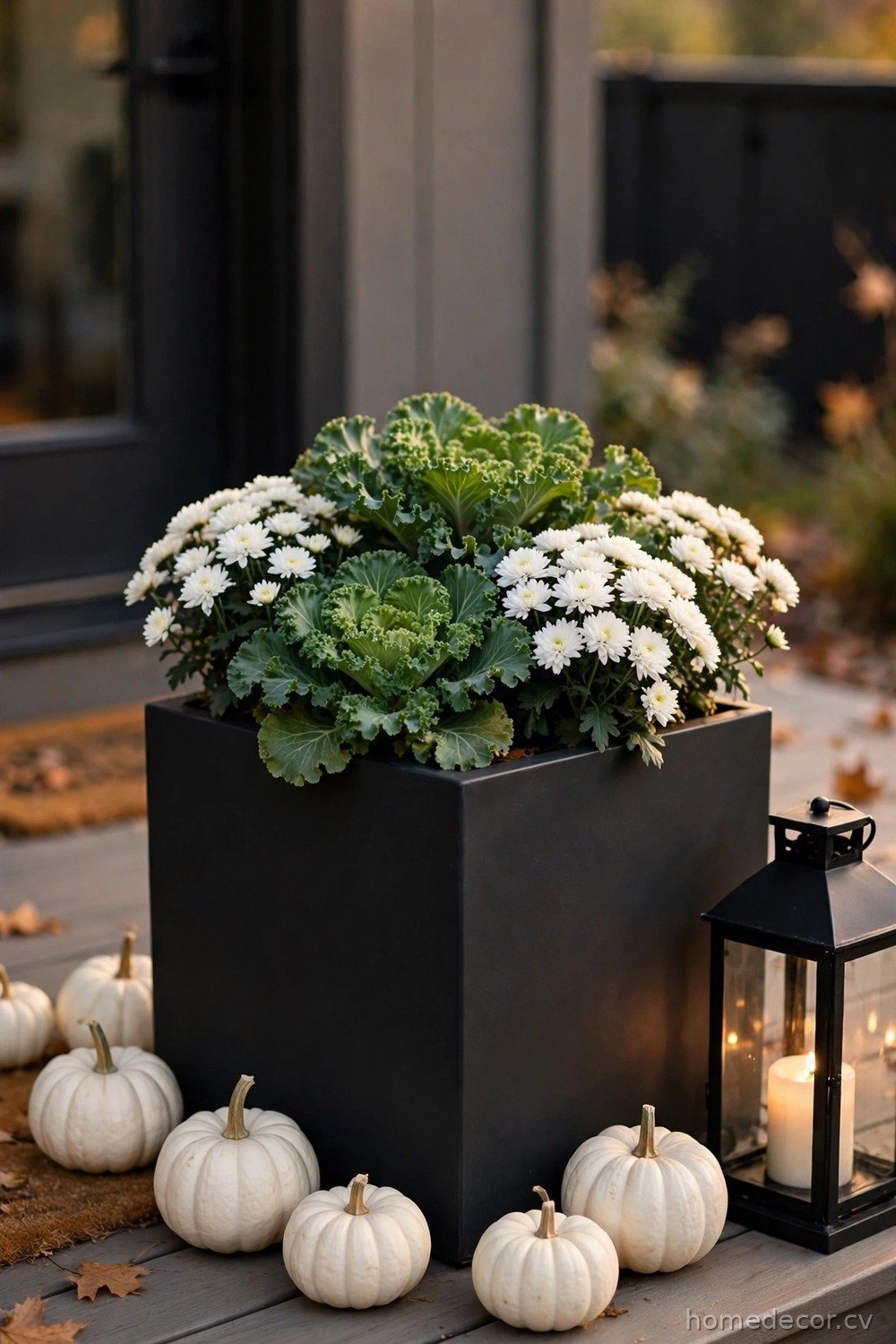
A modern black planter filled with white pumpkins and green plants creates a striking, high-contrast look that feels fresh and current. Use matte black square or round planters, which are easy to find at big-box and home stores, and plant them simply with green ornamental kale, white mums, or a single sculptural snake plant for indoor entryways. Nestle white pumpkins, such as Baby Boo or Casper varieties, around the base and between the leaves. The black, white, and green palette looks sophisticated with concrete, light wood, and modern farmhouse exteriors alike. Repeat the black accent once more nearby, perhaps a doormat or house numbers, so the planter feels like part of a deliberate design.
This restrained style is perfect if bright orange feels like too much for your home, or if your house already has a black door and hardware you want to echo. Keep the arrangement tidy by wiping dust from the pumpkin skins and removing any faded mum blooms promptly. Water the plants, not the pumpkins, and keep pumpkins on a small tray or pot saucer to protect porch floors from moisture marks. Add one black lantern with a warm flameless candle to complete the look for evening arrivals and trick-or-treat night. This monochrome style also photographs extremely well, which is helpful if you enjoy sharing your porch updates with friends and family online.
Hanging Basket with Cascading Sweet Potato Vine
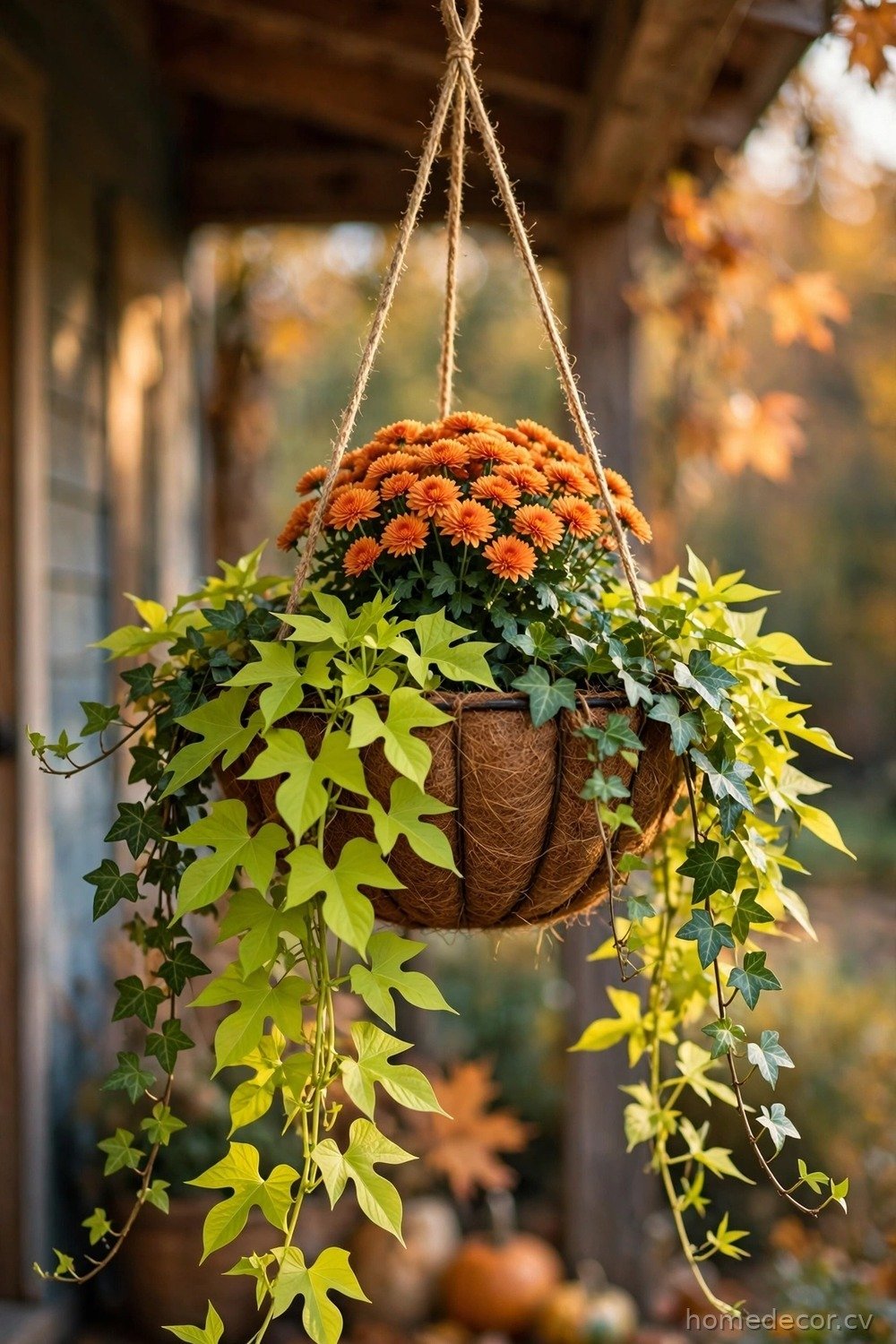
A hanging basket brings fall color up to eye level and is ideal for porches with limited floor space. Start with a moss or coco-fiber basket, fill it with lightweight potting mix, and plant a compact mum or a cluster of pansies in the center. Around the edge, add cascading sweet potato vine in chartreuse or deep purple, calibrachoa in orange or red, and trailing ivy. Within a few weeks the vines soften the whole basket and create a lush waterfall effect that moves gently in the autumn breeze above your door or railing. Coco liners look natural but dry quickly, so consider slipping a plastic liner with drainage holes inside to hold a little more moisture.
Hanging baskets dry out faster than any other container, so water daily in warm weather and every other day once it cools down. Feed every two weeks with a diluted liquid fertilizer to keep the flowers coming, since frequent watering washes nutrients away. Hang baskets from sturdy hooks rated for the wet weight, and take them down during strong wind or storms. If a basket fades before the season ends, refresh it by swapping just the center plant, which is far cheaper than starting over and keeps the beautiful trailing vines you have grown. Two matching baskets hung at the same height look calm and classic, while staggering the heights gives a more relaxed, cottage garden feeling.
Vintage Wheelbarrow Garden Planter
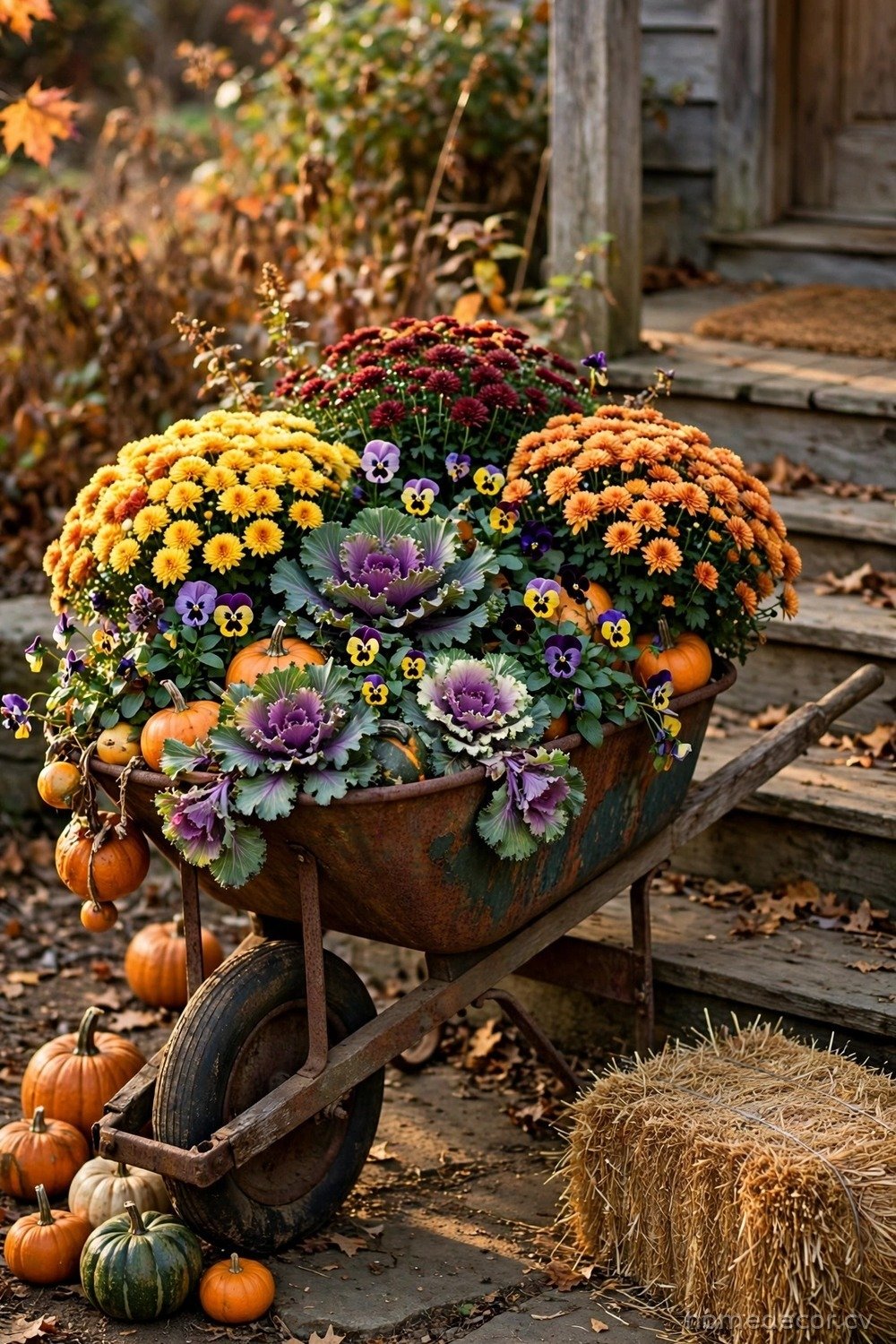
A vintage wheelbarrow planter turns an old garden tool into the most charming focal point in your yard or on a wide porch. Look for a rusty metal or wooden wheelbarrow at yard sales and antique shops, drill a few drainage holes, and fill it with soil. Plant it generously with mums, kale, pansies, and pumpkins tumbling over the sides as if they have just been harvested. The long, low shape holds far more plants than a single pot, so the display looks abundant and generous from the street. If the wheelbarrow still rolls easily, chock the wheel with a brick so the display stays exactly where you styled it all season.
Park the wheelbarrow near your front walk, under a tree, or beside the porch steps where visitors will see it up close. Because it has a wheel, you can roll it into the garage during a freeze warning and roll it back out in the morning, which smaller gardeners will especially appreciate. Line a very rusty barrow with landscape fabric to slow further rust and keep soil in place. Surround the base with hay bales, lanterns, or a wooden sign to build a complete fall scene that neighborhood walkers will stop to admire. Refresh the scene in November by removing pumpkins and adding pinecones, dried corn, and a small sign that celebrates gratitude and harvest time.
Concrete Planter with Sedum and Mini Gourds
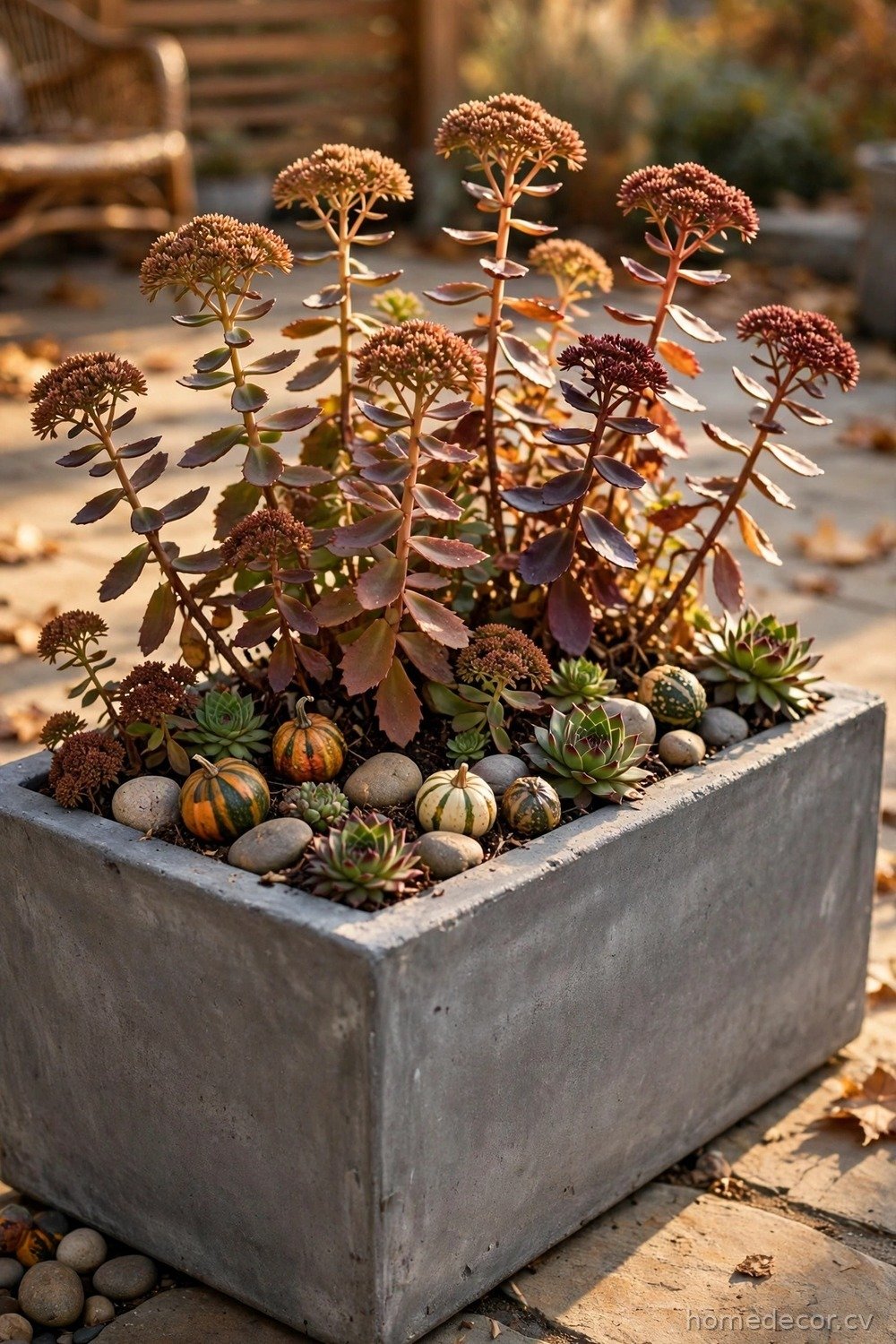
A concrete planter offers a cool, modern texture that contrasts beautifully with warm fall colors and needs very little care. Plant it with hardy sedum, whose fleshy leaves turn bronze and burgundy as nights cool, plus a few small succulents or hens-and-chicks tucked between stones. Sedum is drought-tolerant, so this is the perfect planter for busy people, sunny patios, and second homes that sit empty during the week. Scatter mini gourds and a few smooth river stones across the soil for a harvest finish that requires no watering at all. Top the soil with a thin gravel layer if your patio gets heavy rain, because it prevents soil from splashing onto the clean concrete edges.
Concrete is heavy and durable, so choose your spot carefully and place the planter on a stand or bricks to protect decking from moisture. Make sure it has a drainage hole, and use gritty, fast-draining soil to keep sedum roots healthy through fall rains. In colder zones, hardy sedum can overwinter right in the pot, giving you a head start next spring. Pair one concrete planter with a softer terra cotta or woven basket nearby so the mix of textures keeps your porch feeling balanced, interesting, and thoughtfully layered all season long. Because sedum stores water in its leaves, it forgives a forgotten watering weekend, which makes it ideal for rental porches and busy households.
Tiered Ladder Planter for Small Porches
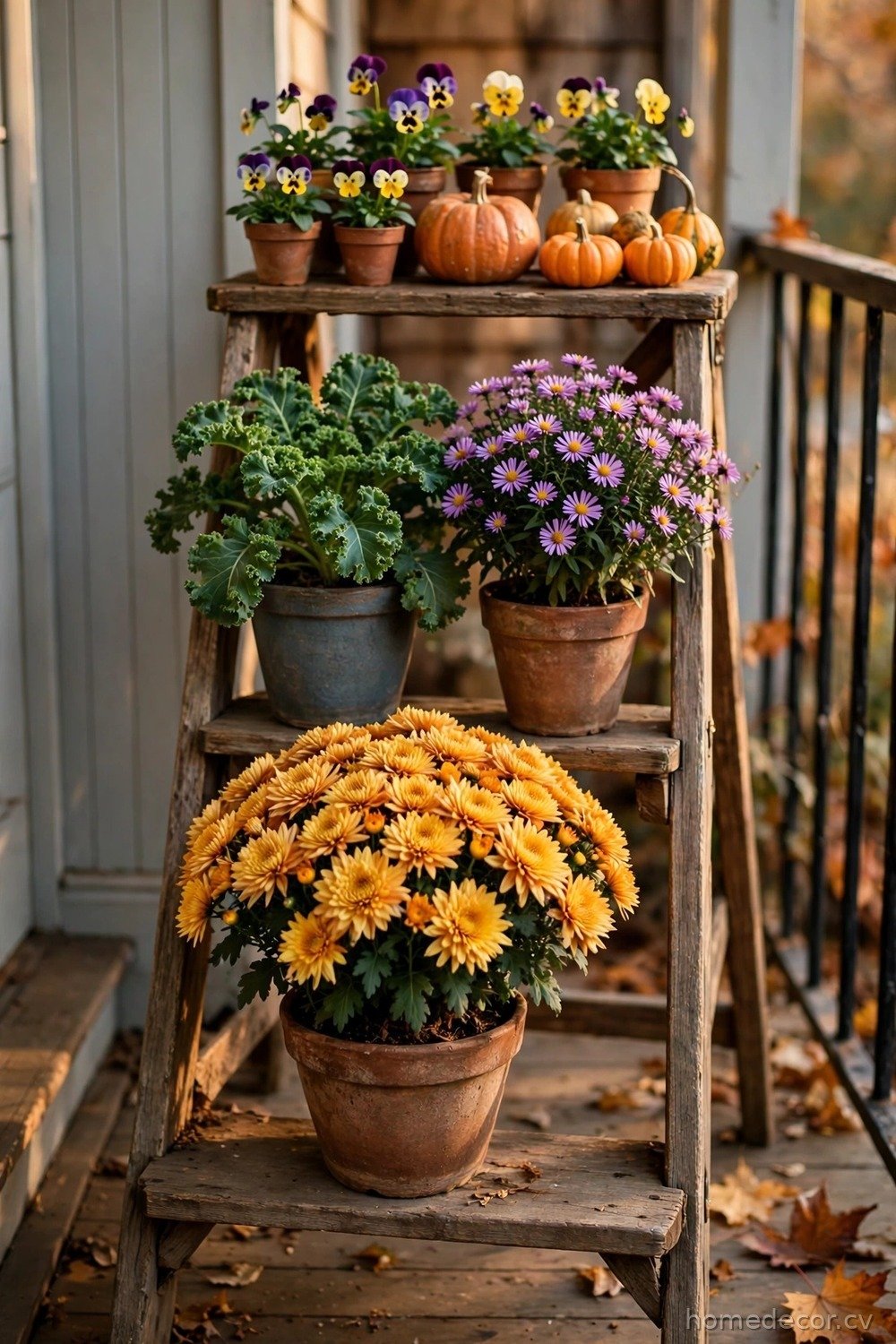
A tiered ladder planter solves the small-porch problem by growing upward instead of outward, giving you room for many plants in just a few square feet. Use a wooden step ladder, a leaning ladder shelf, or a plant stand with three levels. Place your largest pot with a mum on the bottom step, medium pots of kale and asters in the middle, and small pots of pansies, succulents, or mini pumpkins on top. The stepped heights create a full, garden-like display that makes a narrow entry feel abundant without blocking the door or walkway. Keep heavier pots on the lower steps for stability, and reserve the top step for the lightest pots and non-breakable decorations only.
Secure the ladder against a wall or railing so it cannot tip in wind, and put saucers under each pot to catch drips and protect the steps below. Water from the top down, moving slowly so each level gets enough moisture, and check the smallest pots most often since they dry fastest. This setup is also easy to redecorate: swap one pot for a lantern at Halloween, add a small sign for Thanksgiving, or tuck in string lights for evening sparkle. Renters love this idea because it needs no drilling, no digging, and packs away flat. At the end of the season, the ladder moves indoors beautifully as a stand for houseplants, blankets, or holiday stockings in the living room.
Evergreen Transition Planter for Late Fall
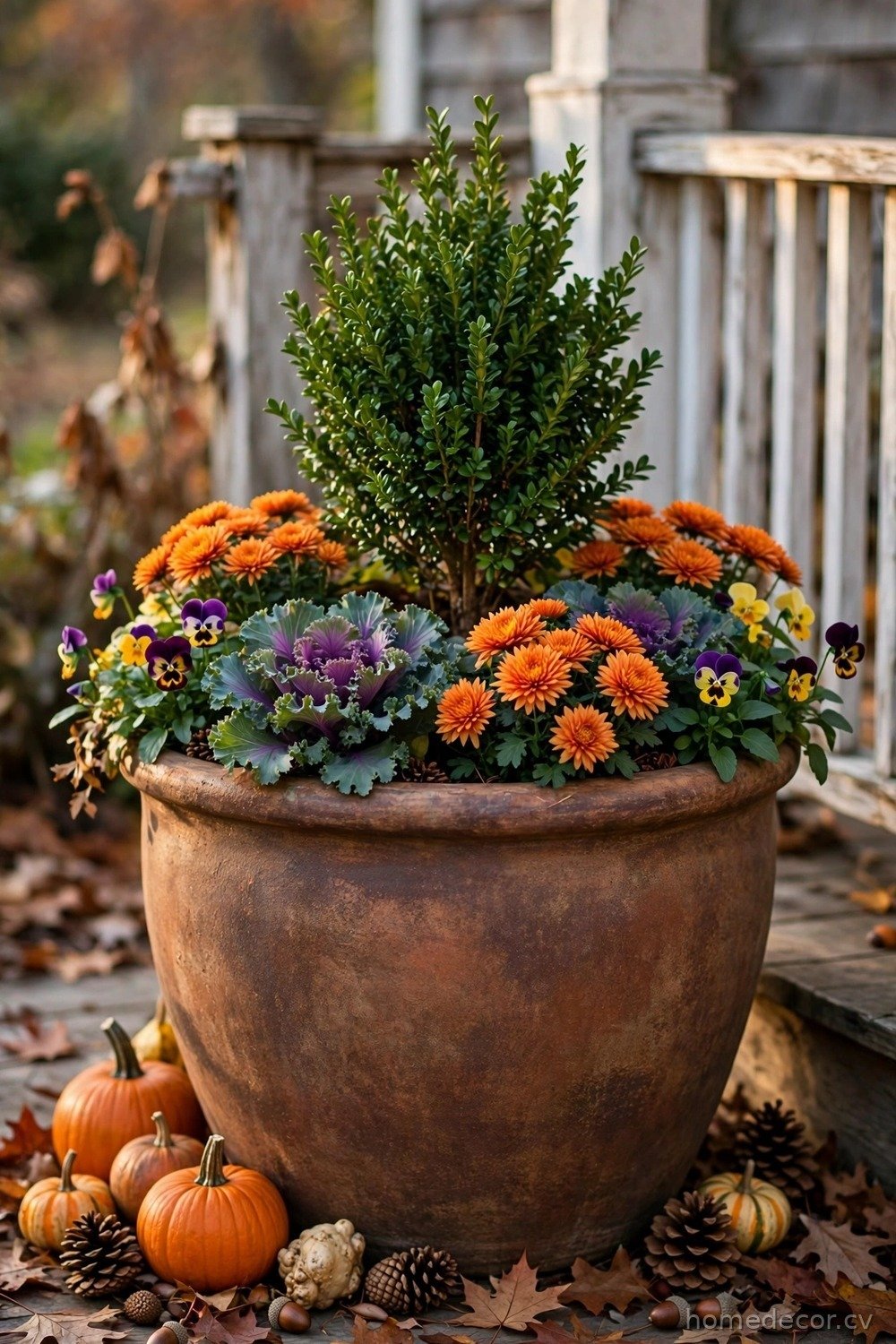
An evergreen transition planter carries your porch gracefully from late fall into winter without starting over in December. In October, plant a small boxwood, dwarf Alberta spruce, or upright juniper in the center of a large pot. Ring it with fall favorites like mums, kale, and pansies, and add pumpkins at the base. As the flowers fade in November, simply pull them out and tuck in pinecones, birch logs, or red berry branches around the evergreen, which stays green and handsome through frost, snow, and the holiday season ahead. Choose a pot large enough for the evergreen’s roots to grow for at least two seasons, so you are not repotting again next year.
This approach saves money because the main plant is permanent and only the seasonal ring changes a few times a year. Water the evergreen deeply before the ground freezes, and in cold climates wrap the pot in burlap or bubble wrap to protect the roots from repeated freezing and thawing. Choose a frost-proof container made of fiberglass, resin, or treated wood for the same reason. By planning one planter that evolves with the calendar, you always have something beautiful at your door, even on the busiest weeks when decorating is the last thing on your list. Keep a small notebook of what you planted in the ring each season, and future decorating becomes faster because your best combinations are recorded.