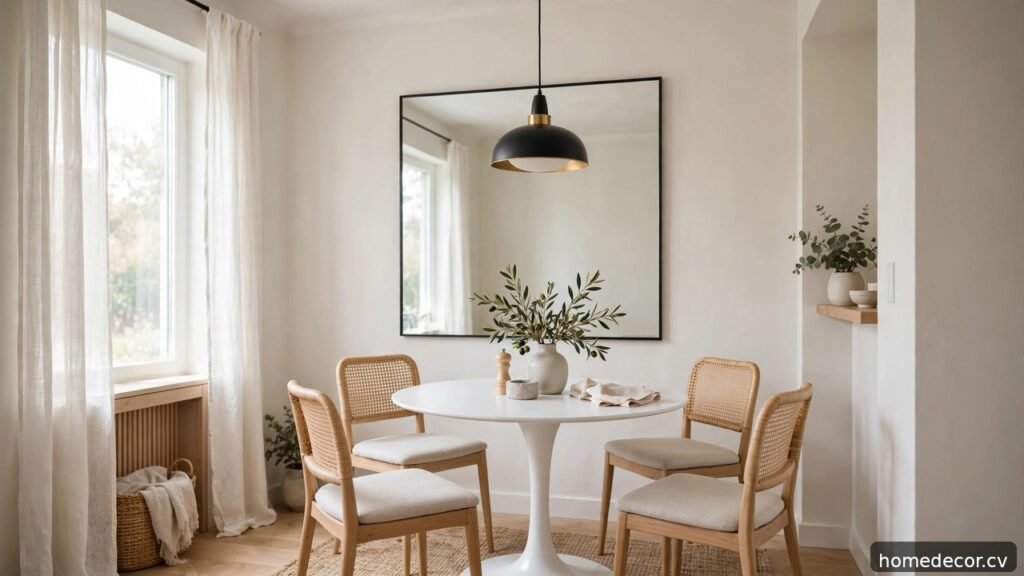
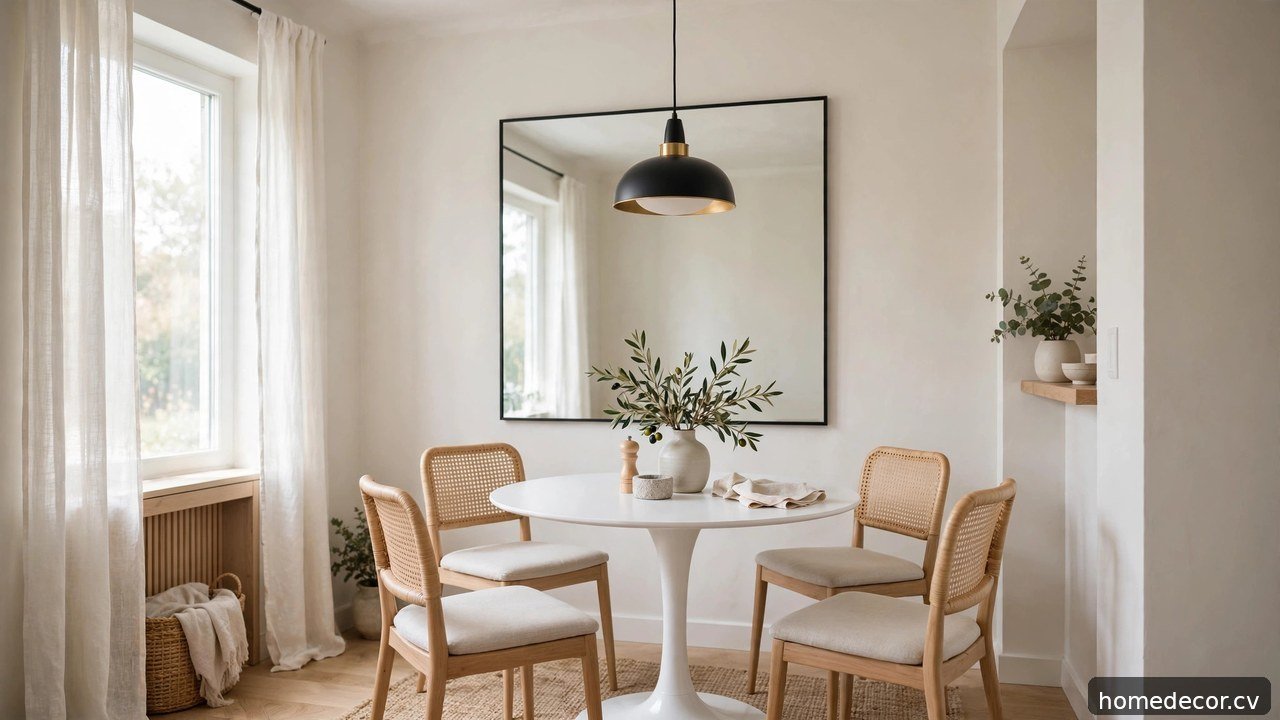
A small dining room does not have to mean cramped elbows and a table shoved against the wall. With the right furniture choices and a few visual tricks, even the tiniest corner can seat family and friends comfortably. These thirteen ideas show you how to fit everyone around the table without sacrificing style or breathing room.
Idea 1: Round Pedestal Table
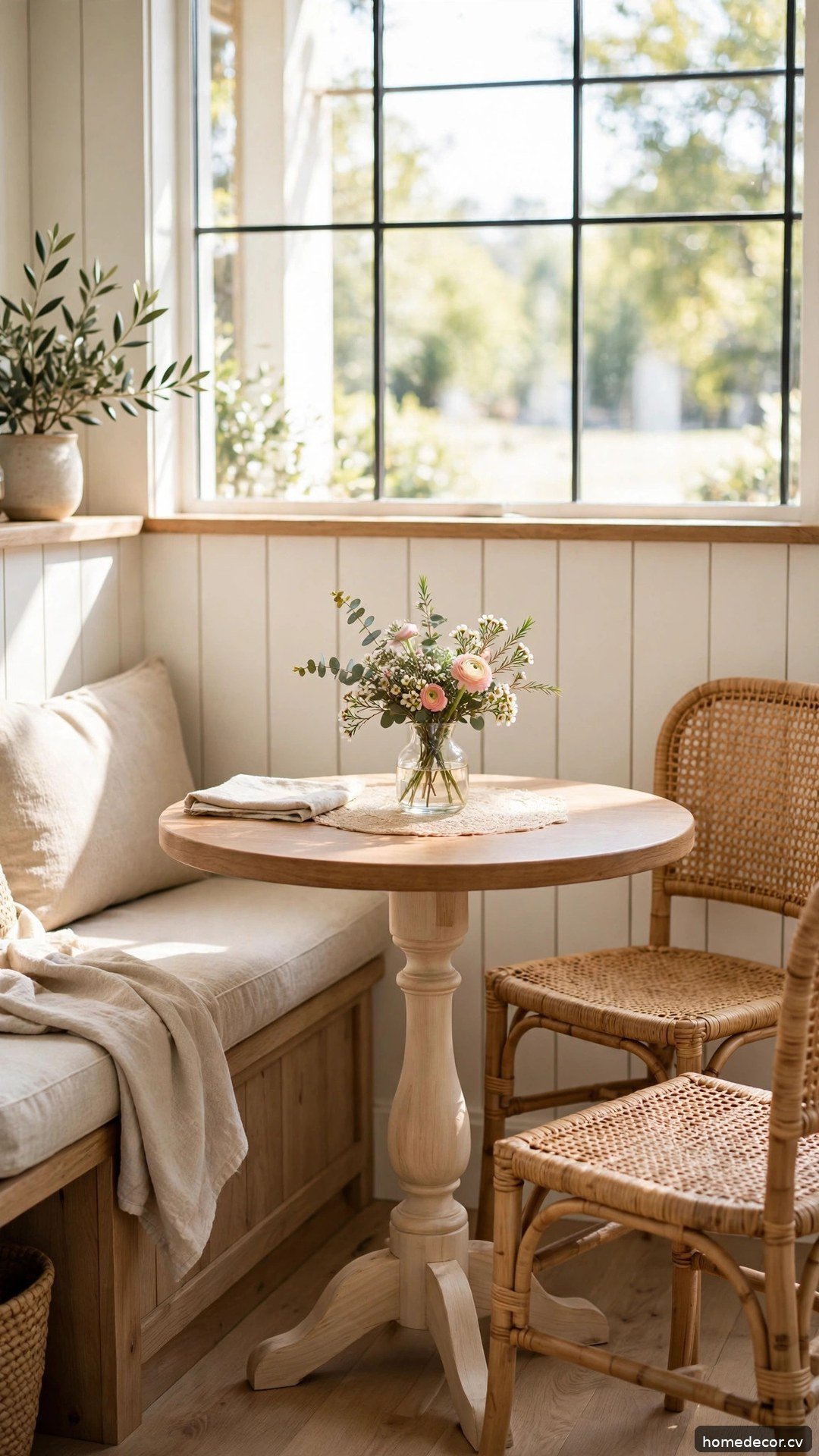
In a tight dining space, a round table beats a rectangular one every time, because there are no corners jutting into walkways and everyone sits equidistant for better conversation. A pedestal base is the real hero here, since a single central column means no legs blocking knees and chairs tuck completely underneath when not in use. For everyday seating of four, choose a forty-two to forty-eight inch round top, and measure your room to leave at least thirty-six inches of clearance on all sides for comfortable chair pull-out. White, light oak, or glass tops keep the visual weight low, which matters enormously when every square inch counts.
I spend far too much time saving home ideas.
If you'd like the best ones, I'll send a short email once or twice a month.
Round tables flex beautifully for guests, since squeezing a fifth chair around a forty-eight inch top is far easier than around a square one. Expect to pay two hundred to six hundred dollars for a solid wood pedestal table, or hunt vintage markets where mid-century round tables appear regularly under one hundred fifty. Style it simply with a low bowl of fruit or a small vase of fresh stems, keeping the center clear so the table feels spacious even when fully set. When the meal ends, push all chairs in and the round silhouette disappears gracefully into the corner. Add a lazy Susan in the center for shared dishes, and passing food becomes effortless even in the tightest squeeze.
Idea 2: Extendable and Drop-Leaf Table
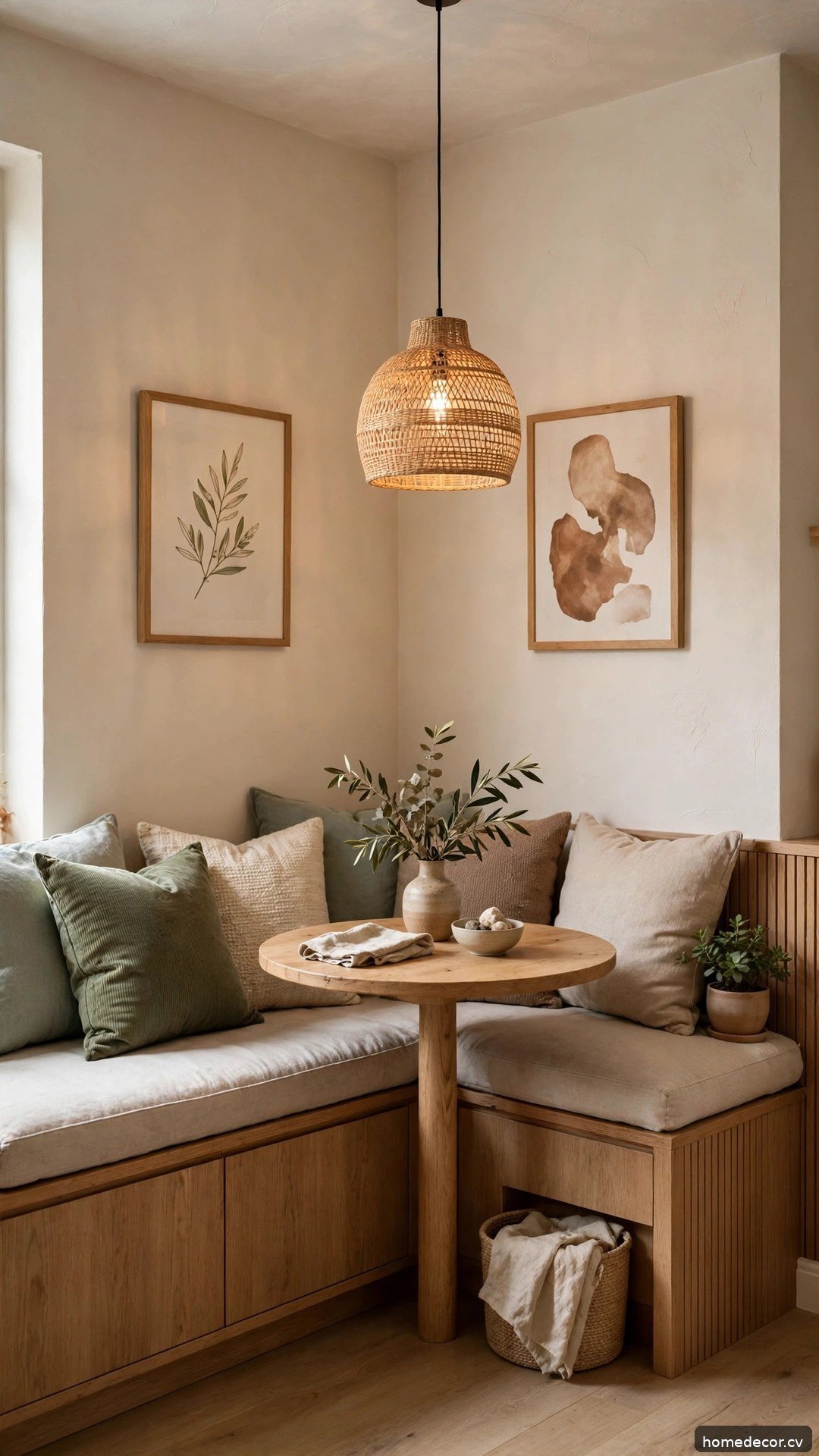
An extendable table is the ultimate small-space compromise, compact for daily life and generous when guests arrive. Butterfly-leaf tables hide the extension panel inside the table itself, unfolding in seconds to stretch a sixty-inch table to seventy-eight inches and seat six comfortably. Drop-leaf designs are even simpler, with hinged sides that fold down for a slim console profile against the wall and flip up for dinner parties. For daily use as a couple, keep the leaves down and enjoy the extra floor space, then expand in under a minute when friends come over. Measure your expanded length against the room before buying, leaving thirty-six inches of clearance around the open table so guests can still move freely.
Test the extension mechanism in the store, because smooth-gliding leaves and sturdy locking supports separate quality tables from wobbly disappointments. Solid wood extendables run three hundred to nine hundred dollars, while well-made veneer versions cost half that and still look beautiful. Treat the seam where leaves meet with coasters and placemats during daily use, since that joint shows wear first. Store table pads for the extension leaf inside the table or a nearby closet so the finish stays pristine. With one piece of furniture doing double duty, your small dining room effectively gains a party mode on demand. Oil the moving parts once a year, and the mechanism will glide smoothly for decades of dinner parties.
Idea 3: Bench Seating on One Side

Swapping chairs for a bench on one side of the table is the oldest small-dining trick, and it works because benches seat more people in less depth. A five-foot bench comfortably fits three adults where two chairs would feel cramped, and it slides completely under the table when not in use, freeing precious floor space. Choose a backless bench in matching wood or an upholstered version in performance fabric that wipes clean after spaghetti night. Pair it with two chairs on the opposite side, and the mixed seating looks intentional and designer rather than like a compromise. Kids especially love bench seating, and the lack of individual chairs means nobody fights over who sits where.
Upgrade to a storage bench with a lift-up seat, and you gain hidden space for table linens, board games, or rarely used serving pieces right where you need them. Add a long custom cushion in wipeable fabric plus two or three throw pillows, and the bench becomes the coziest seat in the house. Storage benches run one hundred to three hundred dollars, while simple backless benches start around sixty. Anchor the arrangement with the bench against a wall when possible, which keeps traffic flowing on the chair side and makes the whole dining zone feel deliberate and calm. Measure your table height against the bench seat, aiming for ten to twelve inches of difference so everyone sits comfortably.
Idea 4: Wall-Mounted Fold-Down Table
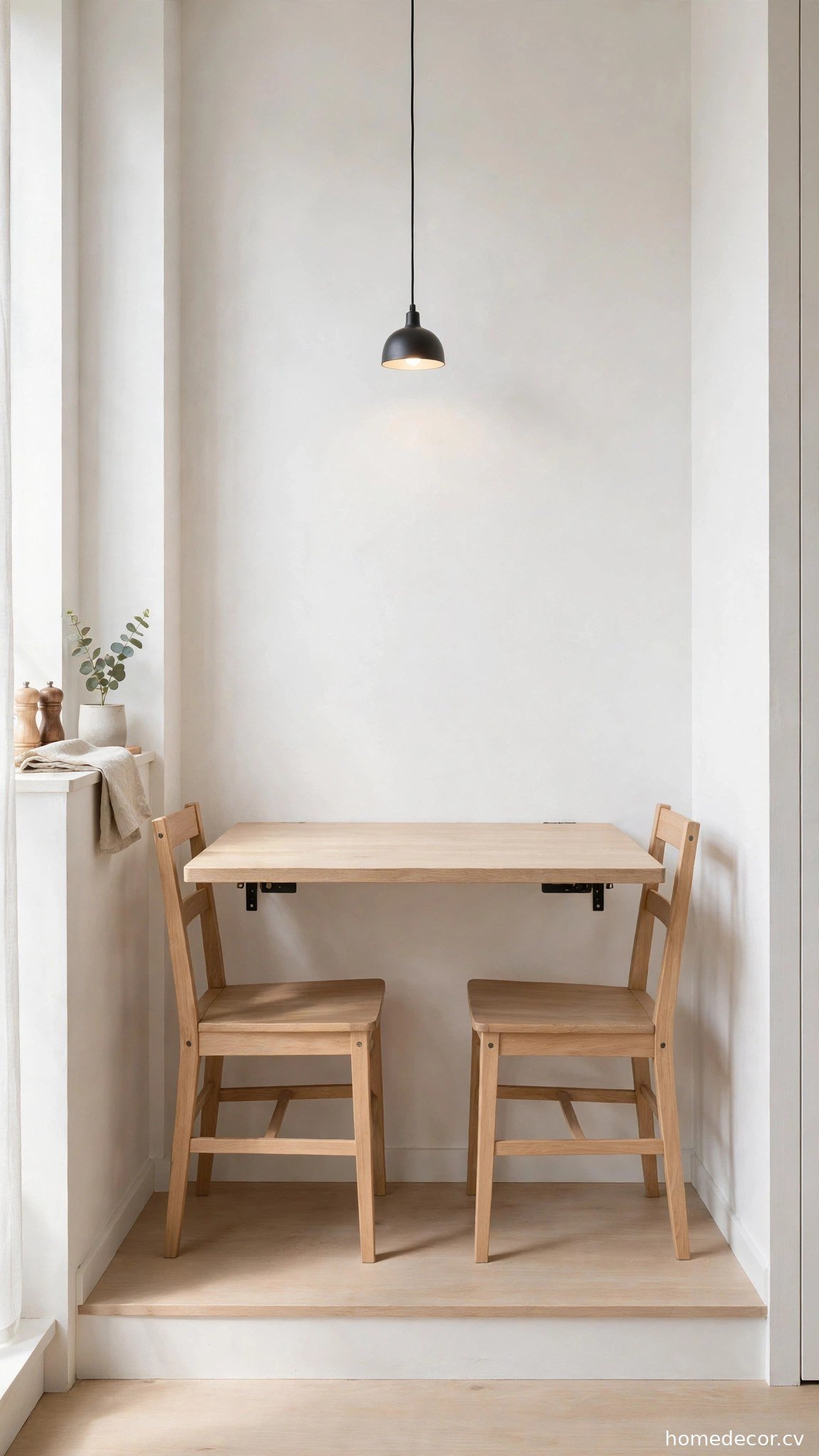
When floor space is truly at a premium, a wall-mounted fold-down table disappears entirely when you are done eating. These tables hinge to a wall bracket, folding flat like a murphy bed to a slim six-inch profile and dropping down in seconds to a full dining surface. Most models span thirty to forty-seven inches wide and seat two to four, making them perfect for studio apartments and narrow eat-in kitchens. Installation needs just a few screws into a wall stud, and the bracket hardware is engineered to hold up to one hundred pounds of dinner, dishes, and elbows. Fold it up after breakfast, and your dining room instantly becomes a home office, play area, or simply open breathing space.
Style the folded table like wall art by choosing a finished underside in a pretty wood tone or chalkboard paint for grocery lists and doodles. These tables cost eighty to three hundred dollars depending on size and material, far less than the rent value of the floor space they save. Pair with folding chairs that hang on wall hooks nearby, and the entire dining set vanishes in under a minute. For renters who cannot drill, heavy-duty freestanding alternatives like gateleg tables offer similar flexibility without touching the walls. Always mount into studs, never drywall anchors alone, because a loaded dining table is no place to gamble on hardware.
Idea 5: Light Color Palette

Color is free square footage, and a light palette is the single easiest way to make a small dining room feel twice its size. Paint walls in warm white, soft greige, or pale sage, which reflect natural light deep into the room instead of absorbing it like dark colors do. Choose furniture in light oak, white, or natural cane, and keep upholstery in creams, oatmeal, and soft grays that blend rather than chop the space into visual blocks. The goal is seamlessness: when walls, trim, and major furniture share a light family, the eye travels uninterrupted and the room reads larger.
Light does not have to mean boring, so layer in contrast through black pendant cords, brass hardware, or a single deep green plant that pops against the pale backdrop. Use eggshell or satin paint sheens, which bounce light better than flat finishes and wipe clean after dinner splatters. A full repaint costs under one hundred dollars in paint and a weekend, making it the highest ROI change on this list. Keep window treatments sheer and light too, because heavy dark curtains instantly shrink the very airiness you just created. If painting is not an option, achieve the same effect with light slipcovers, a pale rug, and white curtains that soften whatever wall color the rental gave you.
Idea 6: Mirror to Expand the Space

A well-placed mirror is the oldest space-expanding trick in interior design, literally doubling what the eye sees in a small dining room. Hang a large mirror opposite or adjacent to a window so it bounces natural light and the outdoor view around the room, instantly making the space feel wider and brighter. Go as big as your wall and budget allow, since a single oversized mirror around thirty-six inches or more reads as a window, while tiny mirrors just look like decor. Lean a floor-length mirror against the wall for a casual modern look that needs only one small anchor for safety.
Choose frames that echo your dining style, thin brass for modern, distressed wood for farmhouse, or frameless for minimalist spaces. A grid of four matching square mirrors creates the same expansive effect with more visual interest, and thrift stores are goldmines for interesting frames you can spray paint to match. Expect to pay forty to one hundred fifty dollars for a quality large mirror, and always hang with proper anchors rated for the weight. Avoid placing mirrors where they reflect clutter or the kitchen mess, since doubling chaos is the opposite of the calm expansion you want. Clean the glass monthly, because a dusty mirror dulls the light-bouncing magic that makes this trick work.
Idea 7: Pendant Light Focal Point

In an open-plan space, a pendant light does the crucial work of declaring this corner the dining room, drawing the eye down and creating an intimate zone. Hang the pendant thirty to thirty-six inches above the tabletop, low enough to feel cozy but high enough to see across to your dinner companions. Scale matters enormously: the fixture should span roughly one half to two thirds of the table width, so a forty-eight inch table wants a twenty-four to thirty-two inch pendant. Choose rattan, woven cane, or linen drum shades that glow warmly and keep sightlines open in tight quarters. A dimmer switch transforms the same pendant from bright homework lighting to romantic dinner glow in seconds.
Swapping a pendant is a beginner-friendly project if a ceiling box already exists: turn off the breaker, connect matching wires, and mount the new fixture in under thirty minutes. Renters can use plug-in pendant kits with long cords and ceiling hooks, swagging the cord to the nearest outlet for zero wiring. Budget fifty to two hundred dollars for a statement pendant, plus fifteen for a dimmer switch that multiplies its usefulness. Keep the bulb warm white around 2700 Kelvin, and your small dining corner will feel like the most inviting restaurant table in town. When in doubt, choose a fixture slightly larger than you think, since undersized pendants are the most common small-dining mistake.
Idea 8: Banquette Corner Nook

A banquette turns the most awkward dead corner of your home into the most coveted seat in the house, wrapping seating around two walls where chairs could never fit. An L-shaped bench in a ninety-inch corner comfortably seats four to five people, far more than the same footprint could manage with individual chairs. Build a simple platform bench from plywood and two-by-fours for under one hundred fifty dollars, or buy a freestanding corner bench unit that needs no construction at all. Top it with a four-inch foam cushion in wipeable fabric, and suddenly the forgotten corner becomes the breakfast nook everyone fights over.
Pair the banquette with a round or square pedestal table that slides easily in and out, leaving enough gap for people to scoot along the bench. Pile on throw pillows in mixed patterns but a tight color palette, which makes the nook feel like a boutique cafe booth. Add a small pendant or wall sconce above for evening coziness, and a narrow windowsill shelf for coffee cups. The whole project costs two hundred to five hundred dollars and effectively adds a dining room where none existed, which is remarkable value per square foot. Build in storage under the bench seat with hinged lids, and the nook hides table linens, placemats, and seasonal decor too.
Idea 9: Stackable and Folding Chairs
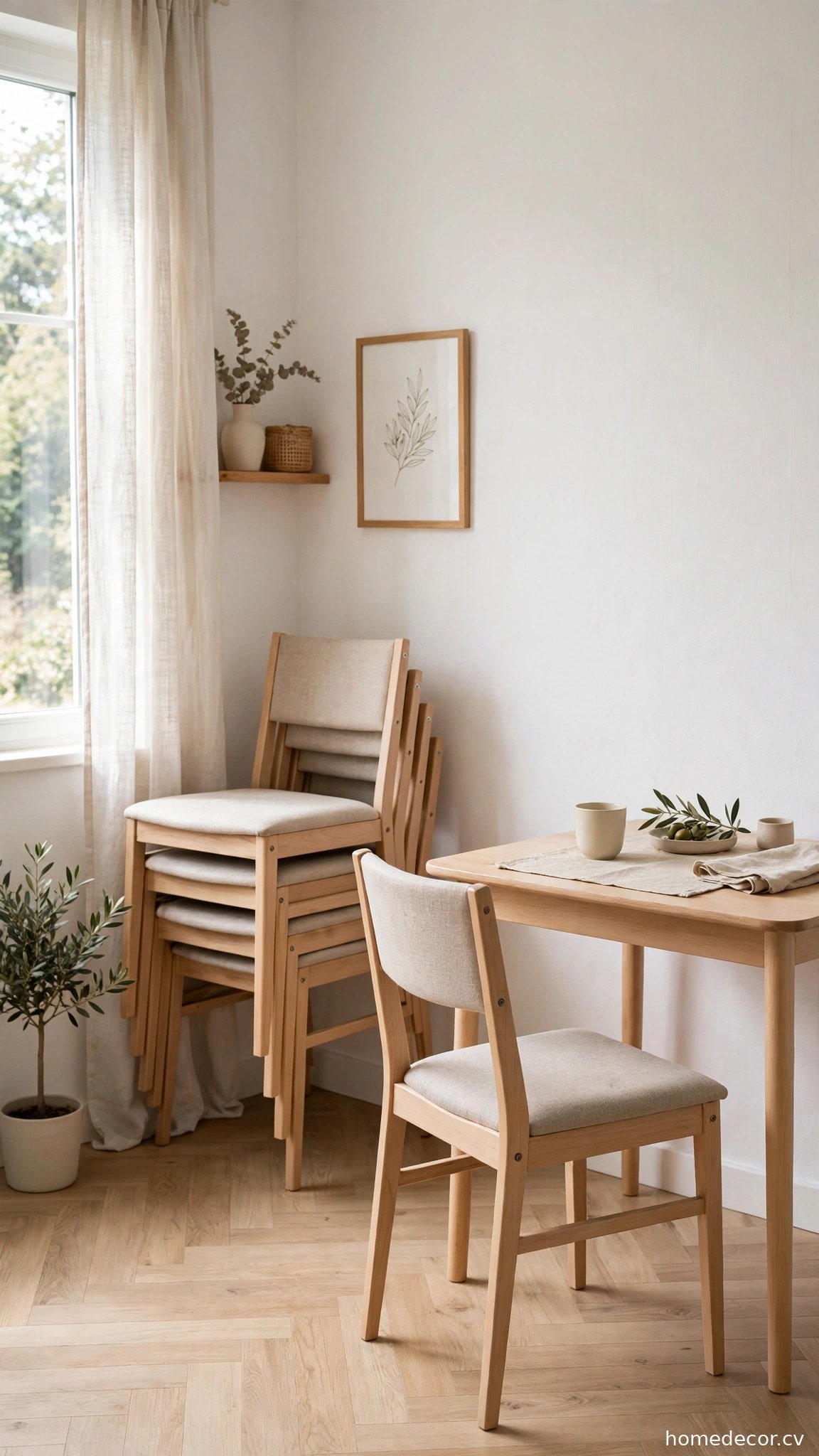
Every small dining room needs a plan for extra guests that does not involve permanent chairs crowding the space year-round. Modern stackable chairs in molded plastic, bent plywood, or upholstered designs look genuinely stylish while nesting four-high in a closet corner. Folding chairs have evolved far beyond the metal banquet versions, with beautiful wooden and cane options that hang flat on wall hooks or slide behind a bookshelf. Keep two to four extras stashed away, and your four-person dining room becomes a six-person one in the two minutes it takes to unfold them. Test the comfort before buying, since guests remember an achy chair far longer than they remember the beautiful table.
Decent stackable dining chairs run forty to one hundred twenty dollars each, while attractive folding options start around thirty-five. Store them in a hall closet, under a bed in flat garment bags, or on decorative wall hooks where they double as art. Match the extra chairs loosely to your main set through color or material rather than demanding identical twins, which looks collected and intentional. This strategy costs less than one permanent armchair and guarantees you never turn anyone away from the table for lack of a seat. Label each stored chair’s spot with a small hook or tag, so setup for parties stays quick and frustration-free.
Idea 10: Rug to Define the Zone

In open-plan homes where the dining table floats between living room and kitchen, a rug is what tells the eye where dining begins. Size it generously: the rug should extend at least twenty-four inches beyond the table on all sides so chairs stay on the rug even when pulled out. For a forty-eight inch round table, that means a rug around eight feet across, which feels large but is exactly right. Choose low-pile, flatweave, or indoor-outdoor rugs that chairs glide over easily and crumbs shake out of, because dining rugs work hard. A rug also softens the acoustics, absorbing the clatter of dishes and chatter that makes small hard-floored dining corners feel chaotic.
Pick patterns that forgive crumbs, like subtle geometrics, vintage-inspired prints, or textured jutes that hide a multitude of sins between vacuuming. Light rugs expand the zone visually, while a saturated color can anchor the dining area as a deliberate design moment. Budget eighty to three hundred dollars for a quality dining-size rug, and always add a thin rug pad to prevent slipping and extend the rug’s life. Shake it outside monthly and spot-clean spills immediately, and your dining zone will look intentional and inviting for years. Rotate the rug twice a year to even out wear from chair legs, and it will age gracefully instead of showing traffic lanes.
Idea 11: Rolling Bar Cart as a Movable Sideboard

A rolling bar cart is the small dining room’s secret weapon, because it adds serving space and storage without demanding a permanent footprint. Park it against the wall during everyday meals, then wheel it beside the table when guests arrive so drinks, extra plates, and serving dishes stay within reach. The top shelf holds bottles and glasses, the middle shelf carries plates or a small speaker, and the bottom shelf hides extras like napkins and candles. Choose brass, black metal, or warm wood finishes that echo your table, and keep the cart styled but not overloaded so it still rolls smoothly.
When the meal ends, the cart earns its keep again as a coffee or dessert station, holding cups, a cake stand, and a small vase of flowers. Lock the wheels during dinner so nothing drifts, and unlock them when you need the floor space back for chairs. A good cart costs sixty to one hundred eighty dollars, far less than a built-in sideboard, and it moves to the living room for parties or to a new home without any installation. In a tiny dining room, furniture that moves is furniture that multiplies your space. That flexibility is exactly what small rooms reward most.
Idea 12: Slim Sideboard for Extra Storage and Serving

A slim sideboard is the piece most small dining rooms are missing, because it swallows clutter that otherwise lands on the table. At only fourteen to eighteen inches deep, it hugs the wall and still holds table linens, serving bowls, board games, and the candles you only use for dinner parties. Use the top as a serving ledge for dishes, a lamp, and a small tray for keys or mail, keeping the dining table clear for eating. Pick a sideboard with sliding doors or drawers so it never needs swing clearance, which matters enormously when chairs already fill the room completely.
Inside, use small trays and dividers to stop drawers from becoming junk drawers, and label one shelf for each category so serving stays quick. A sideboard between two hundred and five hundred dollars in light oak, white, or rattan keeps the room feeling open, while dark finishes can anchor a bright space beautifully. Style the top with restraint: a lamp, one bowl, and one plant are enough, leaving room to set down hot dishes. When guests leave, everything returns to the sideboard in minutes, and the dining room resets to calm. That quick reset is the real luxury in a small home.
Idea 13: Vertical Shelves and Art to Draw the Eye Up

When floor space is gone, the only direction left is up, which makes vertical shelves and art the smartest move in a tiny dining room. A tall, narrow shelf or a stack of floating shelves above the sideboard draws the eye upward and makes ceilings feel higher, while holding plants, cookbooks, and beautiful serving pieces that would otherwise crowd the table. Keep the heaviest items at waist height and lighter decor up high, so the display feels balanced and safe. Leave breathing room between objects instead of filling every inch, because negative space is what keeps a tall display elegant rather than cluttered.
Pair shelves with one large piece of art rather than many small frames, since a single bold print anchors the wall and reduces visual noise. Hang art at eye level from the dining chair, not from standing height, so it feels right when you sit down to eat. A trailing plant on the top shelf softens the whole corner and adds life without taking a single inch of table space. For under one hundred fifty dollars in shelves, brackets, and one print, you gain storage, personality, and the illusion of height, which is a remarkable return in a room this small.
Hungry for more small-space ideas? Browse our [small bathroom decor ideas](https://homedecor.cv/small-bathroom-decor-ideas/) and [entryway table decor ideas](https://homedecor.cv/entryway-table-decor-ideas/) to make every inch of your home work harder.