A bookshelf is never just storage — it’s the most personal piece of furniture in your home. If you’ve been looking for bookshelf ideas that turn a cluttered shelf into something you’d proudly photograph, you’re in exactly the right place.
These 14 ideas work whether you’re a serious reader with hundreds of books or someone who just loves the look of a styled shelf. The rules are simpler than you think: vary the arrangement, leave breathing room, mix books with objects, and let your personality show. A well-styled bookshelf makes a whole room feel smarter, warmer, and more interesting. Let’s turn your shelves into the best-looking spot in the house.
Love styling surfaces? These 15 Pillow Ideas for Grey Couch That Add Instant Warmth perfect your sofa, and our 17 Gallery Wall Ideas for Beginners (With Layout Templates) help you style the wall above.
Bookshelf Styling Rules That Always Work
1. Mix vertical rows with horizontal stacks
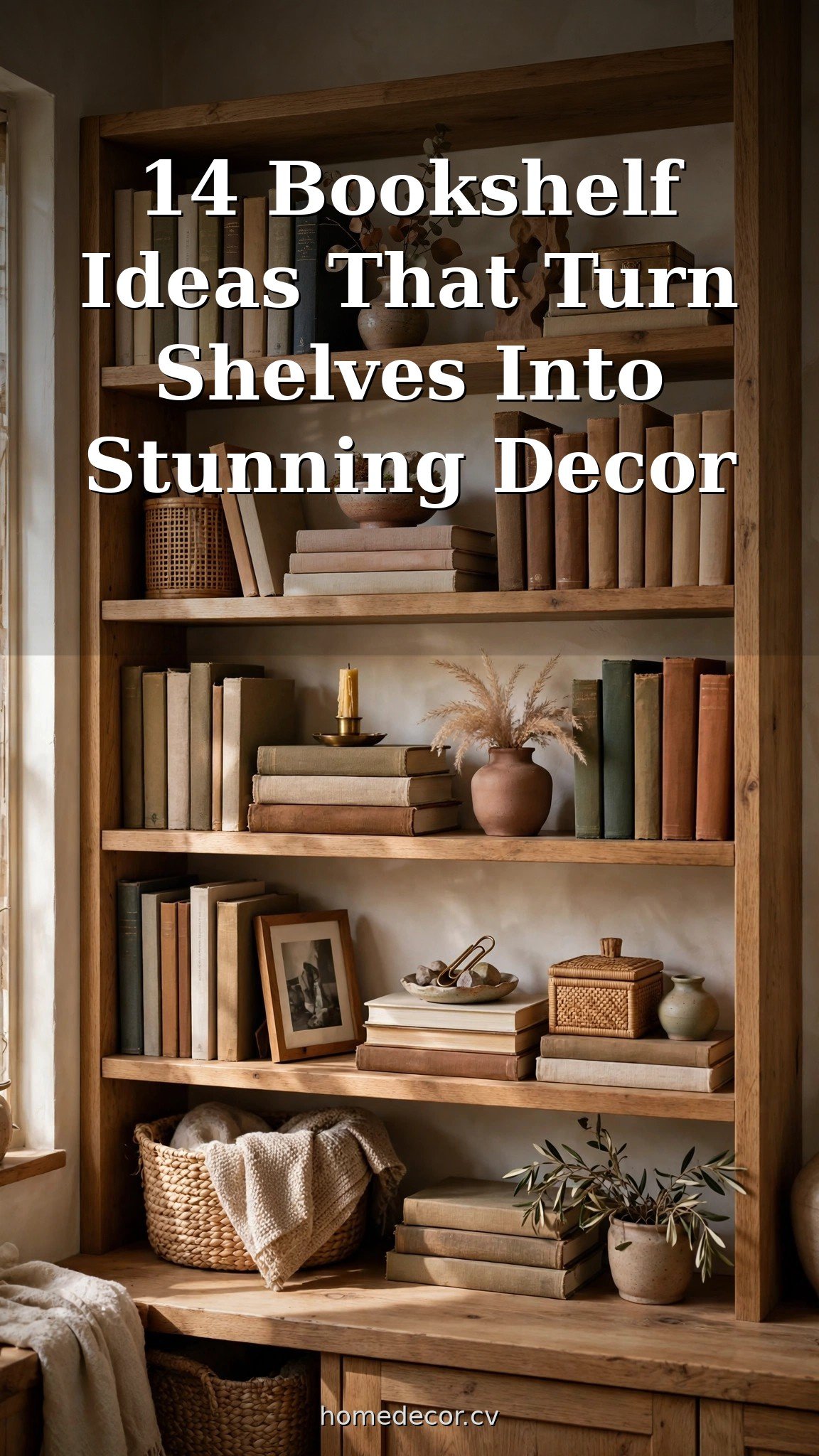
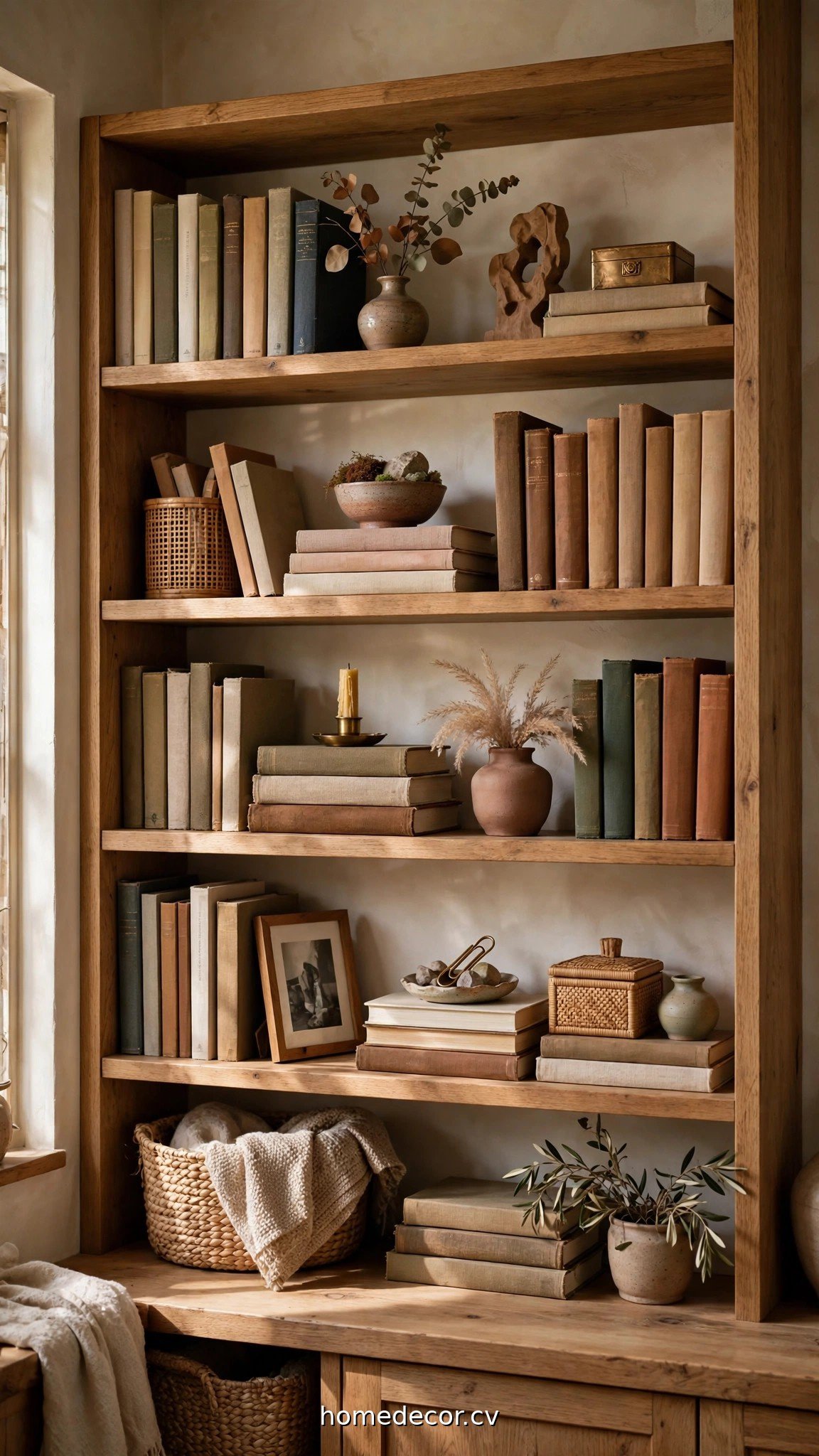
The number-one bookshelf styling rule: don’t line up every book vertically. Break rows with horizontal stacks of three to five books, topped with a small object like a candle or plant. The rhythm of vertical-horizontal-vertical is what makes professional shelves look effortless.
Practical tip: Aim for roughly 70 percent books and 30 percent objects and empty space. A shelf crammed edge-to-edge with spines looks like storage; one with breathing room looks like decor.
2. Group books by color for a rainbow or tonal effect
Arrange books in color gradients — all the blues together, fading into greens, then neutrals — for a striking visual effect. Or go tonal: group all cream, beige, and white spines for a calm, sophisticated look that flatters minimalist rooms.
Practical tip: Color-grouping works best on shelves you don’t access daily — it’s beautiful but impractical if you’re constantly hunting for a specific title. Keep your current reads on one easy-access shelf arranged normally.
3. Leave intentional empty space
Resist the urge to fill every inch. Leave one shelf partially empty, or leave gaps at the ends of rows. Empty space gives the eye somewhere to rest and makes the books you do display look more important.
Practical tip: If a shelf looks sparse rather than styled, place one horizontal stack with a small plant in the gap — it reads as intentional design rather than “I ran out of books.”
4. Vary the heights across shelves
Don’t make every shelf identical. Put tall art books on one shelf, short paperbacks on another, and objects of different heights throughout. Varied heights create the visual rhythm that flat, uniform shelves lack.
Practical tip: Stand back and squint at your bookshelf — the blur test reveals whether the heights flow or clump. If one area looks heavy, move a tall object to the opposite side for balance.
Decorative Objects for Bookshelves
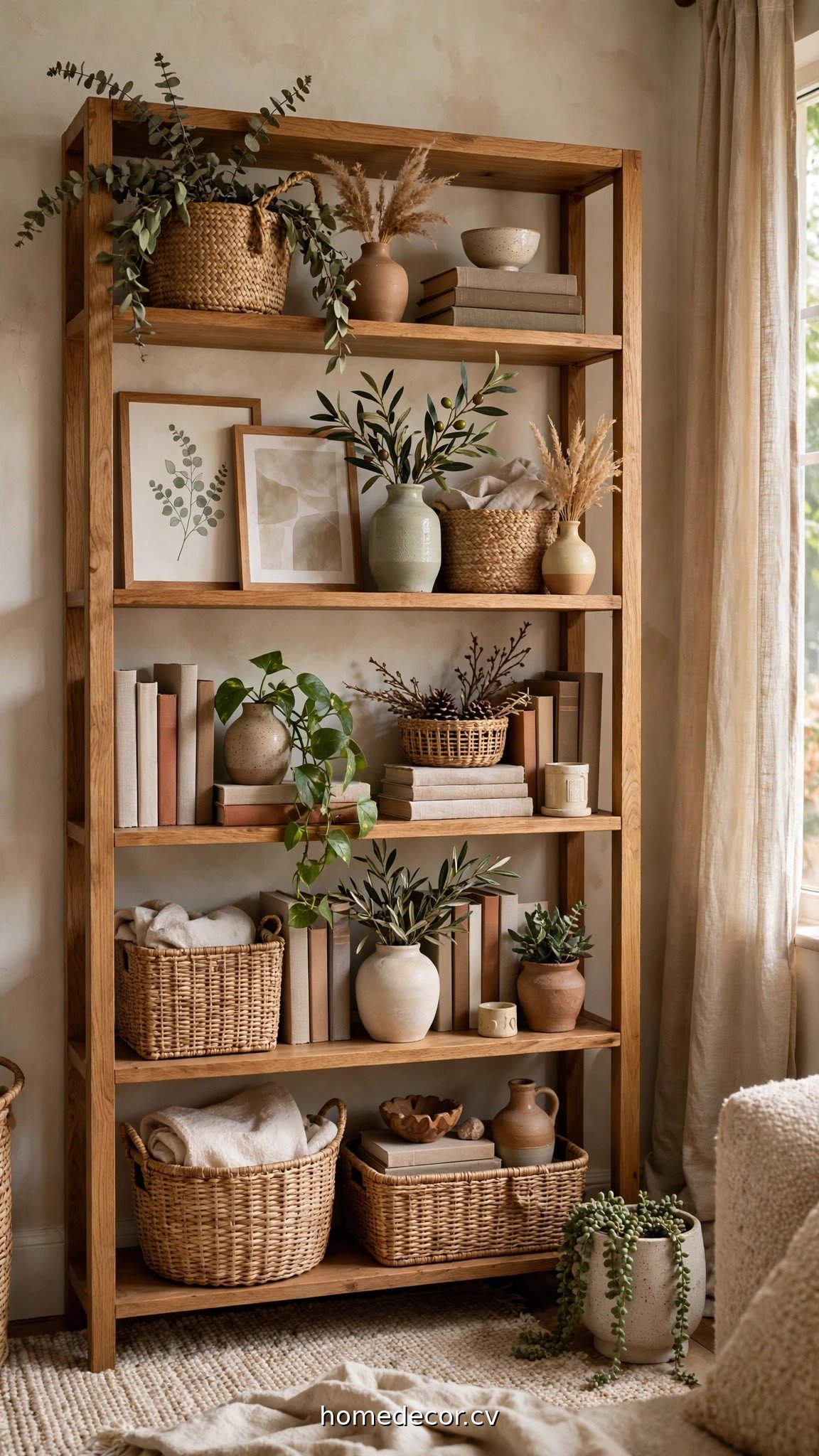
5. Add plants for life and softness
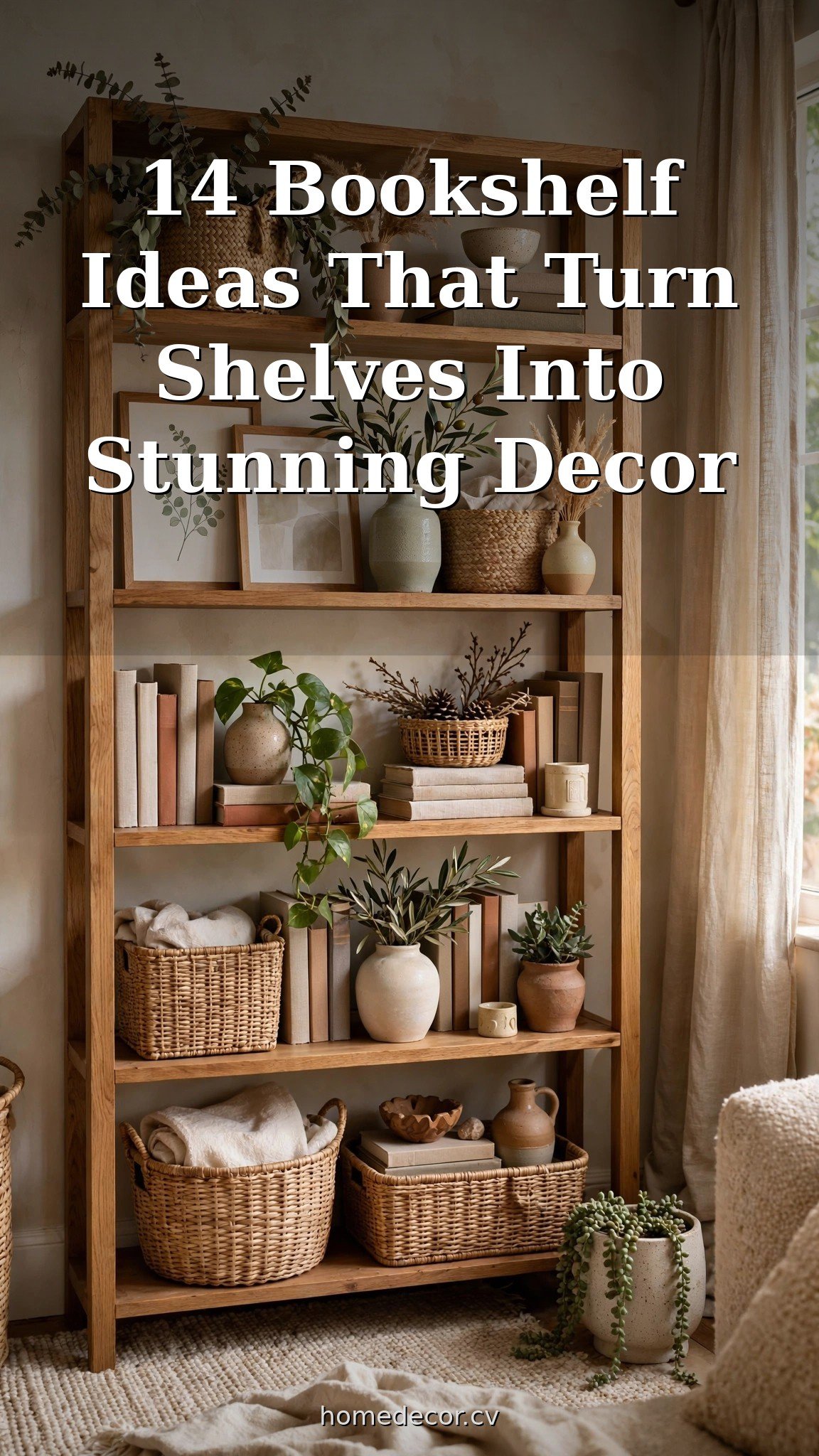
Trailing pothos, small succulents, or a tiny fern tucked between books brings life to shelves. Plants soften all the hard rectangular lines of books and add a color — green — that goes with everything.
Practical tip: Choose low-light plants for interior shelves and water with a small squeeze bottle to avoid spills on books. Faux plants are completely fine on high shelves you’d never reach to water.
6. Lean framed art on the shelves
A small framed print or photograph leaning against the back of a shelf, in front of a row of books, adds depth and personality. Layering art over books is a designer trick that makes shelves look collected rather than arranged.
Practical tip: Keep leaned art small — five by seven to eight by ten inches — so it doesn’t overwhelm the books. Match the frame finish to other metals in the room for cohesion.
7. Use baskets and boxes on lower shelves
Woven baskets, lidded boxes, or fabric bins on the bottom shelves hide the less pretty stuff — chargers, remotes, kids’ books — while adding texture. They also give the bookshelf a finished “base” that grounds the whole piece.
Practical tip: Measure your shelf openings before buying baskets — a half-inch too tall is useless. Label-free looks cleaner, but a small tag helps family members put things back in the right spot.
8. Display one statement object per shelf
Give each shelf a hero: a sculptural vase, an interesting clock, a vintage camera, a globe. One statement piece per shelf (not three) keeps the look curated. Your bookshelf should hint at your interests, not display your entire collection at once.
Practical tip: Rotate statement objects seasonally — it’s a free refresh that makes the whole room feel new. Store the off-duty pieces in the baskets on the bottom shelf.
Bookshelf Lighting and Structure Ideas
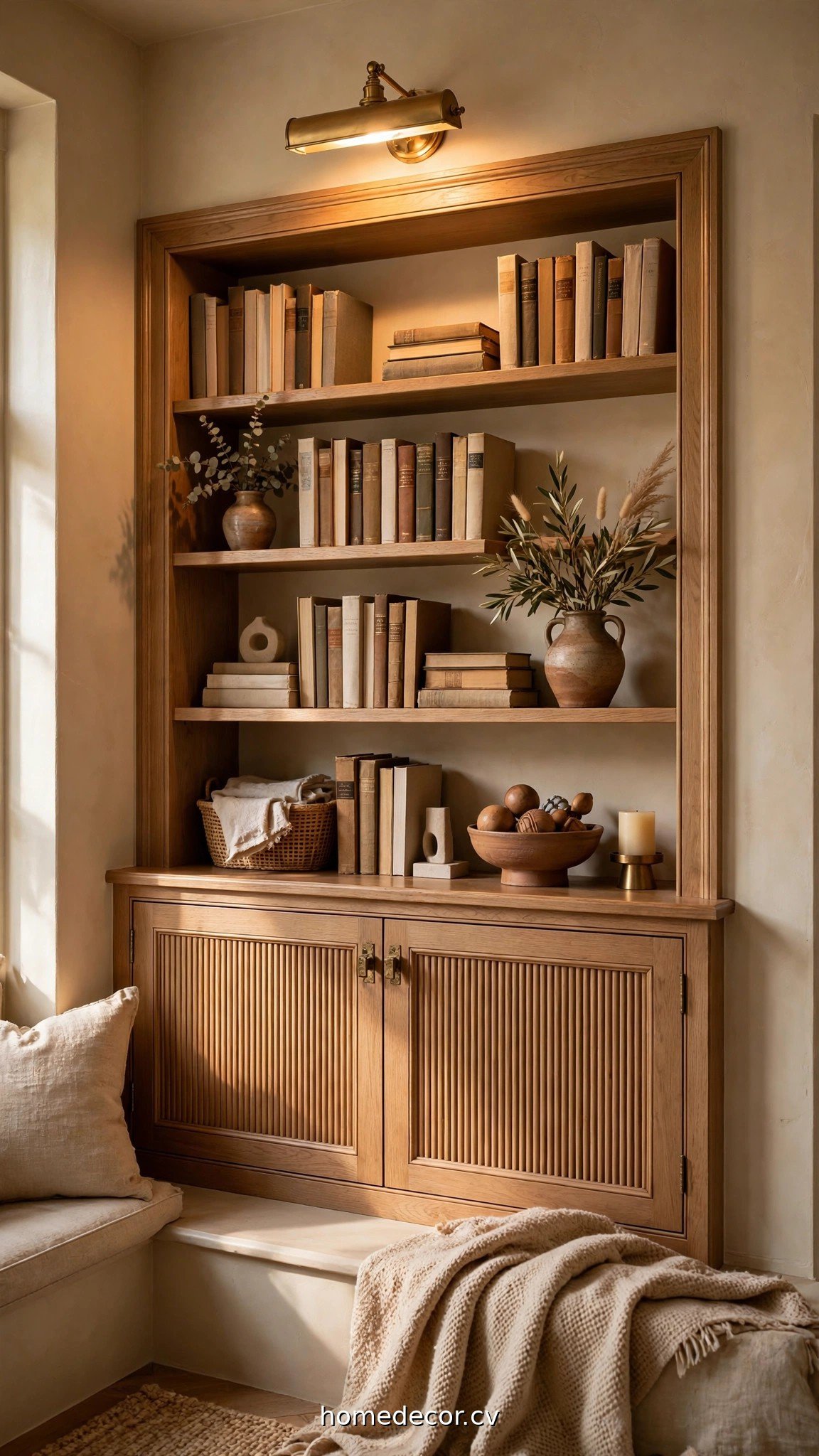
9. Add picture lights or LED strips
Battery-operated picture lights on top of the bookcase, or LED strip lights tucked under each shelf, transform shelves after dark. Lit shelves glow like a library and make the whole room feel warmer and more expensive.
Practical tip: Warm-white (2700K) light flatters book spines and wood tones; cool white makes them look flat. LED strips with a remote dimmer let you set the mood from the sofa.
10. Paint the back of the bookcase
Paint the interior back panel a contrasting color — deep green, navy, charcoal, or even a soft blush — and books and objects pop against it. It’s a one-afternoon project that makes a basic bookcase look custom.
Practical tip: Remove the shelves (label their order with tape) and paint the back panel with a small roller for a smooth finish. Two coats of satin paint wipe clean and resist scuffs from sliding books.
11. Style the top of the bookcase
Don’t waste the top surface. A tall vase with branches, a stack of oversized art books, or a small gallery of leaning frames uses the vertical space and draws the eye up, making ceilings feel higher.
Practical tip: Keep the top arrangement simple — one to three items. Anything fussy up there just collects dust and looks cluttered from across the room.
Bookshelf Ideas for Small Spaces and Kids
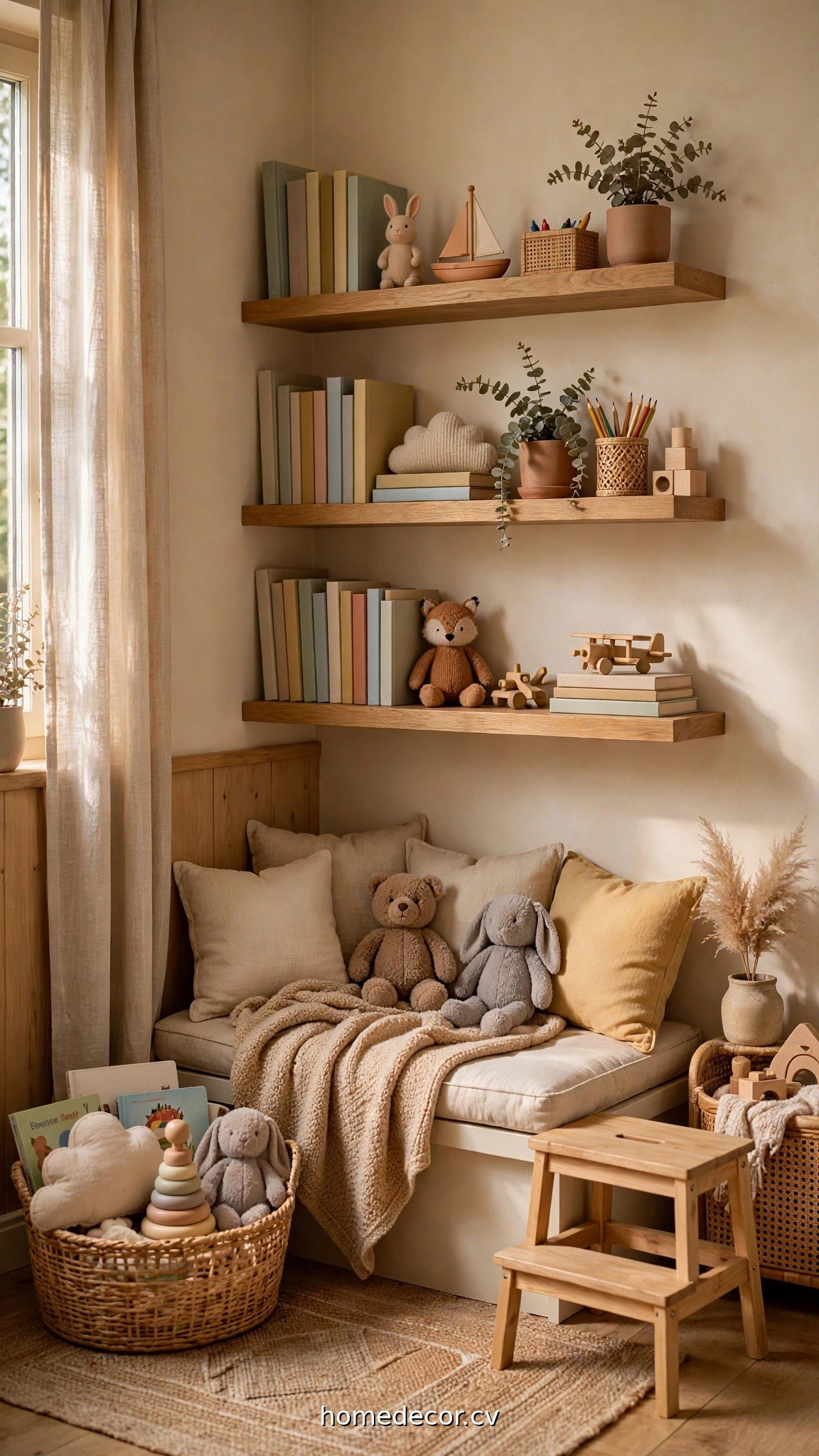
12. Use floating shelves as a mini library
No room for a bookcase? Three or four floating shelves on a wall hold a surprising number of books and take up zero floor space. Style them with the same vertical-horizontal-object rhythm and they look like a built-in library.
Practical tip: Mount floating shelves into studs — books are heavy, and a shelf of hardcovers can weigh 30 pounds or more. Stagger the shelf lengths for a more designed look.
13. Create a kids’ book display shelf
Mount a picture ledge or forward-facing book rack at child height so kids can see covers, not spines. Children choose books by their covers — a display shelf turns reading into a visual treat and keeps favorite books accessible.
Practical tip: Rotate the displayed books every couple of weeks like a little bookstore — it reignites interest in books they’d stopped noticing. Keep the shelf low enough that kids can reach and re-shelve independently.
14. Turn a narrow nook into a reading corner
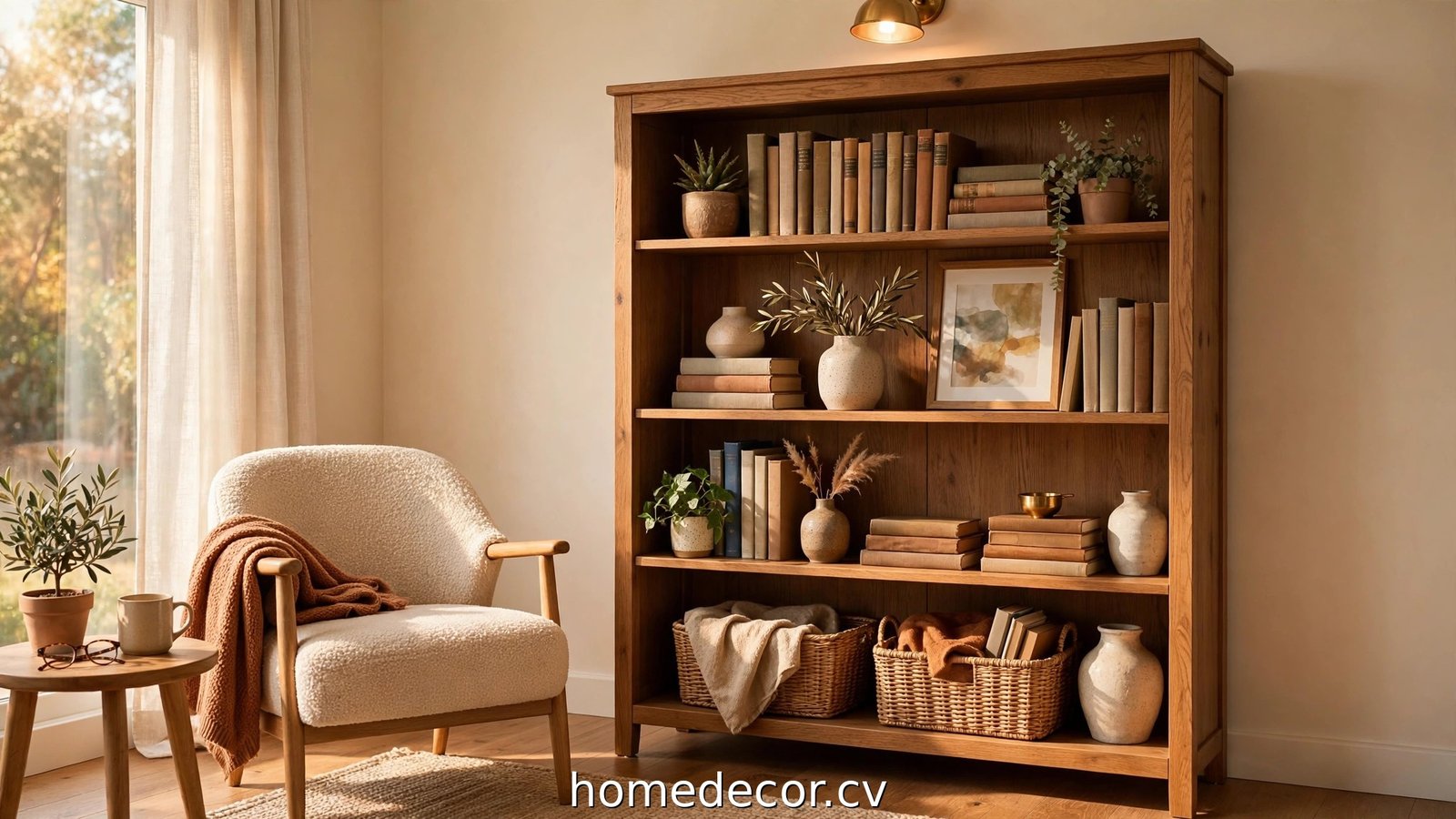
Tuck a slim bookcase into an unused hallway nook, stair landing, or bedroom corner with a small chair and a floor lamp. Even a two-foot-wide nook becomes a reading retreat — proof that you don’t need a library room to have a library feeling.
Practical tip: A plug-in wall sconce above the chair saves floor space versus a floor lamp in a tight nook. Add a small basket for the current read and a throw blanket, and the corner is complete.
Keep Exploring
More ways to style your living spaces:
- 21 Small Living Room Ideas That Feel Twice the Size
- 17 Gallery Wall Ideas for Beginners (With Layout Templates)
- 15 Budget Friendly Boho Living Room Ideas Full of Soul
Frequently Asked Questions
How do I style a bookshelf without it looking cluttered?
Follow the 70-30 rule: 70 percent books, 30 percent objects and empty space. Mix vertical rows with horizontal stacks, leave breathing room on every shelf, and give each shelf one statement object. Step back frequently — clutter is easiest to spot from across the room.
Should books be organized by color or by author?
By color if the shelf is primarily decor in a main living space; by author or genre if you actually use the books daily. Many people do both — color-grouped display shelves in the living room, practical organization in the bedroom or office.
How do I style a bookshelf I don’t read from?
Treat it as pure decor: fewer books, more objects, art, and plants. You need fewer books than you think — a mix of thrifted hardcovers in your color palette plus beautiful objects creates the library look without a single book you’ve actually read.
What’s the best lighting for a bookshelf?
Warm-white LED strip lights under each shelf or battery picture lights on top. Warm light (2700K) makes wood and book spines glow; avoid cool white which looks clinical. Dimmable lights let you go from bright reading light to cozy evening glow.
Shelves That Tell Your Story
These bookshelf ideas all share one philosophy: a bookshelf should look like you live there. Mix the books you love with objects that mean something, leave room to breathe, and light it like it matters — because it does. Start with one shelf this weekend using the vertical-horizontal rule, and let the rest follow. For more living room inspiration, browse our Living Room Ideas category and keep styling the spaces that make your house a home.