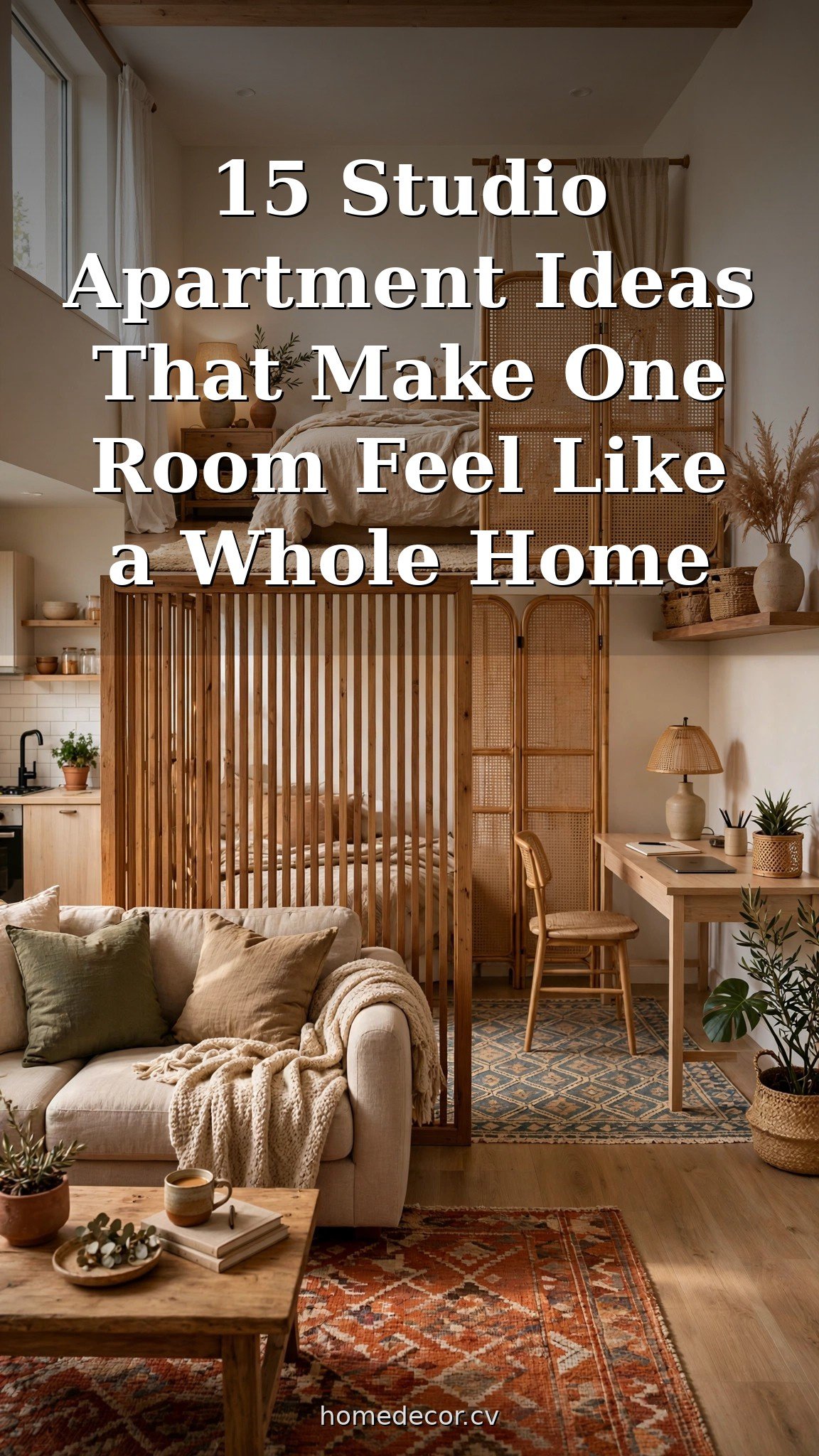
Living in a studio apartment is an art form — one room has to be your bedroom, living room, office, and dining room all at once. If you’ve been hunting for studio apartment ideas that make a single room genuinely feel like a whole home, you’re in exactly the right place.
These 15 ideas are built on three principles: define zones, choose furniture that does double duty, and go vertical with storage. A bookshelf that divides sleep from socializing. A daybed that’s a sofa by day. A rug that tells your brain “this is the living room now.” Whether your studio is 300 or 600 square feet, whether you rent or own, these ideas will make your one room live much larger than its floor plan.
More small-space help? These 21 Small Living Room Ideas That Feel Twice the Size maximize tiny lounges, and our 14 Dorm Decorating Ideas for Guys That Are Actually Cool tackle the ultimate one-room challenge.
Studio Apartment Ideas: Creating Zones
1. Divide the space with an open bookshelf
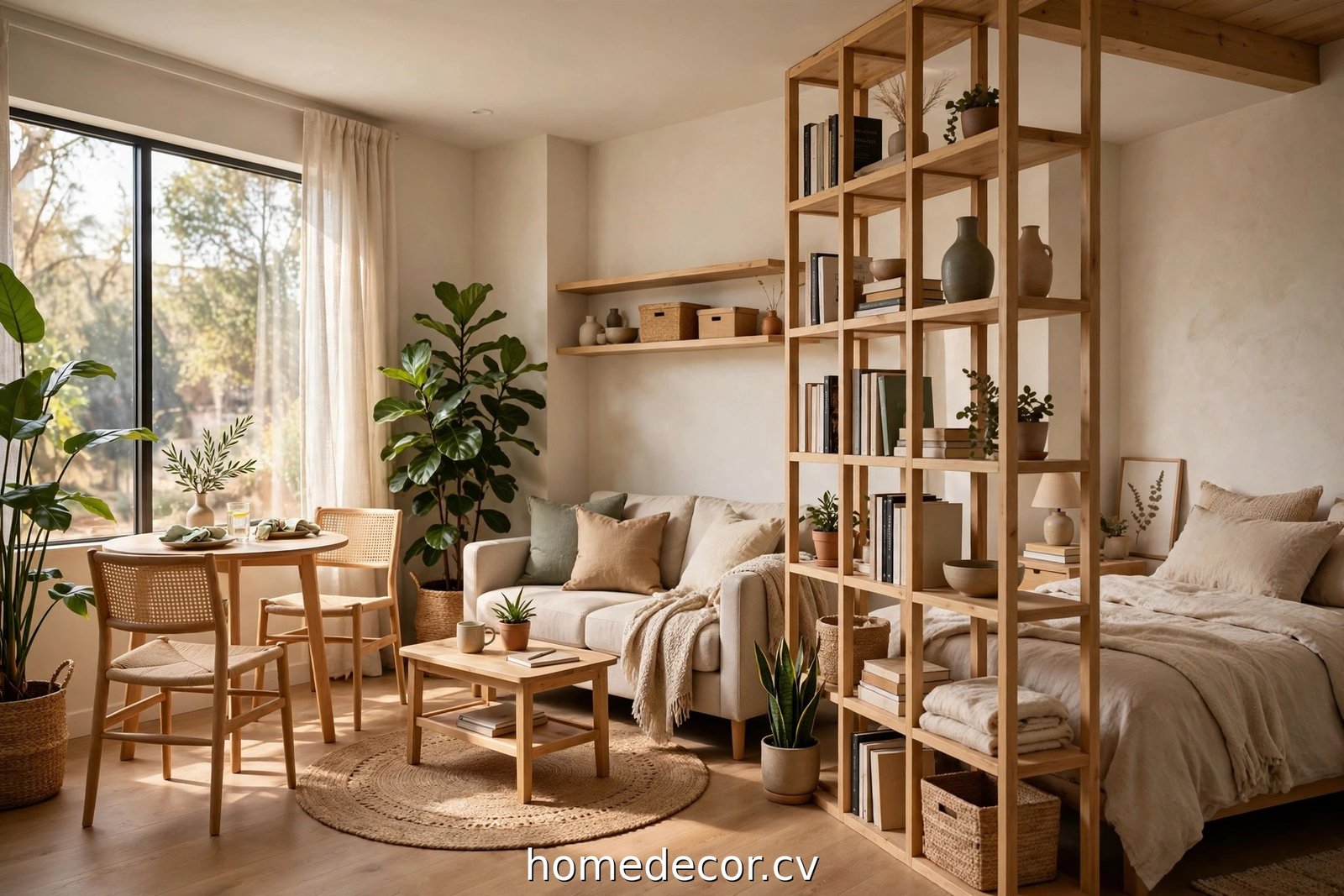
Place a tall open-backed bookshelf perpendicular to the wall between your bed and living area. It creates a visual wall without blocking light or airflow, and both sides get storage. This single piece of furniture does more zoning work than anything else you can buy.
Practical tip: Leave the top shelf or two sparsely styled so light passes over — a bookshelf crammed to the ceiling reads as a wall, while one with breathing room reads as a divider. Anchor it to the wall for safety.
2. Use area rugs to define each zone
A rug under the bed area, a different rug under the seating area — your brain reads each rug as a separate “room.” It’s the cheapest, renter-friendliest zoning trick there is, and it adds warmth and sound absorption too.
Practical tip: Choose rugs in the same color family but different patterns so the zones feel related, not random. Leave a few inches of bare floor between rugs so each zone has a clear edge.
3. Hang curtains as a soft room divider
Ceiling-mounted curtain tracks with linen or sheer curtains let you close off the sleeping area at night and open it by day. Fabric dividers feel softer and more apartment-like than screens, and they take up zero floor space.
Practical tip: Mount the track as close to the ceiling as possible — floor-to-ceiling curtains make the room feel taller. Sheers divide the space while keeping light flowing; heavier linen gives real privacy.
4. Arrange furniture to face inward, not the walls
Float your sofa or loveseat with its back to the bed, facing into the living zone. Furniture backs are natural dividers — when the sofa faces away from the bed, your brain stops seeing the bed as part of the living room.
Practical tip: A slim console table behind the floating sofa gives you a surface for lamps and decor while reinforcing the divide. Even six inches of gap between furniture groupings reads as a boundary.
Multifunctional Furniture for Studios
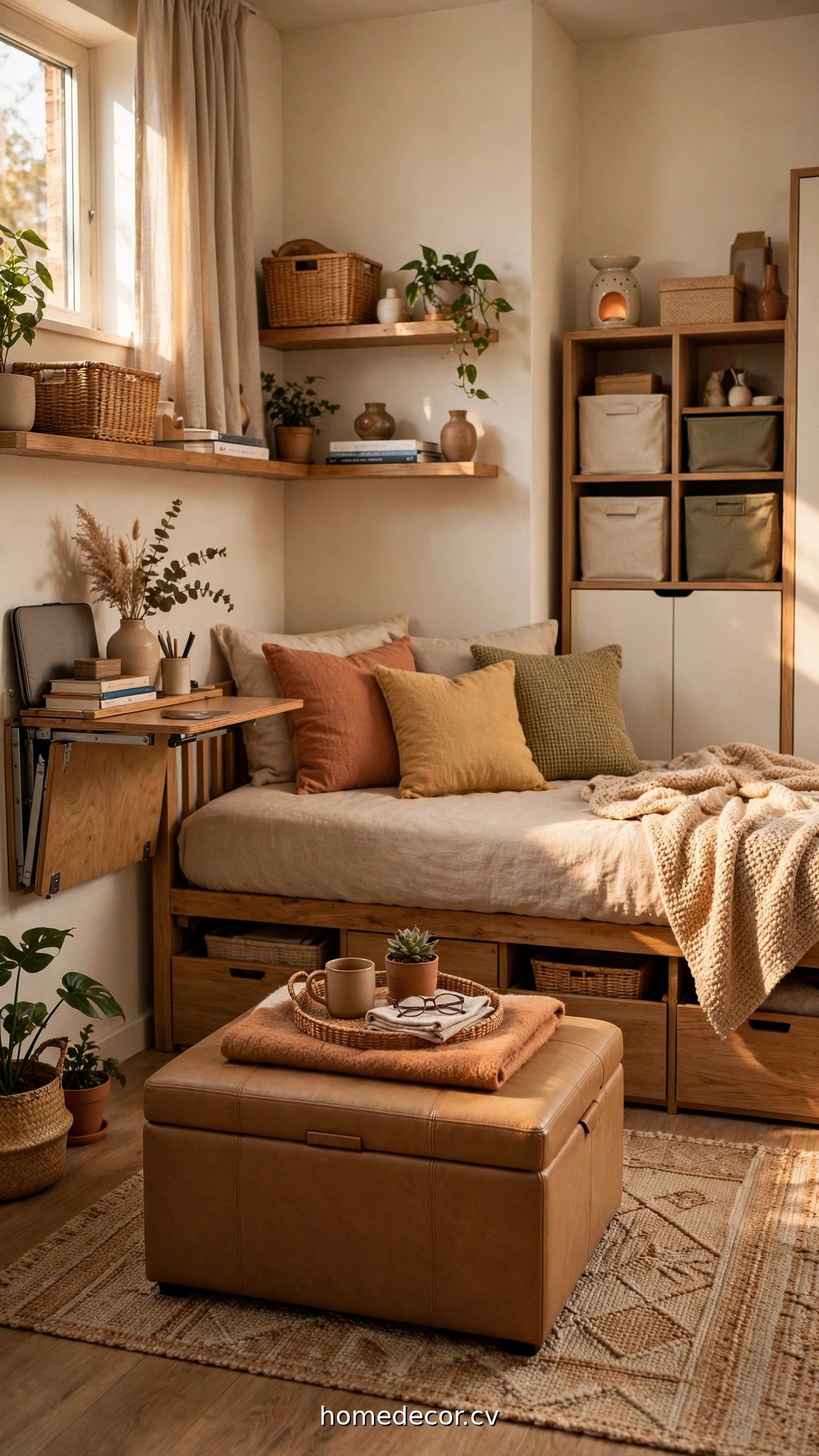
5. Choose a daybed instead of a sofa-bed
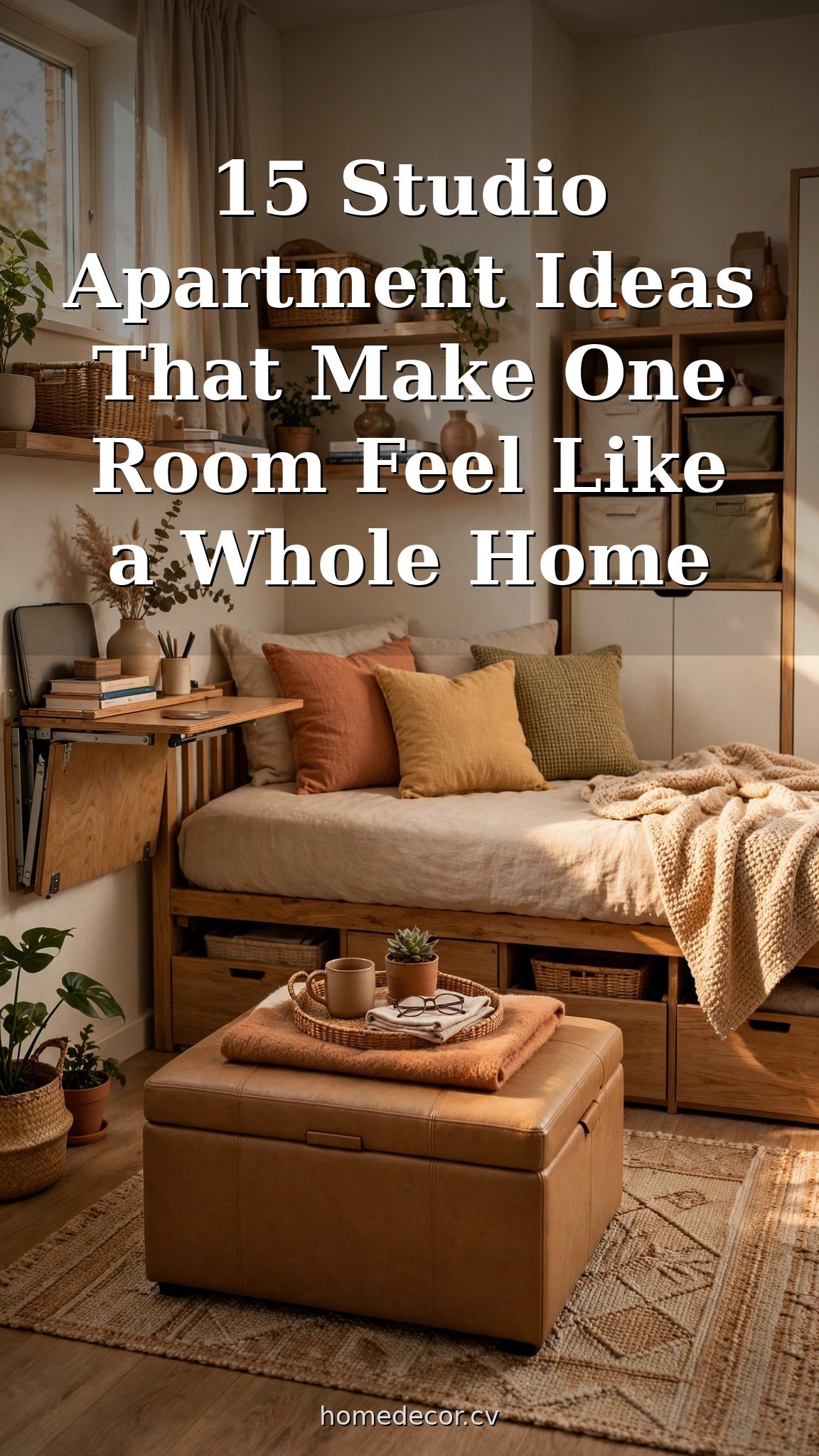
A daybed styled with throw pillows looks like a proper sofa by day and sleeps like a bed by night — no unfolding mechanism, no lumpy mattress. It’s the most elegant sleep-sit solution for a studio.
Practical tip: Use a real mattress, not a futon pad, and dress it with a tailored daybed cover plus sleeping pillows hidden behind decorative ones. Guests will never guess it’s your bed.
6. Get a storage ottoman that does triple duty
A large storage ottoman is a coffee table, extra seating, footrest, and hidden storage in one. In a studio, every piece should earn its footprint three ways — the ottoman is the gold standard.
Practical tip: Choose one with a flat, firm top so it works as a table (add a tray for drinks). Store bedding, board games, or off-season clothes inside — things you need but don’t need daily.
7. Use a drop-leaf or extendable dining table
A drop-leaf table seats two daily against the wall and expands for four when friends come over. Or use a console table that extends into a dining table — workspace by day, dinner party by night.
Practical tip: Pair it with stackable or folding chairs stored in a closet. Two good chairs for daily use plus two folding ones for guests covers every scenario without permanent clutter.
8. Pick a bed with built-in storage
A platform bed with drawers, a lift-up storage base, or simply a tall bed frame with bins underneath gives you dresser-capacity storage without a dresser. In a studio, under-bed space is too valuable to waste.
Practical tip: Use divided bins or bags under the bed so things don’t become a dusty jumble. Vacuum-sealed bags for off-season clothes shrink to almost nothing and slide easily under even low frames.
Vertical Storage and Visual Tricks
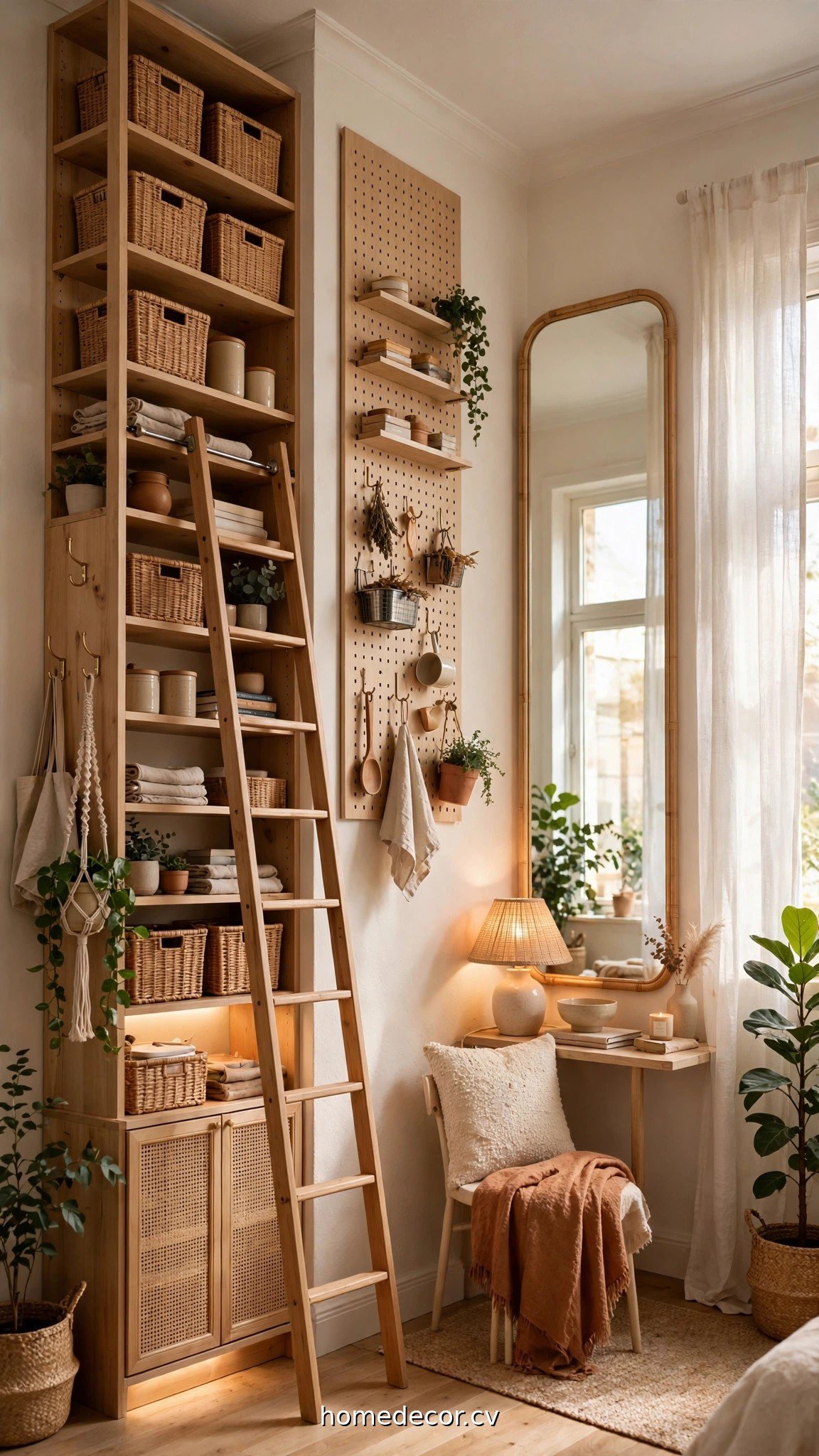
9. Take storage all the way to the ceiling
Tall bookcases, over-door organizers, and high shelves use the vertical space studios always have but rarely use. The top shelves hold the rarely-needed; the middle holds the daily — and the room feels bigger because the walls work harder.
Practical tip: Keep a slim folding step stool tucked beside the fridge or in the closet — you’ll actually use high storage if reaching it takes five seconds. Store a label on each high bin so you remember what’s up there.
10. Mount the TV on the wall
A wall-mounted TV on a swivel arm eliminates the media console entirely and lets one screen serve the bed and the sofa. It’s a small change that frees a surprising amount of floor space.
Practical tip: A full-motion mount lets you angle the TV toward the bed at night and the seating area by day. Hide cables in a paintable cord cover for a clean look.
11. Use mirrors to double the light
A large mirror opposite the window bounces daylight deep into the studio and visually doubles the space. In a one-room home, light is square footage — mirrors manufacture it.
Practical tip: Lean a full-length mirror against the wall rather than hanging it — no holes for renters, and leaning mirrors look more relaxed. Place it where it reflects the window, not the bed, for the best effect.
12. Keep a light, cohesive color palette
One restrained palette across the whole studio — whites, warm neutrals, soft blues — makes the single room feel calm and unified instead of chopped up. Save bold color for small accents you can change.
Practical tip: This doesn’t mean boring: layer textures (linen, wool, rattan, wood) within the neutral palette for richness. Visual calm is what makes a small space feel serene rather than cramped.
Studio Kitchen and Entry Details
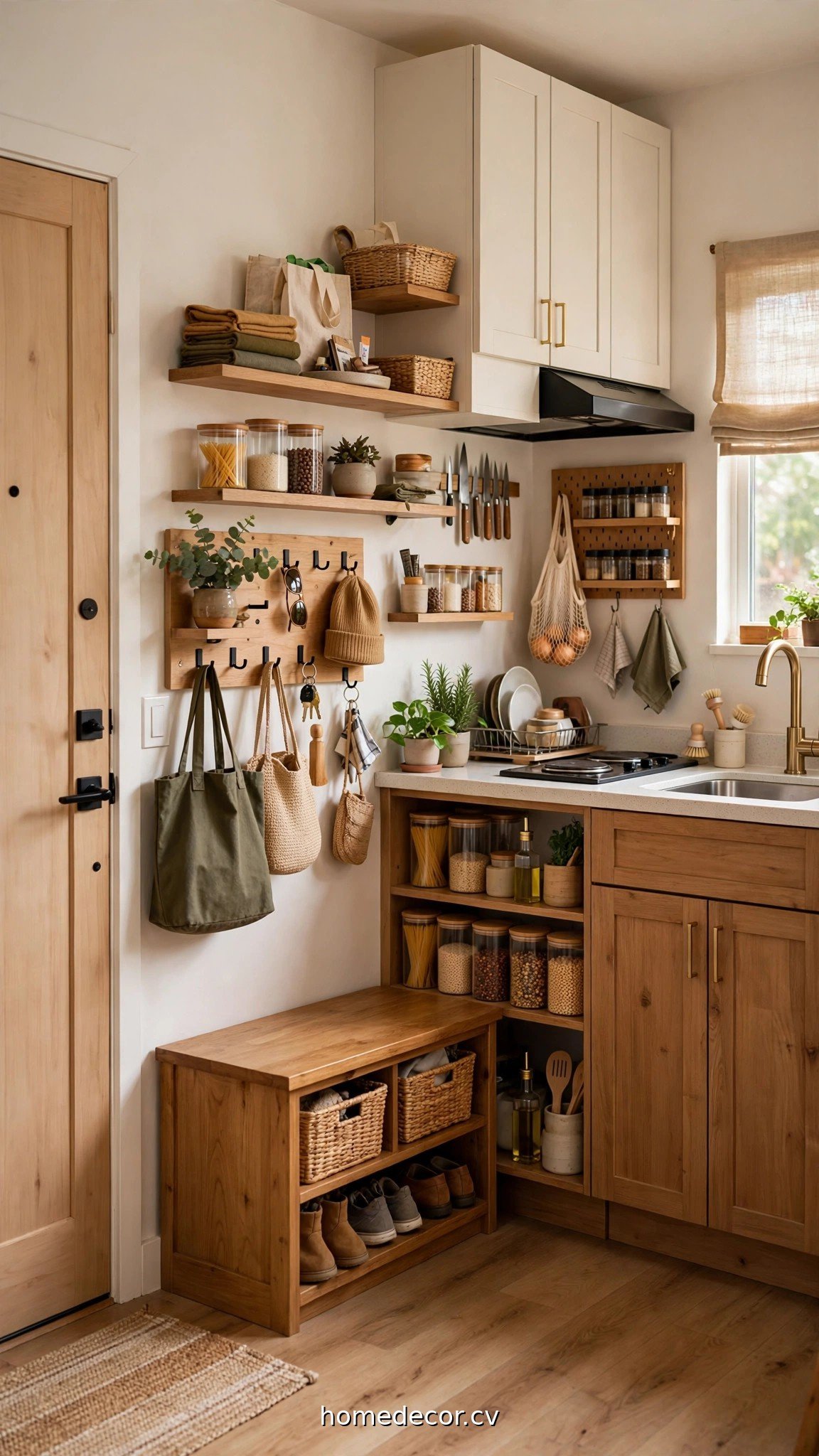
13. Create a mini entryway drop zone
Even without a foyer, you need a landing spot: a slim console or wall-mounted shelf by the door with hooks above for keys, bag, and jacket. It keeps the rest of the studio from becoming the entryway.
Practical tip: A wall-mounted shelf with hooks underneath takes up zero floor space — perfect for studios where the door opens directly into the room. A small tray on the shelf catches keys and sunglasses.
14. Maximize the kitchen with a rolling cart
A slim rolling kitchen cart adds prep space, storage, and serving surface that tucks against the wall when not needed. In a studio kitchenette, it’s the difference between functional and frustrating.
Practical tip: Choose a cart with a butcher-block top (extra cutting space) and locking wheels. Roll it to the living zone as a bar cart when entertaining — multifunctional again.
15. Hide the bed for video calls and guests
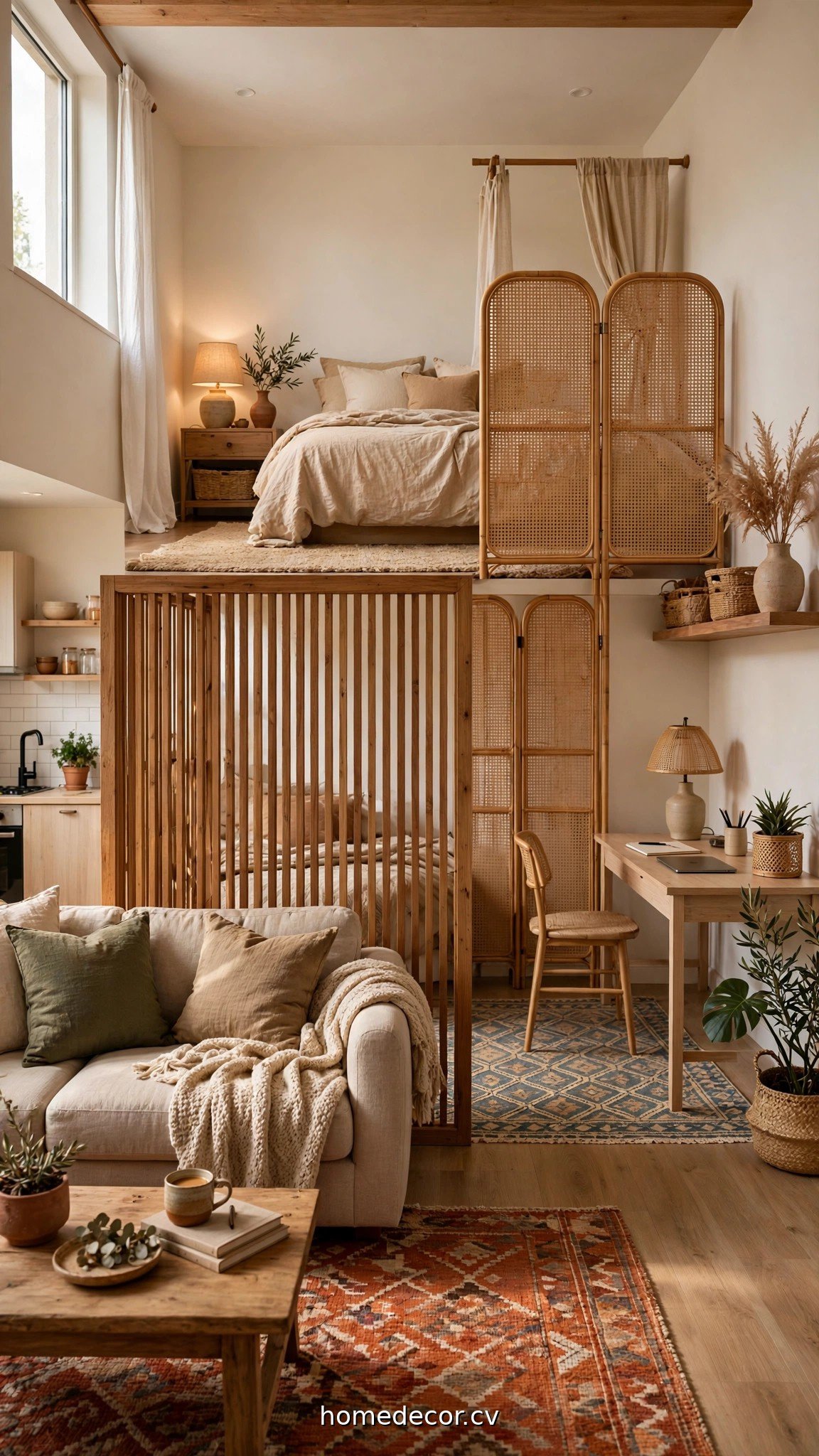
A folding screen, a curtain panel, or simply a well-styled throw and pillows can make the bed disappear visually when you need the studio to read as “living room.” It’s about controlling what the camera — or guests — see.
Practical tip: Keep a “five-minute tidy” routine: pull up the duvet, fluff the daybed pillows, close the curtain. A made bed behind a divider reads as a styled daybed, not a bedroom on display.
Keep Exploring
More ideas for living large in small spaces:
- 21 Small Living Room Ideas That Feel Twice the Size
- 14 Dorm Decorating Ideas for Guys That Are Actually Cool
- 12 Very Small Open Plan Kitchen Living Room Ideas That Actually Work
Frequently Asked Questions
How do I make my studio apartment feel bigger?
Define zones with rugs and dividers, keep one light cohesive color palette, use mirrors opposite windows, mount the TV, and choose multifunctional furniture. Visual order matters as much as actual square footage — a tidy, zoned studio feels twice the size of a cluttered one.
Where should the bed go in a studio apartment?
In the darkest, most private corner — farthest from the door — with a divider (bookshelf, curtain, or screen) between it and the living area. Never place the bed where it’s the first thing visible from the front door if you can avoid it.
What’s the best sofa for a studio apartment?
A loveseat-scale sofa (under 60 inches), a daybed, or a compact sleeper sofa. Look for raised legs (visual lightness), storage inside (chaise storage or ottoman), and a tailored rather than bulky silhouette. Every inch counts, so measure twice.
How do I add privacy to a studio apartment?
Layer your dividers: curtains for the sleeping area, a bookshelf between zones, and rugs to define spaces acoustically and visually. For video calls, a folding screen behind your desk hides the bed. True sound privacy is hard in a studio — soft furnishings and rugs help more than you’d expect.
One Room, Whole Home
These studio apartment ideas all share one philosophy: a studio isn’t a small apartment, it’s an efficient one. Zone it thoughtfully, make every piece of furniture work double duty, and use your walls and vertical space like you mean it. One well-planned room can live like three — and feel like entirely yours. For more small-space inspiration, browse our Small Space Ideas category and keep making the most of every square foot.