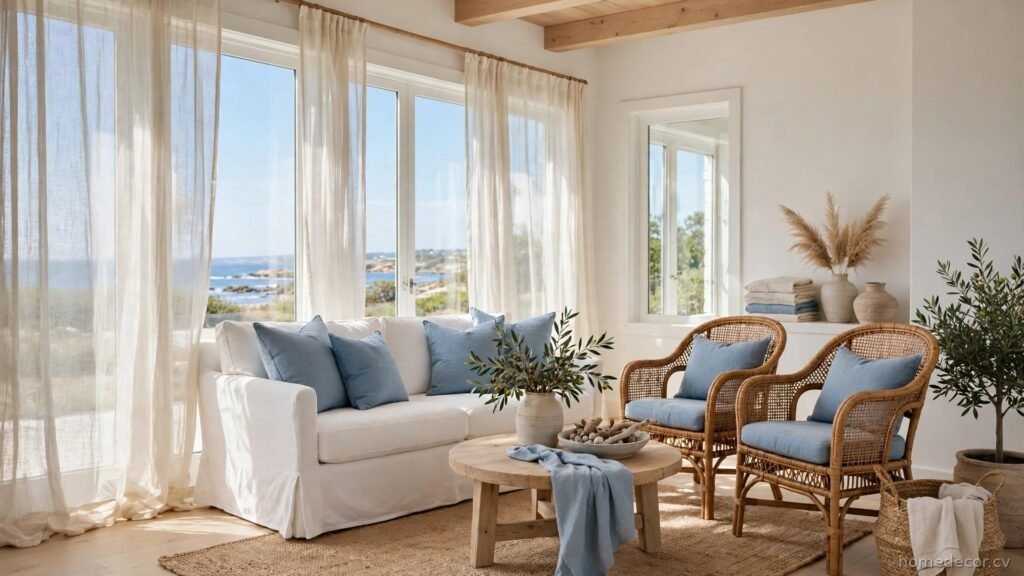
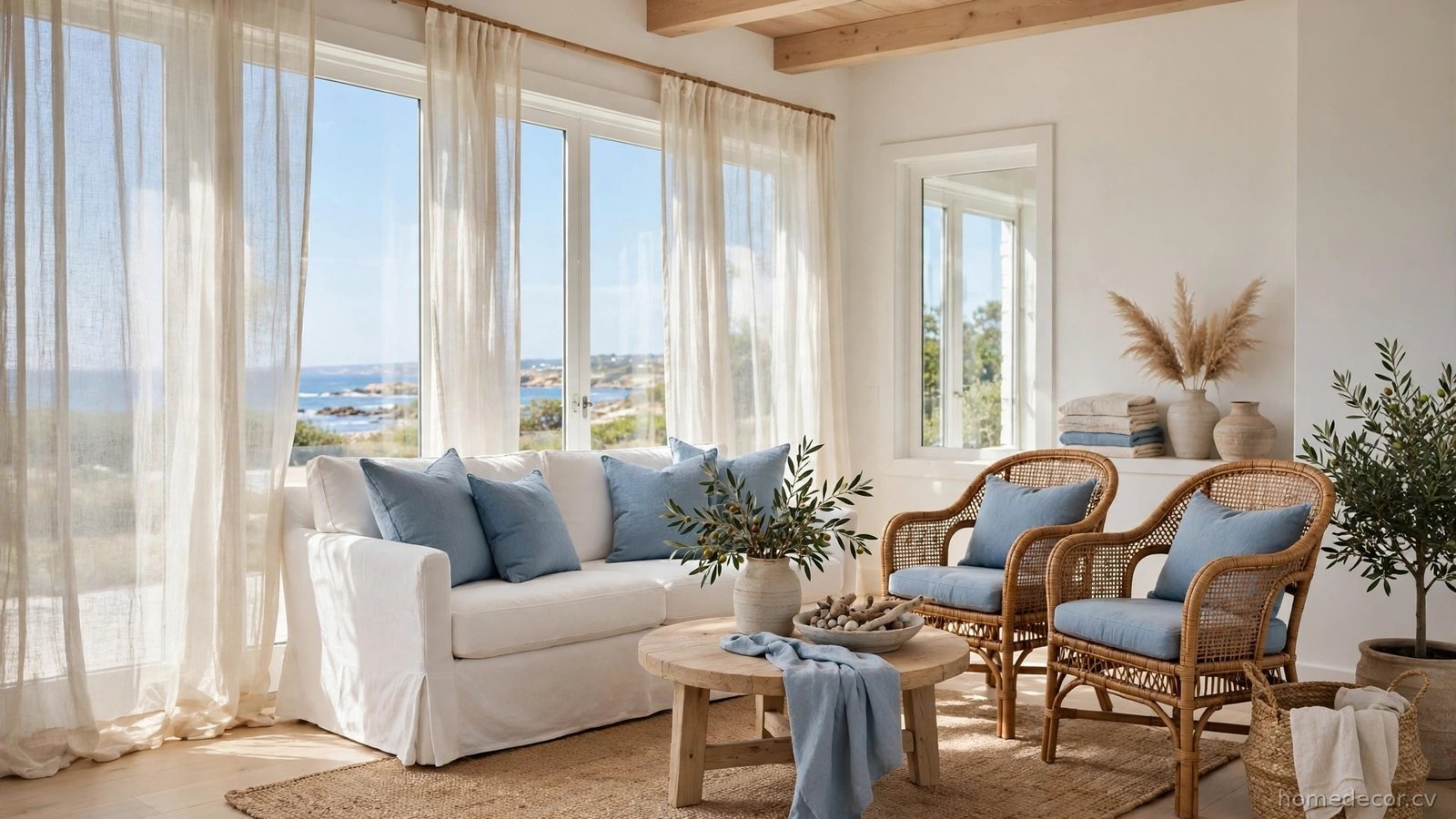
There is nothing quite like walking into a living room that feels like a slow morning at the beach, with soft light, sandy neutrals and a gentle sea breeze drifting through open windows. The good news is you do not need an ocean view or a big budget to get that feeling at home. These coastal living room ideas focus on simple, affordable changes that work in real houses, apartments and rentals alike. From washable slipcovers and woven textures to relaxed art and collected shoreline details, each idea builds a calm, breezy space step by step. Pick two or three to start, layer slowly, and enjoy a room that feels like a holiday every single day.
Start With a Soft Sea-Inspired Palette
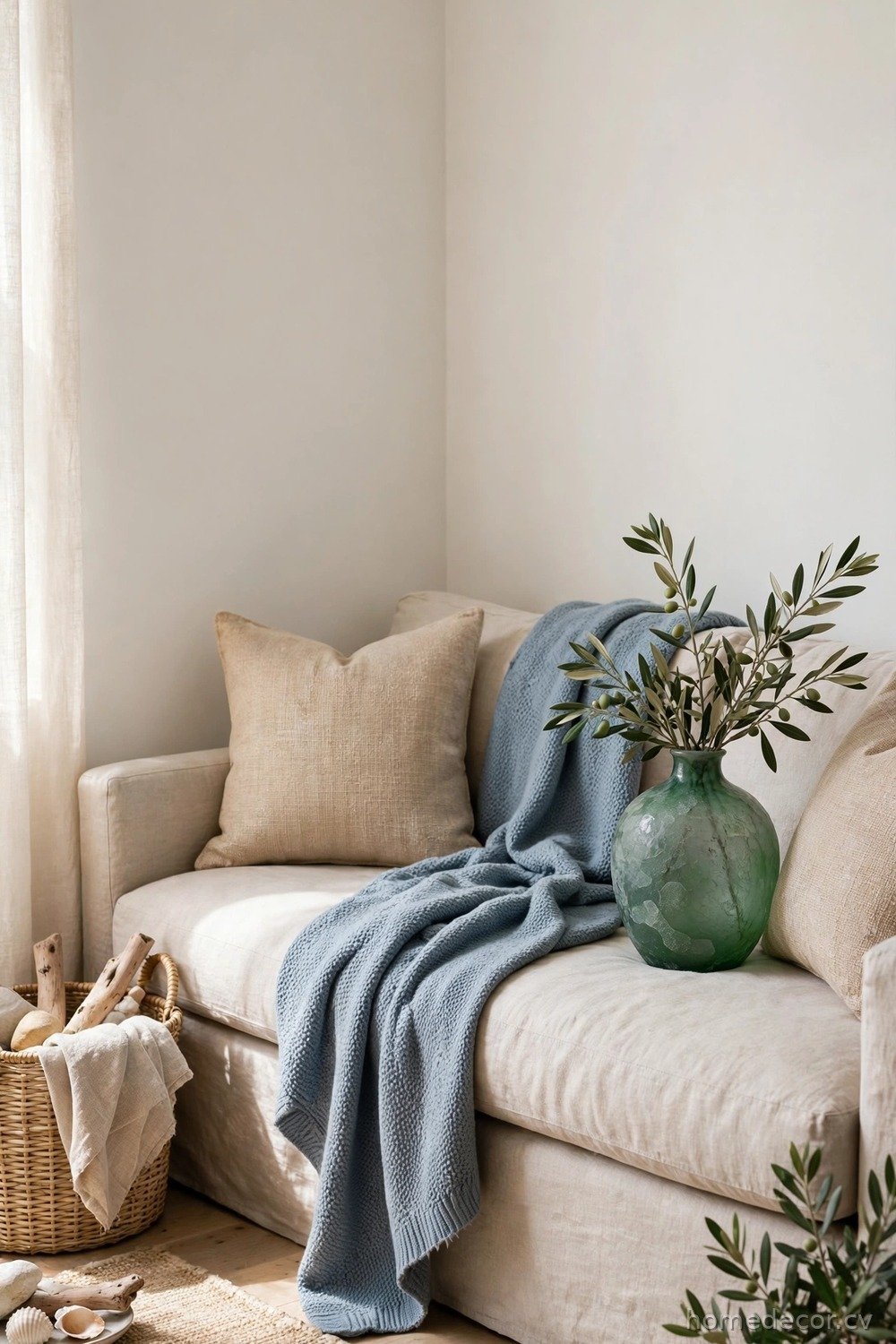
Every coastal room begins with color, and the most relaxing palettes borrow directly from the shoreline itself. Think warm white walls, sandy beige upholstery, soft sea-glass green and dusty blue accents layered in small doses. This combination keeps the room bright during the day while still feeling warm and welcoming in the evening. If you are renting or painting feels like too much, start with textiles instead. Swap in pale cushion covers, a light throw and a washed cotton rug to test the palette before committing to paint. The key is restraint, so let neutrals do most of the work and save stronger blues for pillows, art and ceramics.
I spend far too much time saving home ideas.
If you'd like the best ones, I'll send a short email once or twice a month.
Once the base feels right, repeat each color at least three times around the room so nothing looks accidental or out of place. A blue cushion, a blue vase and a hint of blue in your artwork will quietly tie the whole scheme together. Keep metal finishes simple and soft, like brushed nickel, aged brass or matte white, rather than shiny chrome that can feel cold. Natural wood tones in driftwood, oak or weathered pine bridge the gap between white furniture and colored accents beautifully. This gentle repetition is what makes a coastal palette feel calm instead of busy, even in a very small living room.
Choose Slipcovered Sofas for Easy Living
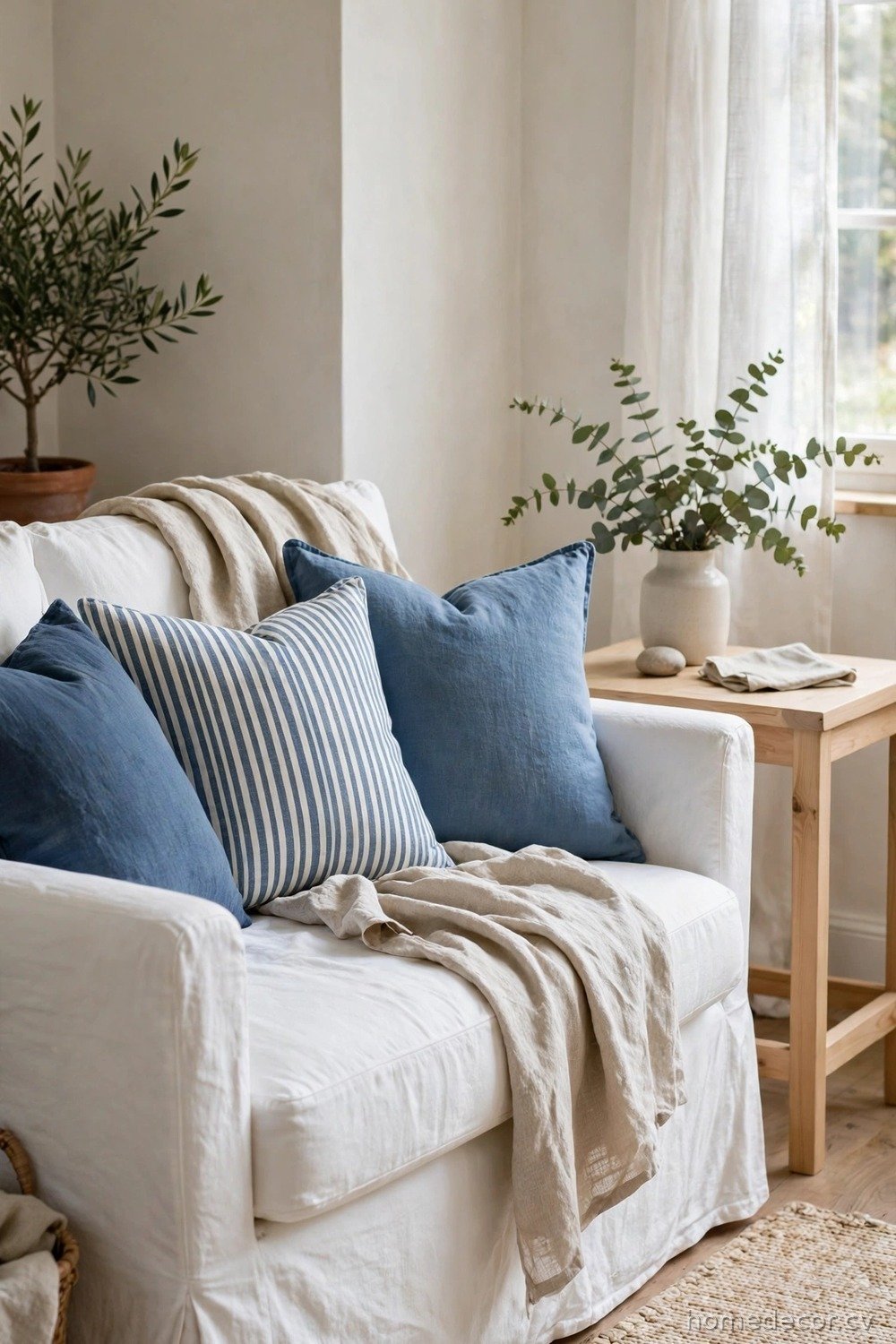
A slipcovered sofa is the hardest working piece in a beach house style living room because it looks relaxed and handles real life gracefully. Choose washable covers in white, ivory or pale oatmeal linen-look fabric so sandy feet, spilled drinks and muddy paws never become a disaster. The slightly rumpled silhouette is part of the charm, so there is no need to keep it perfectly pressed or formal. If a new sofa is not in the budget, a well-fitted slipcover over your existing sofa or loveseat gives almost the same breezy effect for a fraction of the cost, especially in durable cotton canvas.
Style the sofa with a simple mix of cushions in stripes, solids and one subtle coastal print to keep the look layered but not themed. Add a lightweight throw in washed linen or soft cotton that can move easily between the sofa, an armchair and shoulders on cool evenings. Keep the seating low and generous where possible, because deep seats invite long conversations and lazy afternoon naps. Pair the sofa with a light wood or woven side table instead of heavy dark furniture that can weigh the room down. This relaxed foundation makes every other coastal detail you add later feel natural, easy and completely unforced.
Layer Natural Textures Like Jute and Rattan
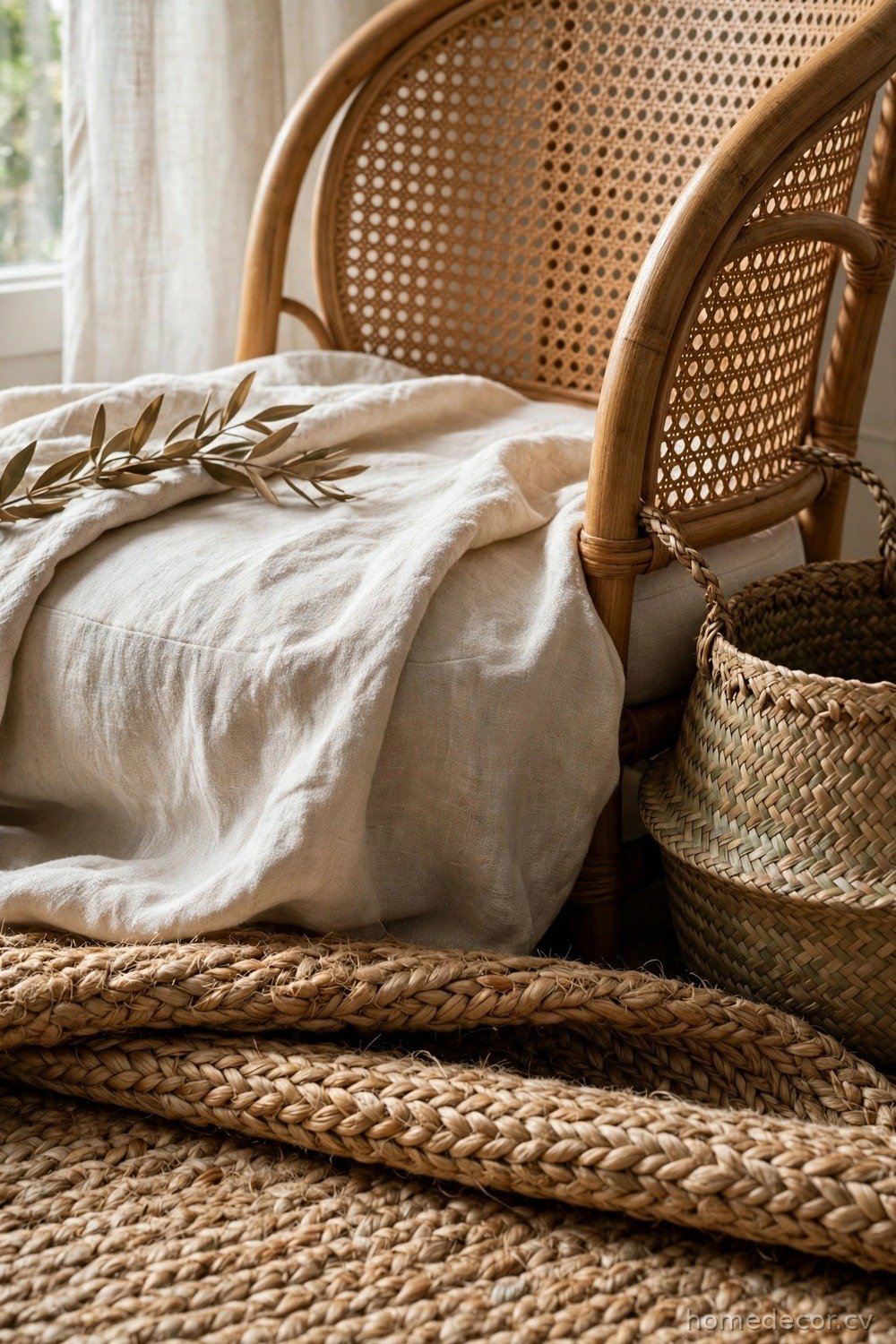
Texture is what stops a pale coastal room from feeling flat, cold or unfinished, and natural fibers do that job better than anything else. Start with a jute or sisal rug under the coffee table to bring in that sandy, underfoot feeling the moment you step into the room. Then add rattan in one or two places only, such as a pair of accent chairs, a woven pendant or a simple side table with curved lines. Wicker baskets, seagrass trays and linen upholstery all count as texture too, so mix rough, smooth and nubby finishes together for quiet depth throughout the whole seating area.
Keep the layering balanced by spreading textures around the room instead of clustering them in one corner near the sofa. If the rug is heavily woven, choose smoother cushions and a plain throw so the seating area still feels restful to look at. A rattan chair beside a sleek glass lamp, or a jute rug under a soft wool cushion, creates the contrast that makes each material stand out. Thrift stores and budget home shops are full of woven pieces in good condition, so this is one of the cheapest layers to build slowly. Over time, these natural textures give the room warmth that paint alone can never achieve.
Let Light In With Sheer Linen Curtains
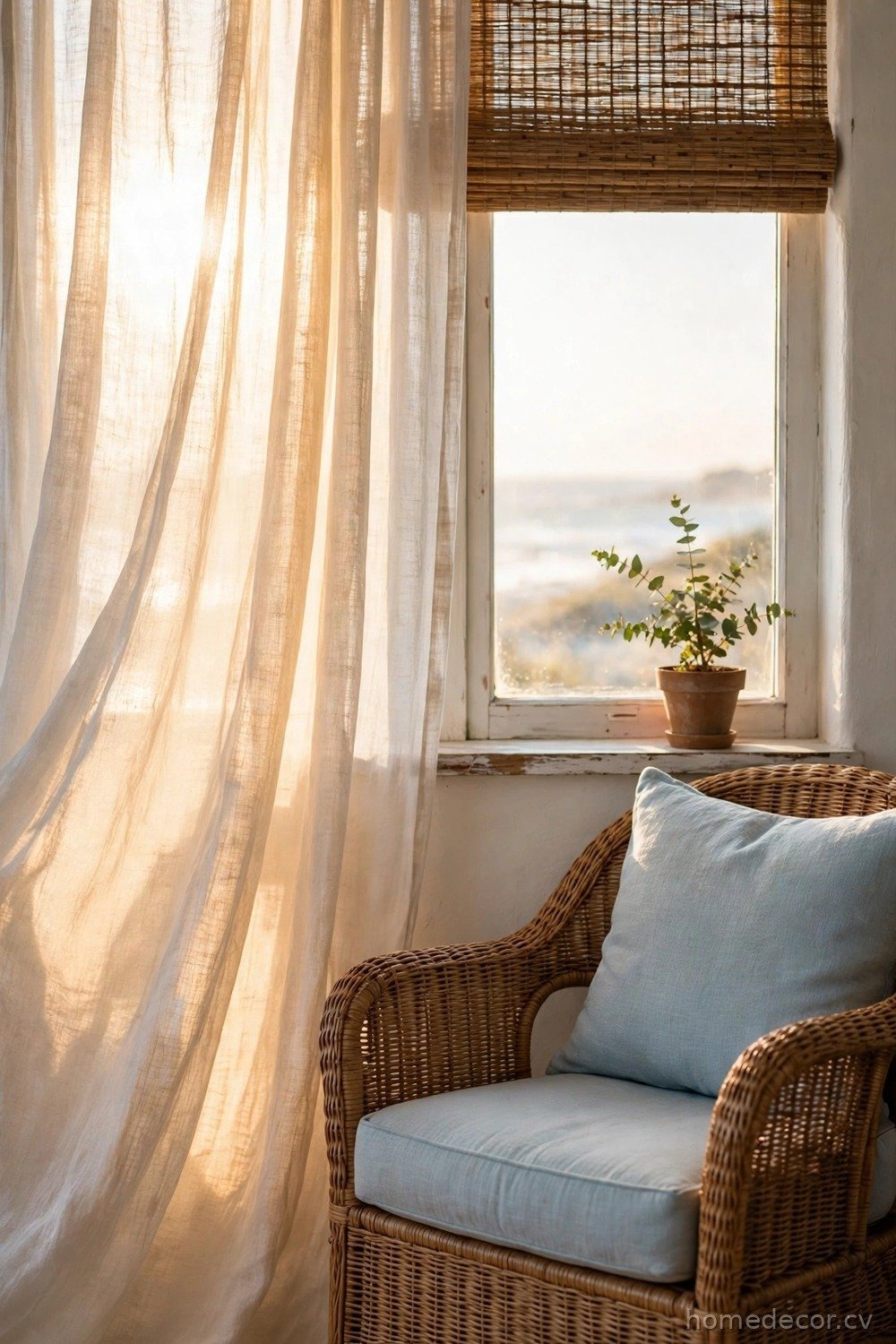
Nothing says coastal quite like sunlight filtering softly through curtains that move with the breeze, so window treatments deserve real attention in this style. Replace heavy drapes or dark blinds with sheer linen or cotton voile panels in white or natural flax that glow when the sun hits them. Hang the rod close to the ceiling and a little wider than the window frame to make the glass look bigger and the ceiling feel taller. In rentals, tension rods or clip rings make this change completely reversible, with no drilling, filler or landlord drama required at all for most homes and budgets.
During the day, pull the panels fully to the sides and keep windowsills clear so the light itself becomes part of the decor. If privacy is an issue in the evening, layer a simple woven shade behind the sheers for coverage that still looks soft and natural. Washable fabrics matter here because light curtains show dust quickly, and a fresh wash keeps the whole room feeling clean and airy. Avoid busy patterns on the curtains themselves, since plain panels let your cushions, art and rugs carry the personality instead. This one change often makes the entire living room feel larger, calmer and unmistakably closer to the coast.
Add Weathered Wood for Beach House Warmth
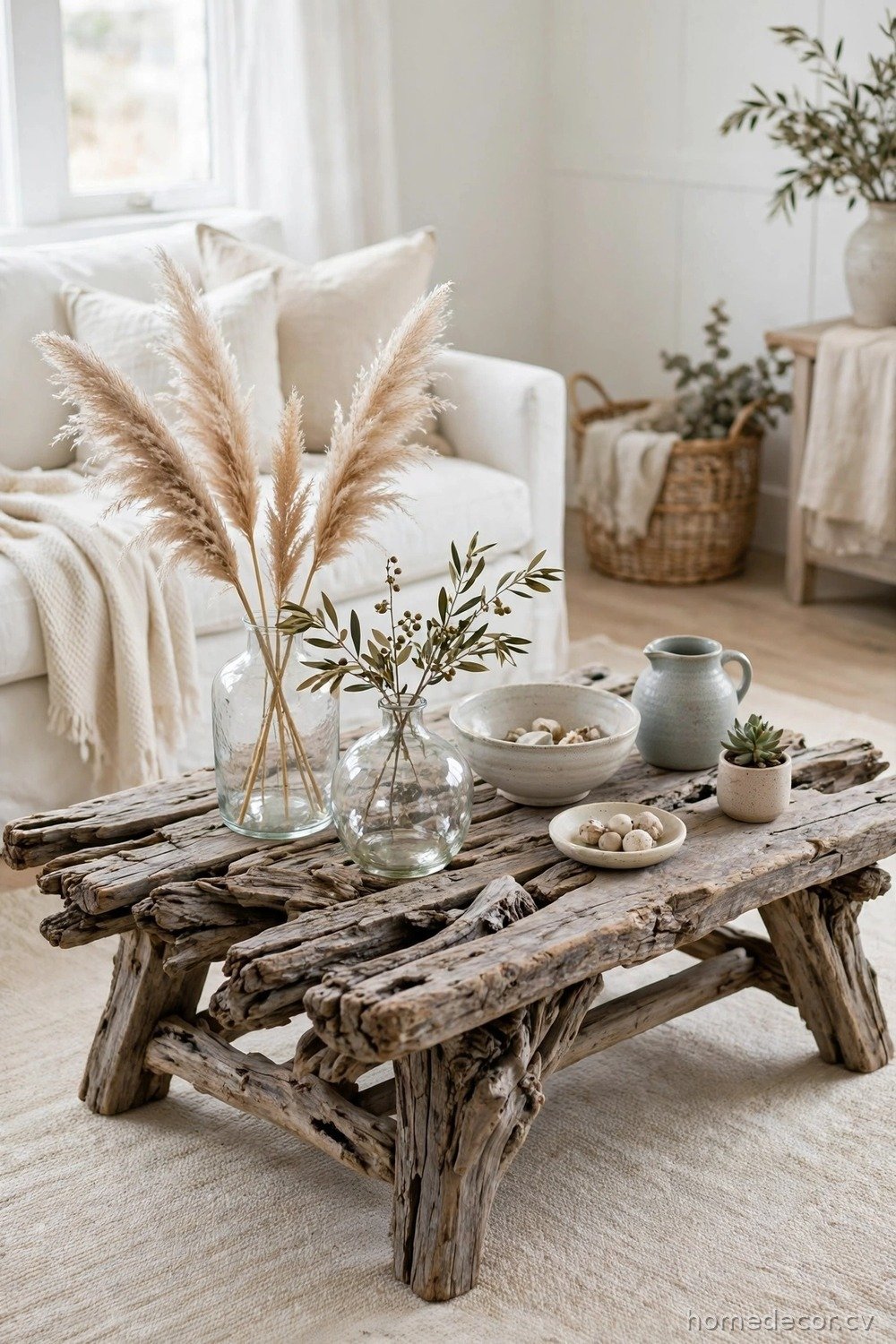
Weathered wood brings the soul of an old beach cottage into a modern living room, softening all the white and blue with honest warmth. Look for pieces with a grey-washed, sun-bleached or lightly distressed finish, like a driftwood style coffee table, a reclaimed wood console or simple floating shelves. You do not need much of it, because one or two well-chosen pieces are enough to ground the whole seating area beautifully. If buying furniture is out of reach, a weathered wood tray, picture frames or a small stool can deliver the same feeling on a much smaller budget that still feels generous and warm.
Balance is everything with this material, so pair weathered wood with crisp white walls and soft textiles to stop it feeling rustic or heavy. A bleached wood coffee table on a pale rug, topped with glass and ceramics, looks light and modern rather than cabin-like. Keep other wood tones in the room within the same pale family so pieces feel collected on purpose, not mismatched by accident. Sanding and whitewashing a thrifted table is a satisfying weekend project that costs very little and transforms dark furniture completely. Done thoughtfully, weathered wood makes a coastal room feel lived in, loved and quietly timeless all year round.
Style With Blue and White Striped Accents
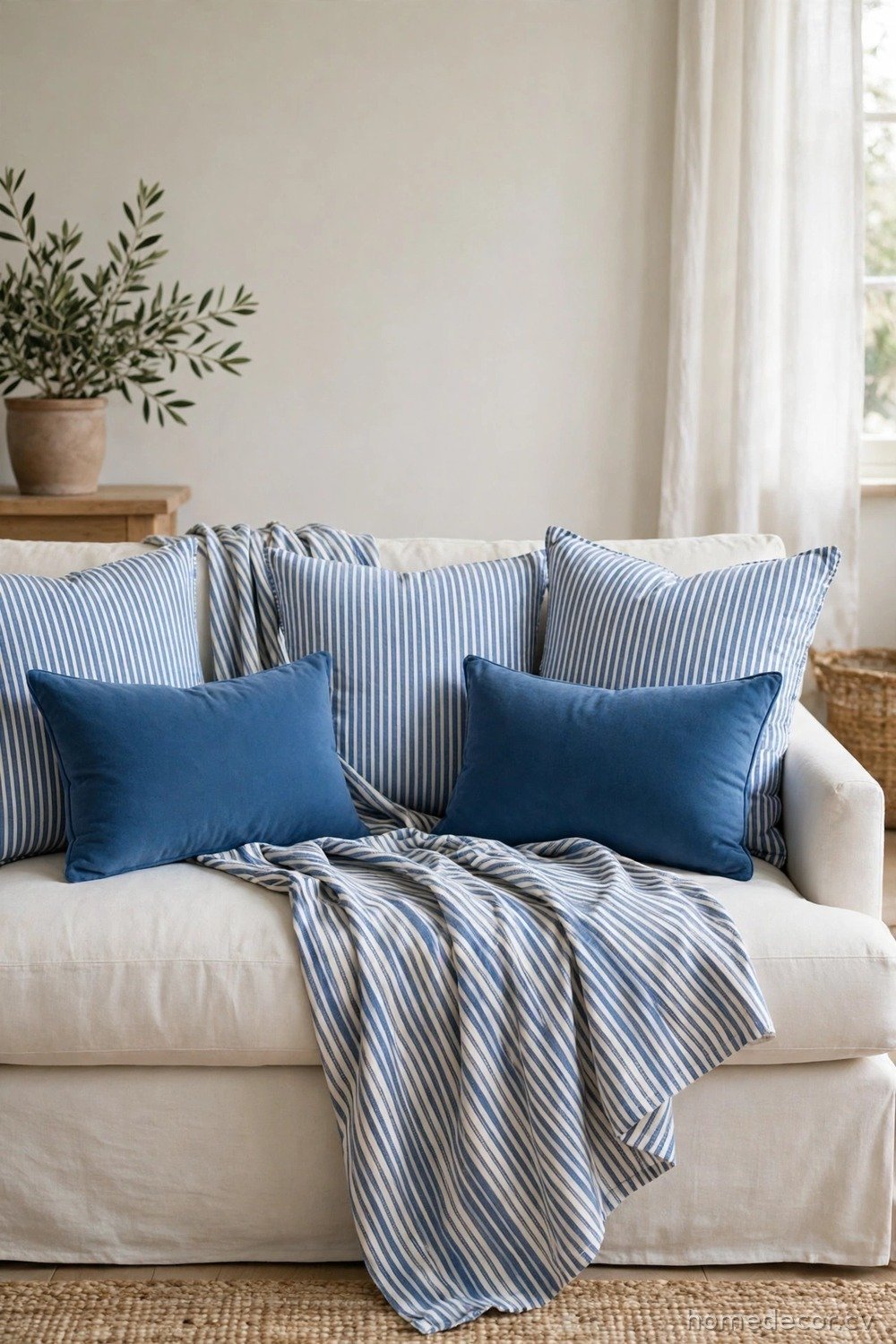
Blue and white stripes are the classic coastal pattern for a reason, because they feel fresh, crisp and instantly connected to the sea. The safest way to use them is in small, swappable pieces like cushion covers, a throw folded over the sofa arm or a striped cotton rug in the seating zone. Wide cabana stripes feel bold and beachy, while thin ticking stripes read softer and suit smaller rooms or more neutral schemes. Stick to one stripe scale per room where possible, then mix in solid blues and whites so the pattern stays a highlight instead of taking over everything.
If you love the look, repeat the stripe in just one more place, such as a lampshade, an ottoman cover or curtains in a connecting space. This gentle repetition makes the room feel designed rather than decorated in a hurry for summer. Keep the rest of your patterns minimal, perhaps one small botanical or coral print, so the stripes remain the clear star of the scheme. Striped cushion covers are inexpensive, washable and easy to store, which makes them perfect for a seasonal refresh without buying new furniture. Come autumn, you can swap them for plain linen covers and the room instantly settles into a calmer, cozier mood.
Bring in Woven Baskets for Pretty Storage
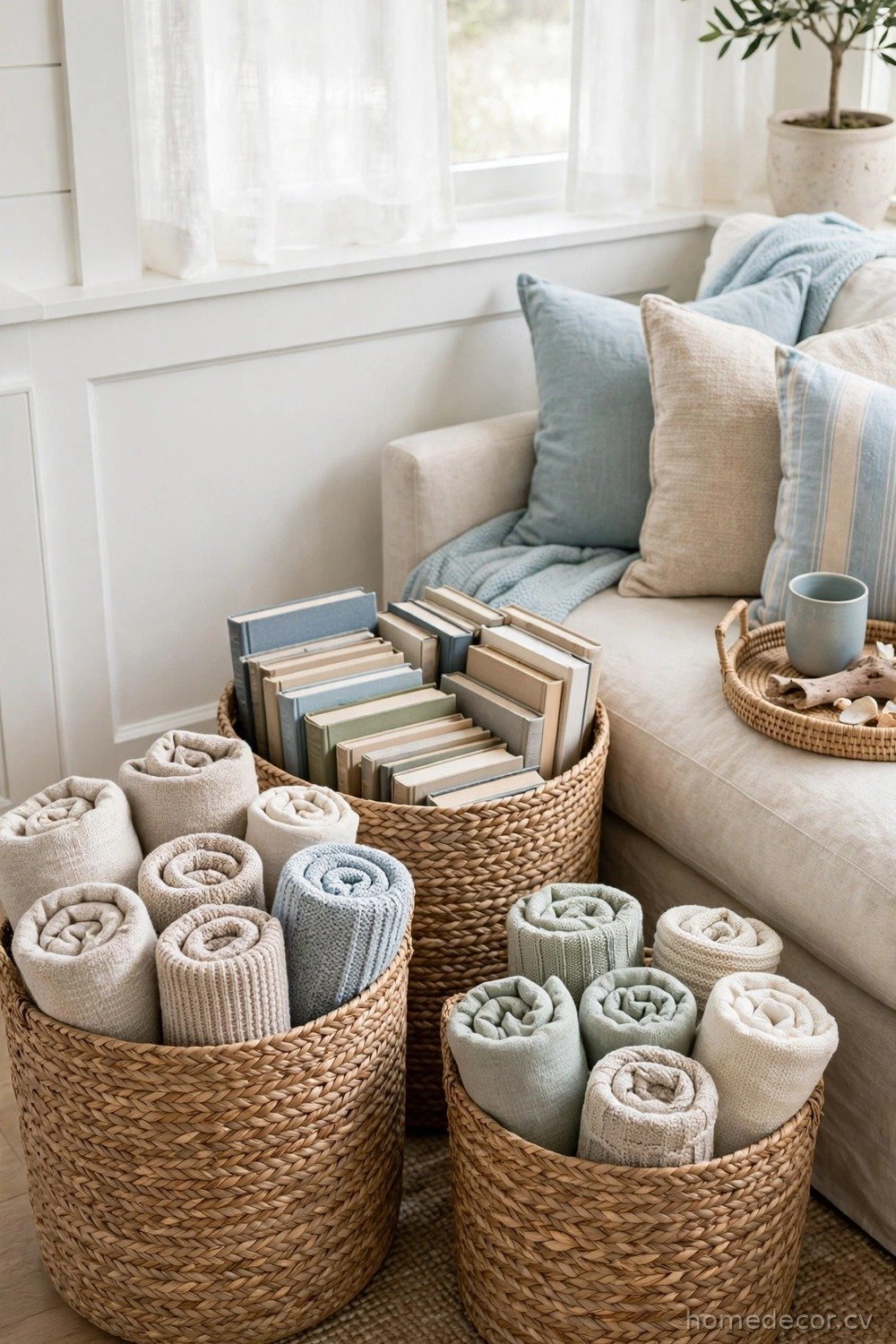
Coastal rooms only feel breezy when surfaces stay clear, and woven baskets are the prettiest way to hide everyday clutter without plastic boxes. Use a large seagrass basket beside the sofa for throws, a medium one for magazines and remotes, and smaller baskets on shelves for chargers, coasters and reading glasses. The natural texture counts as decor in its own right, so even a basket full of ordinary things still adds warmth to the room. Choose baskets with lids where you want a cleaner look, and open baskets where you need quick, one-handed access during busy family evenings all through the week ahead.
Group baskets in odd numbers and vary the heights slightly so the arrangement feels relaxed rather than lined up like a shop display. A tall basket with rolled blankets next to a low basket of books creates an easy, lived-in corner beside an armchair. Label free and fuss free is the goal here, because coastal storage should feel as effortless as the room itself looks. Check thrift shops and discount stores first, since woven baskets are common, durable and usually very cheap second hand in great condition. With clutter tucked away in beautiful baskets, the whole living room breathes more easily and your pale palette finally gets room to shine.
Hang Relaxed Coastal Art Above the Sofa
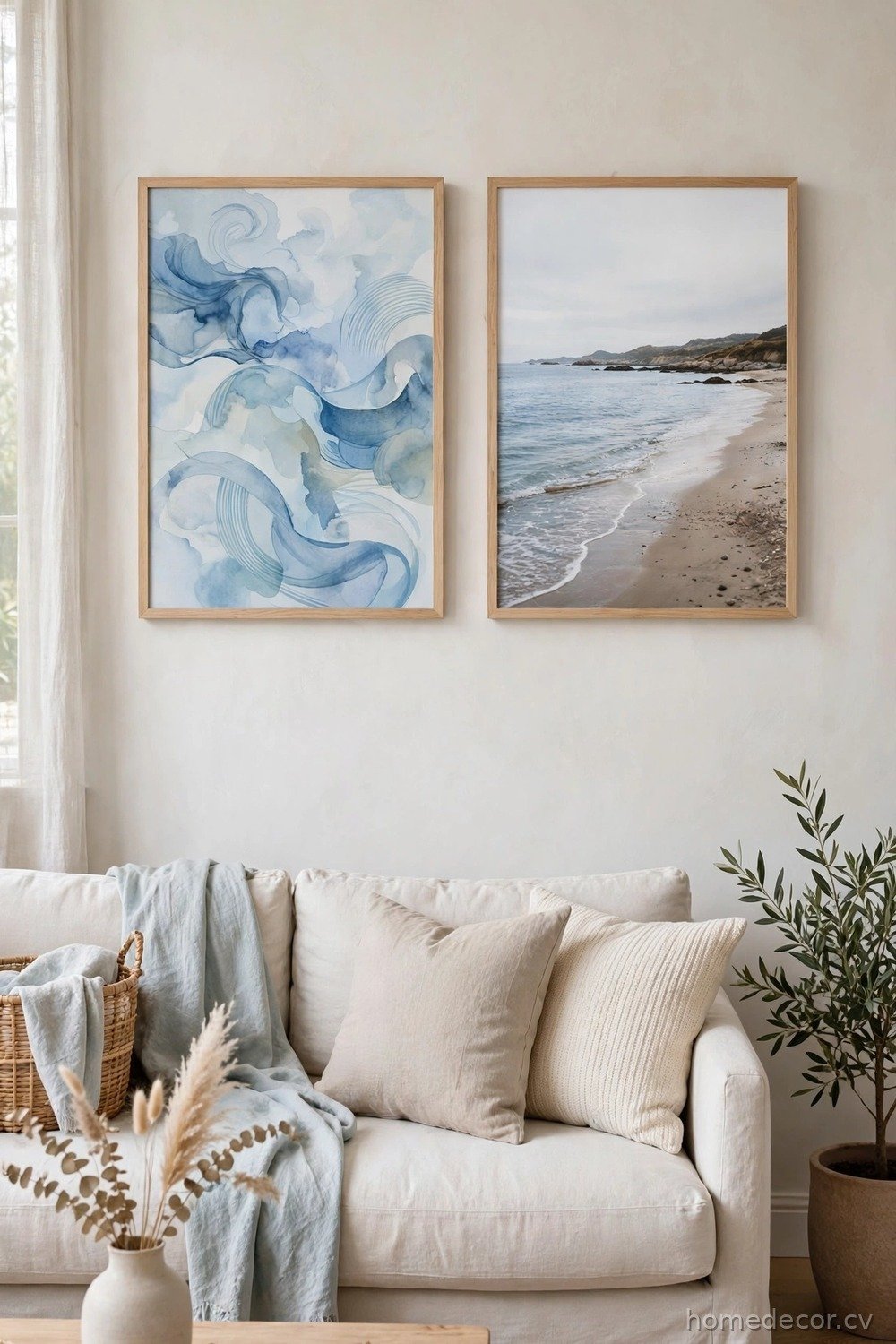
Artwork is where a coastal living room gains personality without drifting into themed novelty, so choose pieces that suggest the sea rather than shout about it. Soft abstract paintings in blue, sand and white, gentle shoreline photography or simple line drawings of waves all work beautifully above a sofa. Keep frames light in white, pale oak or weathered wood so the display feels airy against the wall. One large piece creates a calm focal point, while a loose gallery of smaller prints feels collected and personal, especially when the colors repeat the cushions and rug already in the room and furniture you already own.
Hang the center of your arrangement at eye level when seated, slightly lower than you would in a hallway, so it connects with the sofa below. Leave a hand width of space between the sofa back and the lowest frame to keep the grouping feeling intentional and balanced. If you like a warmer, layered feeling in the evening, borrow the layered look from these cozy living room ideas and add a small lamp or candlelight nearby to soften the wall. Rotate prints seasonally using the same frames to keep costs low and the room feeling fresh. Good coastal art should make you exhale slowly, like the first quiet moment of a beach walk.
Use Glass and Driftwood for Collected Details
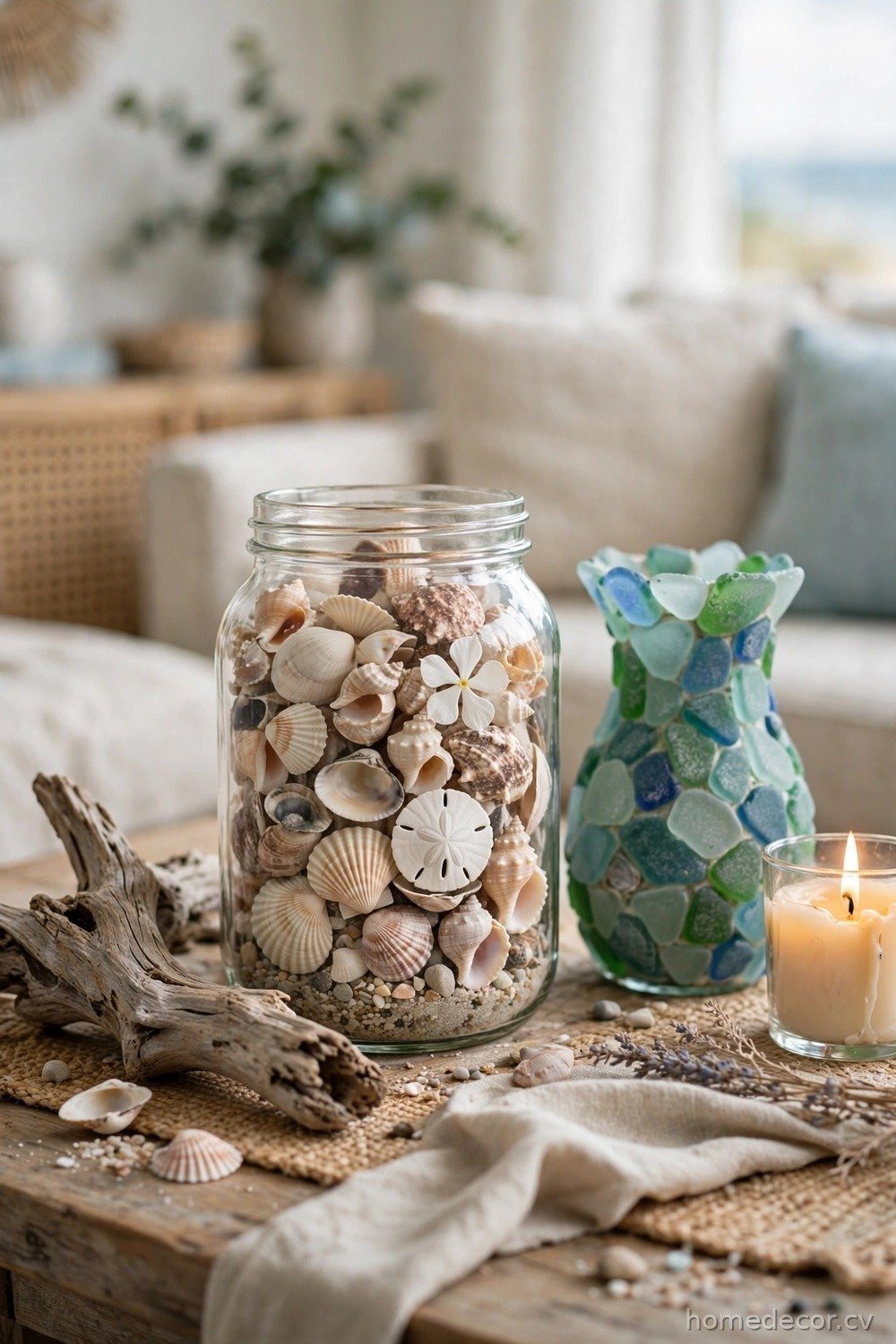
The finishing details in a coastal room should feel found and collected over time, not bought as a matching set in one afternoon. Clear and sea-glass tinted vases, simple glass hurricanes for candles and a smooth piece of driftwood on the mantel or coffee table all bring that shoreline feeling in quietly. Fill a glass jar with shells, pebbles or sand from a favorite trip if you have them, because personal pieces always look better than generic decor. Keep each surface edited to two or three objects so the room stays calm, open and easy to dust on busy weeks.
Style these details in small triangles of height, placing a taller vase beside a low bowl and a medium candle for a balanced little scene. Glass works especially well in darker corners because it catches light and keeps the arrangement from feeling heavy or cluttered. Avoid covering every shelf with beach objects, since restraint is what separates a stylish coastal room from a souvenir shop display at home. One beautiful piece of coral on a stack of books or a single driftwood branch above a doorway is often completely enough. These quiet, collected touches are usually the details guests remember most, precisely because they feel honest and personal.
Pick Light Wood Flooring or a Sandy Rug
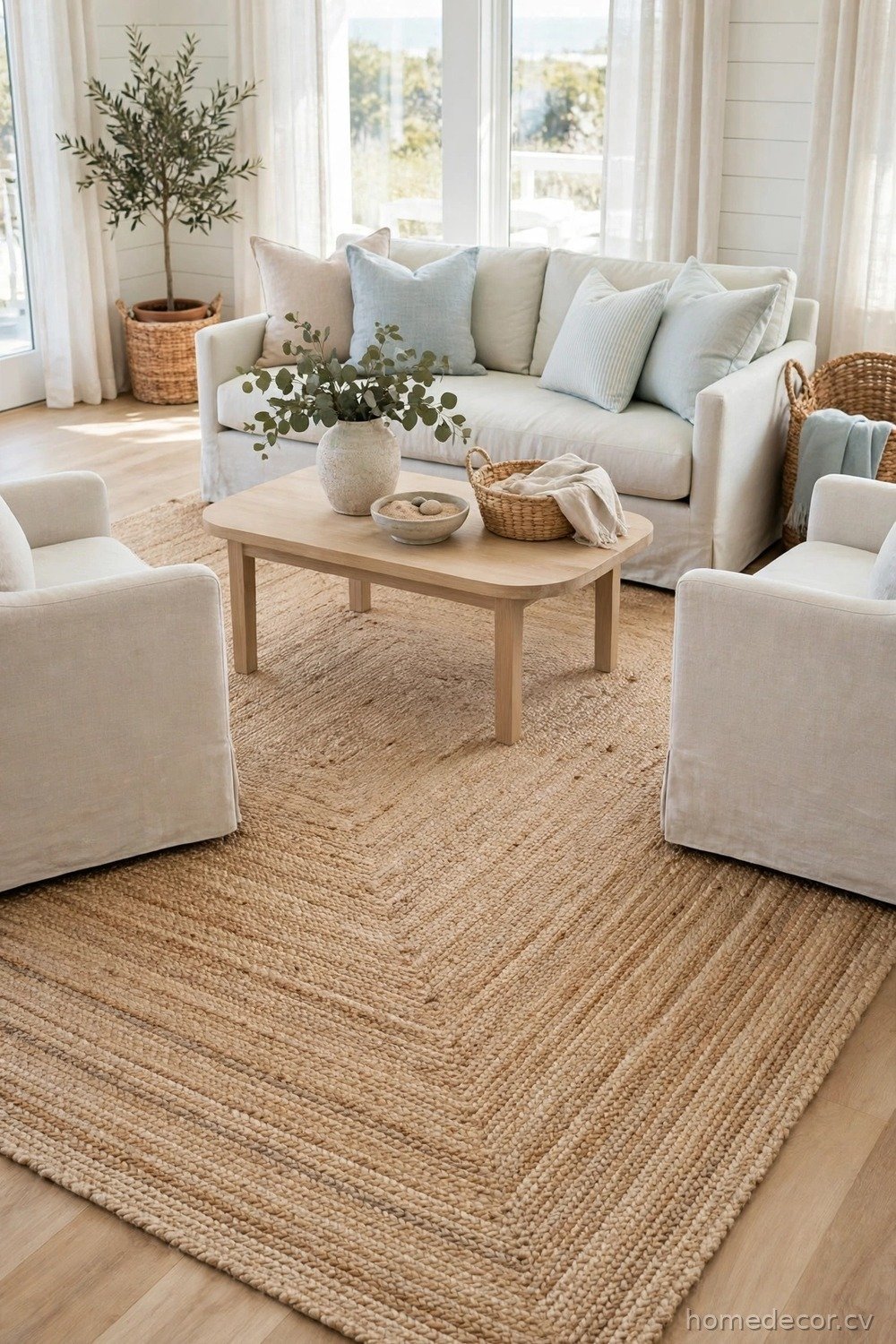
Floors set the temperature of the whole room, and pale surfaces are the fastest way to make a living room feel like a beach house. If you can choose flooring, light oak, whitewashed planks or pale wide-board laminate will bounce daylight around and make even a small room feel generous. For most of us working with existing floors, a large sandy-toned rug does the same job for far less money and zero renovation stress. Look for jute, sisal or a low-pile wool blend in oatmeal, flax or pale stone that hides everyday crumbs and pet hair gracefully between vacuums in busy family homes too.
Size matters more than pattern here, so choose a rug big enough for at least the front legs of the sofa and chairs to sit on comfortably. A rug that is too small will make the seating area feel cramped and unfinished, no matter how pretty the color is. Layer a smaller soft rug or a washable cotton throw over natural fiber if you want extra comfort under bare feet in winter. Keep the floor palette consistent with your weathered wood furniture so the room reads as one calm, connected scheme from wall to wall. With the floor lightened, every other coastal choice you make will suddenly look brighter and more intentional.
Add Greenery With Palm and Olive Branches
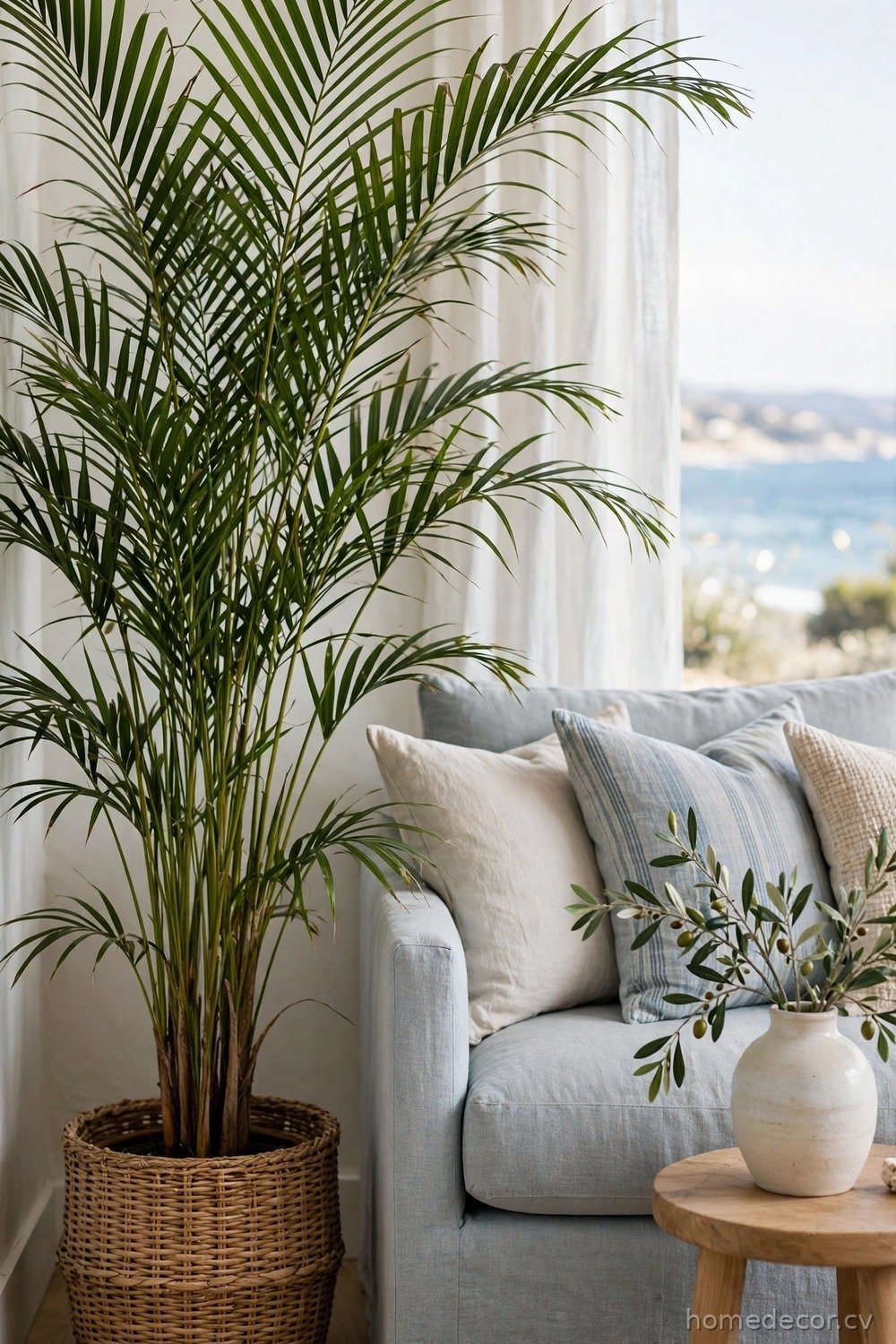
Every coastal room needs something living and green to balance all the pale neutrals, blue accents and woven textures around it. A tall palm, olive tree or fiddle leaf in a woven basket planter instantly softens a corner and draws the eye upward toward the light. On tables and shelves, simple stems work just as well, like eucalyptus, olive branches or dried pampas grass in a glass or ceramic vase. Greenery adds movement and shadow that flat decor cannot copy, which is why even one plant makes a styled room feel suddenly real and welcoming to sit in for family and guests alike.
Choose plants that suit your light and routine honestly, because a struggling plant will never look breezy no matter how pretty the pot is. Low-maintenance options like pothos, snake plants and faux stems of very good quality are all fair choices for busy homes and darker rooms. Group greenery at different heights, perhaps one floor plant, one table plant and a trailing vine on a shelf, to create that lush but calm coastal balance. Keep pots within a simple palette of terracotta, white, stone and woven seagrass so the display stays cohesive. A little green life is often the final layer that turns a nice room into a truly relaxing retreat.
Create a Cozy Reading Corner by the Window
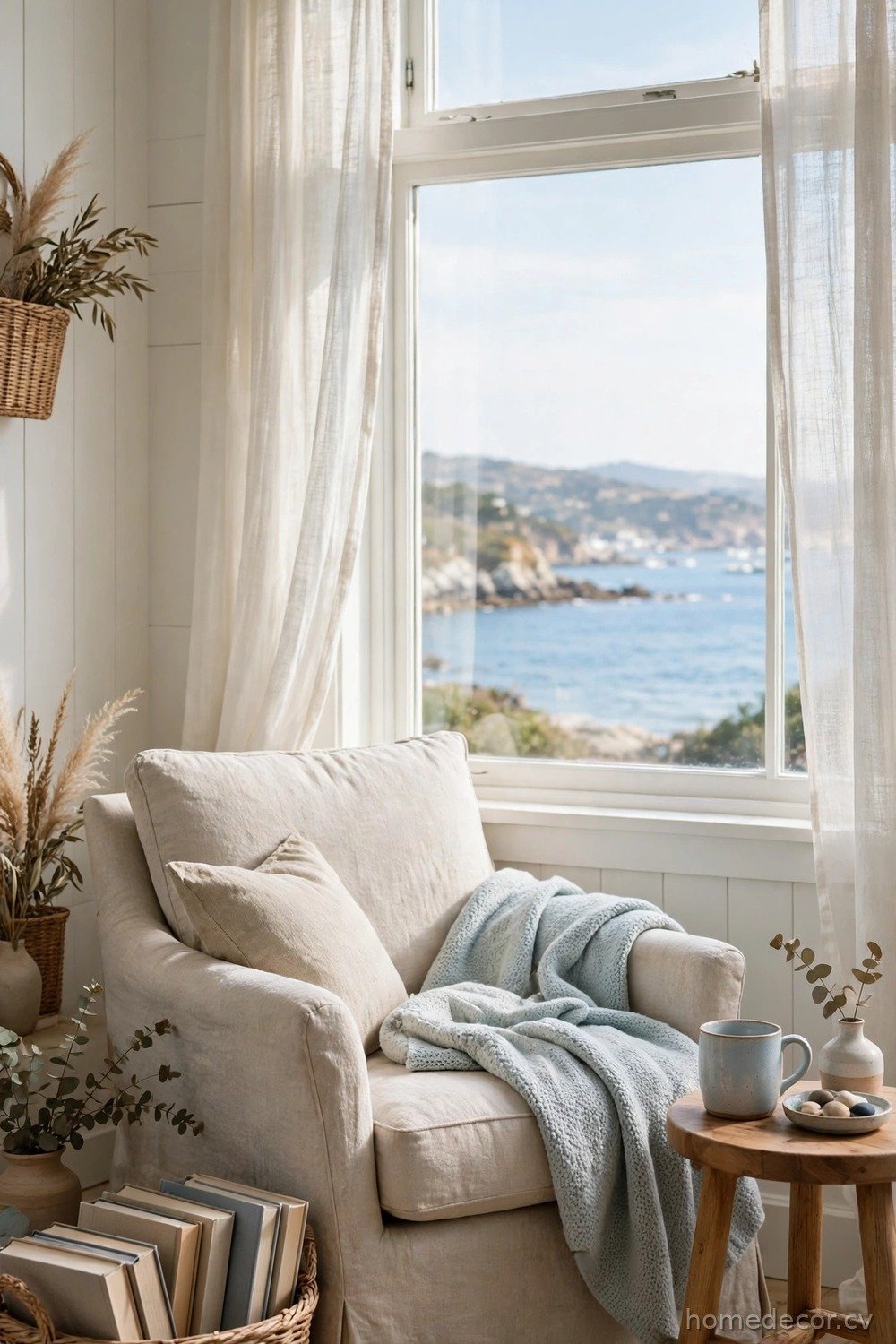
A coastal living room should invite you to slow down, and a small reading corner by the brightest window does exactly that without needing much space. Start with a comfortable armchair in linen, cotton canvas or rattan, angled slightly toward the light and the rest of the room. Add a small side table for tea and glasses, a soft cushion in your blue palette and a lightweight throw for cooler mornings and evenings. A woven basket beside the chair keeps current books and magazines tidy, while a simple floor lamp or wall light makes the corner useful long after the daylight fades away.
This is the perfect place to borrow warmth from your favorite cozy living room ideas, like a plush cushion, a candle in a glass hurricane or a small stack of beloved books within reach. Keep the corner visually light by choosing pale upholstery and natural materials, so it blends with the coastal scheme instead of becoming a dark, heavy nook. If space is tight, a window seat cushion on a storage bench or even a floor cushion beside the window creates the same slow-down feeling. The goal is simple, a spot that calls you to sit, breathe and watch the light change. Every beach house has one, and now your living room can too.
Choose Woven Lighting for a Warm Glow
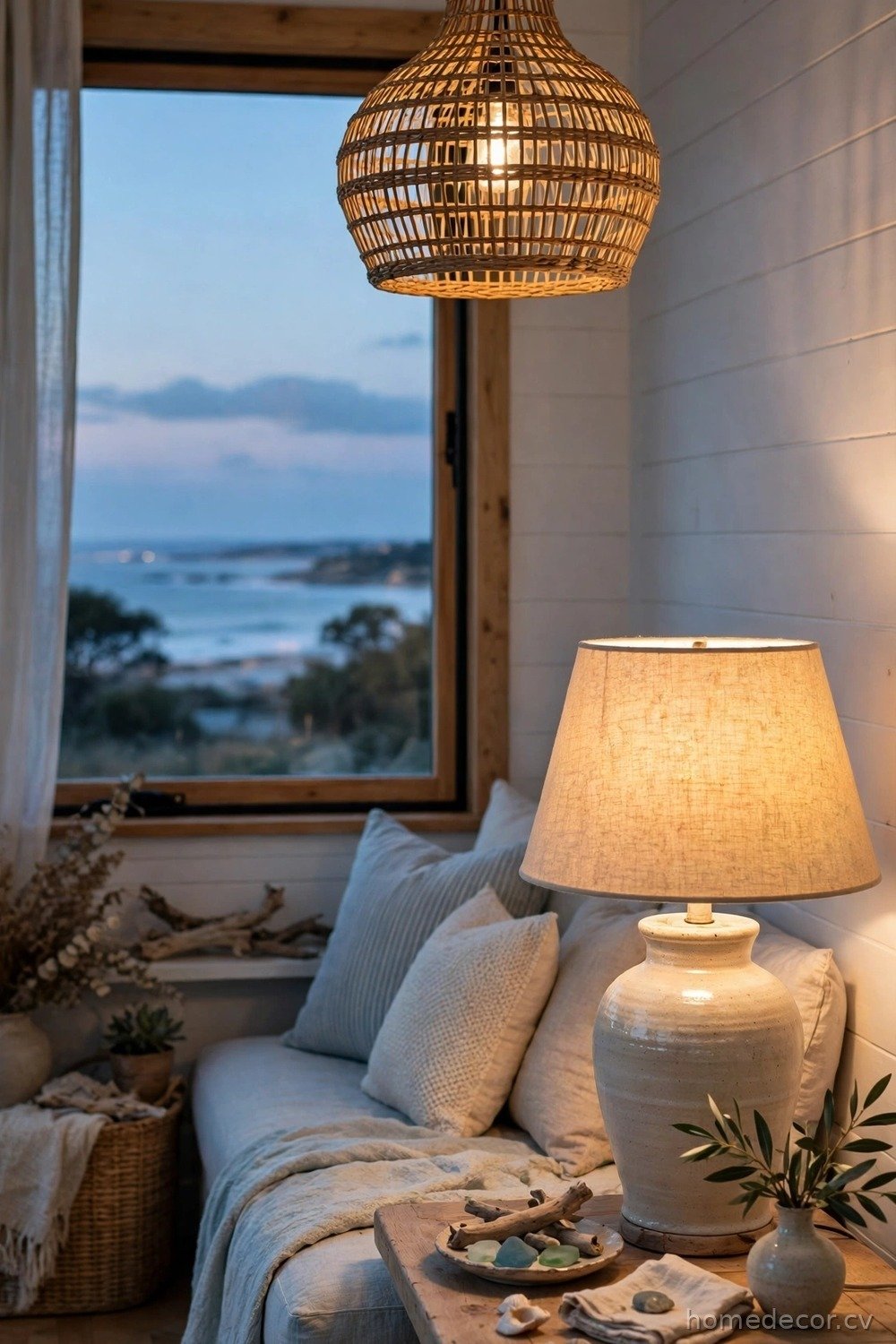
Lighting can make or break the breezy mood, because harsh overhead lights undo all the softness you have built with color and texture. A woven rattan or seagrass pendant over the coffee table area adds sculpture, shadow and warmth in one affordable statement piece. At eye level, table lamps with linen shades and ceramic or glass bases in pale tones spread a gentler glow for reading and conversation. Candles in glass hurricanes on the mantel or tray bring the flicker of firelight that makes coastal evenings feel especially calm and gathered, even on ordinary weeknights at home with family gathered close together.
Layer your lighting at three heights, ceiling, table and low candlelight, so you can adjust the mood from bright family time to quiet evening calm. Choose warm white bulbs throughout, since cool blue light can make sandy neutrals look grey and drain the warmth from wood and rattan. Dimmer plugs are a cheap, renter-friendly upgrade that instantly makes basic lamps feel far more expensive and flexible in daily use. Keep lampshades plain and light colored so they glow softly instead of blocking light or adding a competing busy pattern. When the lighting feels warm and low, the whole coastal palette settles into its most flattering, relaxing version of itself.
Mix in Moody Depth for Evening Comfort
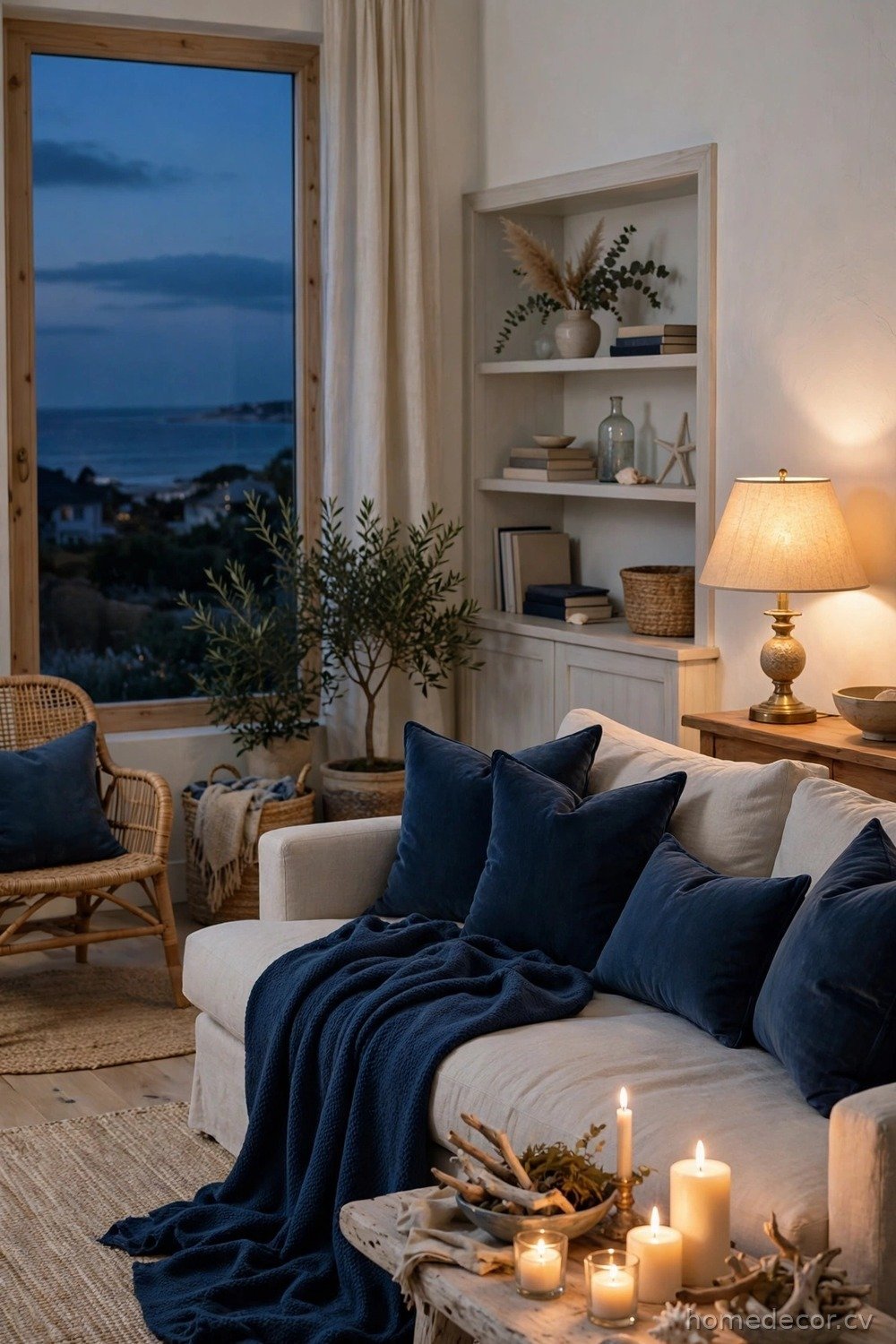
A coastal room does not have to stay pale around the clock, and a little depth makes evenings feel richer and far more inviting. Introduce one or two deeper notes, such as navy cushions, a deep blue throw, dark-stained wood or aged brass lamps, to anchor the light palette after sunset. These darker accents echo the sea at dusk and stop an all-white scheme from feeling washed out or chilly in low light. If you enjoy a more dramatic look, explore these moody living room ideas and borrow just the candlelight, contrast and layering, keeping your coastal base intact underneath.
Keep the balance firmly in favor of light, roughly eighty percent pale and twenty percent depth, so the room still reads breezy by day. A navy cushion pair, a dark wood side table and warm lamp glow are usually enough depth for most living rooms. Textiles are the easiest place to experiment, because deeper throws and covers can be swapped back to white in minutes when summer returns in full. This contrast also photographs beautifully, which is why layered coastal rooms always look so inviting in saved pins and magazines. With gentle depth added, your beach house feel lasts from bright morning coffee to the last quiet hour of the evening.