
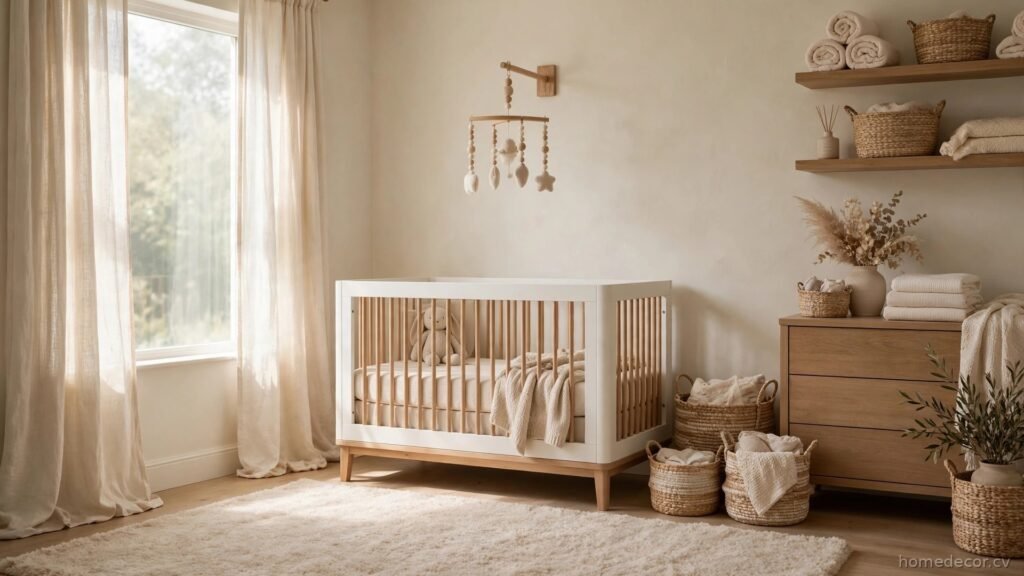
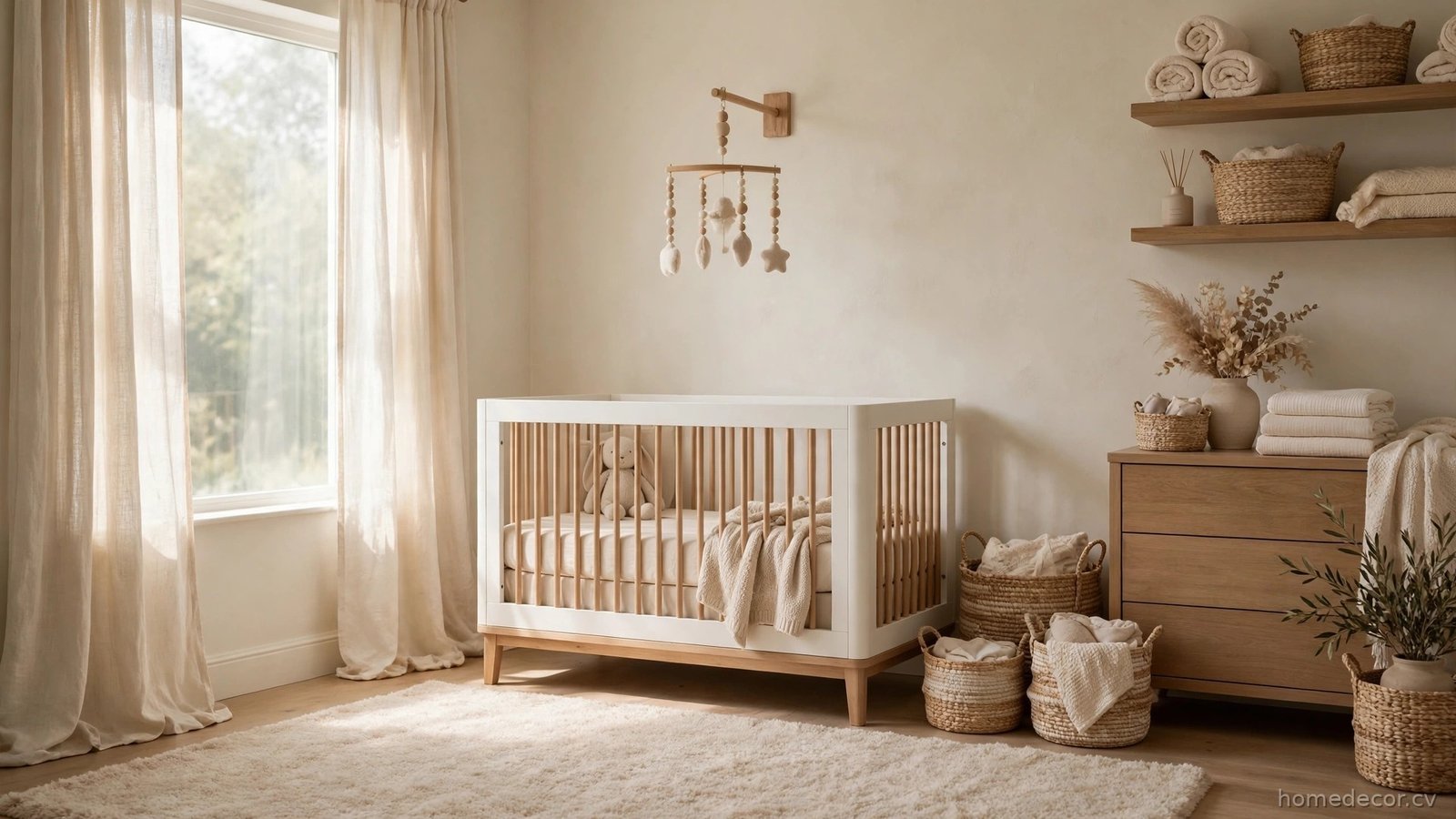
A neutral nursery is one of the sweetest gifts you can give yourself and your baby, because it feels calm from the very first day and never goes out of style. Soft creams, warm beiges, gentle grays, and natural wood create a peaceful space for feeding, rocking, and those quiet middle-of-the-night moments you will remember forever. Neutral also means practical, since the room works beautifully whether you are keeping the gender a surprise, planning to reuse it for a sibling, or simply love a timeless look. These thirteen ideas mix budget-friendly finds, cozy textures, and smart storage, so you can build a serene baby room layer by layer without overspending or repainting every year.
Start With a Warm Cream and Beige Palette
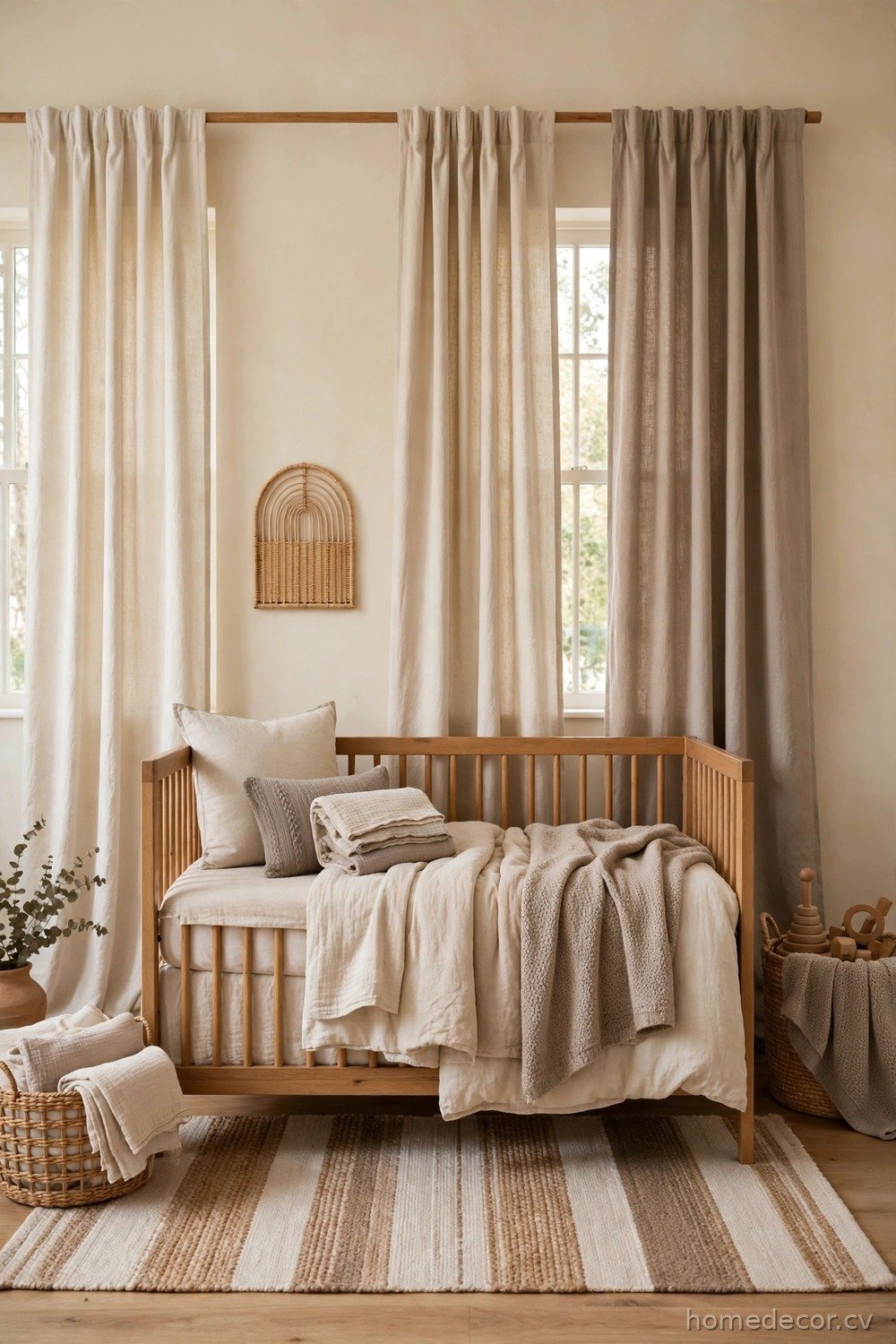
A warm cream and beige palette is the easiest foundation for a nursery that feels soft, bright, and instantly calming for both baby and parents. Choose a creamy white or pale greige for the walls, then layer slightly deeper beige tones through the rug, curtains, and bedding so the room feels rich rather than flat or washed out. This gentle contrast keeps the space interesting without any loud color competing for attention during feeds and naps. Because beige reads warm under both daylight and lamplight, the room stays cozy in every season, and nearly any accent you add later, from sage to dusty rose, will blend in beautifully.
I spend far too much time saving home ideas.
If you'd like the best ones, I'll send a short email once or twice a month.
To keep the palette from feeling plain, mix at least three shades of beige and repeat each one twice somewhere in the room. Paint is the cheapest way to set the tone, and a warm neutral costs no more than any other color at the hardware store. Thrifted wooden frames, a secondhand dresser painted cream, and inexpensive linen-look curtains from a discount store all pull the look together for very little money. Finish with one slightly darker element, like a caramel throw or a walnut side table, to ground the lightness. The result feels intentional and layered, not like you simply could not decide on a color.
Add Natural Wood for Instant Warmth
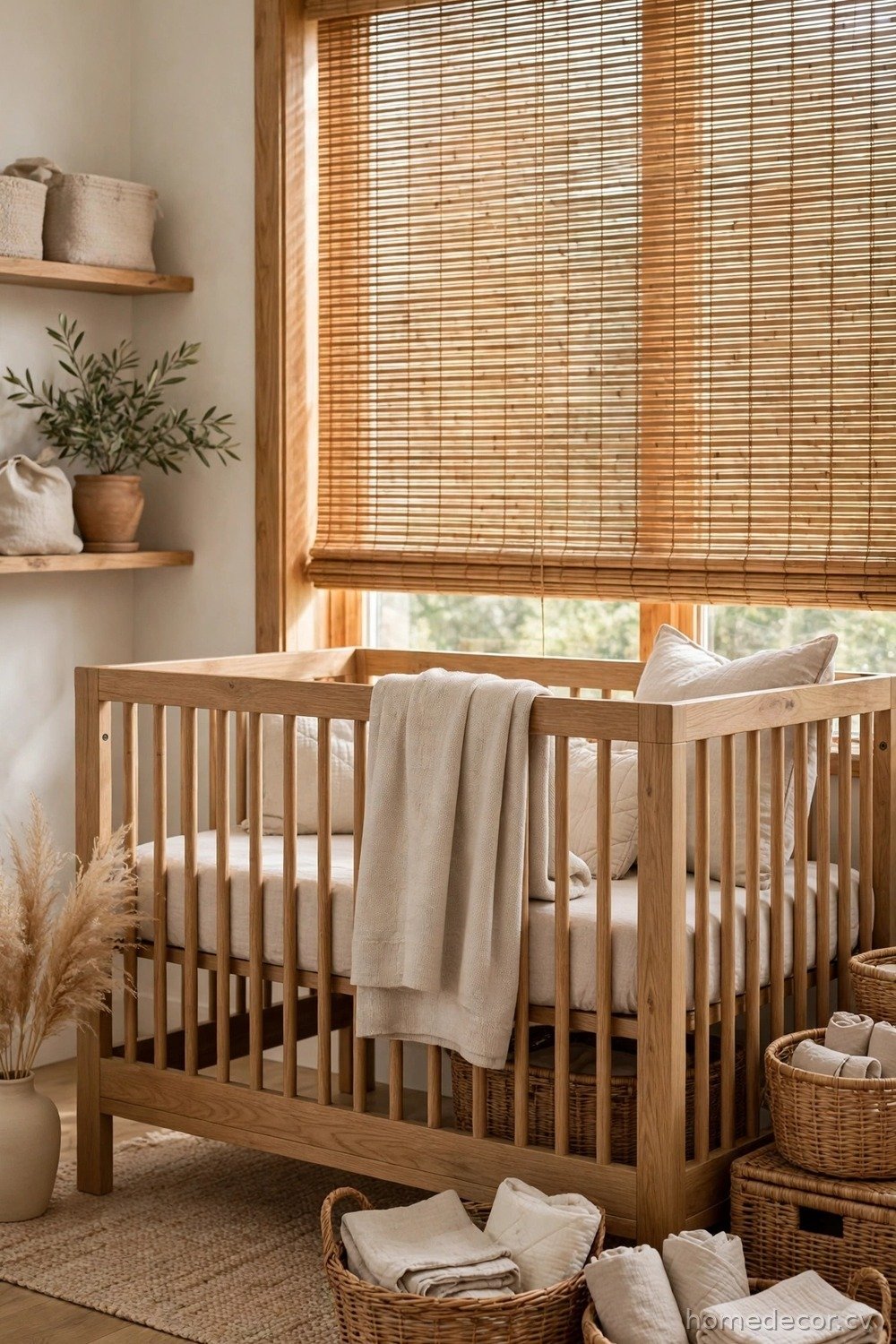
Natural wood is what stops a neutral nursery from feeling cold or sterile, because its warm grain adds the color and texture the palette is missing. A light oak or natural pine crib becomes a beautiful focal point against cream walls, and wooden picture ledges, a small bookshelf, or a rattan laundry basket repeat that warmth around the room. You do not need everything to match perfectly, since mixing two or three light wood tones actually looks more relaxed and collected. Wood also ages gracefully, hides small scuffs better than painted white furniture, and transitions easily into a toddler room later on.
If a solid wood crib is outside the budget, get the same effect with smaller affordable swaps that still make a big visual difference. Peel-and-stick wood-look trim, a thrifted wooden stool beside the glider, bamboo blinds, and unfinished pine crates used as toy storage all deliver real warmth for a few dollars each. Sand and seal secondhand finds with a clear matte finish instead of paint so the grain stays visible. Even the small wooden knobs on a dresser or the frame of a mirror can carry the theme. Spread the wood pieces evenly around the room rather than clustering them, so the warmth feels balanced from every angle.
Layer Cozy Textures Instead of Bold Color
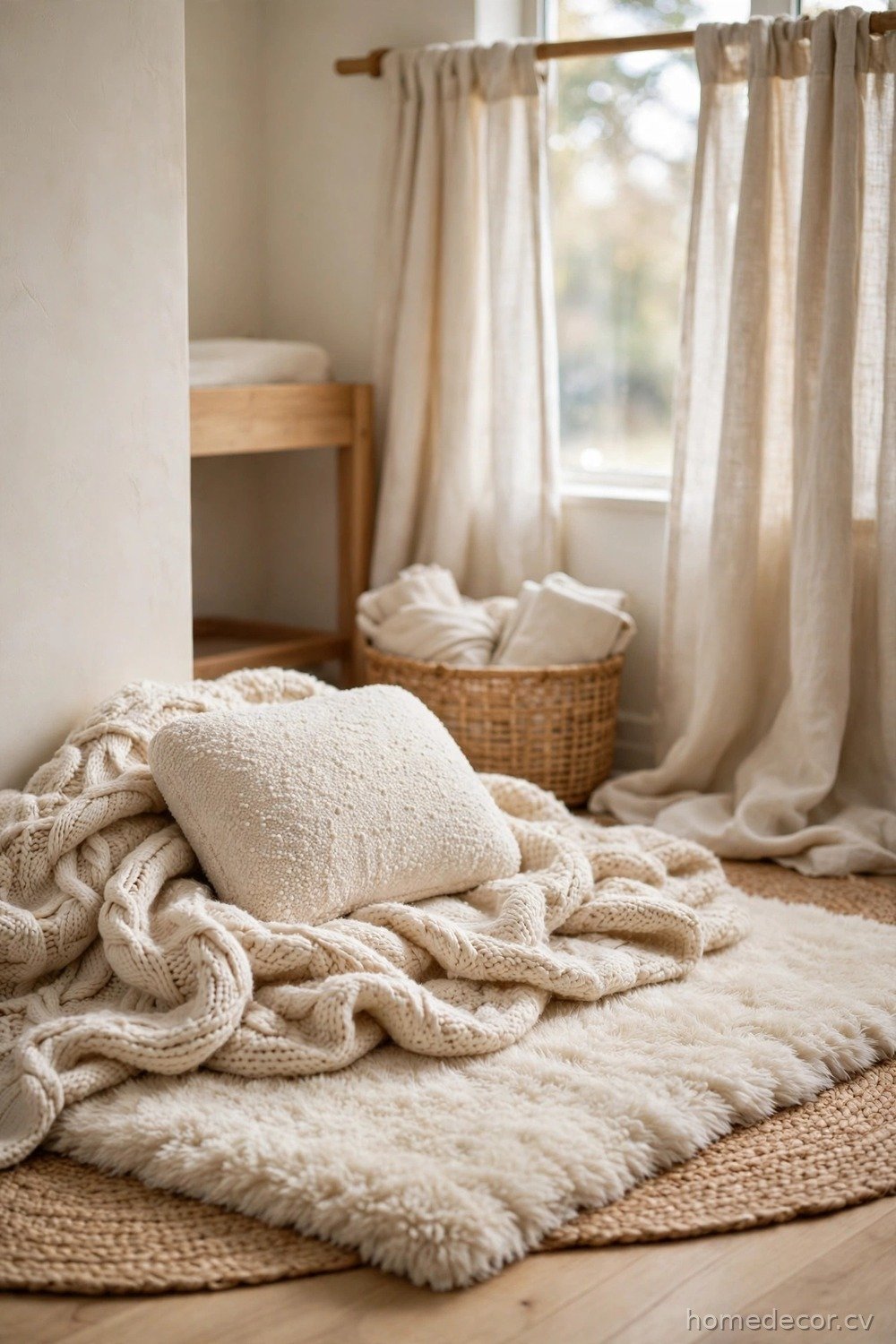
When the color palette stays quiet, texture does all the talking, and layering it generously is the secret to a nursery that feels huggable rather than bland. Think of a chunky knit throw over the glider, a boucle cushion, linen curtains that filter the light softly, a woven seagrass basket, and a plush high-pile rug underfoot for tummy time. Each material catches light differently, which creates depth and shadow that the eye reads as richness. Babies also benefit from these tactile surfaces as they grow, exploring ribbed knits, smooth cotton, and nubby wool blends during play and story time every single day.
Build your layers gradually so the room never feels cluttered or overdone, starting with the big soft pieces and adding smaller ones as you find them. A good rule is one texture per zone: the rug anchors the floor, curtains soften the window, bedding dresses the crib, and a throw plus cushion finish the feeding corner. Shop your own home first, because a cream blanket from the guest room or a woven basket from the hallway may fit perfectly at no cost. Washable fabrics matter more than fancy ones at this stage, so favor cotton, linen blends, and removable covers you can toss in the machine after a messy day.
Choose a White and Wood Crib as the Centerpiece
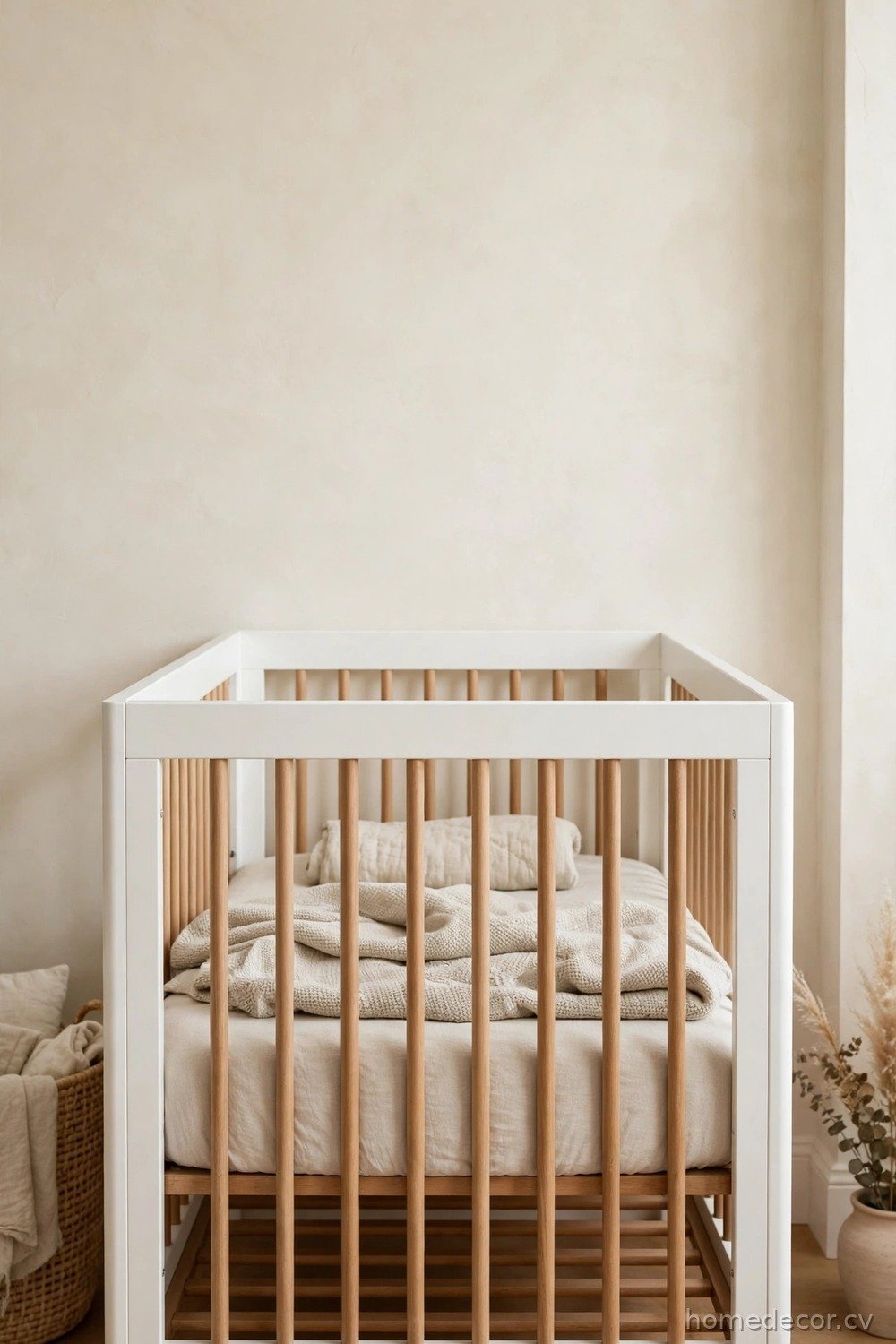
The crib is the largest piece of furniture in the room, so choosing a white and wood design gives you a centerpiece that anchors the whole neutral scheme effortlessly. The white frame keeps the look light and airy, while natural wood legs, rails, or slats add the warmth that prevents an all-white room from feeling clinical. This two-tone style pairs with almost anything, from boho rattan to classic gingham, and photographs beautifully for those first-month pictures you will share with family. If you browse nursery decor ideas for layout inspiration, you will notice this crib style appearing again and again because it simply works in every size of room.
Spend wisely by choosing a convertible model that changes from crib to toddler bed to daybed, spreading the cost across several years of use. Check that the finish is non-toxic and the slat spacing meets current safety standards, since looks should never come before safety. A simple crib also lets your bedding and mobile provide the personality, and those are far cheaper to swap when your taste changes. Keep the styling around it minimal, with one soft fitted sheet in cream or oatmeal and a breathable blanket draped over the rail for color. Let the crib breathe visually, and the whole room will feel calmer and more spacious.
Hang Soft Neutral Wallpaper or Wall Decals
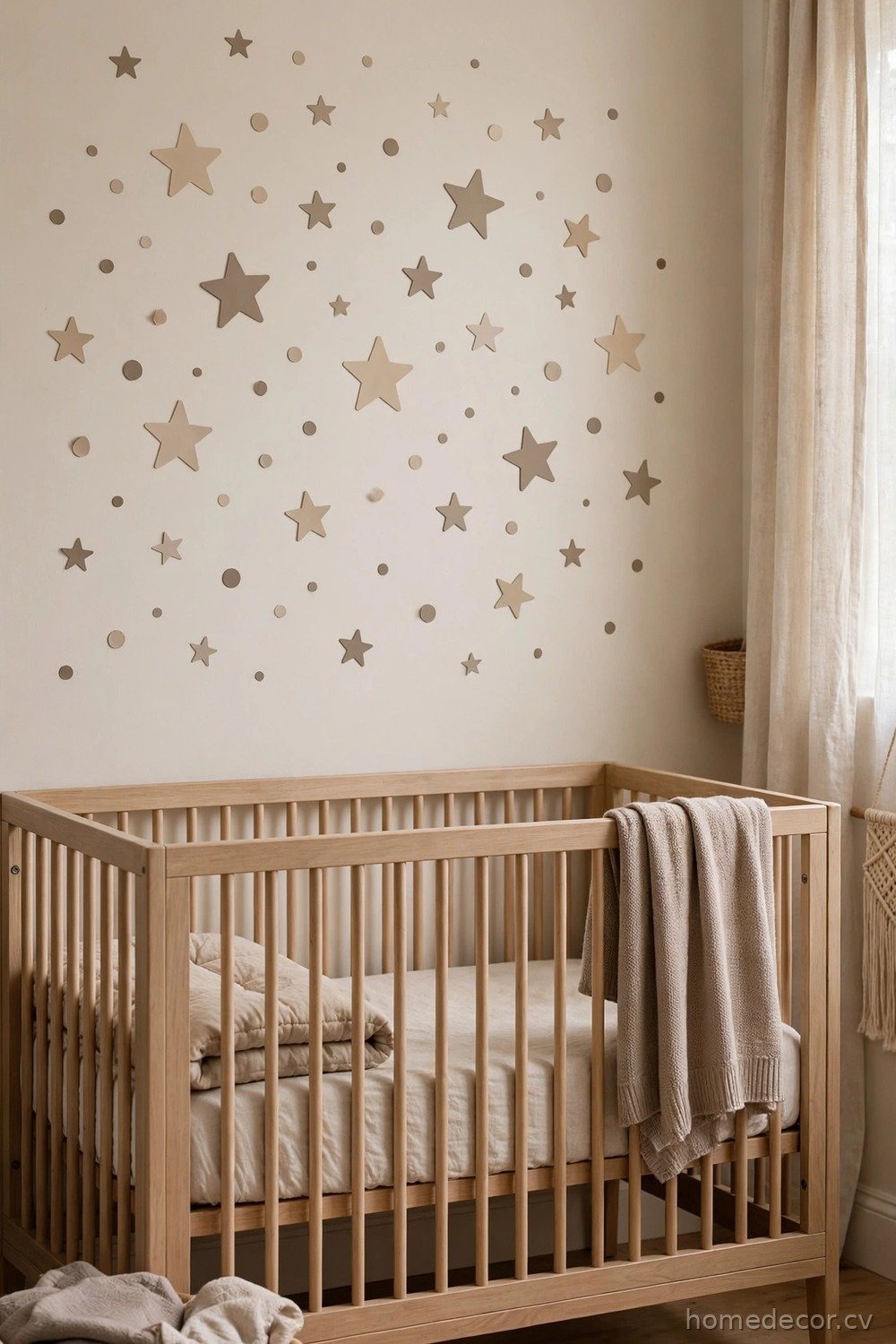
Bare walls can make a neutral room feel unfinished, but a soft patterned wallpaper or a set of removable decals adds gentle interest without breaking the calm mood. Look for tiny scattered stars, faint polka dots, delicate branches, or a subtle watercolor rainbow in beige, taupe, and cream tones that whisper rather than shout. One accent wall behind the crib is usually enough, and it creates a beautiful backdrop for photos. Renters and commitment-phobes can choose peel-and-stick options that remove cleanly, which also makes it easy to update the room as your baby grows into new interests and favorite characters over time.
Budget carefully here, because wallpaper prices vary enormously and one wall needs far fewer rolls than a whole room. Decals are the cheapest route of all, often costing less than a single roll of paper while giving the same dotted or starry effect, and you can space them wider to stretch one pack across the wall. Measure and plan the layout on the floor first so you do not run short mid-wall. Keep the pattern scale small in a small room so it feels like texture from a distance. Pair the feature wall with plain painted walls in a matching cream, and the room gains depth without any visual noise.
Create a Snug Reading and Feeding Corner
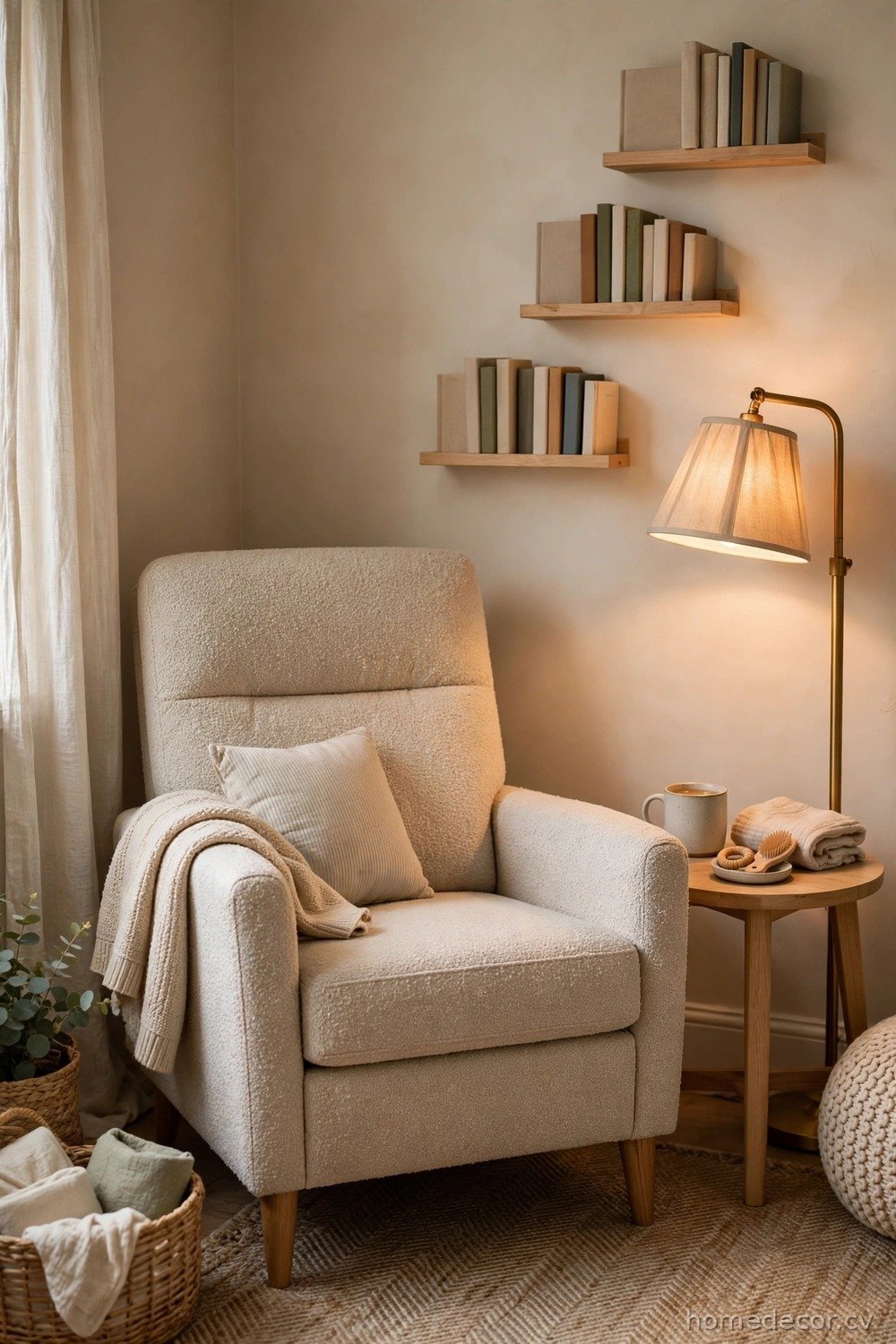
Every nursery needs one corner that feels like a hug, and a comfortable glider or armchair instantly creates that snug spot for feeds, cuddles, and bedtime stories. Choose upholstery in oatmeal, warm gray, or soft ivory so it blends with the palette, then add a small side table for a water bottle, burp cloth, and your phone during long evenings. A floor lamp or wall sconce with warm light keeps the corner glowing softly without waking the baby under the harsh ceiling light. A tiny bookshelf or a few forward-facing book ledges nearby turn the corner into your first little library together as a family.
You do not need a brand-new glider to make this corner work beautifully on a budget. A comfortable secondhand armchair with a washable slipcover, a thrifted rocking chair with a new cushion, or even a padded dining chair can serve until you find the perfect piece. What matters most is a supportive back, a footrest or pouf for tired legs, and a small basket within reach for blankets and board books. Add one personal touch, like a framed print or the baby’s name in wooden letters above the chair. This corner will likely become your favorite seat in the whole house within the first week at home.
Use Woven Baskets for Pretty, Practical Storage
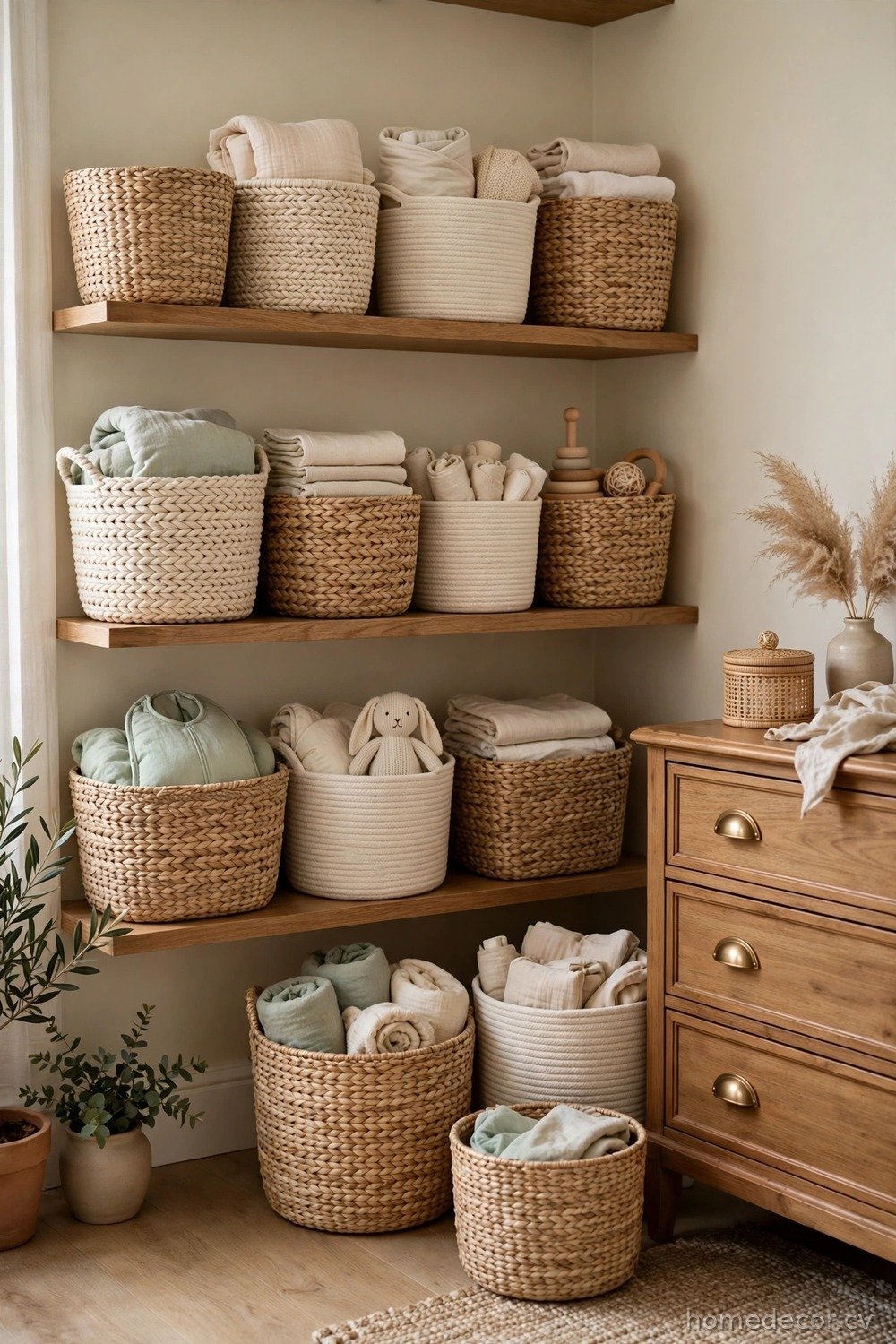
A neutral nursery still has to hold a mountain of diapers, wipes, swaddles, and tiny clothes, and woven baskets hide that clutter while adding gorgeous natural texture. Seagrass, rattan, cotton rope, and water hyacinth baskets all sit comfortably inside the beige and cream palette, so storage becomes part of the decor instead of something to hide. Line them along a dresser top, slide them under the crib, or stack them in an open cube shelf for easy one-handed grabbing during changes. Label each basket simply if you like, because an organized system saves real stress during those sleepy overnight diaper changes and outfit swaps.
Buy baskets in sets whenever possible, since matching sets usually cost less per piece and instantly make shelves look calm and coordinated. Assign each size a job: large baskets for blankets and toys, medium ones for clothes sorted by size, and small ones for creams, thermometers, and grooming bits on the changing station. Thrift stores and discount home shops are full of sturdy baskets for very little money, and a quick wipe-down makes them nursery-ready. Avoid lids on the ones you use most, because open tops are faster with a baby in your arms. When everything has a woven home, tidying the room takes two minutes at the end of the day.
Bring in a Gentle Boho Touch With Rattan and Macrame
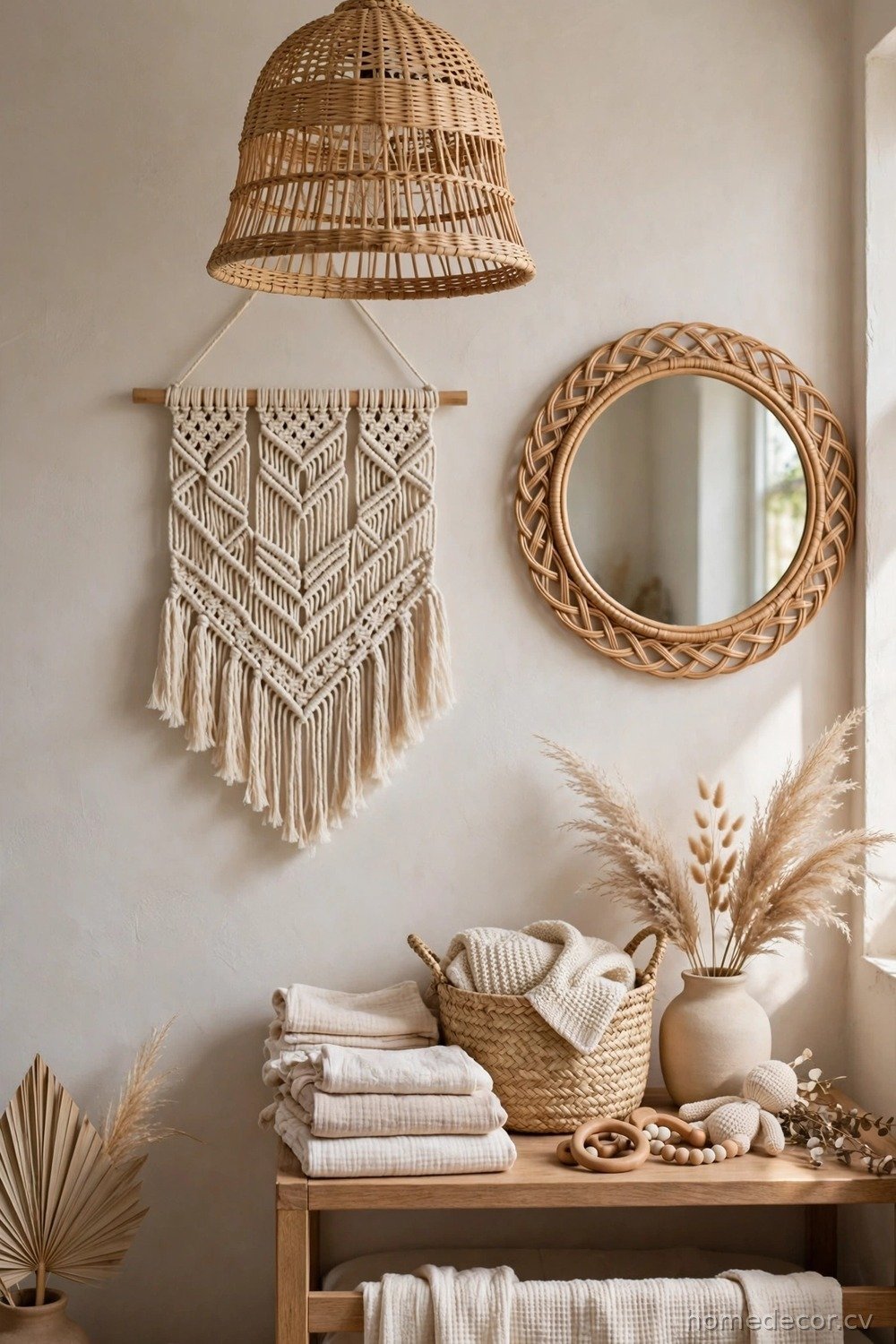
A light boho touch keeps a neutral nursery from feeling too formal, adding the handmade warmth that makes the room feel loved rather than staged. A rattan pendant light or lampshade, a small macrame wall hanging above the dresser, and a fringed cushion on the glider introduce soft curves and craft texture that balance the straight lines of the crib and shelves. Keep the colors in the same cream and sand family so the boho pieces feel calm instead of busy. This style also mixes happily with pieces you may already own, which makes it one of the easiest looks to build slowly on a budget.
Start with just one or two statement pieces so the room stays serene and does not tip into cluttered. A round rattan mirror reflects window light beautifully and makes a small nursery feel bigger, while a macrame hanging can soften a plain wall above the changing table where baby can gaze at the gentle fringe during changes. Support small makers when you can, or try a simple DIY wall hanging with cotton cord and a wooden dowel for a weekend project that costs almost nothing. Balance every soft boho piece with something clean and simple nearby, like a plain linen curtain, so the overall mood stays restful, airy, and easy on tired eyes.
Pick a Plush Neutral Rug to Anchor the Room
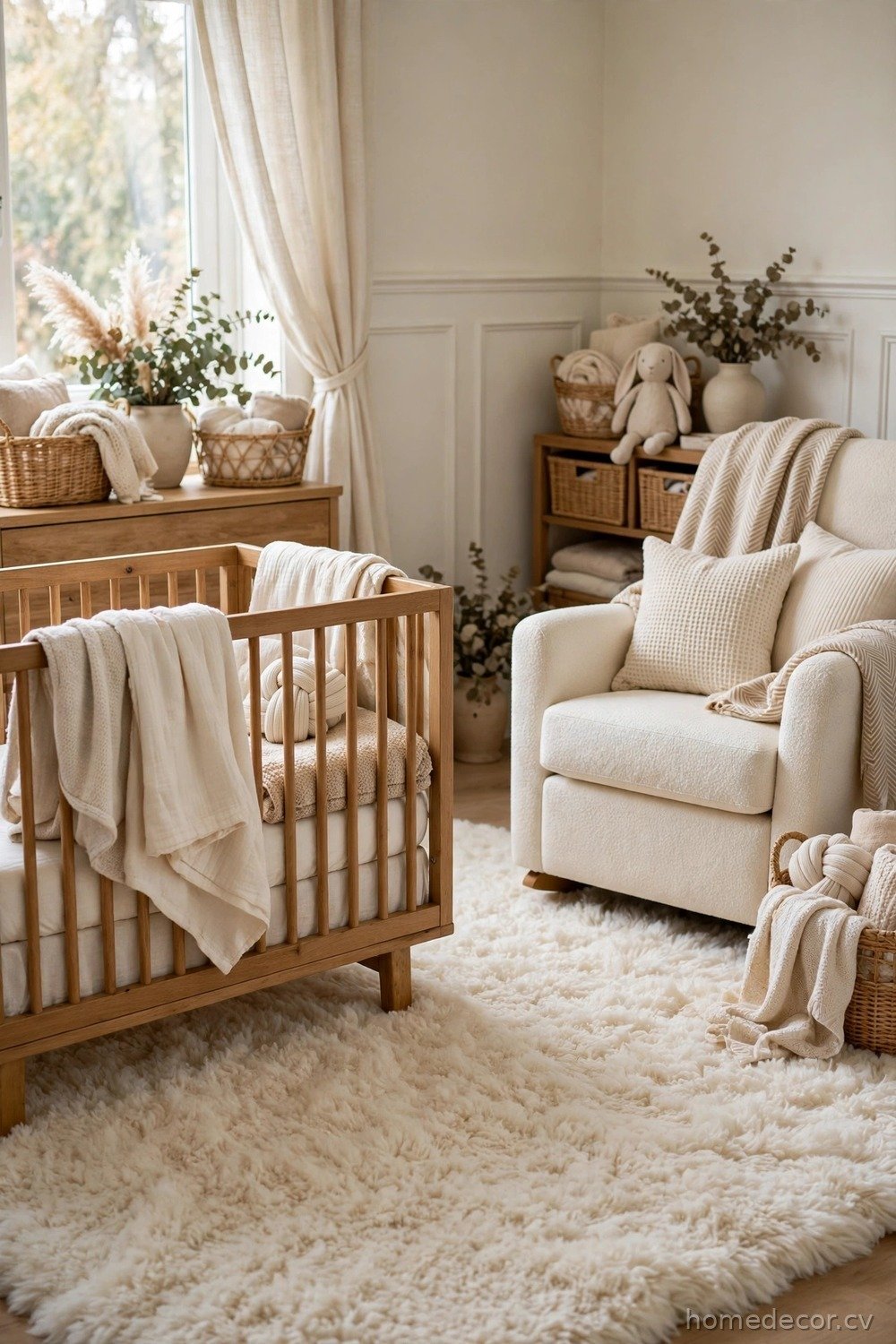
A rug is the hardest-working item in a neutral nursery, anchoring the furniture, softening echo, and giving your baby a cushioned place to roll, crawl, and eventually take first steps. Choose a plush style in cream, oatmeal, or a subtle beige pattern that hides the inevitable crumbs and spills better than pure white ever could. A low, dense pile is easier to vacuum than a deep shag, and a rug pad underneath stops slipping and adds extra softness. Size matters more than pattern here: the rug should sit under the front legs of the crib and glider so the whole arrangement feels like one connected, cozy zone.
If the budget is tight, layering is your best friend, because a large inexpensive flatweave in a warm neutral can sit under a smaller, plusher rug where baby actually plays. This trick gives you the designer layered look for a fraction of the cost and lets you replace only the top rug when it wears out. Look for machine-washable options if your washing machine can handle them, since nursery rugs work hard and wash day will come often. A faint pattern like a thin stripe, tiny diamond, or speckled tweed adds forgiveness between cleans. Test colors in the room’s actual light before committing, because beige can shift surprisingly pink or gray.
Style the Dresser as a Calm Changing Station
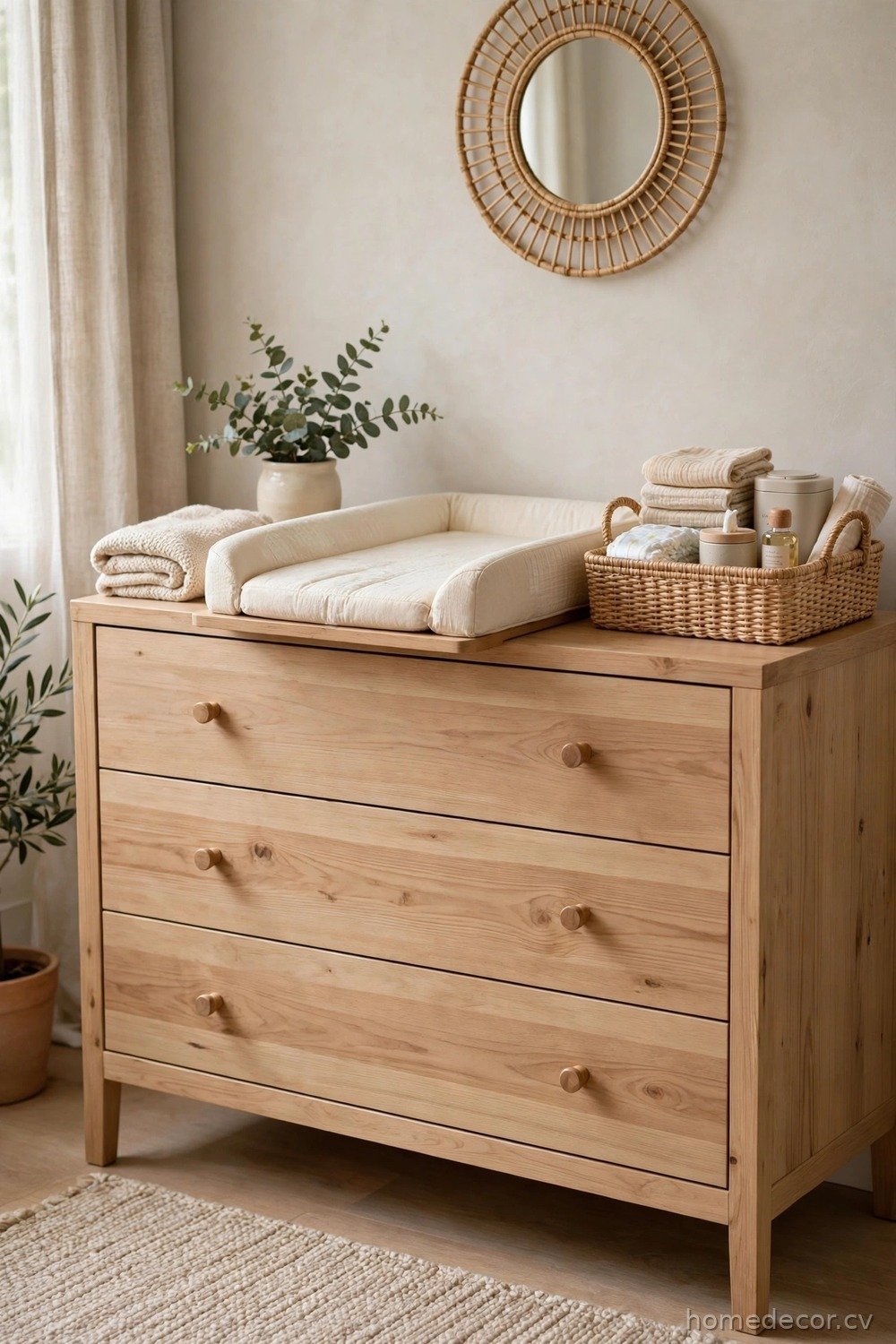
Turning the dresser into a changing station is the smartest space and money saver in a small neutral nursery, because one sturdy piece does two jobs beautifully. Choose a dresser in white, light wood, or warm greige, top it with a contoured changing pad in a cream washable cover, and keep diapers, wipes, and creams in a woven caddy within arm’s reach. The wide surface also gives you display room for a small plant, a framed print, and the baby monitor without crowding the changing area. Many of the sweetest christmas baby shower ideas include dresser-top essentials on the gift list, so add the caddy and pad to your registry early.
Safety and order make this setup work day after day, so anchor the dresser to the wall, keep anything small or breakable far from baby’s reach, and restock the caddy every evening as part of your wind-down routine. Drawers below can follow a simple system: top drawer for diapers and clothing basics, middle for outfits, bottom for blankets and backup supplies. A small lidded bin beside the dresser catches dirty clothes before they reach the floor. Keep the styling above simple, like one piece of art hung high and secure, and the station stays both pretty and practical. When the diaper days end, remove the pad and you simply have a lovely dresser again.
Add Black or Bronze Accents for Soft Contrast
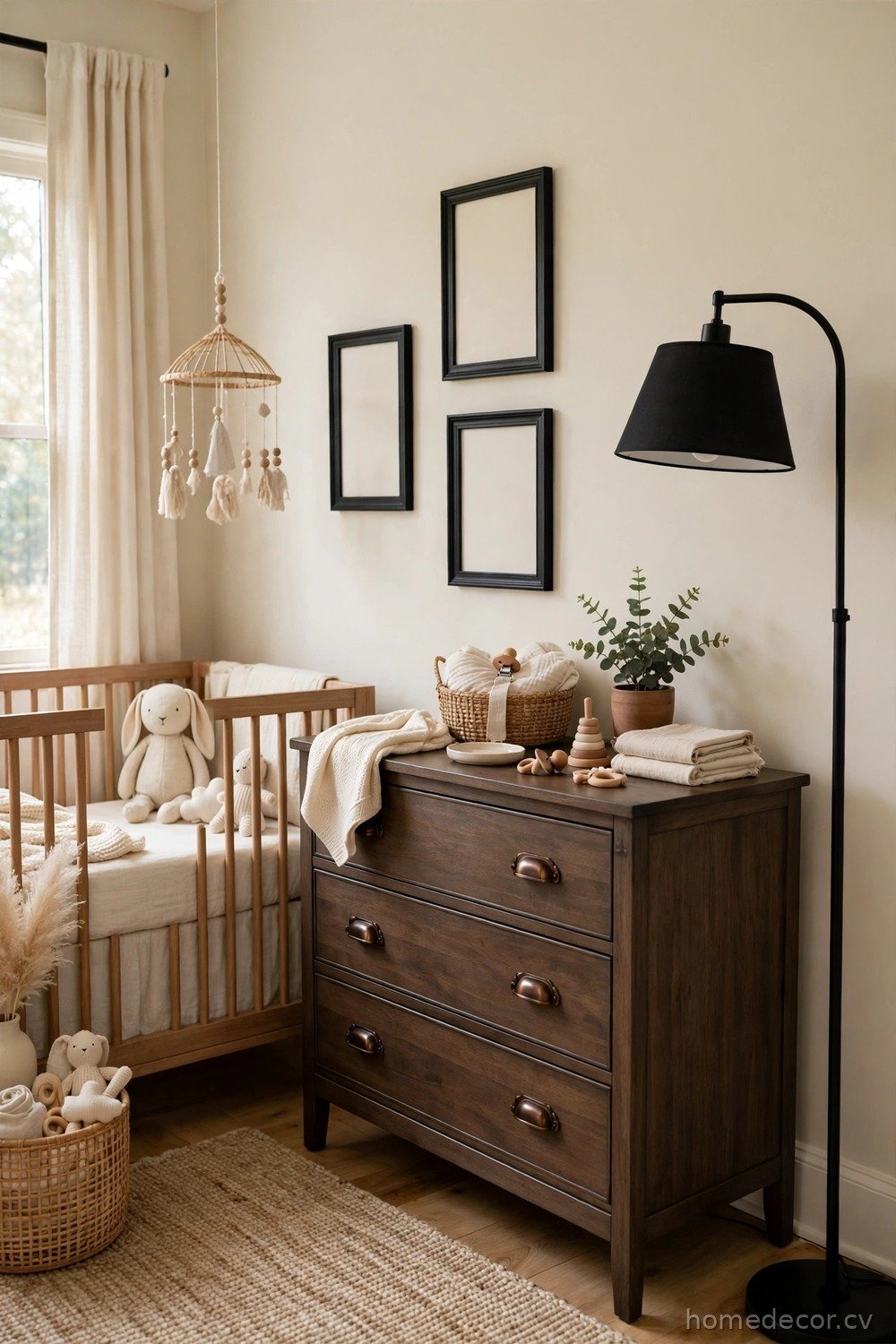
An all-cream room needs a little contrast to keep the eye interested, and slim black or warm bronze accents provide it without disturbing the calm palette at all. Try a black metal floor lamp beside the glider, matte bronze drawer pulls on the dresser, thin black picture frames in a small gallery, or a dark woven basket among the pale ones. These touches sharpen the soft edges of the room the way eyeliner defines an eye, making the light colors look even creamier by comparison. The key is restraint: a few well-placed dark notes repeated in two or three spots feel deliberate, while scattered everywhere they would feel heavy and busy.
Hardware swaps are the cheapest place to start, since a set of new drawer pulls costs very little and changes a plain dresser in ten minutes with a screwdriver. If black feels too strong for your taste, aged bronze, oil-rubbed finishes, or even deep espresso wood deliver gentler contrast with a warmer undertone. Repeat your chosen finish at least twice so it reads as a theme rather than an accident. A dark-framed mirror, a bronze reading lamp, and matching pulls can carry the whole effect. Stand at the doorway and squint: if your eye lands softly on a few dark points as it travels the room, the balance is exactly right.
Keep Window Treatments Light, Soft, and Safe
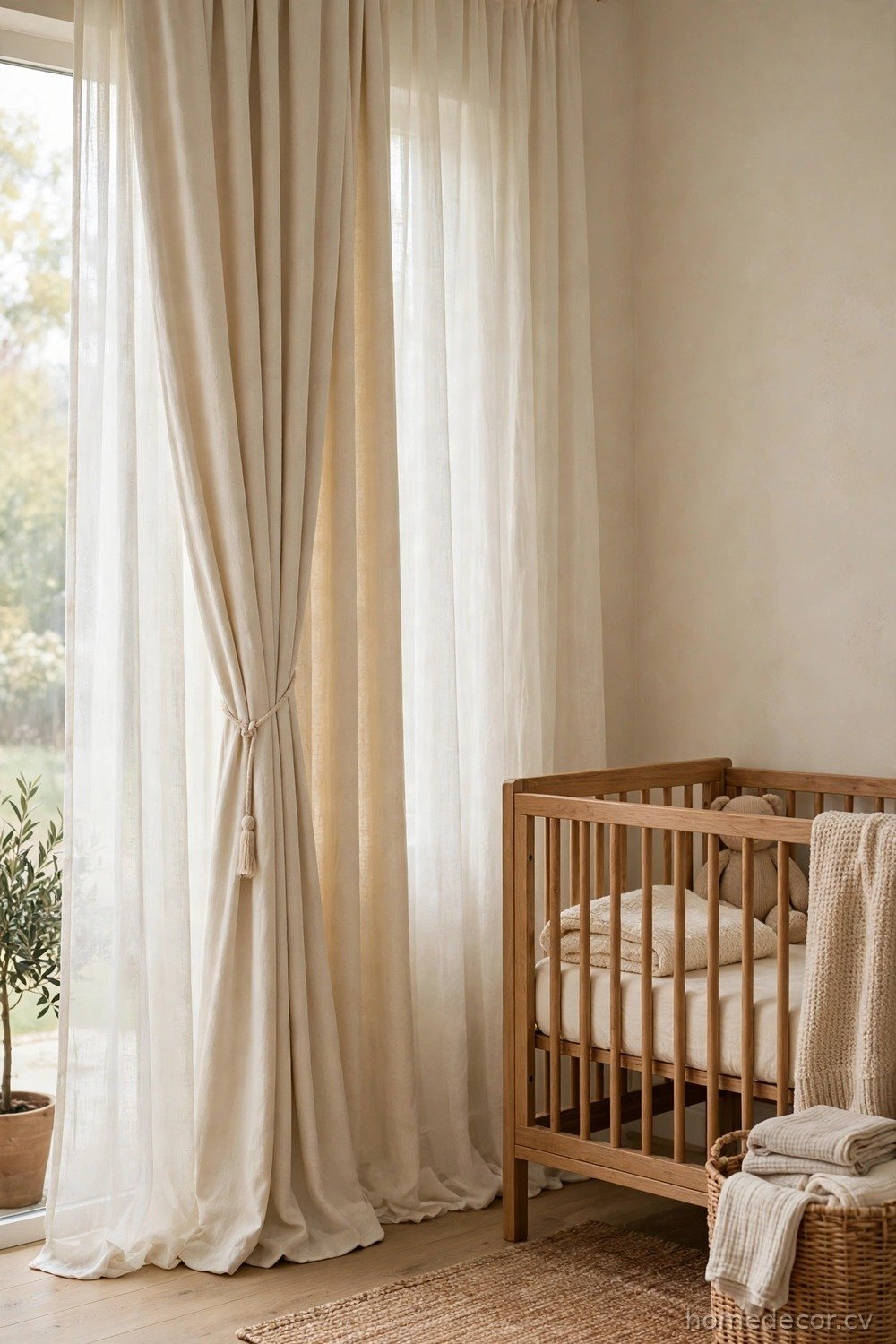
Windows can make or break the mood of a neutral nursery, and soft layered treatments give you gentle daylight for play and real darkness for naps. Start with sheer linen-look panels in ivory that filter harsh sun into a flattering glow, then add blackout curtains or a blackout roller blind behind them in a warm cream or pale taupe. This combination keeps the room looking airy while protecting the sleep schedule you will guard fiercely in the early months. Floor-length panels also add height and softness to plain walls, and their gentle movement in a breeze adds life that flat blinds simply cannot offer on their own.
Safety must lead every choice near the crib, so choose cordless blinds or keep cords completely out of reach with cleats and tensioners fitted from day one. Place the crib away from the window wall whenever the layout allows, and check that curtain hems cannot be pulled into the crib by curious hands later on. Budget-wise, ready-made blackout panels in neutral shades are widely available at low prices, and hemming them with iron-on tape avoids sewing costs entirely. Washable fabrics win again here, since nursery curtains collect dust quickly. Finish with simple wooden or matte black rods that echo the other accents in the room for a pulled-together final layer.
Finish With Personal Touches That Grow With Baby
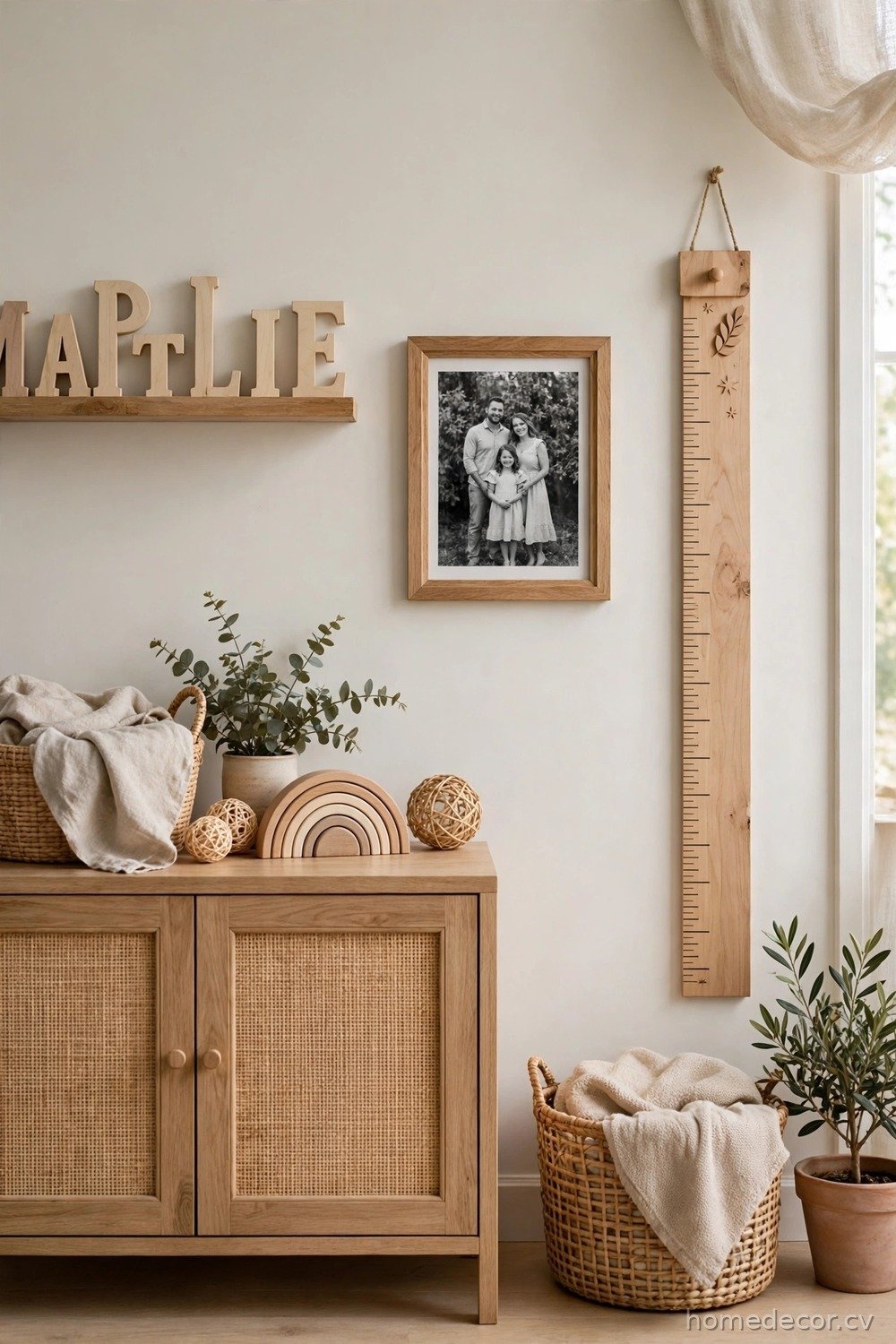
The most loved nurseries feel personal, and a few meaningful touches will make this calm neutral room unmistakably yours without disturbing its peaceful palette. Frame an ultrasound photo beside a family picture, hang wooden name letters above the crib, or display a handmade blanket from a grandparent folded over the glider. A small growth chart in natural wood, a shelf of beloved childhood books, and a soft toy in a muted tone all add story while staying on palette. If you love the layered look of cozy neutral bedroom ideas, borrow their trick of repeating one quiet accent color, like sage or clay, in just two or three small places.
Choose pieces that can evolve, because the sweetest nursery items are the ones still earning their place in a big-kid room years later. Name art can move above a bed, the growth chart keeps recording birthdays, and neutral storage simply absorbs bigger clothes and toys as the years pass. Add a small memory box on a shelf for hospital bracelets, first shoes, and cards, keeping treasures contained instead of scattered. Swap in new photos as baby grows so the room tells an ongoing story. When the foundation stays calm and neutral, every personal layer you add over the years will feel fresh, meaningful, and completely at home.


1 thought on “13 Neutral Nursery Ideas for a Calm and Cozy Baby Room (2026)”