Every house has one: that narrow strip along the side nobody looks at until it becomes a jungle of weeds and forgotten toys. These side of house landscaping ideas are here to rescue it — no landscape designer required, no huge budget, and nothing that demands a green thumb.
Side yards are actually easy wins. They’re small, so a weekend of work transforms them completely. They’re narrow, which means simple, repeating designs look intentional. And because nobody expects much from them, even modest improvements feel dramatic. Let’s turn that forgotten strip into something you’re proud of.
Sprucing up the whole property? These 12 Easy Fall Entryway Decor Ideas That Welcome Guests In polish the front, and these 15 Screened In Porch Decorating Ideas for a Breezy, Cozy Retreat make the back just as inviting.
Clean Up the Side of the House First
Every good side yard starts with a clean slate.
1. Clear everything out and start fresh
Before buying a single plant, empty the strip completely: weeds, dead leaves, old pots, the broken rake, everything. Seeing the bare space helps you plan, and it’s motivating — you’ll be amazed how much bigger it looks already.
Practical tip: Rent or borrow a wheelbarrow for the day. Hauling debris in armfuls takes three times as long and kills your enthusiasm before the fun part starts.
2. Lay down landscape fabric and mulch
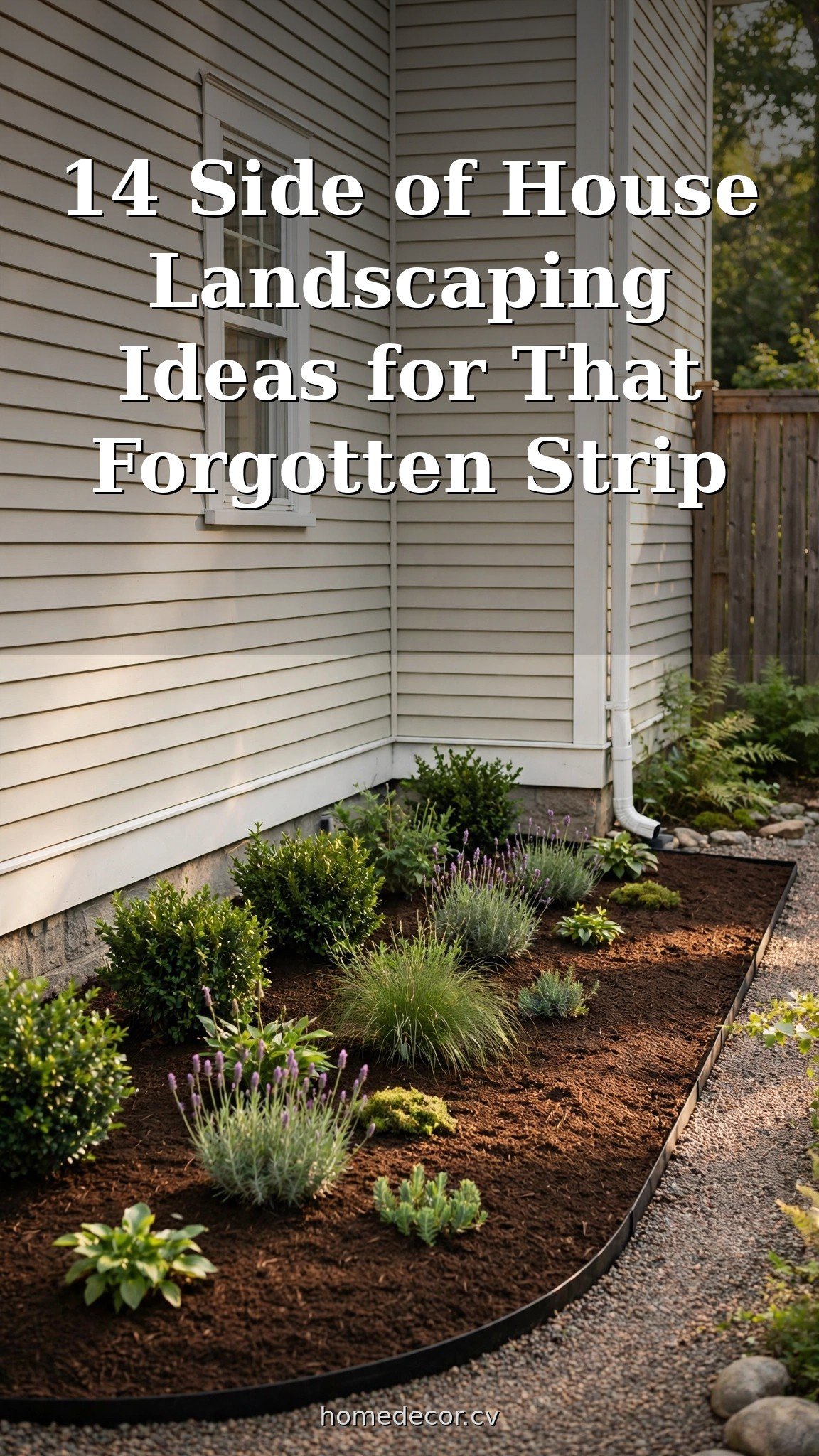
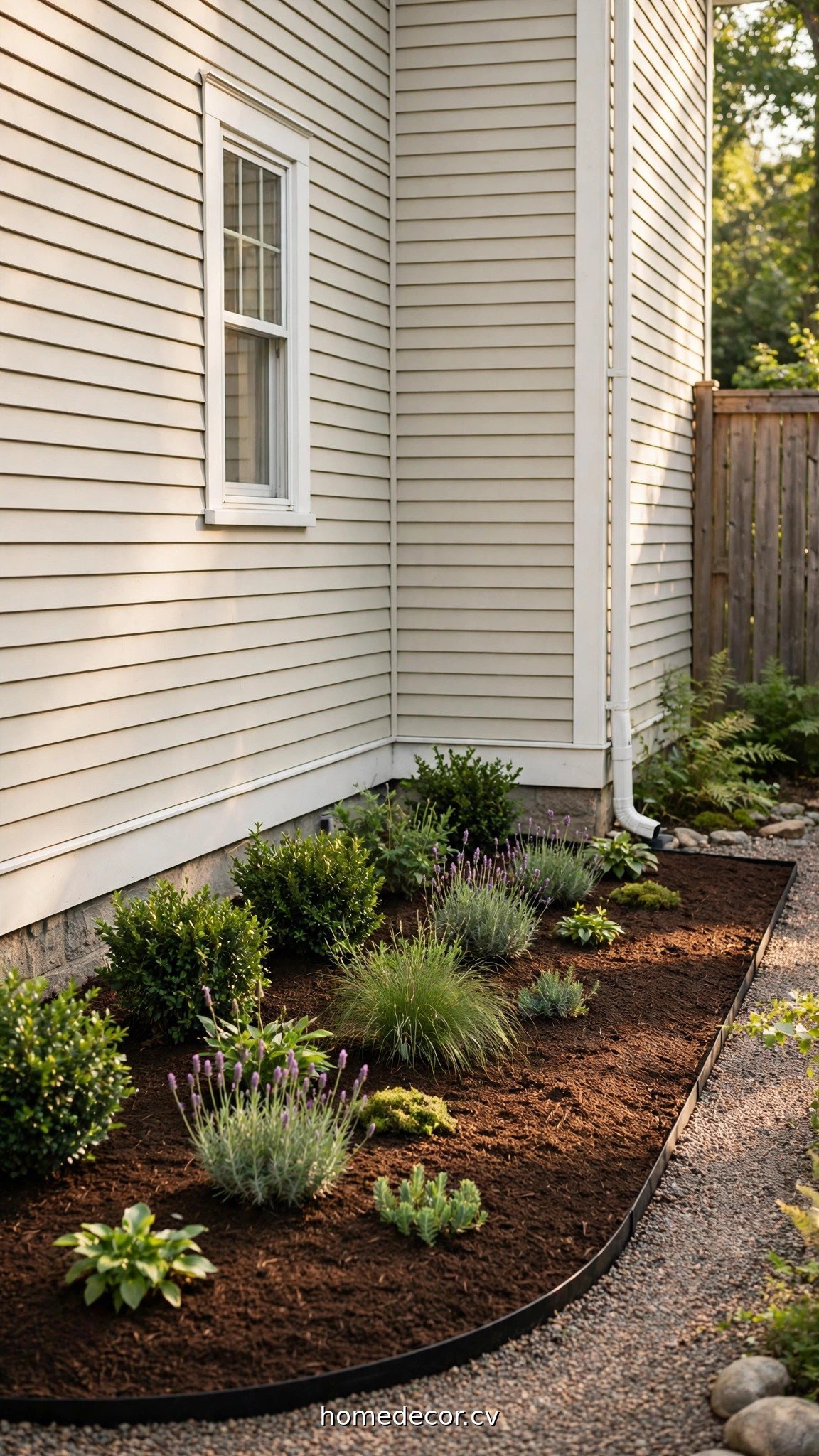
Weeds are the reason side yards look abandoned, and mulch is the cure. Lay landscape fabric over the cleared bed, cut X-shaped slits where plants will go, and spread three inches of shredded bark or wood chips. Instantly tidy, and it stays that way.
Practical tip: Skip the dyed red or black mulch — natural brown shredded bark looks richer, costs less, and won’t stain your siding when it rains.
3. Add crisp edging between bed and lawn
A clean edge is what separates “landscaped” from “messy,” even with identical plants. Pound in simple black plastic edging, set a row of bricks on their sides, or dig a sharp trench edge with a spade. The line does the visual work.
Practical tip: Brick edging laid flat at lawn level lets your mower roll right over it — no string-trimming around every brick, ever.
4. Lay a simple stepping-stone path
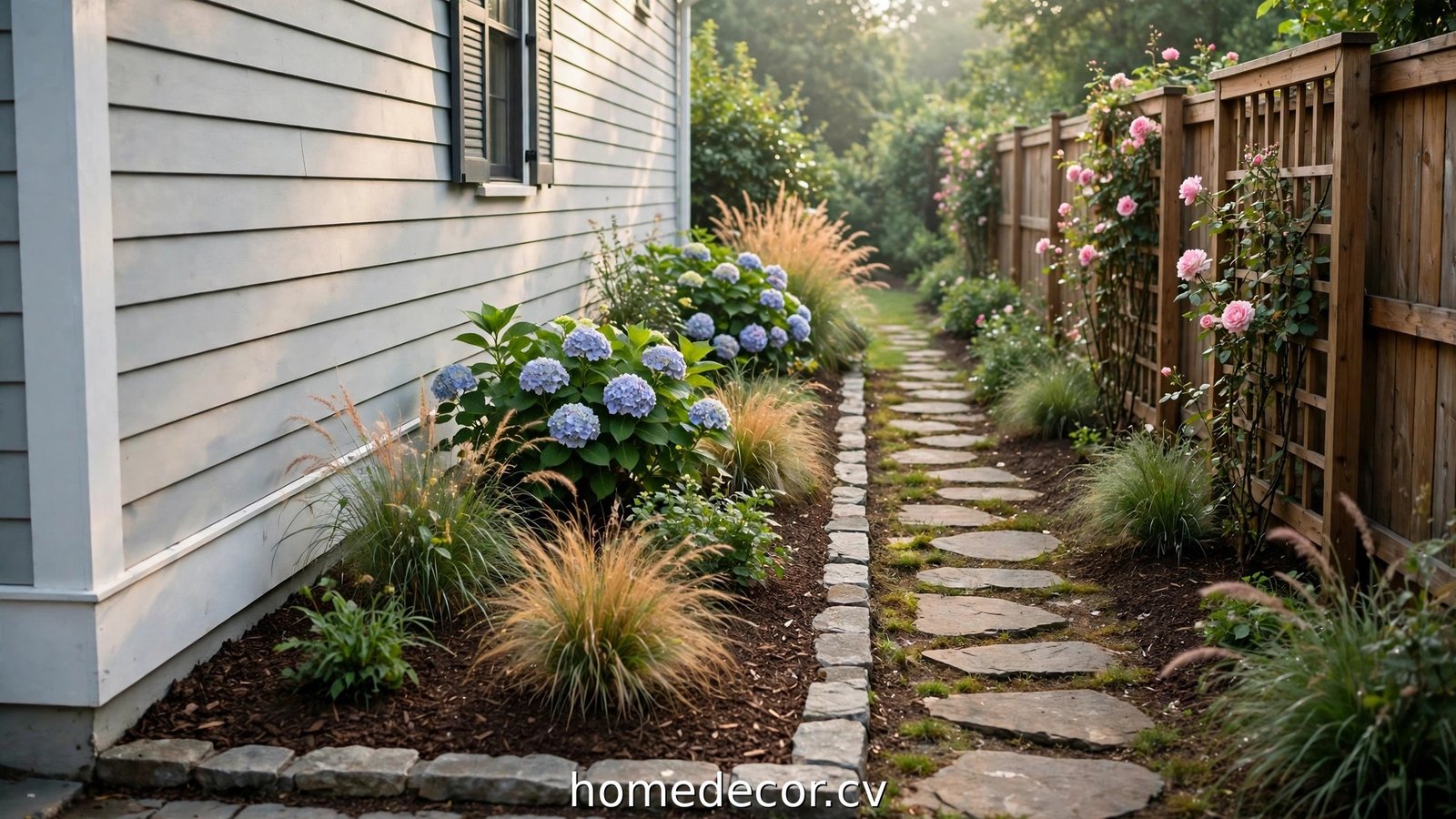
Side yards get walked through constantly — to the backyard, the trash bins, the hose. A path of concrete steppers or flat flagstones set in the mulch saves the grass and looks deliberate. Space them a comfortable stride apart.
Practical tip: Set each stone on a bed of sand and check it’s level with a quick step-test. Wobbly stones are worse than no stones.
5. Refresh the strip with gravel where grass won’t grow
If the side yard is too shady or narrow for grass, stop fighting it. A gravel bed with a few large pots looks clean and modern, drains beautifully, and needs zero mowing. Choose a warm-toned pea gravel or decomposed granite over harsh gray stone.
Practical tip: Lay landscape fabric under gravel too — without it, the stones sink into the soil within a season and weeds poke through.
Plants That Love Narrow Side Yards
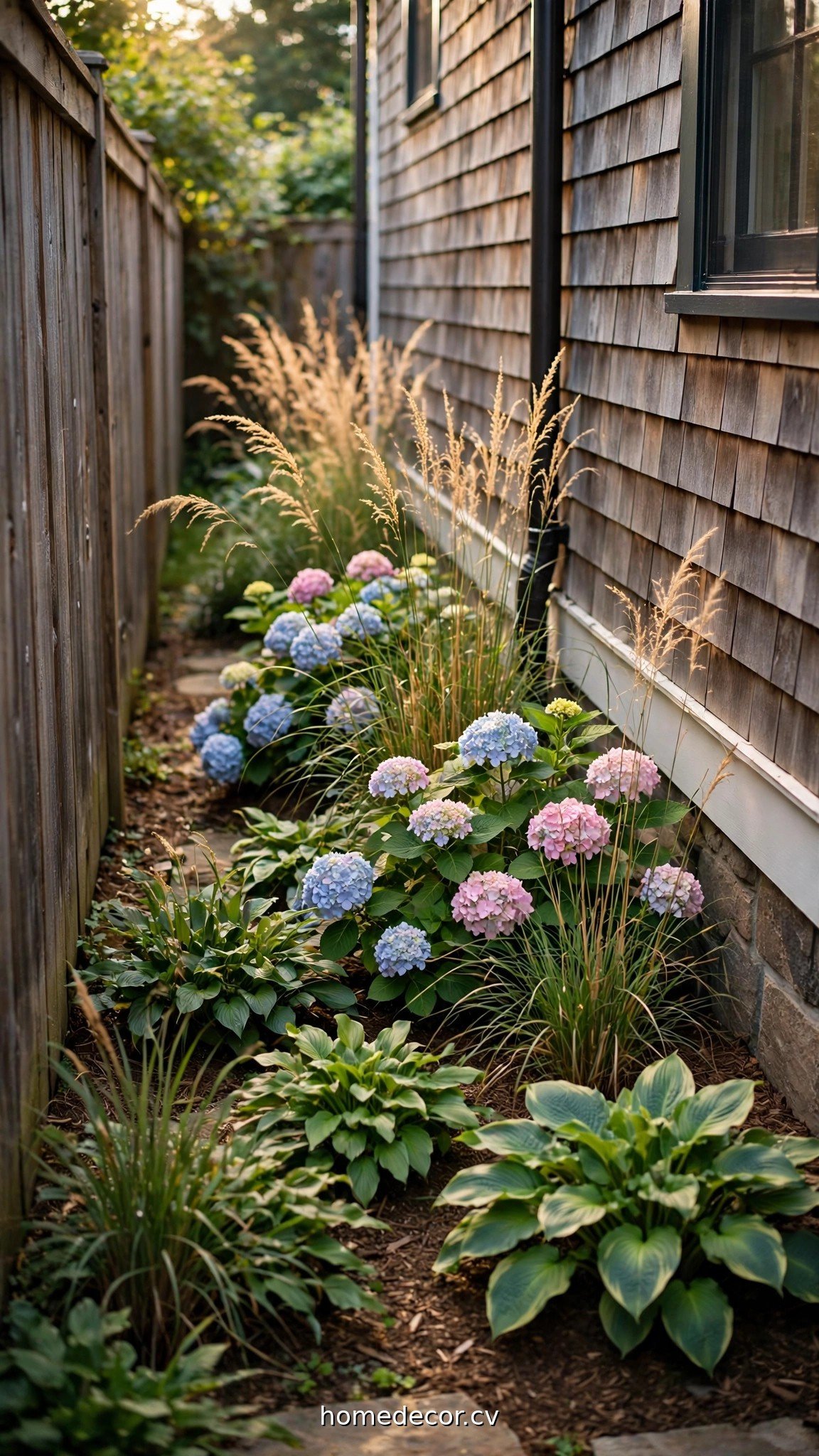
Pick plants that thrive in tight, often shady conditions.
6. Plant hydrangeas for big, easy impact
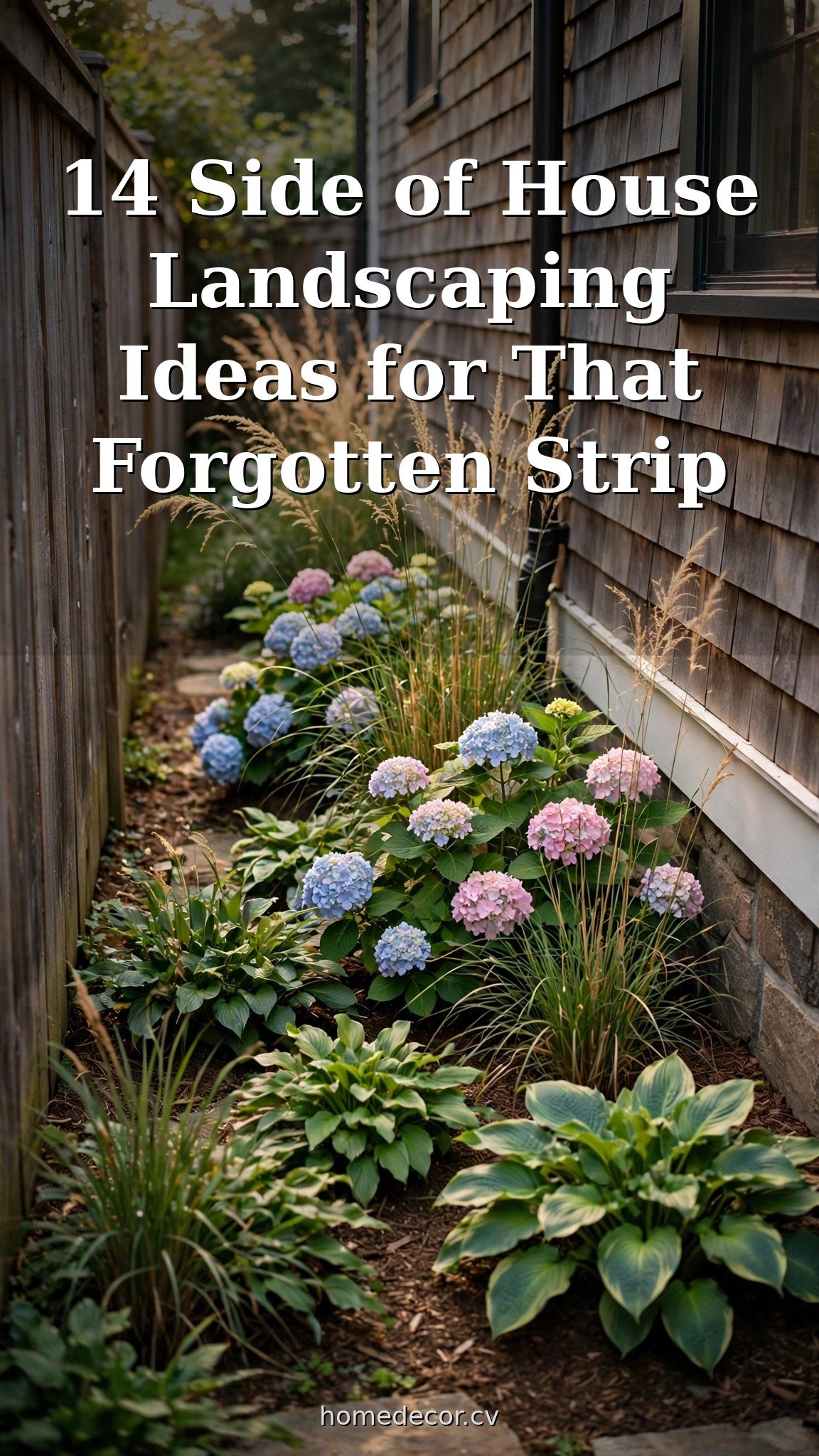
Few plants give more show for less effort in a side yard. Panicle hydrangeas tolerate sun, bigleaf types love the shade most side yards offer, and one plant fills a surprising amount of space. Their summer blooms make the whole strip look intentional.
Practical tip: Give each hydrangea at least three feet of room — they look small in the nursery pot but grow fast, and crowded plants mean constant pruning.
7. Use ornamental grasses for movement and texture
Grasses like fountain grass, feather reed grass, or blue fescue add height and movement without demanding attention. They thrive on neglect, look good from spring through winter, and a row of them along a fence reads as real landscaping.
Practical tip: Cut grasses back hard in late winter before new growth starts — one annual haircut and they’re perfect all year.
8. Train a climbing rose or clematis up a trellis
A blank side wall is a wasted opportunity. Mount a simple trellis or a few horizontal wires and train a clematis or climbing rose across it. In two seasons you’ll have a flowering wall where there used to be bare siding.
Practical tip: Plant the climber at least a foot out from the wall — the soil right against the foundation is dry and poor, and roots need room to establish.
9. Fill shade with hostas and ferns
The north-facing side of most houses is too shady for lawn but perfect for hostas, ferns, and astilbe. Buy three or five of one variety rather than one of everything — repetition looks designed, while a collection of singles looks accidental.
Practical tip: Mulch hostas well and set out a shallow saucer of beer nearby in spring — it traps slugs better than most commercial baits.
10. Line the fence with containers you can rearrange
When the ground is poor or full of roots, containers are the answer. A row of matching large pots along the fence — filled with whatever’s in season — gives you a garden you can rearrange at will. Nothing is permanent, so nothing can fail permanently.
Practical tip: Buy the biggest pots you can afford and fit — large containers hold moisture far longer than small ones, which means less watering and happier plants.
Make the Side Yard Useful, Not Just Pretty
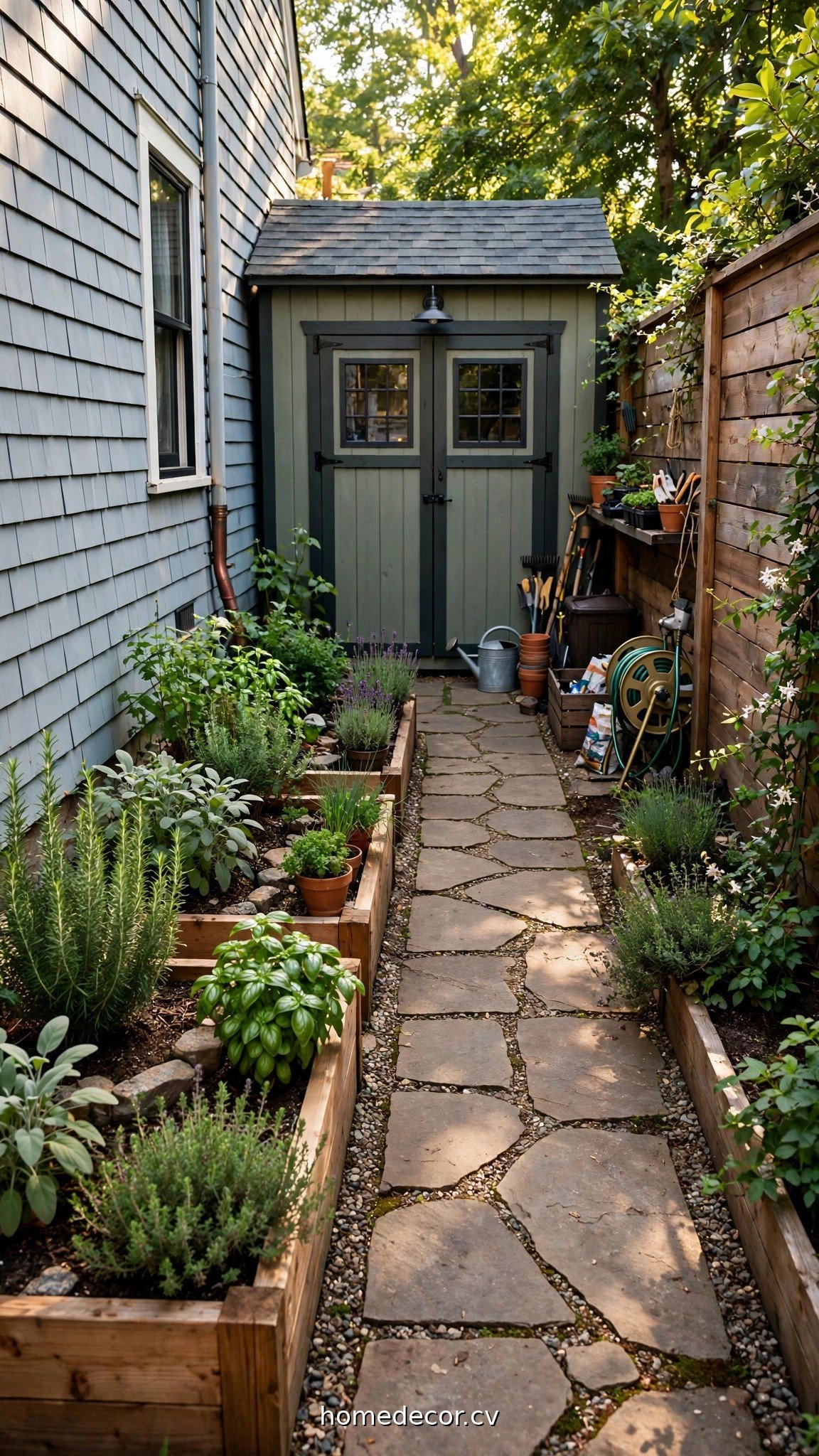
The prettiest side yard is one that also works hard.
11. Hide the practical stuff behind a screen
Trash bins, the AC unit, and the hose reel don’t have to be the view. A simple lattice screen, a row of tall grasses, or a short section of fencing hides the utilities while the rest of the strip stays pretty.
Practical tip: Leave the screen open at one end or make it removable — you’ll need access to the bins and the AC for service, and fighting your own screen gets old fast.
12. Plant a narrow herb garden by the kitchen side
If the side yard runs past the kitchen, turn the sunniest section into herbs: rosemary, thyme, basil, and mint in a simple raised bed or a row of pots. You’ll actually use it because it’s on the way to everywhere, and it smells wonderful.
Practical tip: Plant mint in its own buried pot, not in the open bed — it spreads aggressively and will take over the whole strip within two seasons.
13. Add simple lighting for safety and charm
Side yards get dark, and they’re the route everyone takes after sunset. A few solar path lights along the walkway plus one motion-sensor light by the gate make the strip safe and surprisingly charming at night.
Practical tip: Choose solar lights with warm-white LEDs, not the harsh blue-white kind — the warm glow looks intentional while the cool ones look like a parking lot.
14. Create a potting or project corner
Claim the far end for a small potting bench or a simple work table. A flat surface at waist height, a few hooks for tools, and a bag of soil underneath turns the side yard into your garden headquarters instead of dead space.
Practical tip: A weatherproof deck box under the bench hides soil, pots, and tools in one tidy spot — and doubles as extra seating when you need it.
Keep Exploring
Keep improving every corner of your home:
- 12 Easy Fall Entryway Decor Ideas That Welcome Guests In
- 15 Screened In Porch Decorating Ideas for a Breezy, Cozy Retreat
- 15 Backyard Party Aesthetic Ideas That Look Straight Off Pinterest
Frequently Asked Questions
What grows well in a narrow side yard?
Shade-tolerant workhorses: hostas, ferns, astilbe, and hydrangeas for the shady side; ornamental grasses, lavender, and coneflowers for the sunny side. Match the plant to the light the strip actually gets, not the light you wish it had.
How do I landscape the side of my house on a budget?
Mulch and edging first — they deliver the most visible change per dollar. Then buy fewer, larger plants rather than many small ones, and fill gaps with divided perennials from friends or inexpensive annuals. A tidy three-hundred-dollar side yard beats a messy thousand-dollar one.
How do I keep the side yard from looking like a weed patch?
Three inches of mulch over landscape fabric stops ninety percent of weeds. Edge the bed crisply, and walk the strip once a month to pull the few that sneak through while they’re small. Ten minutes a month beats a full day once a year.
Should I put grass or mulch along the side of the house?
If the strip is shady or narrower than four feet, choose mulch or gravel — grass struggles in shade and narrow strips are miserable to mow. Save the lawn for areas where it can actually thrive.
That Forgotten Strip Deserves Better
These side of house landscaping ideas prove the most overlooked part of your property can become one of the nicest — with mulch, a clean edge, the right plants, and a little purpose. Start with the cleanup weekend, add the mulch and edging, then plant one section at a time. A year from now you’ll walk down that strip and wonder why you ignored it so long. For more ways to love your whole home, inside and out, browse our Seasonal & Holiday Decor category.