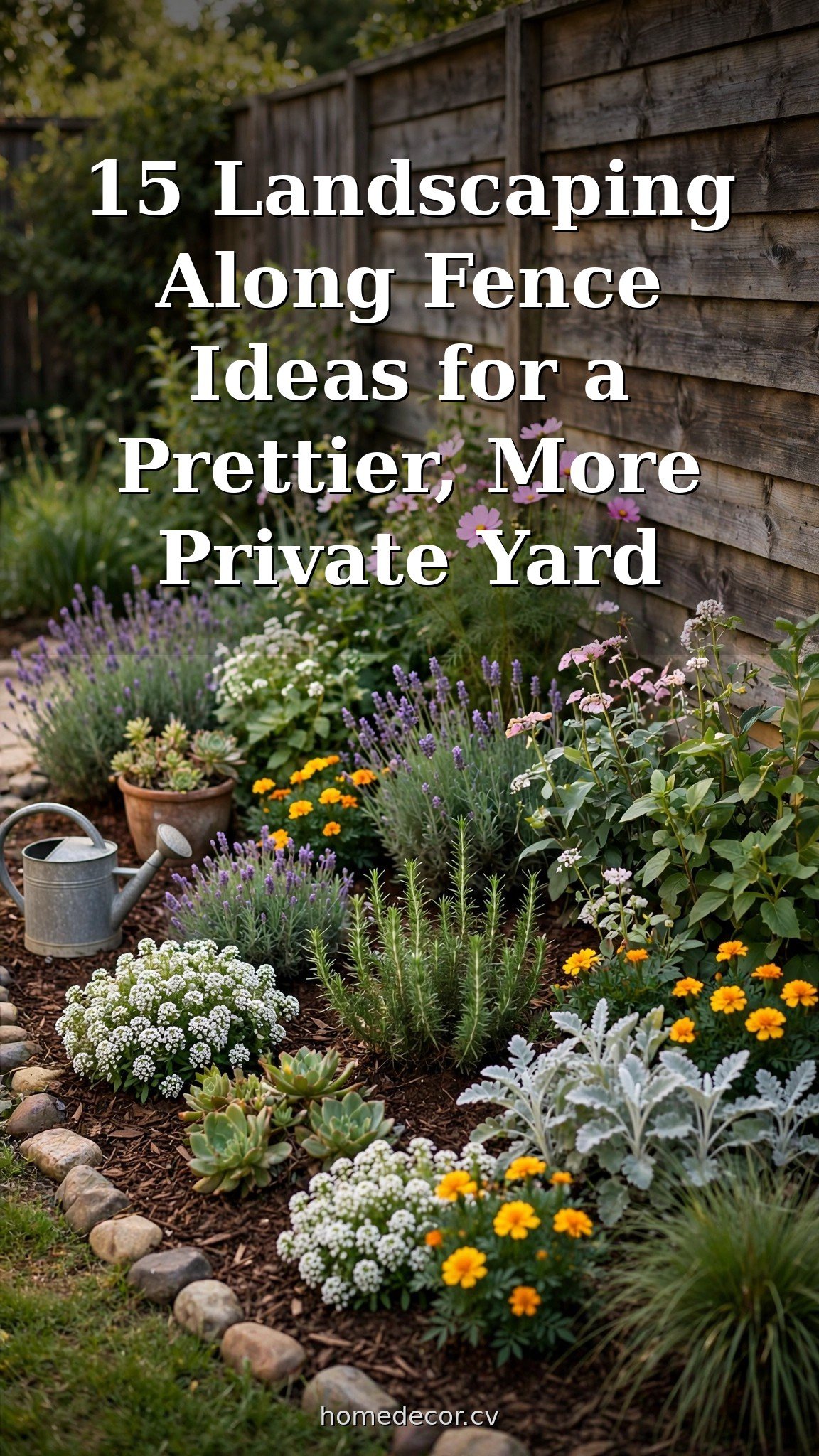

A bare fence is a missed opportunity. These landscaping along fence ideas turn that long, blank boundary into one of the prettiest parts of your yard — softer edges, more privacy, and color from spring through fall. And you don’t need a landscaper’s budget or a huge garden to pull them off.
The secret is treating the fence line as a bed, not a border: tall plants in back, medium fillers in the middle, and low groundcover in front. Whether you own or rent, have a generous side yard or a five-foot strip, there’s a fence-line look here that fits your space and your wallet.
Rethinking the rest of the yard too? These 15 Front Yard Landscaping Ideas for Instant Curb Appeal add serious curb appeal, and our 14 Side of House Landscaping Ideas for That Forgotten Strip handle those awkward in-between strips.
Budget-Friendly Plantings That Soften a Fence Line
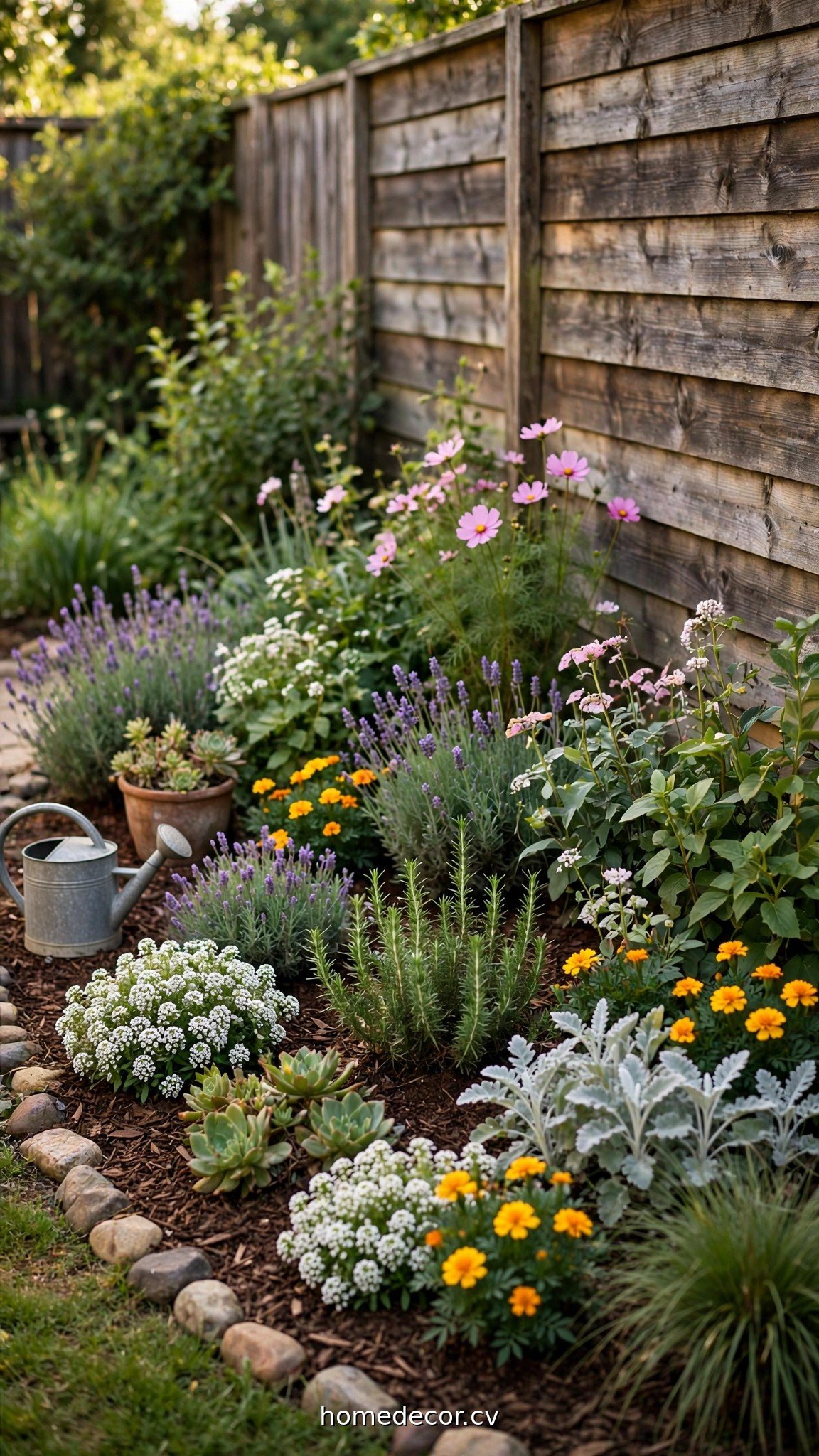
1. Plant a mixed perennial border for three seasons of color
A perennial bed along the fence is the single best investment you can make in your yard. Choose a backbone of hardy perennials — coneflowers, black-eyed Susans, salvias, and daylilies — planted in drifts of three or five for a natural, designed look. They return bigger every year, so the bed only gets better.
Practical tip: Space plants by their mature width, not their nursery-pot size. It will look sparse at first — resist the urge to overplant and you’ll save money.
2. Grow ornamental grasses for movement and winter interest
Ornamental grasses like miscanthus, fountain grass, and feather reed grass are fence-line heroes. They grow fast, need almost no care, and their swaying seed heads soften hard fence lines beautifully. In winter, when everything else is bare, their golden stems still look intentional.
Practical tip: Plant grasses at least two feet from the fence so air circulates and you can reach the boards for maintenance. Cut them to six inches in late winter.
3. Train climbing roses or clematis up the fence itself
Why plant in front of the fence when you can plant on it? Climbing roses, clematis, and jasmine trained on the fence turn a wooden barrier into a flowering wall. Attach a simple wire trellis, tie new growth in as it climbs, and one vigorous clematis can cover ten feet of fence by year three.
Practical tip: Check who owns the fence before attaching anything — shared fences need a neighbor’s okay. Use removable screws rather than nails.
4. Layer evergreen shrubs behind flowering plants
For year-round structure, back your flower bed with evergreen shrubs — boxwood, holly, or dwarf arborvitae. They hide the bottom of the fence in winter when flowers are dormant, and their deep green makes summer blooms pop. One shrub every three to four feet creates a continuous backdrop.
Practical tip: Buy small one-gallon evergreens and let them grow. They’re far cheaper than mature specimens and often catch up within two seasons.
5. Edge the bed with a clean mulch line and simple edging
The difference between a bed that looks intentional and one that looks scrappy is the edge. Cut a crisp line between lawn and bed, install steel or stone edging, and lay two to three inches of dark mulch. It makes plants pop, keeps weeds down, and cuts maintenance all summer.
Practical tip: Shredded bark mulch is cheaper than bagged decorative mulch and breaks down into the soil, improving it over time. Top it up each spring.
Narrow Spaces and Renter-Friendly Fence Landscaping
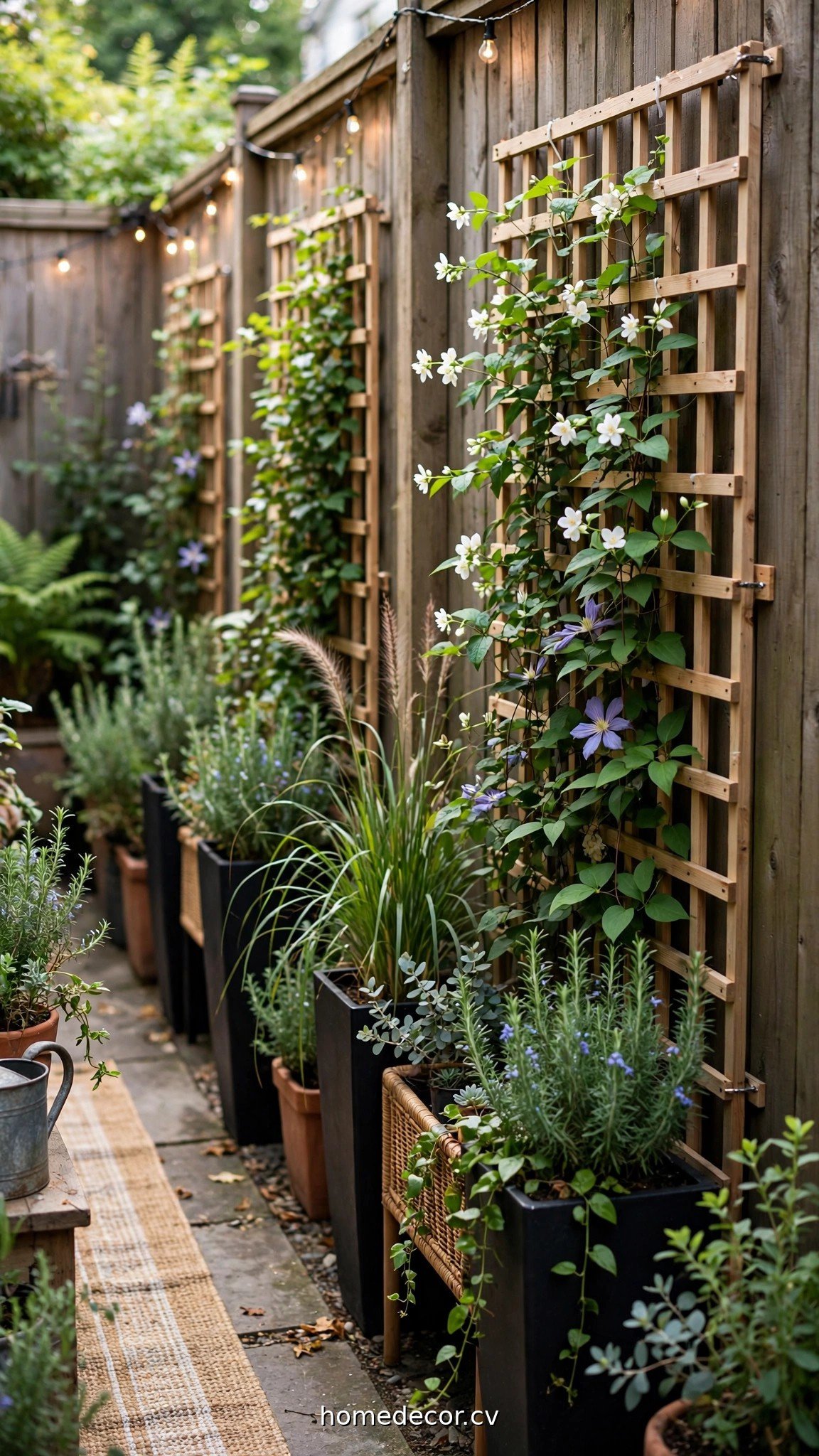
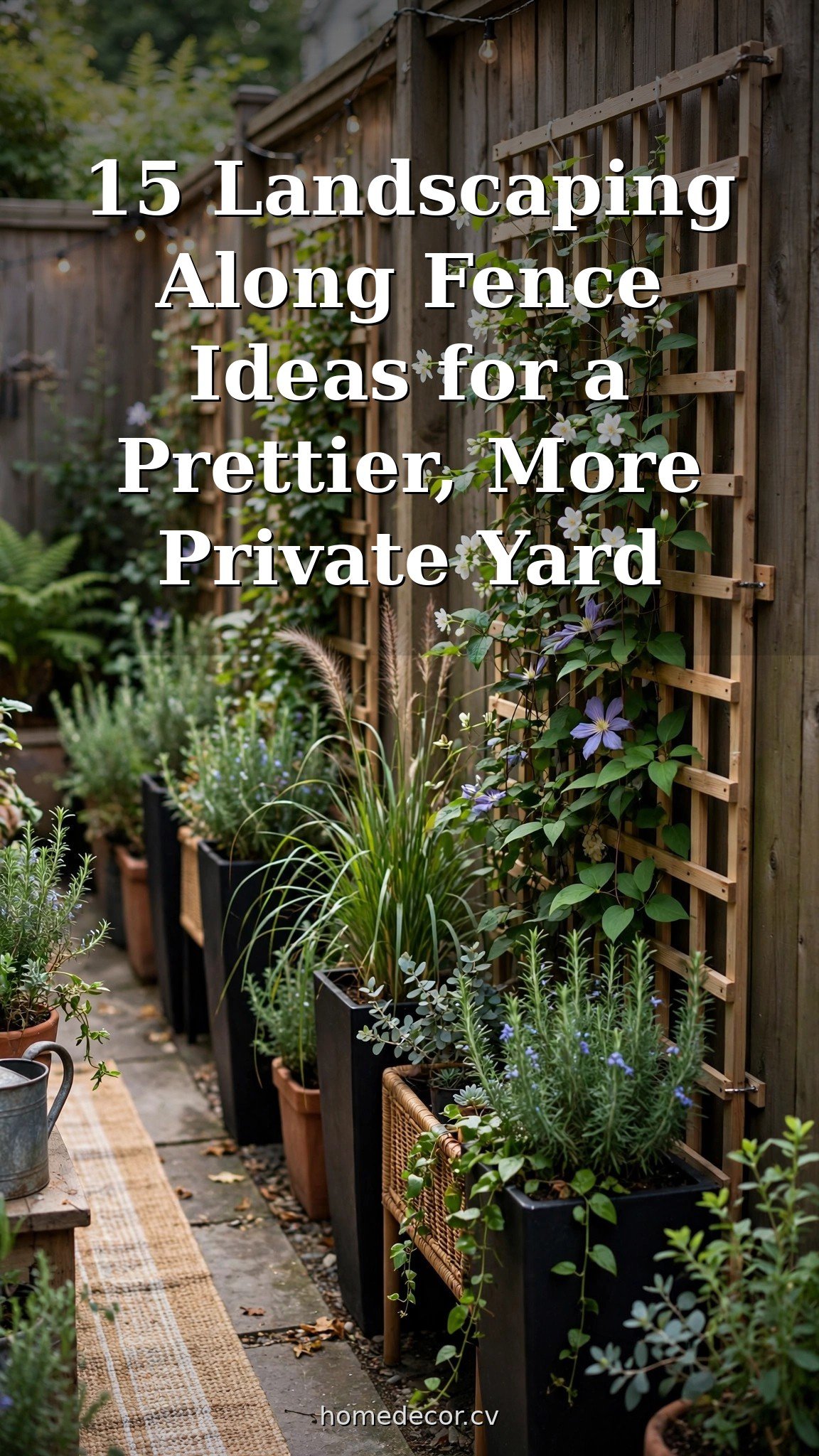
6. Line the fence with tall planters instead of digging beds
If you rent — or your fence line is poor soil — skip digging entirely. Tall planters or large pots lined up along the fence give you all the greenery with zero commitment. Fill them with thrillers (tall grasses), fillers (petunias, geraniums), and spillers (trailing ivy) for an instant designed look.
Practical tip: Elevate pots on pot feet or bricks so water drains freely and doesn’t stain the patio or rot the fence boards behind them.
7. Lean freestanding trellis panels against the fence for vertical growing
A freestanding trellis leaned against the fence is renter gold: no holes, no damage, instant vertical garden. Grow morning glories, sweet peas, or scarlet runner beans up it in summer, or attach window boxes for herbs. When you move, the whole thing comes with you.
Practical tip: Angle the top a few inches away from the fence so air flows behind it — this stops moisture getting trapped against the wood.
8. Hang planters and baskets directly on the fence boards
Fence boards are a ready-made vertical garden. Hang coconut-lined baskets, metal half-baskets, or repurposed tins on sturdy hooks, and fill them with trailing bacopa, lobelia, or strawberries for color at eye level exactly where the fence is most visible.
Practical tip: Hanging baskets dry out fast — water every morning in hot weather and add water-retaining crystals to the soil mix.
9. Build a narrow raised bed for herbs and cut flowers
A slim raised bed — just 18 inches deep — fits almost any fence line and gives you perfect soil where the ground is poor. Fill it with cut-and-come-again zinnias and cosmos, or kitchen herbs like rosemary, thyme, and sage. It reads as landscaping but works like a kitchen garden.
Practical tip: Line the bottom with landscape fabric, fill with a 60/40 topsoil-and-compost mix, and mulch the top with straw to hold moisture.
10. Create a container hedge with fast-growing shrubs
Need privacy fast without planting in the ground? Line up large containers of clumping bamboo, laurel, or photinia along the fence. They form a living screen within a season and move with you if you relocate — a favorite trick for apartment patios and rental yards.
Practical tip: Avoid running bamboo; it escapes containers. Feed container shrubs monthly in the growing season since pots leach nutrients quickly.
Finishing Touches: Light, Color, and Style Along the Fence
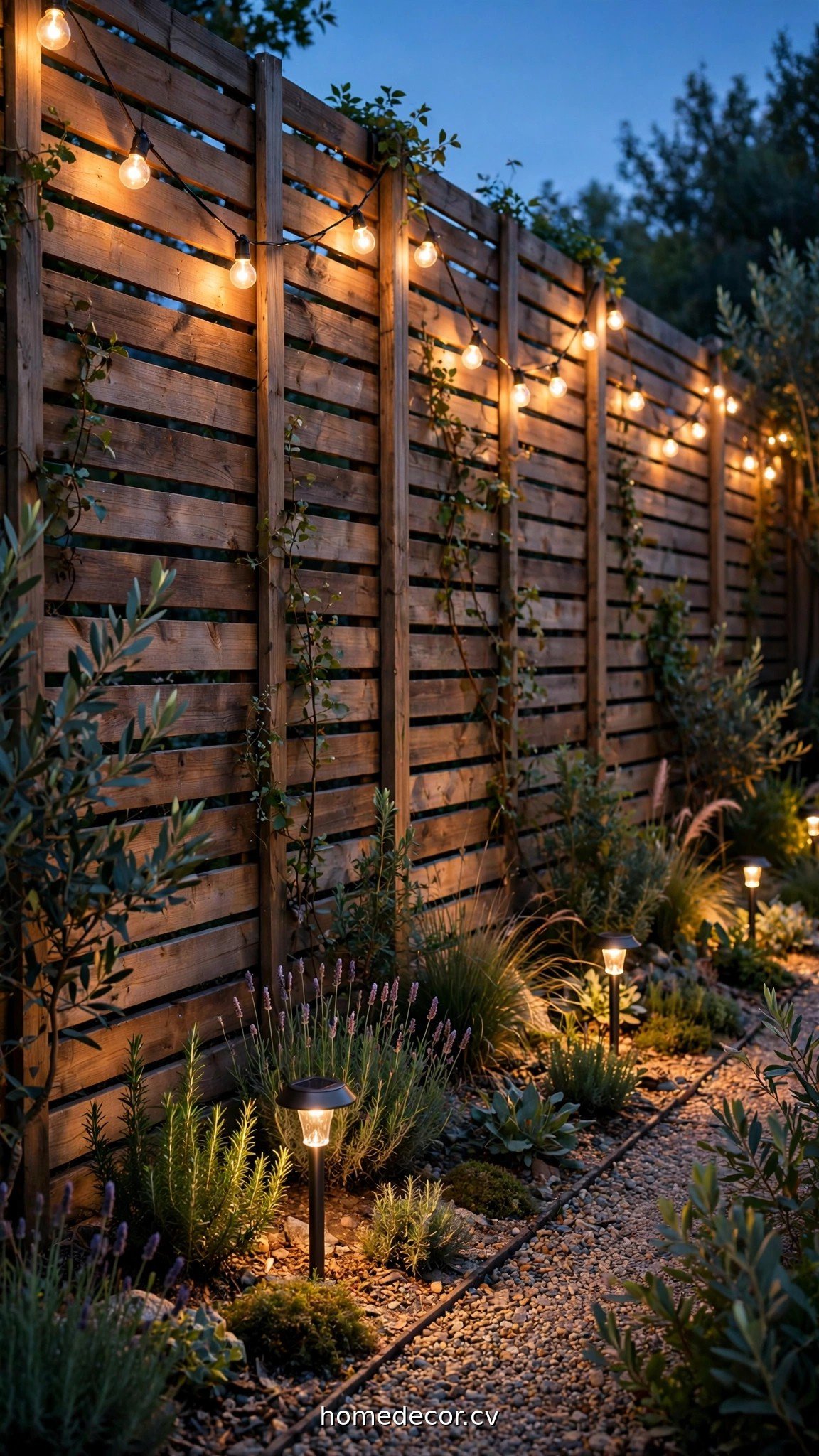
11. Drape warm string lights along the top of the fence
Nothing transforms a fence line after dark like string lights. Drape warm-white outdoor strings along the top rail or zigzag them between posts. Your fence-line garden becomes an evening destination, and the whole yard feels twice as big at night.
Practical tip: Choose shatterproof LED bulbs on an outdoor timer. They switch on at dusk automatically and cost pennies to run all evening.
12. Add solar path lights to define the bed at night
A row of solar path lights along the front edge of your fence bed shows off plantings after dark and marks the edge so nobody steps in it. Stake them into the mulch just inside the edging, about six feet apart for a gentle rhythm of light.
Practical tip: Solar lights need direct sun to charge — don’t tuck them under shrubs. Wipe the panels every few months; dust cuts brightness dramatically.
13. Paint or stain the fence a deep, garden-friendly color
Sometimes the best landscaping along fence idea isn’t a plant — it’s the fence. A coat of dark green, charcoal, or deep brown stain makes foliage pop, hides weathering, and visually recedes so the whole yard feels larger.
Practical tip: Renters, get written permission first. For a reversible option, hang outdoor fabric panels or reed screening over the existing fence.
14. Tuck in garden art, mirrors, and birdhouses
A weatherproof acrylic mirror hung on the fence reflects light and greenery, making a narrow yard feel deeper. Add a couple of birdhouses or a sculptural stake among the plants. These small touches give the fence line personality beyond just being a boundary.
Practical tip: Hang art slightly above plant height so it reads against the fence instead of getting lost in foliage. Avoid real glass mirrors — they can create hot spots in strong sun.
15. Plant a pollinator strip with native wildflowers
Dedicate a section of your fence bed to native wildflowers — coneflowers, bee balm, asters, and milkweed. You’ll get months of color with almost no watering once established, and the butterflies and bees make the whole yard feel alive. It’s the lowest-maintenance, highest-reward fence planting there is.
Practical tip: Sow seed in fall for spring germination, or buy small plugs in spring. Leave seed heads standing in fall — they feed birds through winter.
Keep Exploring
Love these ideas? Here are a few more you might enjoy:
- 15 Front Yard Landscaping Ideas for Instant Curb Appeal
- 14 Side of House Landscaping Ideas for That Forgotten Strip
- 14 Driveway Landscape Ideas That Boost Curb Appeal Fast
Frequently Asked Questions
What is the easiest low-maintenance planting for along a fence?
Ornamental grasses and native perennials: plant once, water for the first season, then enjoy. Miscanthus, coneflowers, and black-eyed Susans need little beyond a yearly cutback and look good spring through winter.
How do I landscape along a fence if I rent?
Use containers: tall planters, hanging baskets, and freestanding trellis panels leaned against the fence. Nothing goes in the ground, nothing damages the fence, and everything moves with you.
How far from the fence should I plant?
Leave 18 to 24 inches between the fence and the center of your plants. This gives air circulation, room for growth, and access for fence repairs. Large shrubs need their full mature width.
What’s the cheapest way to make a fence look better?
A dark stain or paint is the cheapest transformation — one weekend and a few gallons make any fence look new and make plants pop. After that, a clean mulch line and inexpensive perennials deliver the most impact per dollar.
A Yard That Starts at the Fence
These landscaping along fence ideas prove the edge of your yard doesn’t have to be an afterthought. Plant a lush border, line up renter-friendly containers, or simply add string lights and a fresh coat of stain — the fence line sets the tone for everything inside it. Start with one section this weekend, even ten feet, and watch the whole yard start to feel intentional. For more outdoor inspiration, browse our Seasonal & Holiday Decor category through the seasons.