
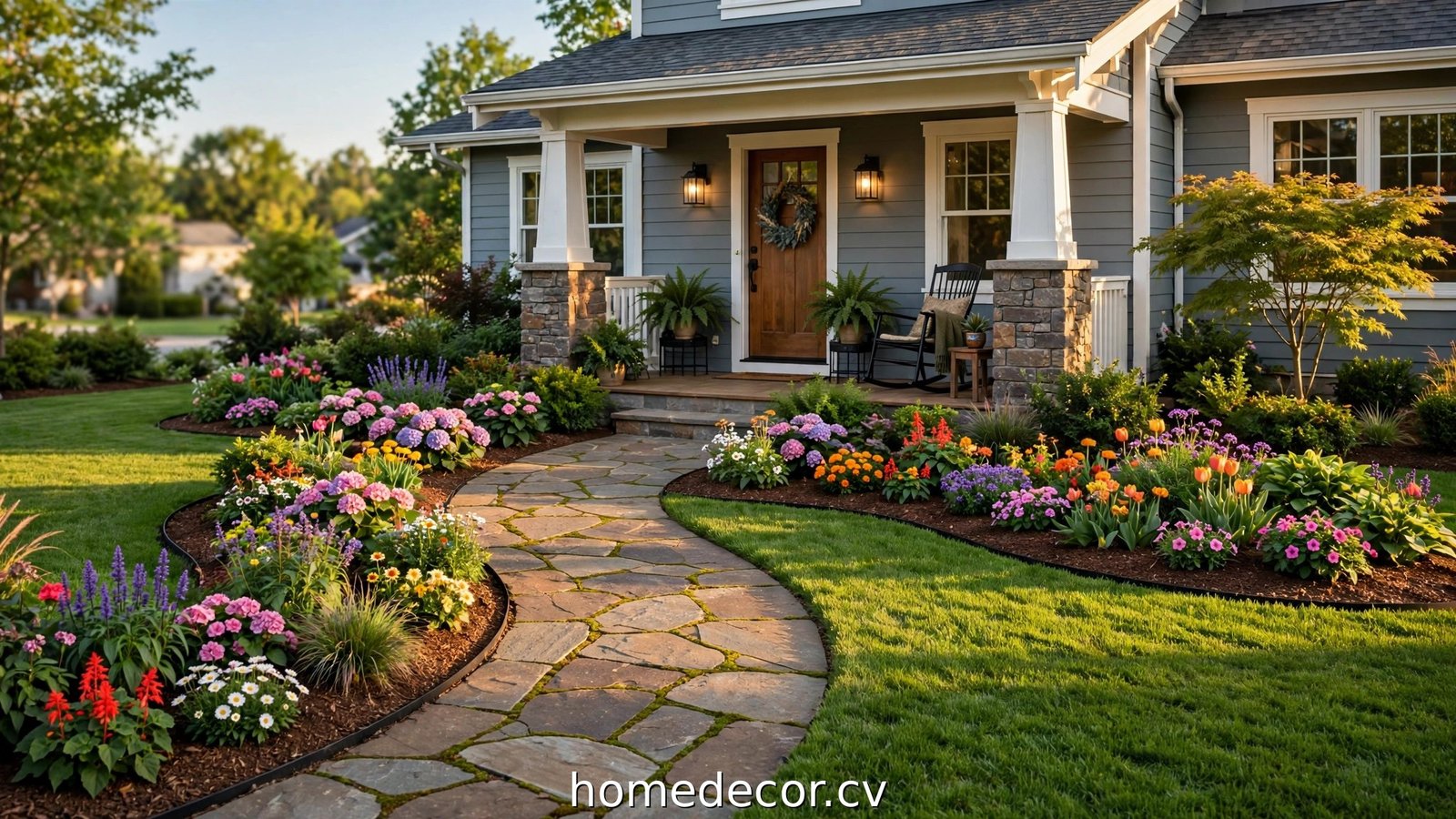
Your front yard is your home’s handshake — the first thing visitors, neighbors, and potential buyers notice. These front yard landscaping ideas focus on high-impact, achievable changes: defined beds, layered planting, crisp edging, and lighting. You don’t need a landscape architect or a five-figure budget; you need a weekend, a plan, and plants suited to your conditions.
The golden rule of curb appeal: neatness beats extravagance. A simple, well-maintained yard always looks better than an ambitious one gone wild. Start with structure (beds, edging, paths), add layers of plants, and finish with the details that make it glow.
Working on the whole property? Our 14 Driveway Landscape Ideas That Boost Curb Appeal Fast and 15 Landscaping Along Fence Ideas for a Prettier, More Private Yard extend the transformation.
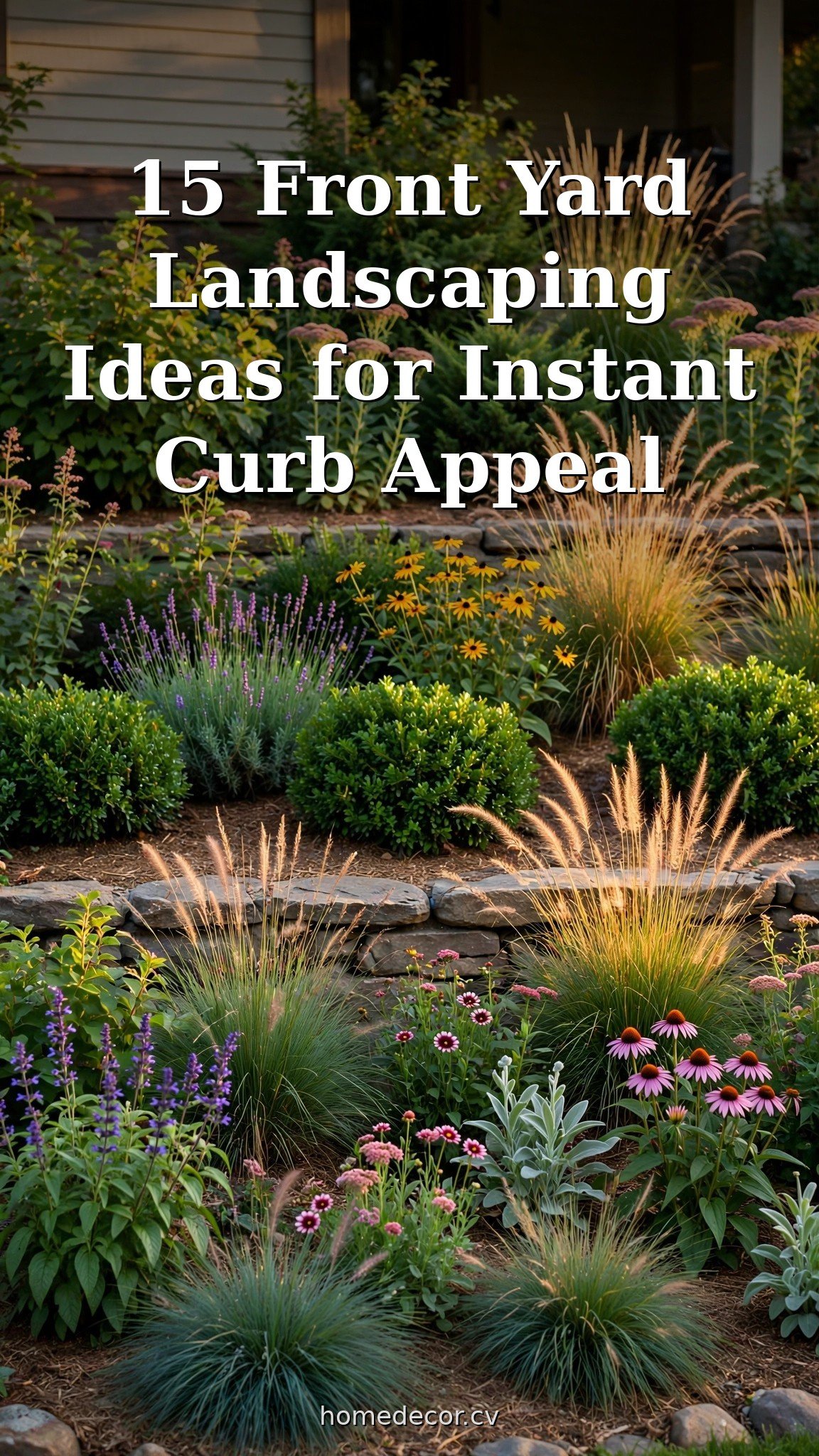
Curb Appeal Foundations
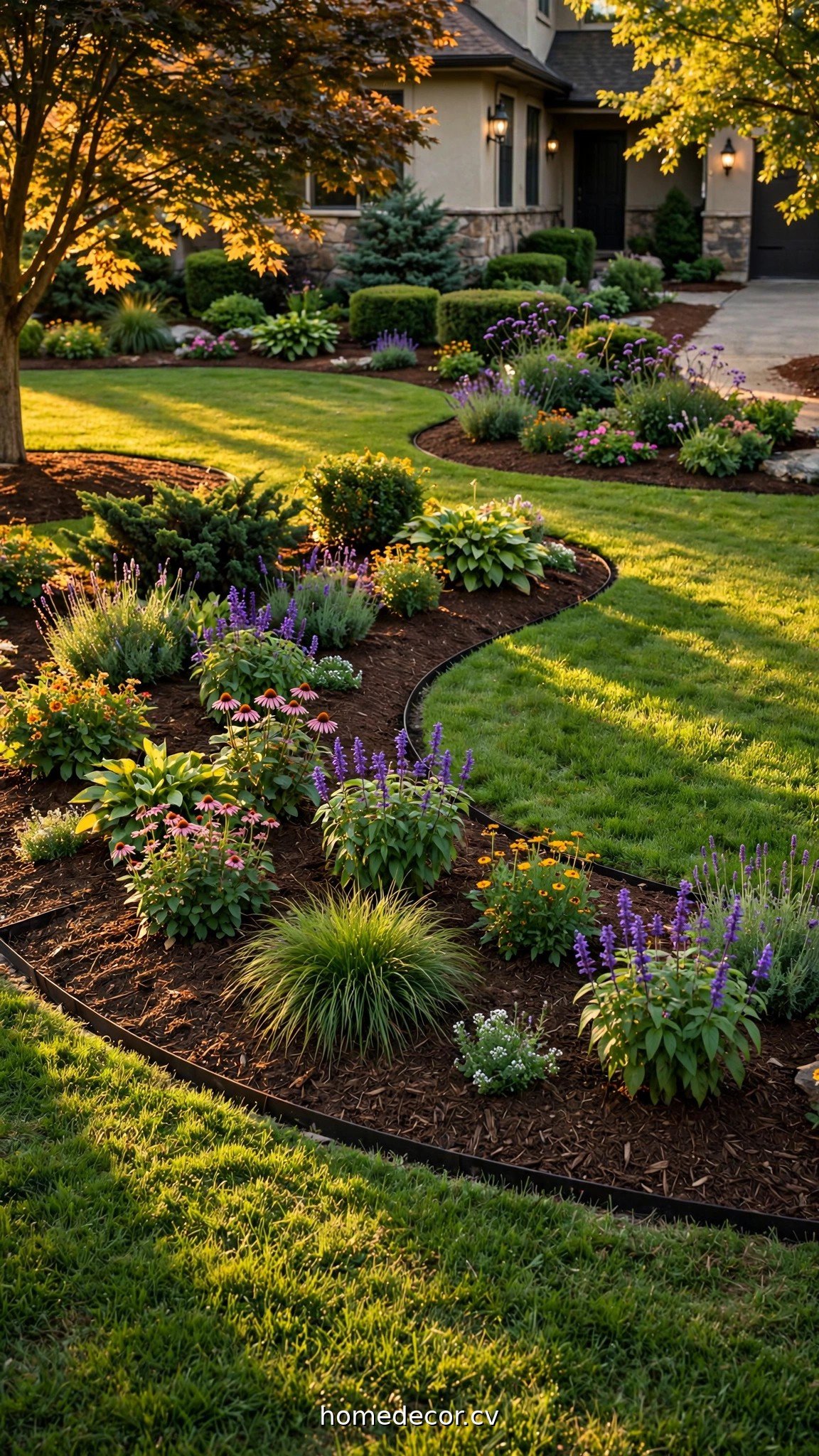
Get the bones right first — everything else builds on these.
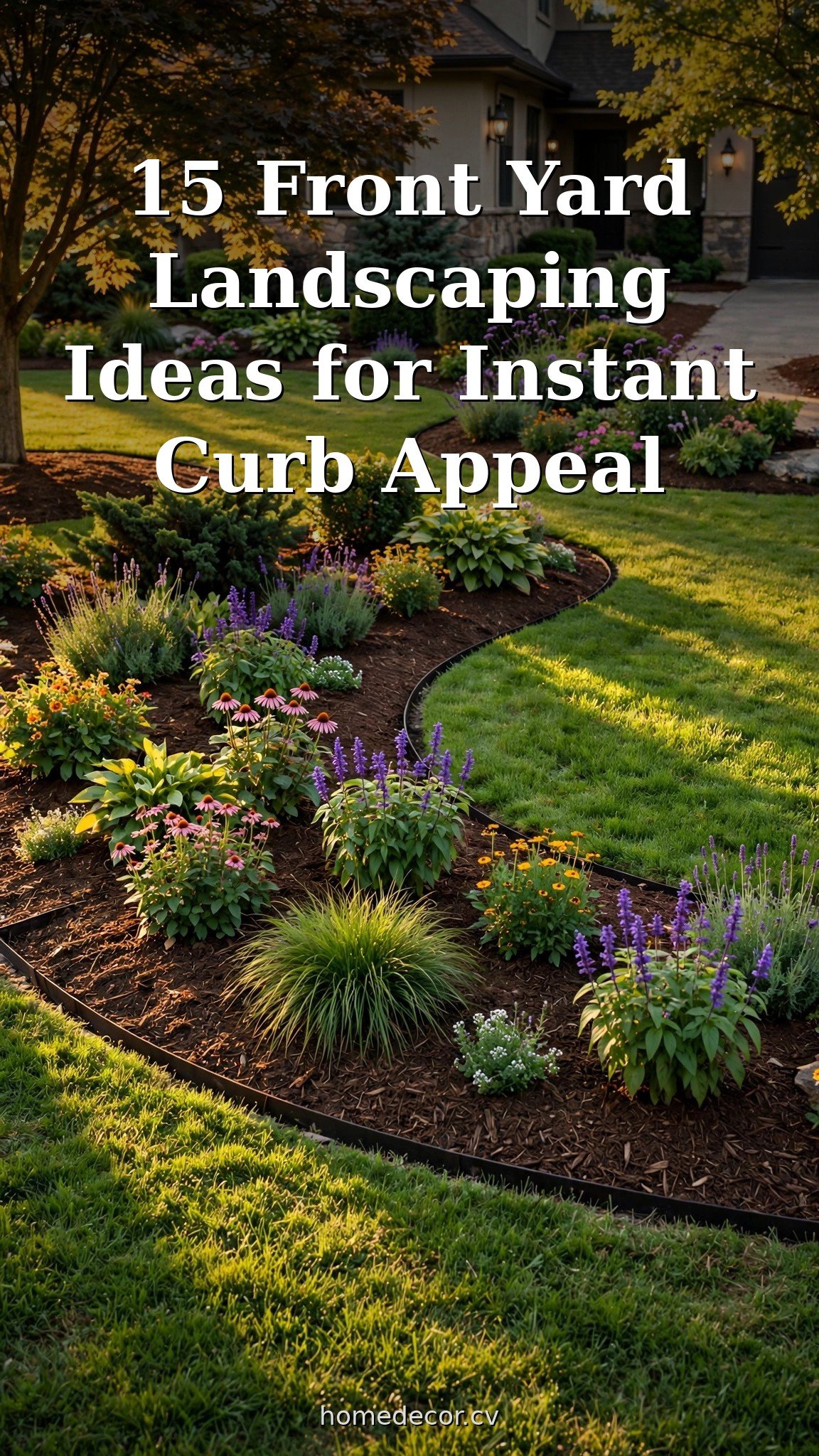
1. Define beds with crisp, curved edges
Cut clean, curved bed lines along your foundation and walkways, separating lawn from planting areas. Curves look more natural and generous than straight lines. A half-moon edger and an afternoon are all it takes, and the result instantly looks “landscaped.”
Practical tip: Lay a garden hose on the ground to audition your curves before cutting — adjust until the lines look smooth from the street, not just from above. Re-cut edges each spring; it’s the cheapest facelift in landscaping.
2. Mulch everything — generously
A fresh 2-to-3-inch layer of mulch (shredded bark, pine straw, or wood chips) unifies beds, suppresses weeds, retains moisture, and makes colors pop. It’s the single fastest way to make a yard look cared for.
Practical tip: Keep mulch pulled back 2-3 inches from stems and trunks — “mulch volcanoes” rot bark and kill plants. Dark brown mulch makes flowers pop; pine straw suits Southern and woodland styles.
3. Layer plants: thriller, filler, spiller
For every bed, think in three layers — tall “thrillers” at the back (shrubs, ornamental grasses), medium “fillers” in the middle (perennials, roses), and low “spillers” at the edge (groundcover, annuals). The layered look is what separates designed beds from random planting.
Practical tip: Plant in odd-numbered groups (3, 5, 7) of the same variety rather than one of everything — repetition reads as design. Leave room for mature size; cramped plants look messy within two seasons.
4. Frame the front door with matching planters or urns
Two identical large planters flanking the front door create symmetry and a focal point that draws the eye to the entrance. Fill with seasonal color — or evergreen structure plants for a year-round look.
Practical tip: Scale matters: planters should be at least one-third the height of the door to look proportional. Big, simple planters always look better than small fussy ones.
5. Refresh the lawn (or rethink it)
A healthy lawn is the green carpet everything else sits on. Overseed bare patches in fall, mow high (3-4 inches), and edge along walks. If your lawn constantly struggles, consider shrinking it — expanding beds with groundcover is lower-maintenance and often prettier.
Practical tip: Mow high and leave clippings — taller grass shades out weeds and the clippings feed the soil. It’s the laziest good-lawn secret there is.
Planting Beds & Borders
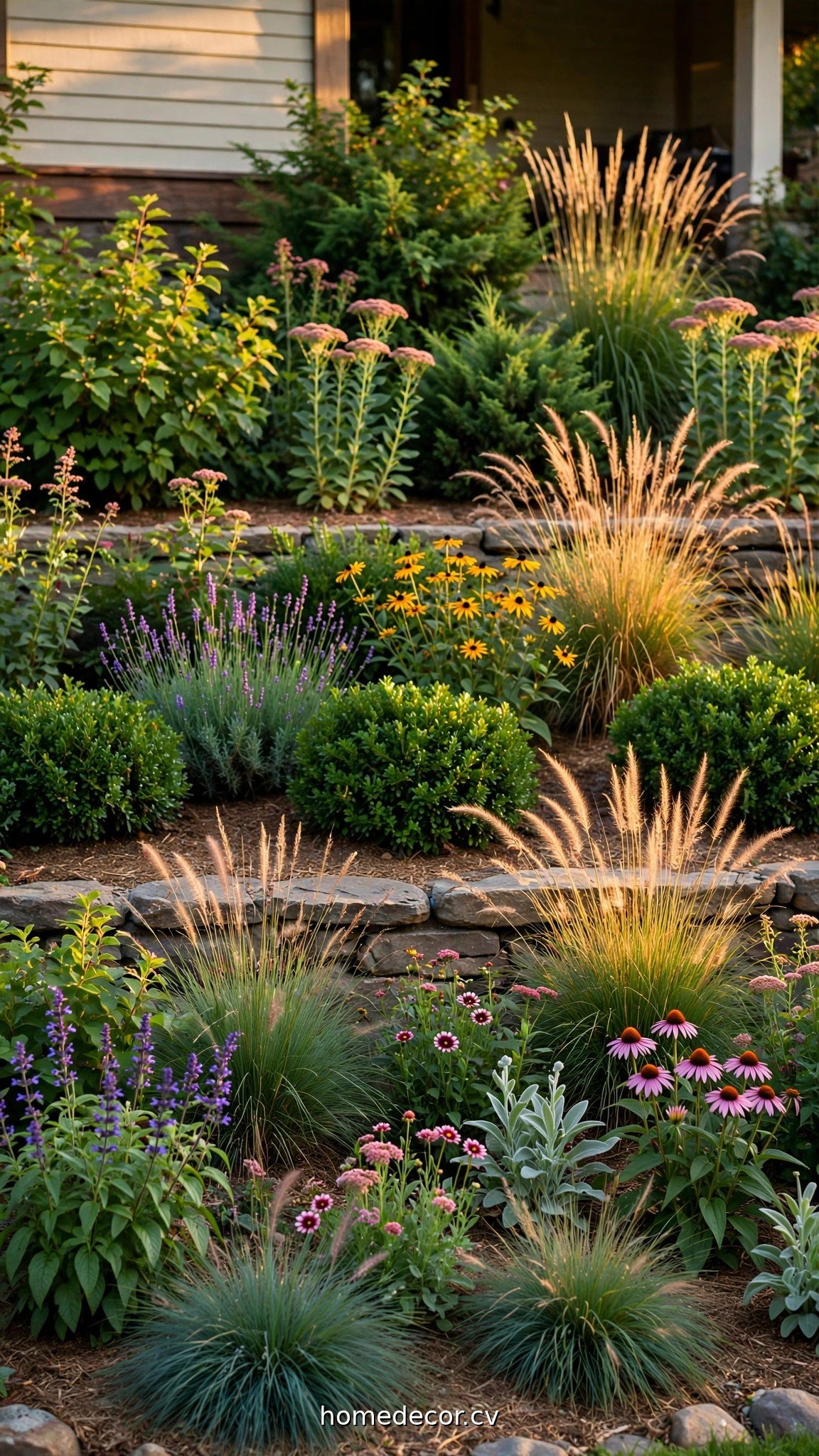
Now fill those defined beds with plants that earn their keep.
6. Anchor with evergreen structure
Evergreens — boxwood, holly, dwarf conifers, ornamental grasses — give your yard year-round bones. They look good in February when perennials are asleep, and they make seasonal flowers shine in summer. Every front yard needs at least a few.
Practical tip: Choose evergreens suited to your zone and mature size — a boxwood that wants to be 6 feet tall in front of a window is a pruning chore forever. Dwarf varieties exist for exactly this reason.
7. Plant for four seasons of interest
The best yards have something happening year-round: spring bulbs, summer perennials, fall color (Japanese maple, burning bush, ornamental grasses), winter structure (evergreens, red-twig dogwood, interesting bark). Plan the calendar, not just the summer.
Practical tip: Plant spring bulbs in fall — 100 daffodils take an hour and return every year bigger. They’re the highest-return planting investment in existence.
8. Add a flowering tree as a focal point
One beautiful small tree — dogwood, redbud, Japanese maple, crape myrtle — gives your yard a centerpiece with more presence than any shrub. It anchors the whole design and adds the vertical layer flat yards lack.
Practical tip: Keep trees at least 10-15 feet from the house and away from sewer lines. Small ornamental trees stay under 20 feet — big shade trees belong farther out. Call 811 before you dig, always.
9. Edge beds with low, tidy borders
A low row of liriope, mondo grass, dwarf boxwood, or even a neat stone border gives beds a finished edge that says “maintained.” It also keeps mulch from migrating onto the lawn.
Practical tip: Space border plants by their mature width, not how they look in the pot — they’ll fill in within two seasons. Stone edging set at mower height lets you mow right over the edge.
10. Try a pollinator strip along the walk
Replace a narrow strip of lawn along the walkway or driveway with native wildflowers — coneflower, black-eyed Susan, bee balm. It’s beautiful, buzzing with life, and far more interesting than grass. Neighbors will ask about it.
Practical tip: Check local rules first — some HOAs restrict “meadow” looks. A defined edge and a small sign (“Pollinator Garden”) signal intention and head off complaints.
Paths, Lighting & Finishing Touches
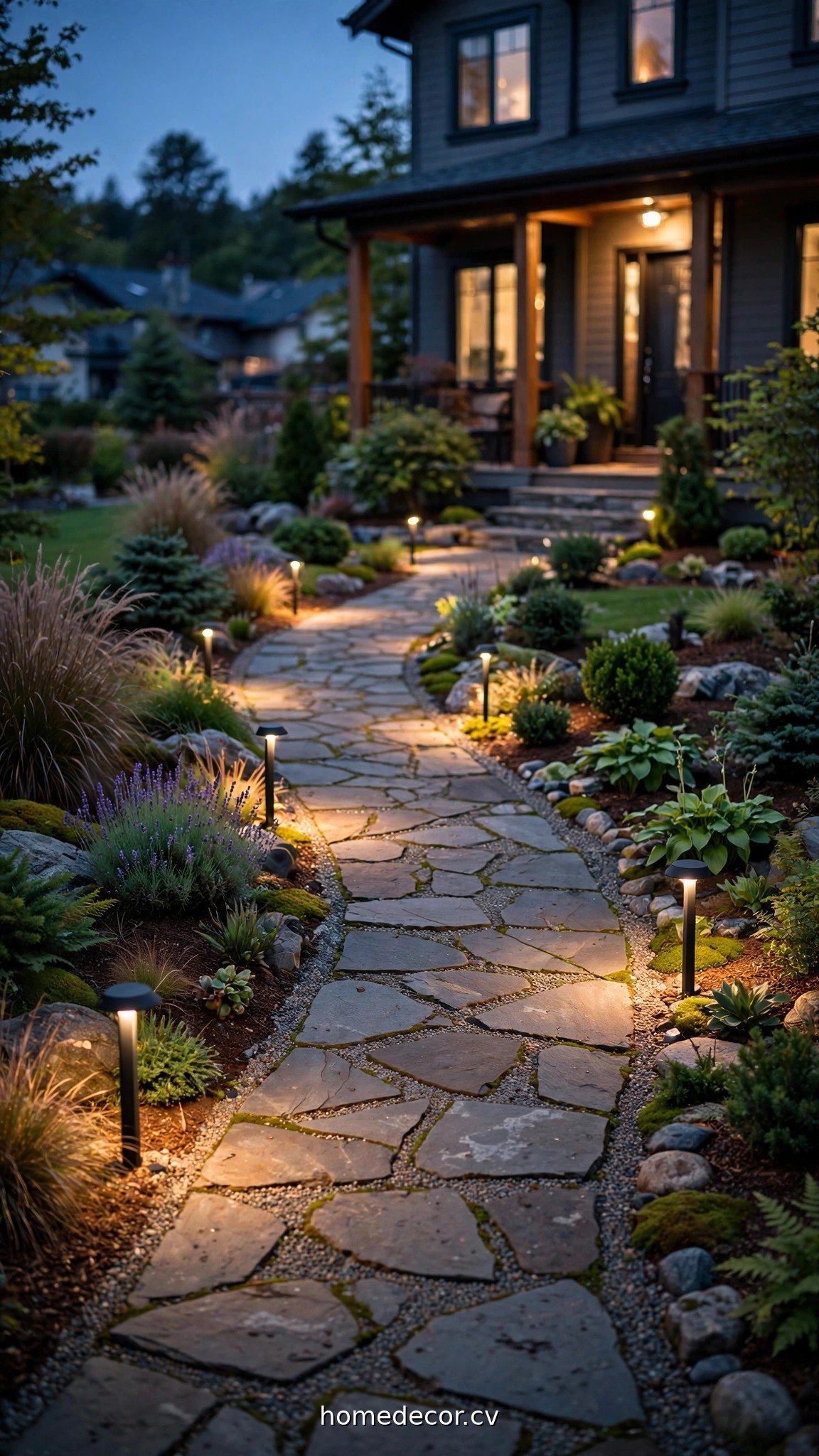
The details that make the yard shine — literally, after dark.
11. Upgrade the walkway
A walkway should be wide (at least 4 feet), well-defined, and welcoming. Edge an existing concrete walk with brick or stone borders, or lay stepping stones through a bed to create a garden path. The walk is the red carpet to your door — treat it like one.
Practical tip: Pressure-wash concrete walks yearly — you’d be amazed how new they look. For a bigger change, stain or stencil concrete for the look of stone at a fraction of the cost.
12. Add low-voltage landscape lighting
A few well-placed path lights, uplights on the house or a tree, and a light on the house number transform the yard after dark. It adds safety, drama, and evening curb appeal — the house looks expensive at night.
Practical tip: Solar path lights are the easy entry point — no wiring. But low-voltage wired kits (about $100 for 6 lights) are brighter, more reliable, and not much harder: one transformer, one cable, done.
13. Install a simple water feature
A small bubbling urn, a basin fountain, or even a DIY bubbling rock adds the sound of water — the most relaxing sound in a garden. It becomes a focal point and masks street noise.
Practical tip: Self-contained fountains (basin + pump, no plumbing) are genuinely plug-and-play. Keep them topped up in summer — pumps burn out fast when run dry.
14. Make the mailbox a mini garden moment
Plant a small bed around the mailbox post — daylilies, liriope, seasonal annuals — or hang a flower box on the post itself. It’s a tiny area with outsized visibility; everyone who passes sees it.
Practical tip: Check with your post office on clearances before building around the box — carriers need unobstructed access. Keep plantings low so the box and house number stay visible.
15. Add house numbers and details that shine
Big, modern house numbers, a freshly painted front door, new porch lights — these small architectural details frame all your landscaping work. Landscaping plus sharp details equals a house that looks fully loved.
Practical tip: House numbers should be at least 4-6 inches tall and contrast with the house color — visible from the street day and night. A $15 can of door paint in a confident color is the cheapest curb-appeal upgrade ever.
Keep Exploring
Love these ideas? Here are a few more you might enjoy:
- 14 Driveway Landscape Ideas That Boost Curb Appeal Fast
- 15 Landscaping Along Fence Ideas for a Prettier, More Private Yard
- 14 Side of House Landscaping Ideas for That Forgotten Strip
Frequently Asked Questions
What’s the cheapest way to improve front yard curb appeal?
Fresh mulch, crisp bed edges, and a mowed lawn — under $100 in materials and one weekend. Next tier: paint the front door, upgrade house numbers, and add two flanking planters. Neatness and defined edges outperform expensive plants every time.
How do I landscape a front yard with no experience?
Start with structure, not plants: define bed lines with a hose, cut edges, mulch. Then add evergreen anchors, then fill with easy perennials in groups. Work one bed at a time to completion rather than starting everywhere. And plant what thrives locally — ask a nursery, not the internet, what’s foolproof in your area.
What are the best low-maintenance front yard plants?
It depends on your zone, but universal winners include: boxwood and holly (evergreen structure), daylilies and coneflowers (tough perennials), ornamental grasses (four-season interest), and liriope or mondo grass (edging). Natives to your region are always the lowest-maintenance choice — they evolved for your exact conditions.
Should I hire a landscaper or DIY my front yard?
DIY the design and planting — it’s very achievable with these ideas — and hire out only what needs equipment or expertise: tree removal, grading, irrigation, and large stonework. A one-hour consultation with a local landscape designer ($100-200) can give you a planting plan you execute yourself: the best of both worlds.
A Yard That Welcomes You Home
These front yard landscaping ideas all build toward the same thing: a home that looks cared for from the street. Define the beds, mulch generously, layer your plants, light it up at night — and suddenly the whole house looks different. Start with edging and mulch this weekend; the transformation will surprise you. For more outdoor inspiration, explore our Seasonal & Holiday Decor ideas for every side of your home.
1 thought on “15 Front Yard Landscaping Ideas for Instant Curb Appeal”