Few garden additions pay off like a bird bath. Within days of setting one up, you’ll have feathered visitors — and a living, moving focal point no statue can match. These diy bird bath ideas range from five-minute upcycles to weekend stone projects, all using inexpensive or salvaged materials. You don’t need masonry skills or a big budget; you need a shallow basin, a sturdy base, and fresh water.
Beyond the charm, bird baths genuinely help local birds, especially in summer heat and winter freeze. Build one, keep it clean, and your garden becomes a neighborhood sanctuary. Here’s how to make one that looks beautiful and works beautifully.
Love garden projects? Pair these with our 15 Front Yard Landscaping Ideas for Instant Curb Appeal for a full curb-appeal refresh.
Easy Upcycled Bird Baths
Start with what you have — the fastest bird baths come from the thrift store and the garage.
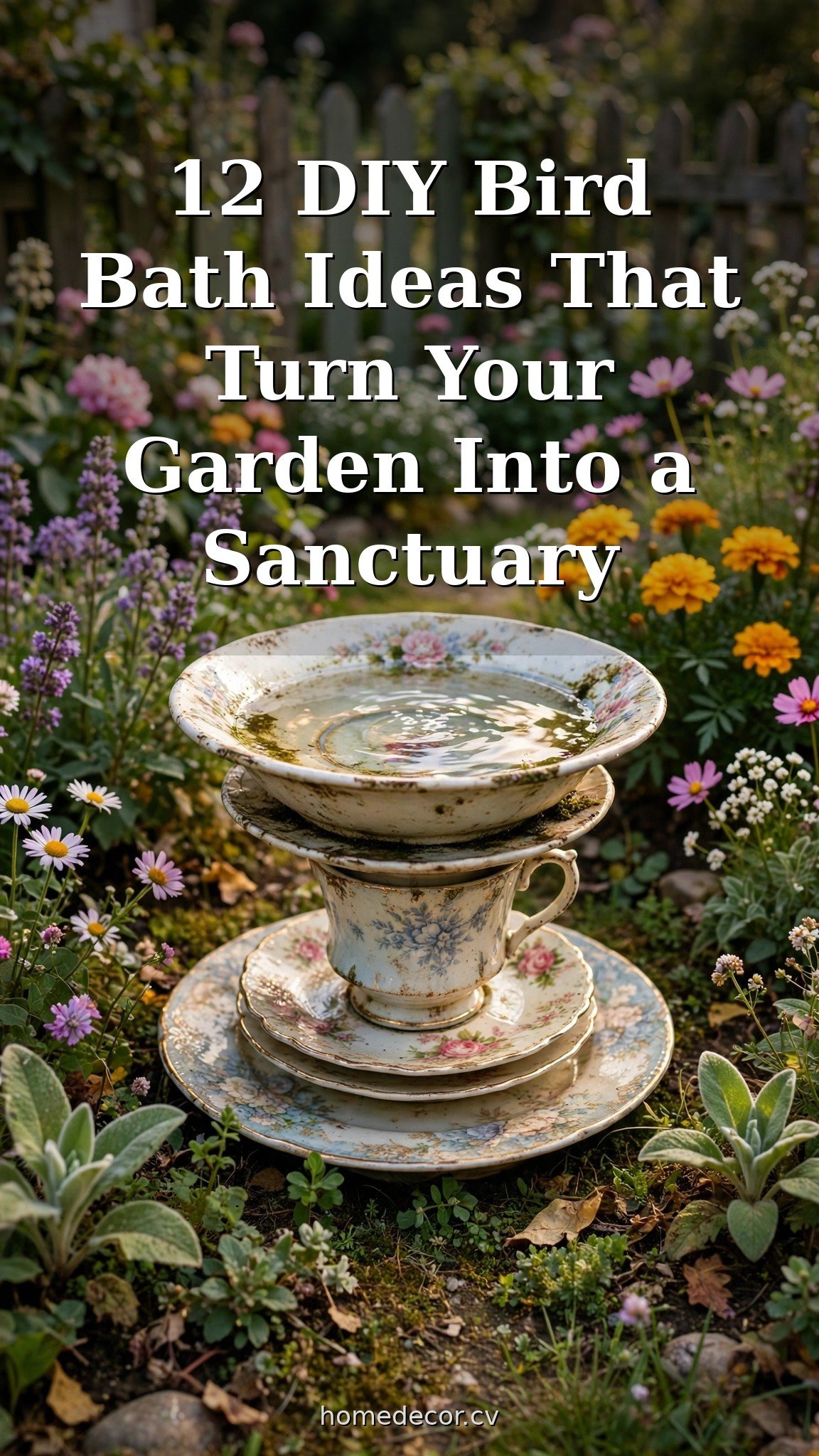
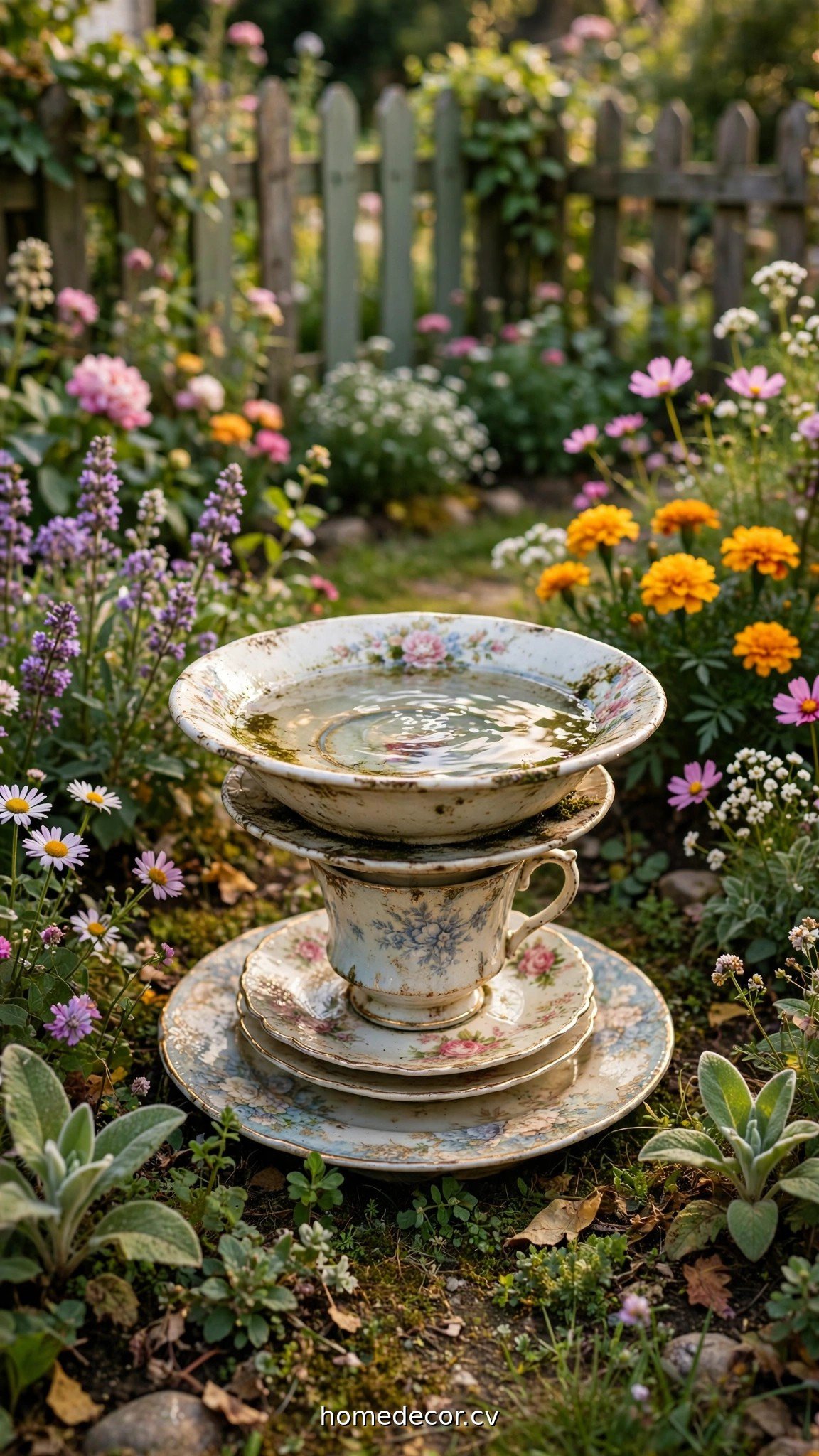
1. The vintage teacup bird bath
Glue a large vintage teacup (or a small bowl) to its saucer with waterproof epoxy, then mount the saucer on a sturdy candlestick, a short piece of copper pipe, or a garden stake. It’s delicate, charming, and perfect tucked among flowers where small birds feed.
Practical tip: Use two-part waterproof epoxy, not hot glue — it must survive rain and sun. This size suits wrens and finches; bigger birds need the deeper options below.
2. Terracotta pot tower bath
Stack two or three terracotta pots (largest at the bottom, upside down), top with a wide terracotta saucer, and seal the saucer’s drainage hole with waterproof silicone. Fill with water. The whole thing costs under $15 and looks like classic garden pottery.
Practical tip: Seal the inside of the saucer with a clear waterproof sealer so it holds water without seeping — unsealed terracotta wicks water away in hours. A pebble in the center gives birds a perching spot.
3. Repurposed sink or basin bath
An old enamel basin, a galvanized wash tub, or even a large stainless mixing bowl set on a tree stump, a stack of bricks, or an upturned crate makes a wonderfully rustic bird bath. The wide, shallow shape is actually ideal for bathing birds.
Practical tip: Galvanized metal heats up in direct sun — place metal baths in partial shade and change the water daily in summer. A few flat stones in the bottom give birds secure footing.
4. Glass lamp shade or light cover bath
Those vintage glass lamp shades and ceiling light covers at thrift stores — the wide, shallow, often beautifully textured ones — make perfect bird bath basins. Mount one on a candlestick, a baluster, or a short pedestal with epoxy.
Practical tip: Check the glass for cracks before buying — hairline cracks become real cracks under water weight and temperature swings. Milk glass and hobnail patterns look especially pretty filled with water.
Garden-Style Bird Baths
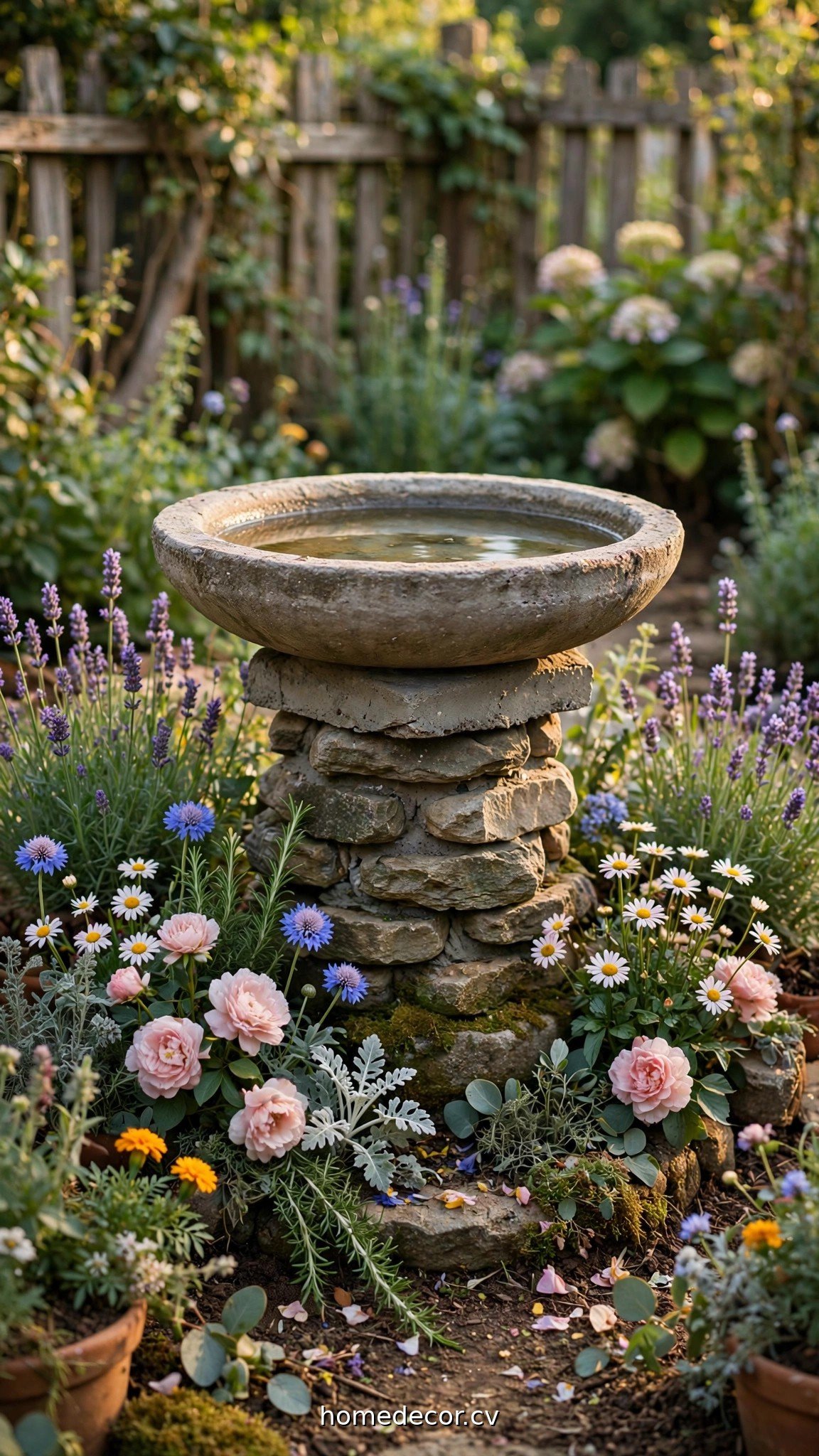
For a more permanent, landscaped look — weekend projects with lasting presence.
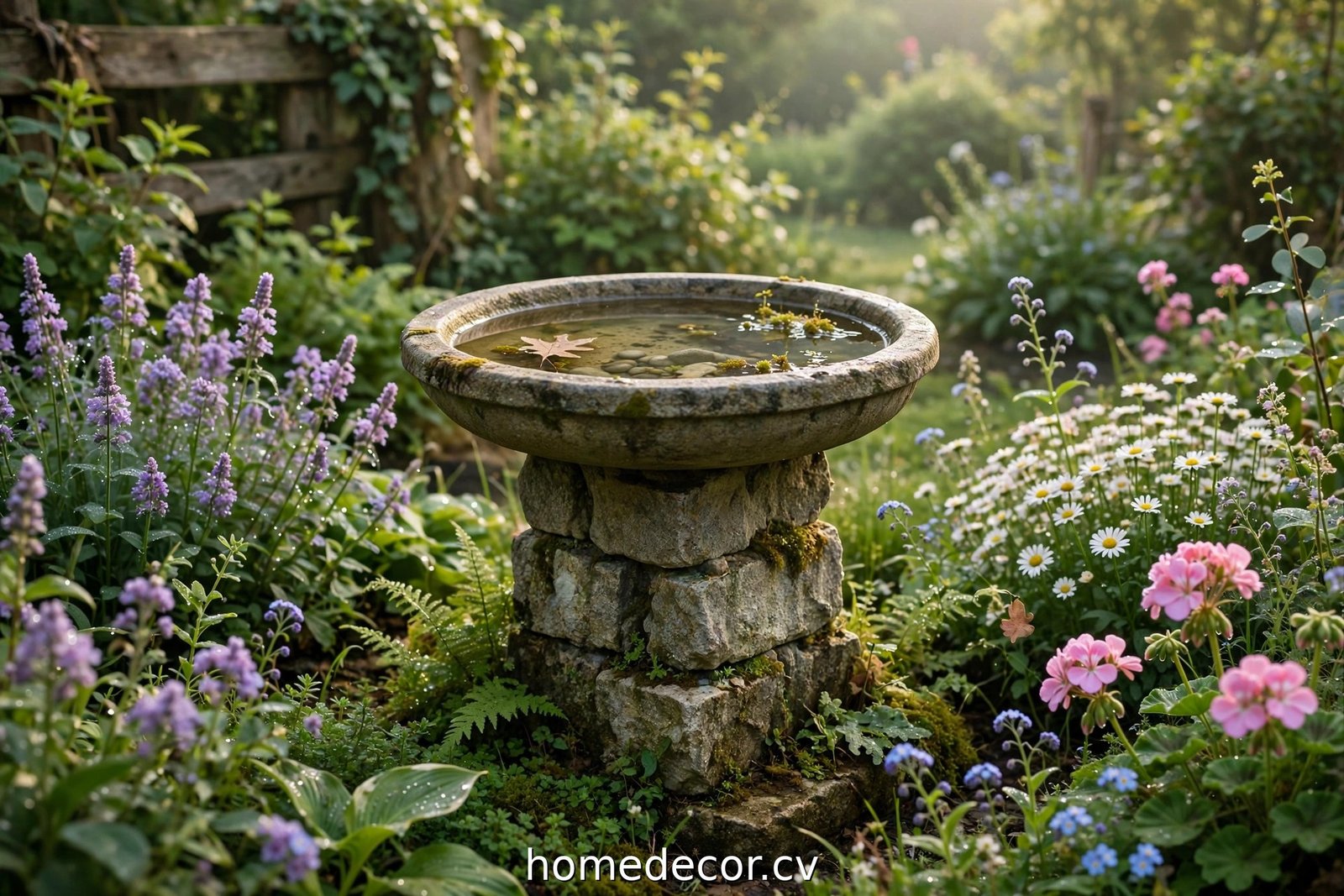
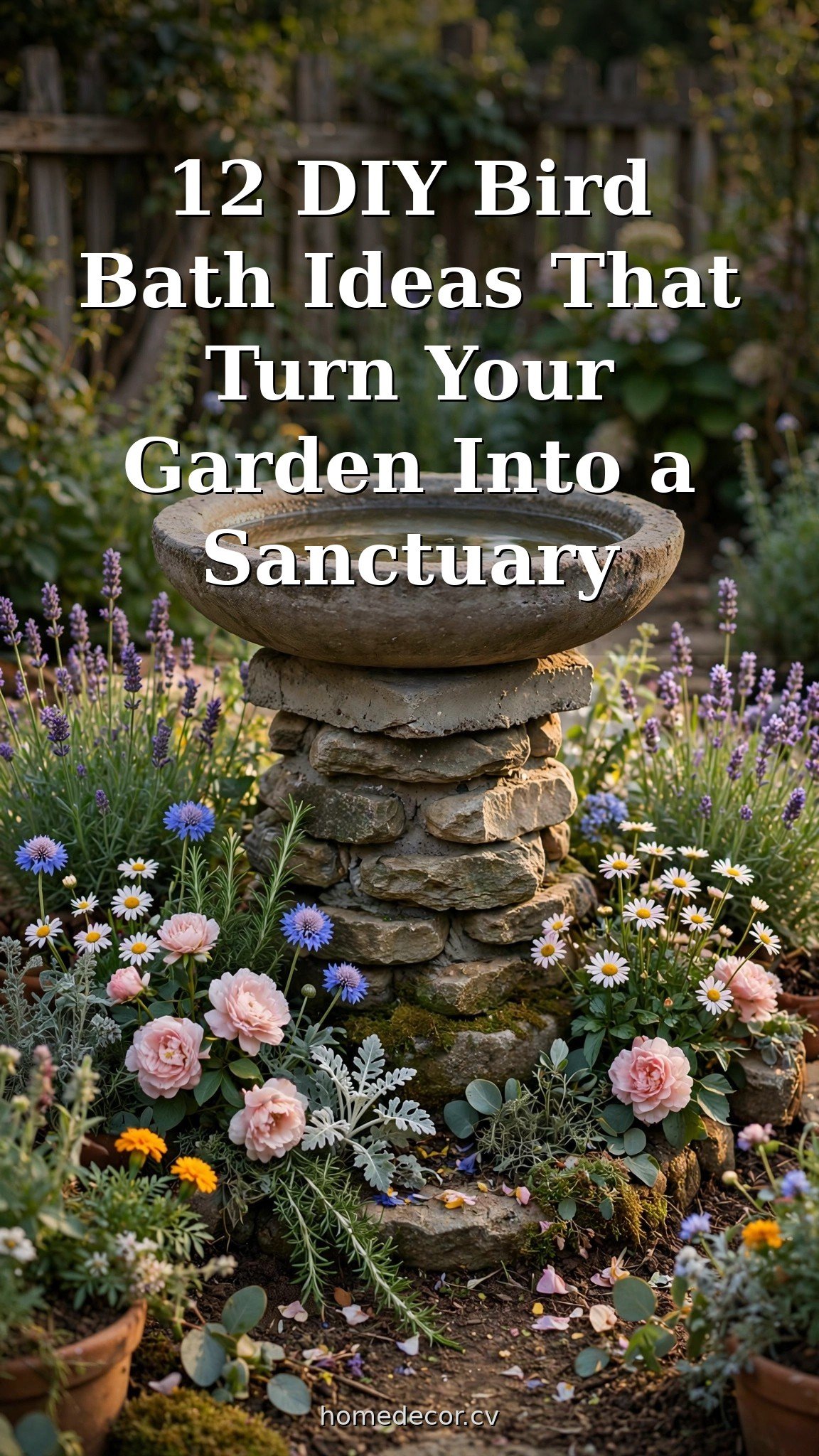
5. The classic stone pedestal bath
Buy a ready-made stone or concrete pedestal and basin (or cast your own basin in a large leaf mold with quick-set concrete), and set it as the centerpiece of a flower bed. The timeless look suits any garden style from cottage to formal.
Practical tip: Set the pedestal on a buried paver or a few inches of gravel so it sits level and doesn’t sink over time. A level bath means even water depth — important for birds.
6. Leaf-cast concrete basin
Press a giant hosta, rhubarb, or elephant-ear leaf face-down into damp sand, pour quick-set concrete over it, and let it cure — peel away the leaf to reveal a stunning veined basin. Mount it on a stump or a stack of stones.
Practical tip: Wear gloves and a dust mask when working with concrete. Cure the basin for a full week, then seal it with a non-toxic concrete sealer before adding water — fresh concrete can leach lime that’s harsh for birds.
7. Bamboo and stone Japanese-style bath
Set a wide, shallow stone or ceramic basin at ground level, surround it with raked gravel, a few feature rocks, and a small bamboo water dripper (a split bamboo pipe fed by a tiny pump). The gentle trickle attracts birds from surprisingly far away.
Practical tip: Moving water is the single best bird attractant — even a tiny solar pump in a still basin doubles your visitors. Solar pumps cost under $20 and need no wiring.
8. Hanging bird bath for small spaces
Hang a shallow, wide bowl (a hanging basket liner sealed with a coco liner replaced by a plastic saucer, or a purpose-made hanging bath) from a sturdy tree branch or shepherd’s hook. Perfect for patios and balconies where a pedestal won’t fit.
Practical tip: Hang it where you can see it from a window — that’s half the joy. Keep it out of the busiest foot-traffic path so shy birds feel safe, and make sure the hanger is strong enough for a water-filled bowl.
Placement & Care: Getting Birds to Actually Come
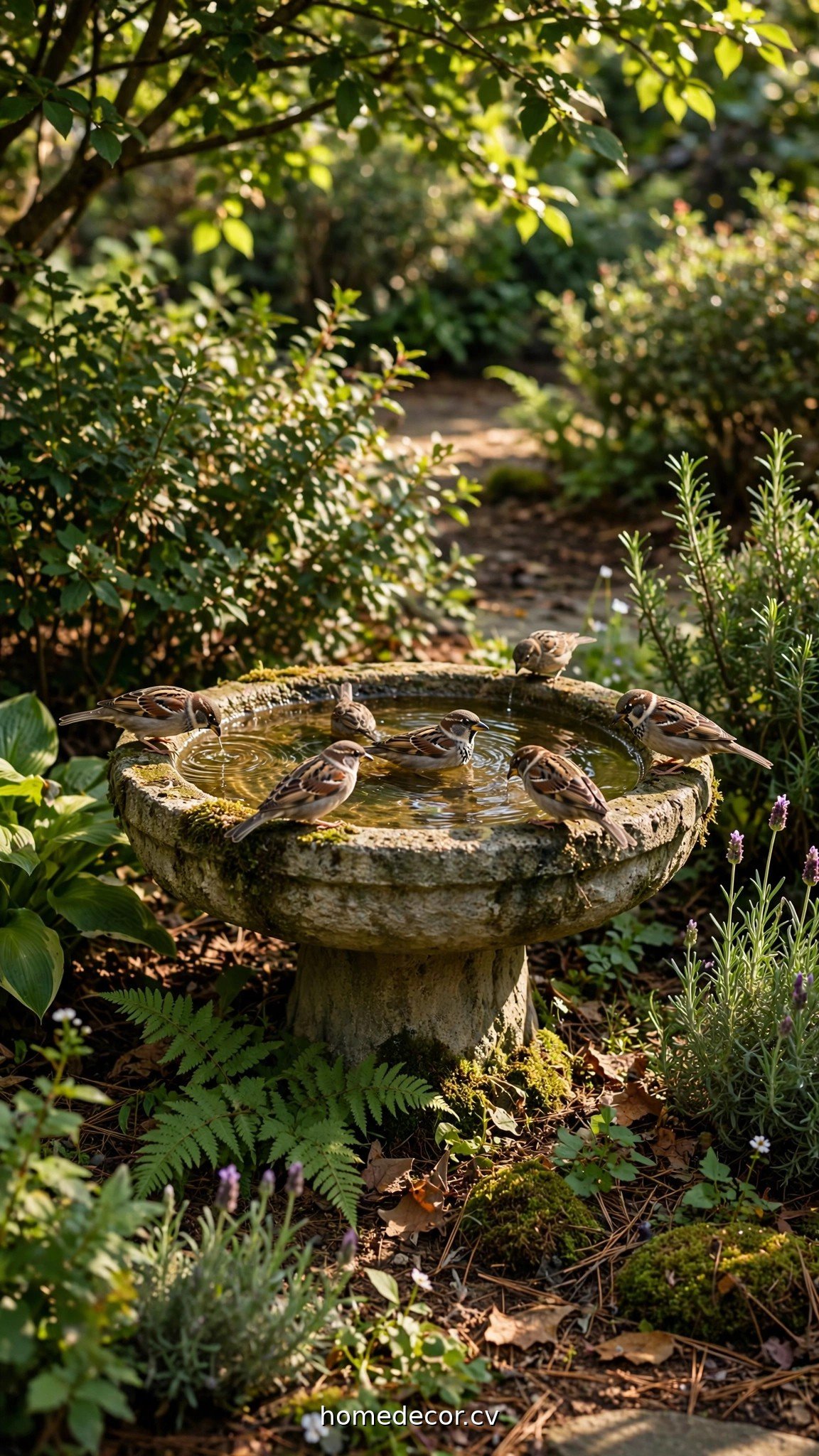
The prettiest bath in the world won’t work in the wrong spot. These tips matter more than the design.
9. Place it near cover, but not in it
Birds want a quick escape route. Set your bath within about 10 feet of shrubs or low branches — close enough to flee to, far enough that cats can’t ambush from hiding. Open sightlines in at least two directions help birds feel safe.
Practical tip: Watch where birds already perch in your garden and place the bath nearby — you’re putting the water on their existing flight path. Avoid the deep center of dense bushes where predators lurk.
10. Keep the water shallow — 1 to 2 inches max
Most songbirds bathe in water just 1 to 2 inches deep. If your basin is deeper, add flat stones or a layer of gravel to create shallow zones. Birds won’t use water they can’t stand in comfortably.
Practical tip: A gently sloping “beach” of pebbles on one side lets birds choose their depth. In winter, a bird-bath heater (about $30) keeps water open and makes your garden the neighborhood hotspot.
11. Clean it weekly — birds notice
Scrub the basin with a stiff brush and a 1:9 bleach-water solution weekly in summer, rinse thoroughly, and refill. Algae and mosquito larvae build up fast in warm weather, and birds avoid dirty water.
Practical tip: A quick daily top-up and a weekly scrub is the whole maintenance routine — five minutes. In mosquito season, the weekly water change also breaks the breeding cycle.
12. Add motion with a dripper or wiggler
A solar-powered dripper, a hanging water wiggler, or a small fountain pump creates ripples and sparkle that birds can see and hear from a distance. It’s the difference between a bath birds discover by accident and one they seek out.
Practical tip: Solar drippers work best in full sun — position the panel accordingly. In shade, a battery-powered “water wiggler” agitates the surface with no sun needed. Either one also discourages mosquitoes.
Keep Exploring
Love these ideas? Here are a few more you might enjoy:
- 15 Front Yard Landscaping Ideas for Instant Curb Appeal
- 14 Side of House Landscaping Ideas for That Forgotten Strip
- 15 Landscaping Along Fence Ideas for a Prettier, More Private Yard
Frequently Asked Questions
What is the best material for a DIY bird bath?
Stone, concrete, and glazed ceramic are the best — they’re heavy (stable), easy to clean, and keep water cool. Avoid deep, slippery plastic and untreated metal, which overheats. Whatever you use, the key specs are: shallow (1-2 inches), textured bottom for grip, and sturdy enough not to tip.
How deep should a bird bath be?
One to two inches in the bathing area. Most backyard songbirds are small and won’t use deeper water. If your basin is deeper, add flat stones or gravel to raise the floor. A graduated depth — deeper in the middle, shallow at the edge — suits the widest range of birds.
Why aren’t birds using my bird bath?
The usual culprits: water too deep, bath too exposed (no nearby cover) or too hidden (predator ambush risk), dirty water, or simply too new — birds can take 2 to 4 weeks to trust a new bath. Add moving water with a dripper, which attracts birds fastest, and be patient.
How do I keep a bird bath from freezing in winter?
A submersible bird-bath heater (thermostat-controlled, about $30) keeps a drinking hole open without heating the whole basin — it’s safe and cheap to run. Dark-colored basins absorb more sun. Never add antifreeze or salt; both are toxic to birds. Fresh unfrozen water in winter attracts more birds than summer water does.
Your Garden, Alive
The magic of diy bird bath ideas isn’t the bath — it’s what shows up. Build the terracotta tower this weekend or cast the leaf basin next month; either way, keep the water shallow, clean, and rippling, and your garden will hum with wings. For more ways to love your outdoor space, explore our Seasonal & Holiday Decor ideas for gardens big and small.