Your driveway is the red carpet to your home — and most of us treat it like a parking lot. If you’ve been looking for driveway landscape ideas that actually make a difference without hiring a landscaper or spending a fortune, you’re in exactly the right place.
These 14 ideas focus on the strip of land along your driveway, because that’s where the transformation happens. Clean edging, layered plantings, warm lighting, and one or two focal points turn a plain concrete slab into something that makes the whole house look better. Nothing here requires heavy equipment or professional skills — just a weekend, some plants, and a plan. Whether your driveway is short or long, straight or curved, these ideas will make arriving home feel a little more special.
Working on the whole front yard? These 15 Front Yard Landscaping Ideas for Instant Curb Appeal cover the bigger picture, and our 14 Side of House Landscaping Ideas for That Forgotten Strip handle those forgotten strips.
Driveway Edging and Border Ideas
1. Cut a clean edge along the driveway
The single highest-impact, lowest-cost driveway upgrade is a crisp edge. Use a half-moon edger to cut a clean four-inch-deep trench line along both sides of the driveway, separating pavement from lawn or bed. That sharp line alone makes everything look professionally maintained.
Practical tip: Re-cut the edge every spring and top the trench with a light mulch fill. A crisp edge fades fast under grass creep — ten minutes with the edger twice a year keeps it sharp.
2. Install metal or stone landscape edging
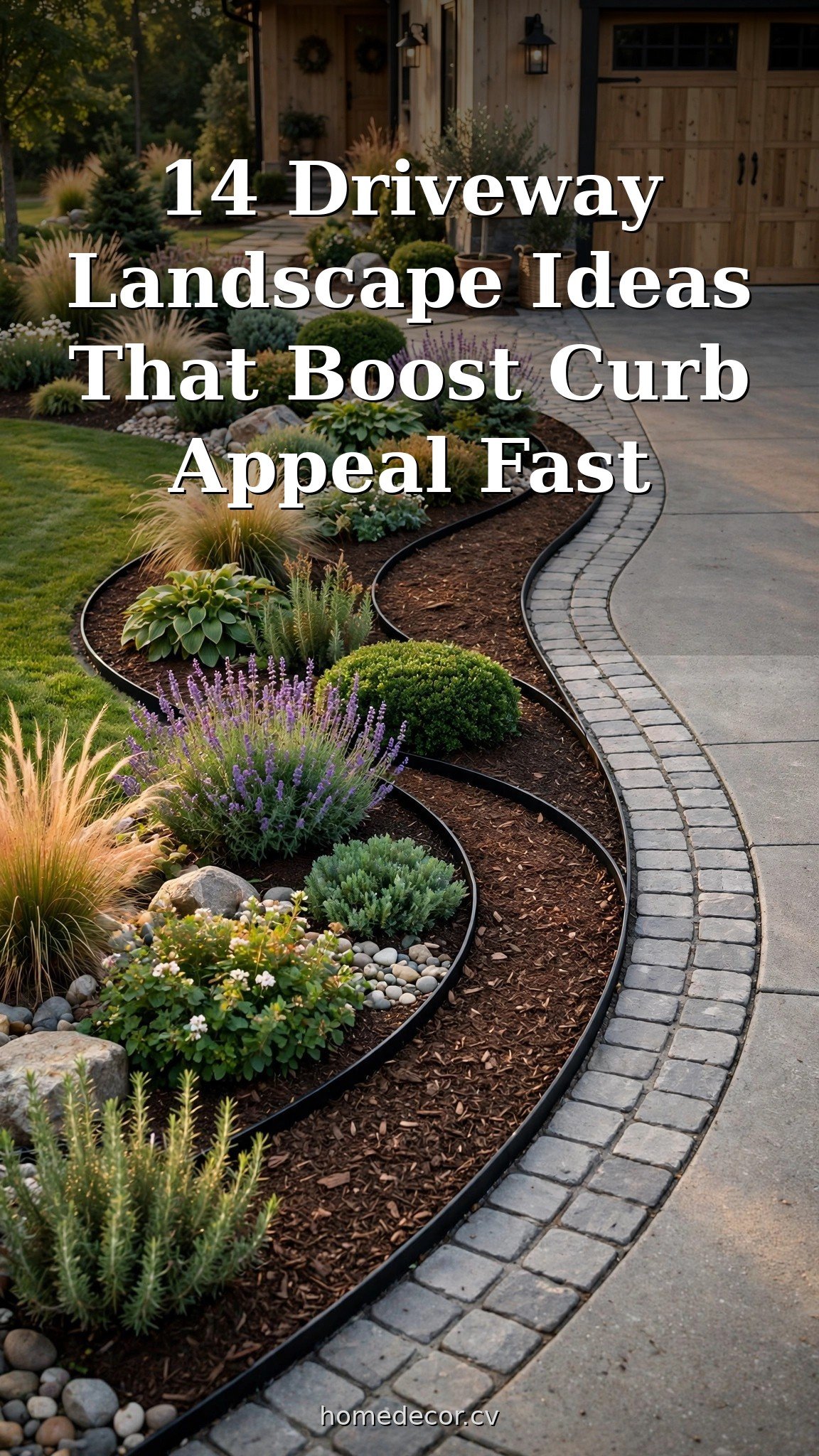
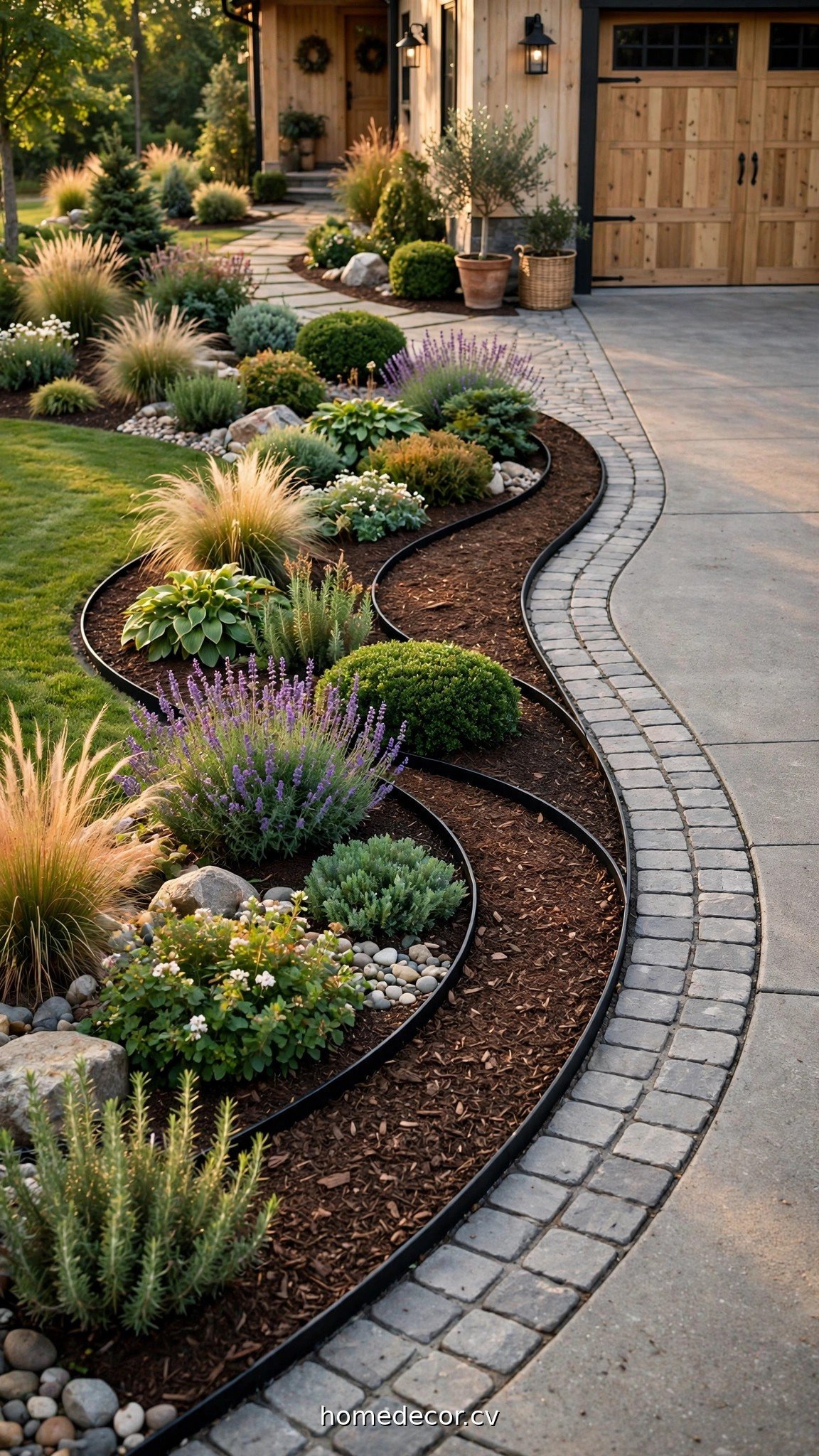
For an edge that lasts, install steel landscape edging or natural stone along the driveway borders. Steel gives a modern crisp line; irregular stone reads more cottage-garden. Either one keeps mulch in the bed and grass out of it permanently.
Practical tip: Steel edging comes in flexible strips that bend around curves — perfect for winding driveways. Stake it every three feet so frost heave can’t push it up.
3. Build curved mulch beds along the driveway
Swap the straight grass-to-driveway line for gently curved beds filled with dark mulch. Curves are more forgiving and more attractive than straight lines, and mulch instantly makes plantings look intentional and rich.
Practical tip: Keep beds at least three feet wide — narrow strips look stingy and dry out fast. A two- to three-inch mulch layer suppresses weeds; anything deeper can suffocate plant roots.
4. Line the driveway with a low hedge
A row of boxwood, dwarf yaupon holly, or lavender along the driveway creates a living frame that looks stunning year-round. Low hedges (under two feet) define the space without blocking views or feeling closed in.
Practical tip: Plant hedges at least two feet back from the driveway edge so car doors and mirrors clear them. Choose a variety that stays naturally compact — you’ll thank yourself every time you skip a trimming session.
Driveway Lighting Ideas
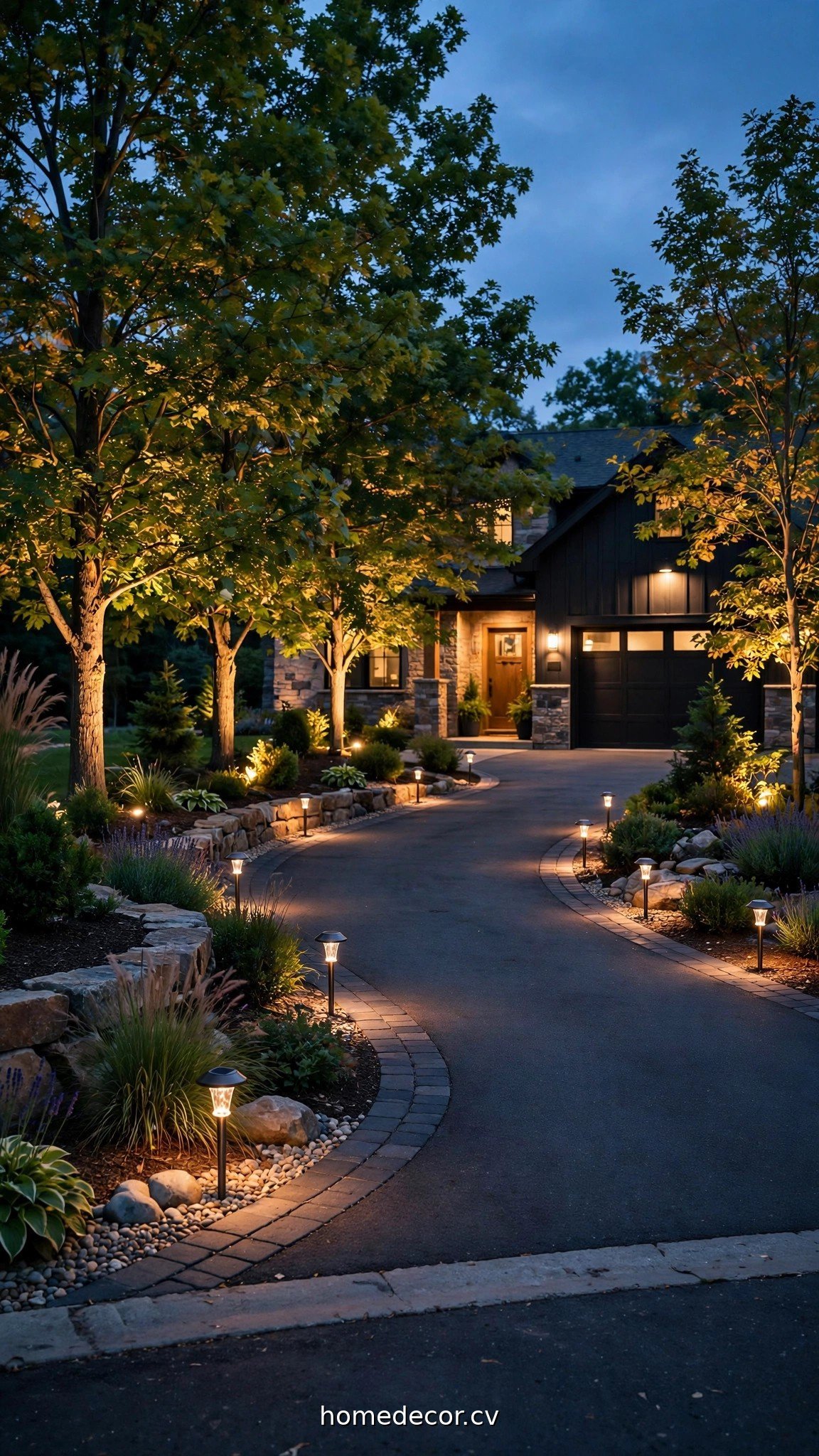
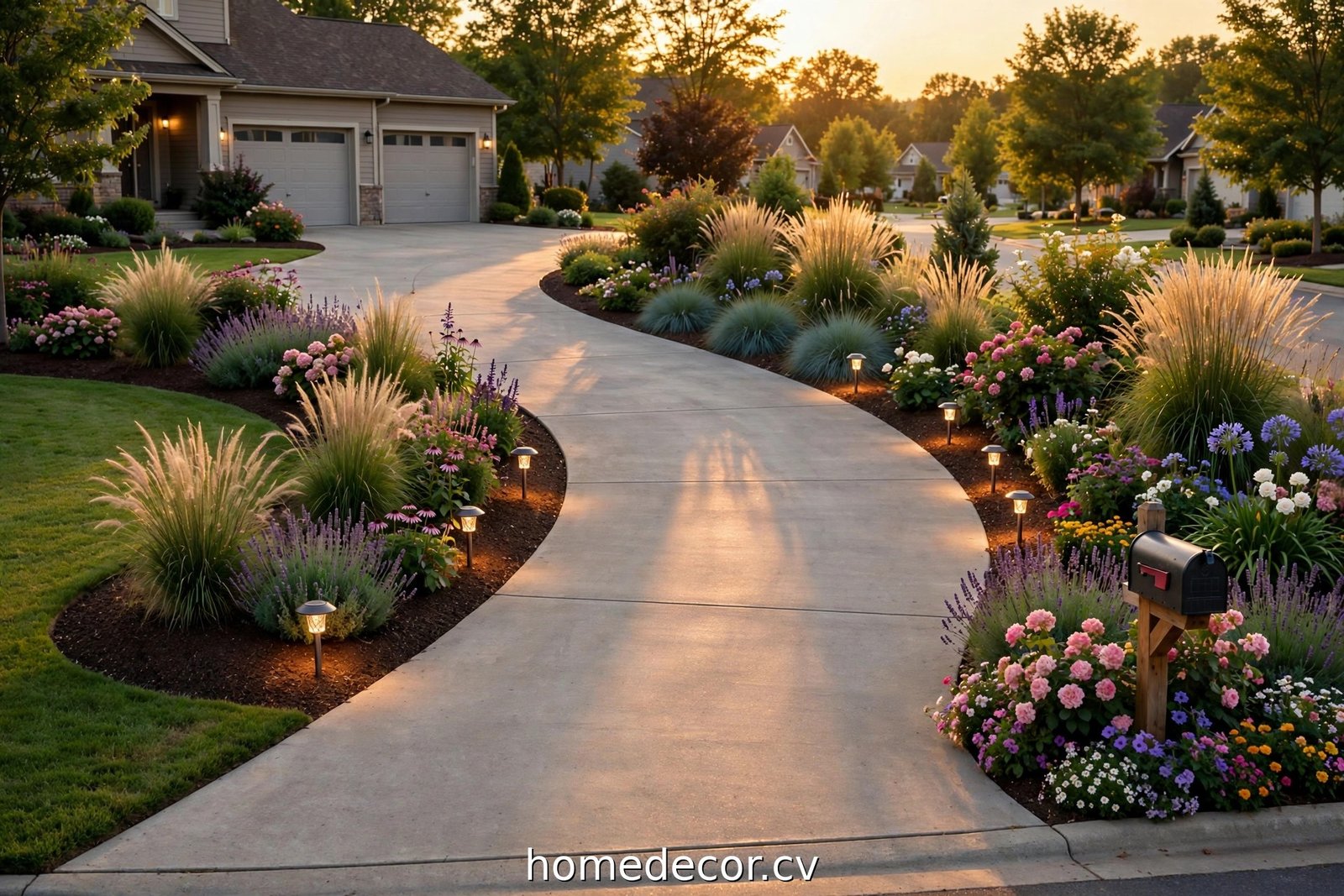
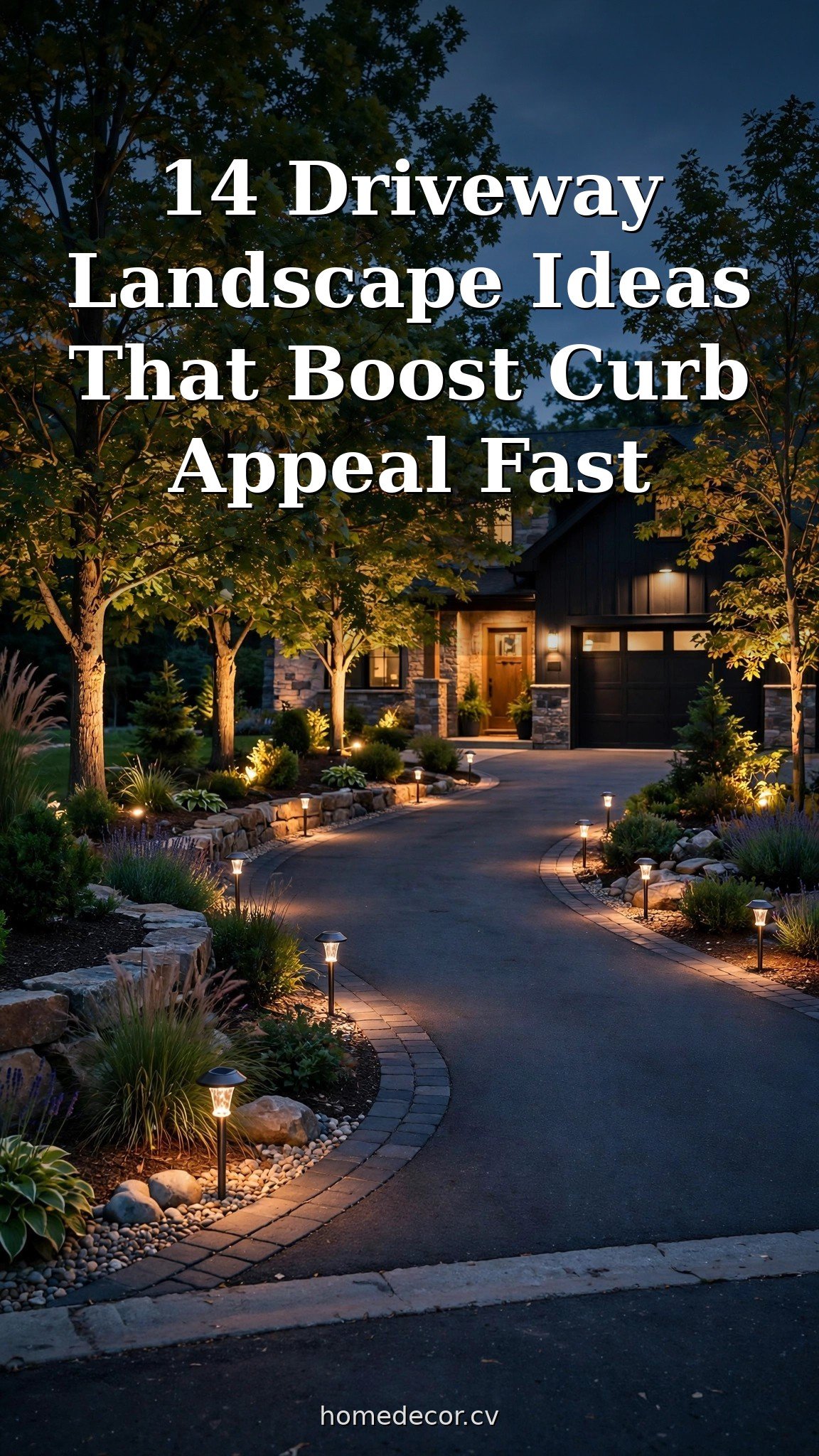
5. Install solar path lights along the borders
Solar path lights are the easiest driveway lighting there is — push them into the ground, and they charge by day and glow by night. A row of them tracing the driveway’s curve is both beautiful and genuinely useful for guests arriving after dark.
Practical tip: Buy lights with replaceable rechargeable batteries, not sealed units — when the glow fades after a year or two, new batteries cost pennies while new lights cost dollars. Wipe the solar panels clean each spring.
6. Uplight a statement tree or feature near the driveway
If there’s a tree, large shrub, or architectural feature near the driveway, aim a ground-level spotlight up into it. Uplighting creates dramatic shadows and turns an ordinary tree into a nighttime sculpture.
Practical tip: Warm-white light (2700K to 3000K) flatters plants and stone; cool white makes everything look stark. One well-placed uplight has more impact than a dozen scattered small ones.
7. Add bollard lights at the driveway entrance
Two short bollard lights flanking the driveway entrance mark the threshold like gateposts. They guide drivers in at night and give the property a finished, deliberate look from the street.
Practical tip: Low-voltage wired bollards are brighter and more reliable than solar versions for entrance lighting. Run the cable in a shallow trench along the bed edge — it’s a one-afternoon job.
Planting Ideas for Driveway Borders
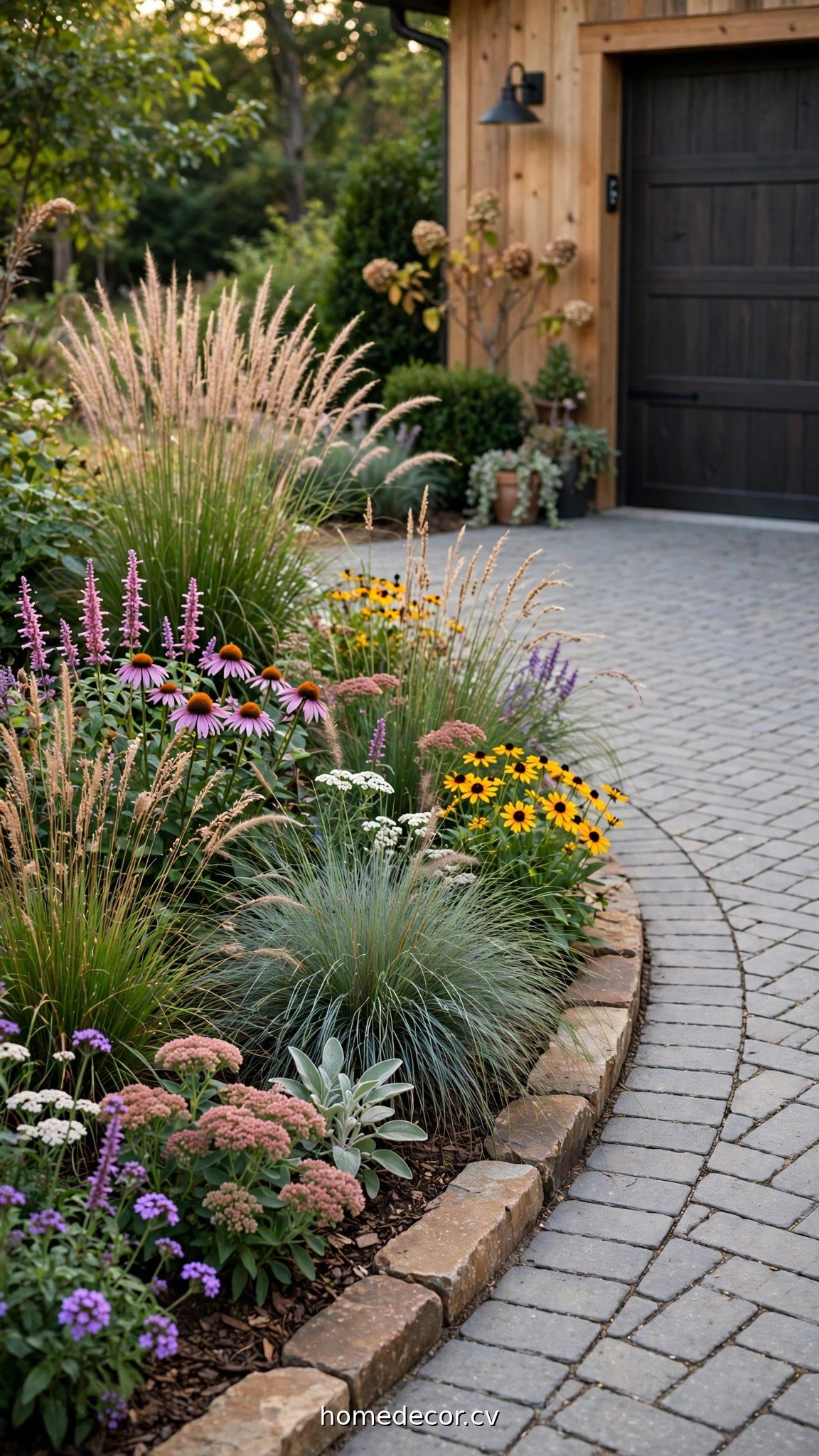
8. Plant ornamental grasses for movement and texture
Feather reed grass, fountain grass, and blue fescue add height, movement, and year-round interest to driveway beds. Grasses sway in the breeze, catch the light beautifully, and need almost no care once established.
Practical tip: Plant grasses in odd-numbered clusters of three or five for a natural look. Cut them back in late winter before new growth starts — one annual haircut is all the maintenance they need.
9. Layer perennials for three seasons of color
Plant in three layers: tall perennials at the back (coneflowers, black-eyed Susans), medium bloomers in the middle (salvia, daylilies), and low groundcover at the front (creeping thyme, sedum). Something is always blooming from spring through fall.
Practical tip: Choose perennials suited to your exact sun exposure — driveway beds are often hot and dry. Native plants handle those conditions best and need far less water than fussy imports.
10. Add evergreen structure for winter interest
Mix in dwarf spruce, boxwood balls, or holly so the driveway beds don’t look bare in winter. Evergreens are the backbone of any border — they hold the design together when the flowers are gone.
Practical tip: The classic ratio is about one-third evergreen to two-thirds deciduous in a border. Place evergreens at the corners and ends where they anchor the design visually.
11. Fill gaps with seasonal color
Tuck flats of seasonal annuals — pansies in fall, petunias in summer, tulips in spring — into the front of driveway beds for instant, cheap color. Annuals are the makeup of the garden: temporary, but they make everything else look better.
Practical tip: Buy annuals in the smaller cell packs rather than big pots — they’re a third of the price and catch up in size within weeks. Plant them close together for immediate fullness.
Focal Points and Finishing Touches
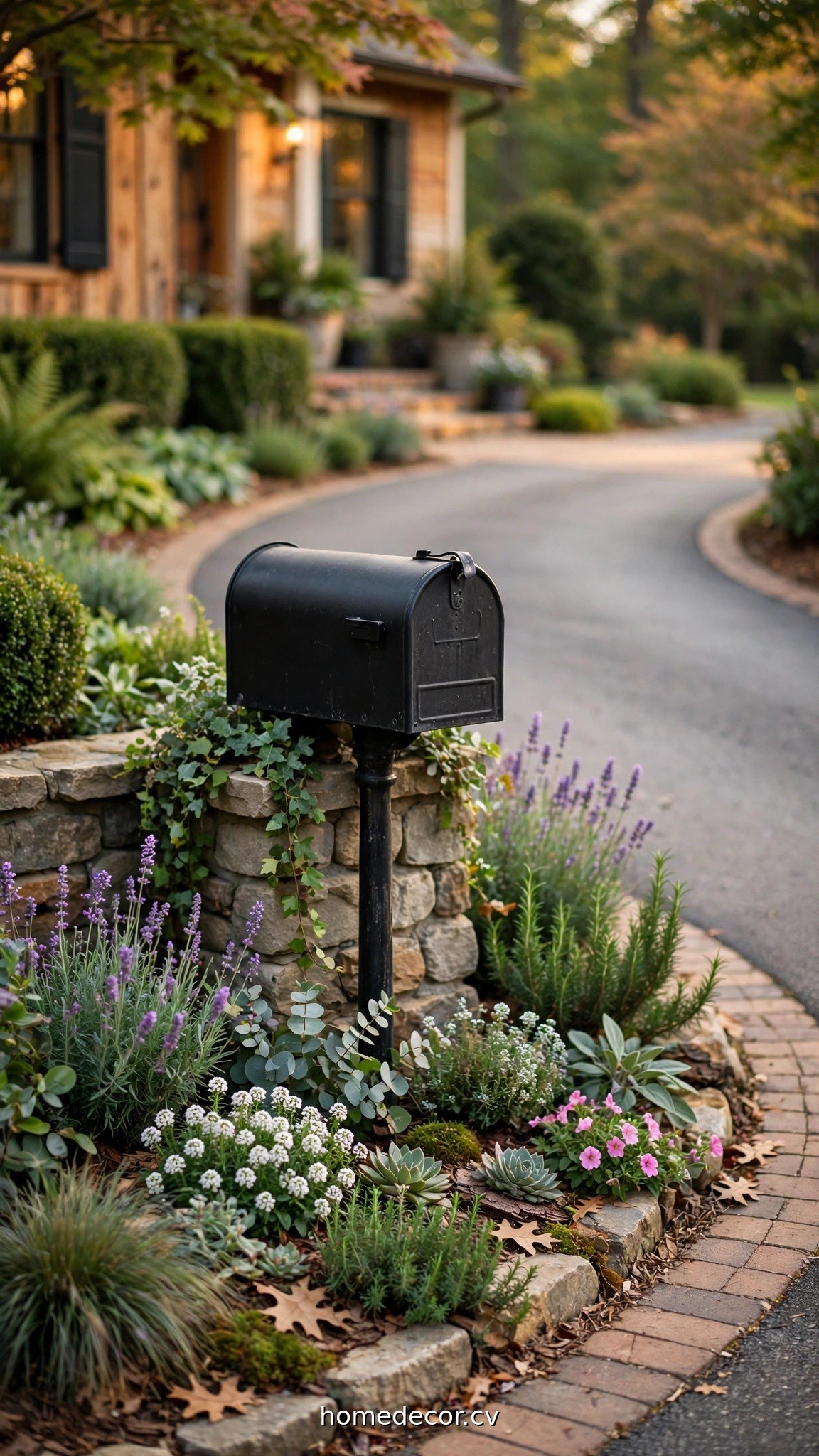
12. Give the mailbox a garden makeover
Plant a small bed around the mailbox post with low flowers and a climbing vine on the post itself. A dressed-up mailbox is visible to every passerby and sets the tone for the whole property — it’s the smallest garden with the biggest audience.
Practical tip: Keep plantings at least a foot clear of the mailbox door so the mail carrier has easy access. A fresh coat of paint on the mailbox and post costs almost nothing and makes the planting look twice as good.
13. Add large planters at the garage or entrance
Two oversized planters flanking the garage door or driveway entrance give you instant structure and seasonal flexibility. Fill them with the classic thriller-filler-spiller formula: one tall plant, medium fillers, and trailing plants over the edge.
Practical tip: Bigger planters are easier to maintain than small ones — they hold moisture longer and give roots room. In hot climates, choose light-colored planters that reflect heat instead of dark ones that cook the roots.
14. Top it off with fresh gravel or a sealcoat
If the driveway surface itself is tired, a fresh sealcoat on asphalt or a top-dressing of decorative gravel on a gravel drive makes the landscaping around it look twice as good. The surface is the canvas — everything else is the frame.
Practical tip: Sealcoat asphalt every three to five years, and always do it before adding new edging or lighting so construction traffic doesn’t damage your fresh work. For gravel drives, a two-inch top layer of fresh stone every couple of years keeps it looking new.
Keep Exploring
Keep improving your home’s first impression:
- 15 Front Yard Landscaping Ideas for Instant Curb Appeal
- 15 Landscaping Along Fence Ideas for a Prettier, More Private Yard
- 12 Small Front Porch Fall Decor Ideas for Tiny Spaces
Frequently Asked Questions
What’s the cheapest way to improve my driveway’s appearance?
Cut a clean edge, add fresh mulch to existing beds, and install a row of solar path lights. That trio costs very little and transforms the look completely. Paint the mailbox and add one large planter and you’ve done a full driveway makeover for the price of a nice dinner out.
What plants work best along a driveway?
Choose tough, heat-tolerant plants: ornamental grasses, lavender, daylilies, coneflowers, and dwarf evergreens. Driveway beds deal with reflected heat from pavement, occasional car exhaust, and sometimes road salt — natives and Mediterranean plants handle all of it.
How wide should driveway landscape beds be?
Three to four feet minimum. Narrower beds dry out fast, look stingy, and give plants no room to grow. If you’re unsure, go wider — generous beds always look more expensive and intentional than skinny ones.
Should I hire a landscaper for driveway landscaping?
For the ideas on this list — edging, mulching, planting beds, solar lights — no. They’re all genuinely DIY-friendly weekend projects. Hire a pro only for major grading, drainage work, retaining walls, or if you want a full design plan to implement yourself over time.
Arrive Home to Something Beautiful
These driveway landscape ideas all share one philosophy: frame the driveway, light it well, and let plants do the talking. You don’t need a grand estate to have curb appeal — you need clean edges, thoughtful plantings, and warm light guiding the way home. Start with the edging this weekend and build from there. For more outdoor inspiration, browse our Seasonal & Holiday Decor category and keep making your home’s first impression its best one.