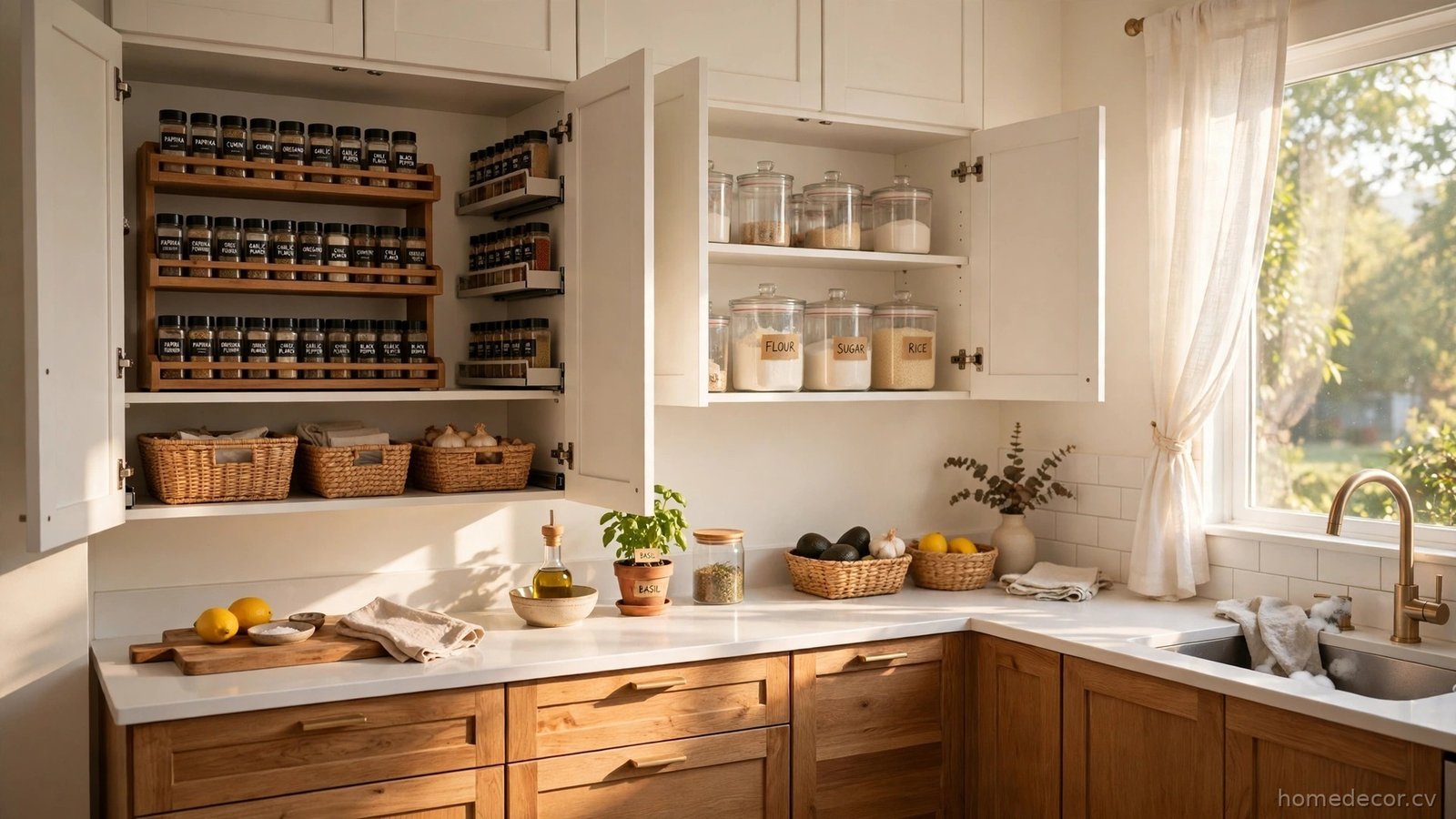
If opening your kitchen cabinets feels like opening a junk drawer, you are not alone, and your tiny kitchen is not the problem. Small cabinets fail when everything is stacked, hidden, and hard to reach, so you end up buying duplicates and cooking stressed. The good news is that smart small kitchen cabinet organization ideas do not need a remodel or expensive built-ins. A few pull-outs, risers, door racks, and clear zones can double what each cabinet actually holds. In this guide, every idea is renter friendly, budget friendly, and made for real daily cooking, so your cabinets finally work as hard as you do every single day.
Add Pull-Out Shelves So Nothing Gets Lost in the Back
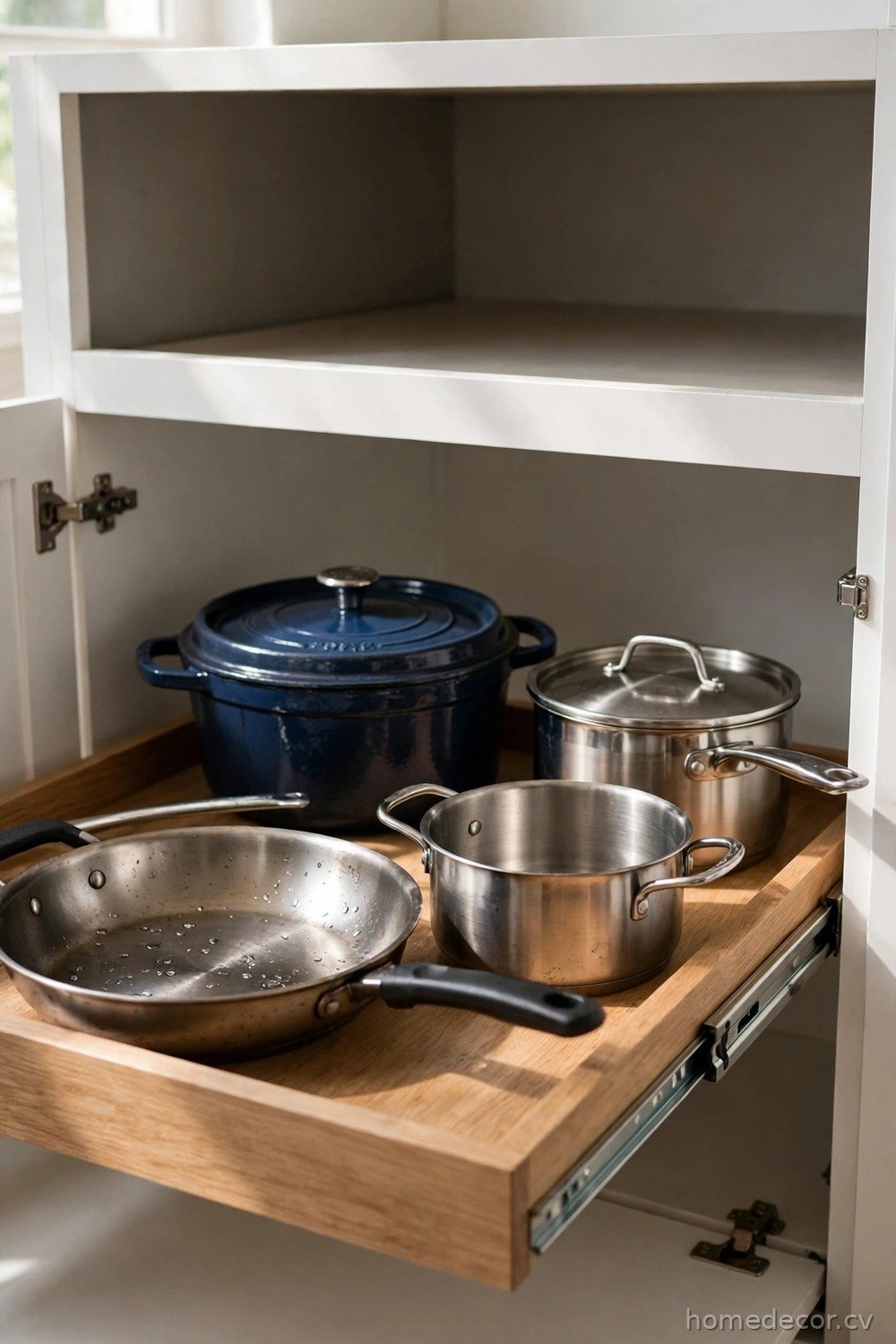
Deep base cabinets are where pots, lids, and small appliances go to disappear, because reaching the back means kneeling and digging blindly. A pull-out shelf fixes that in one afternoon by bringing the whole cabinet to you on smooth runners. Choose sturdy metal or wood trays sized to your cabinet opening, leaving a little side clearance so they glide freely. Load heavy items like Dutch ovens and mixers low and centered, and keep everyday pans at the front. Suddenly the back row is just as usable as the front, and cooking stops feeling like an archaeological dig through forgotten kitchen gear.
I spend far too much time saving home ideas.
If you'd like the best ones, I'll send a short email once or twice a month.
Start with the cabinet you open most, usually the one under or beside the stove, and live with one pull-out for a week before buying more. Measure inside width, depth, and height carefully, because older cabinets are rarely perfectly square. If a full pull-out feels pricey, a simple rolling under-cabinet basket gives a similar effect for less money. Label the tray zones if family members keep mixing things up. Once you feel how easy dinner prep becomes, you will want that same pull-forward access in your pantry and bathroom cabinets too, because wasted depth is wasted storage everywhere in a small home.
Use Shelf Risers to Double Your Vertical Space
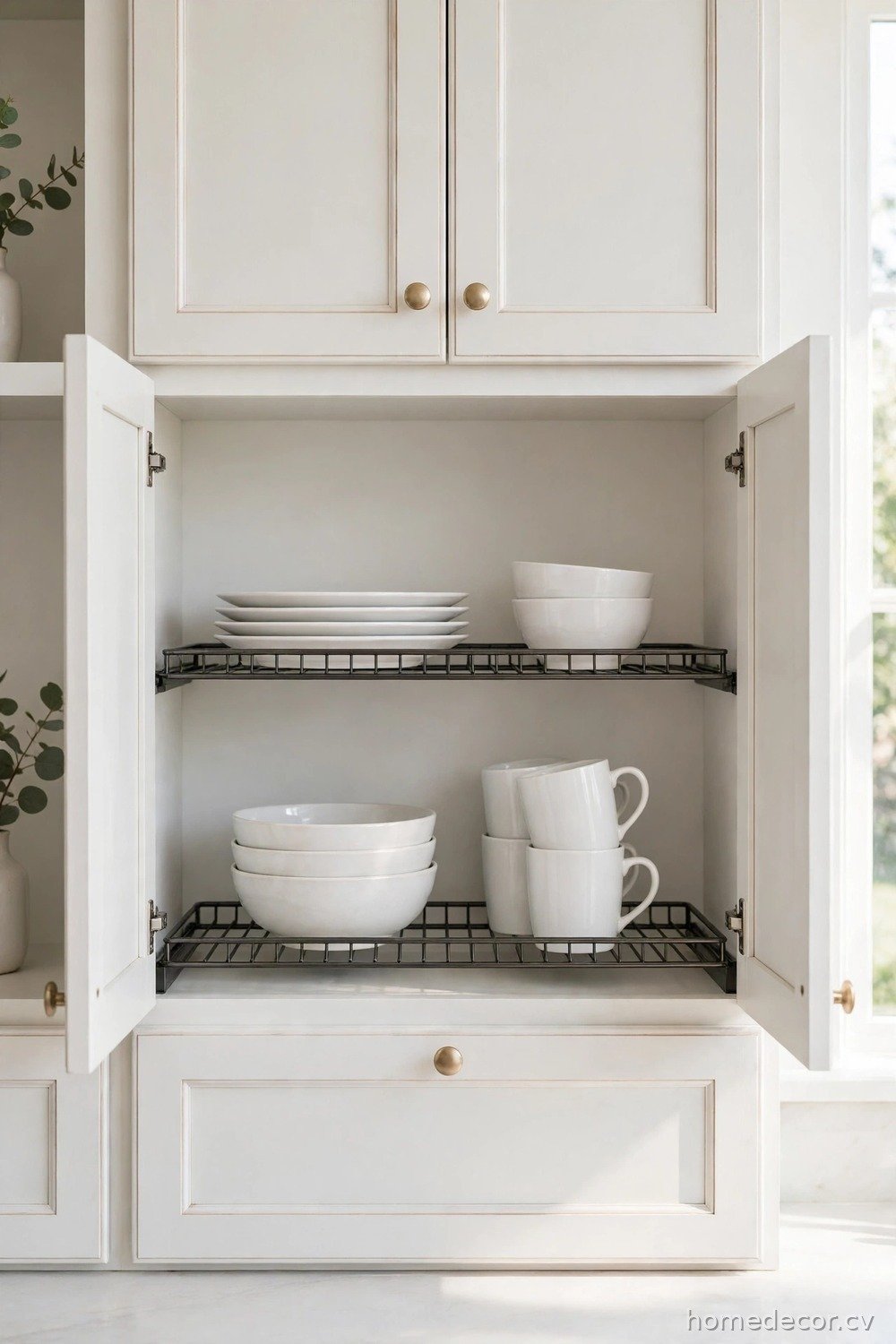
Most kitchen cabinets waste half their height, because plates and bowls sit in one tall stack while empty air floats above them. A simple shelf riser instantly creates two levels from one, so mugs can live above plates and small bowls stop hiding behind big ones. Pick risers that are sturdy, non-slip, and wide enough for your dinnerware, and avoid flimsy wire versions that wobble under heavy stoneware. In upper cabinets, risers work beautifully for glasses, spice jars, and canned goods. You will be amazed how much extra room appears without adding a single new cabinet to your small kitchen layout.
Arrange each riser by how often you use things, not just by size. Everyday plates belong on the easy lower level, while serving pieces and holiday dishes can sit higher or further back. Keep stacks short, around six to eight plates, so they stay light and safe to lift. If you rent, freestanding risers are perfect because they need no screws and move with you. Pair them with clear shelf liner to stop sliding and protect the cabinet floor. This one cheap change often makes cabinets feel twice as big, especially when combined with a quick declutter of chipped, duplicate, or never-used pieces first.
Turn Cabinet Doors Into Hidden Storage
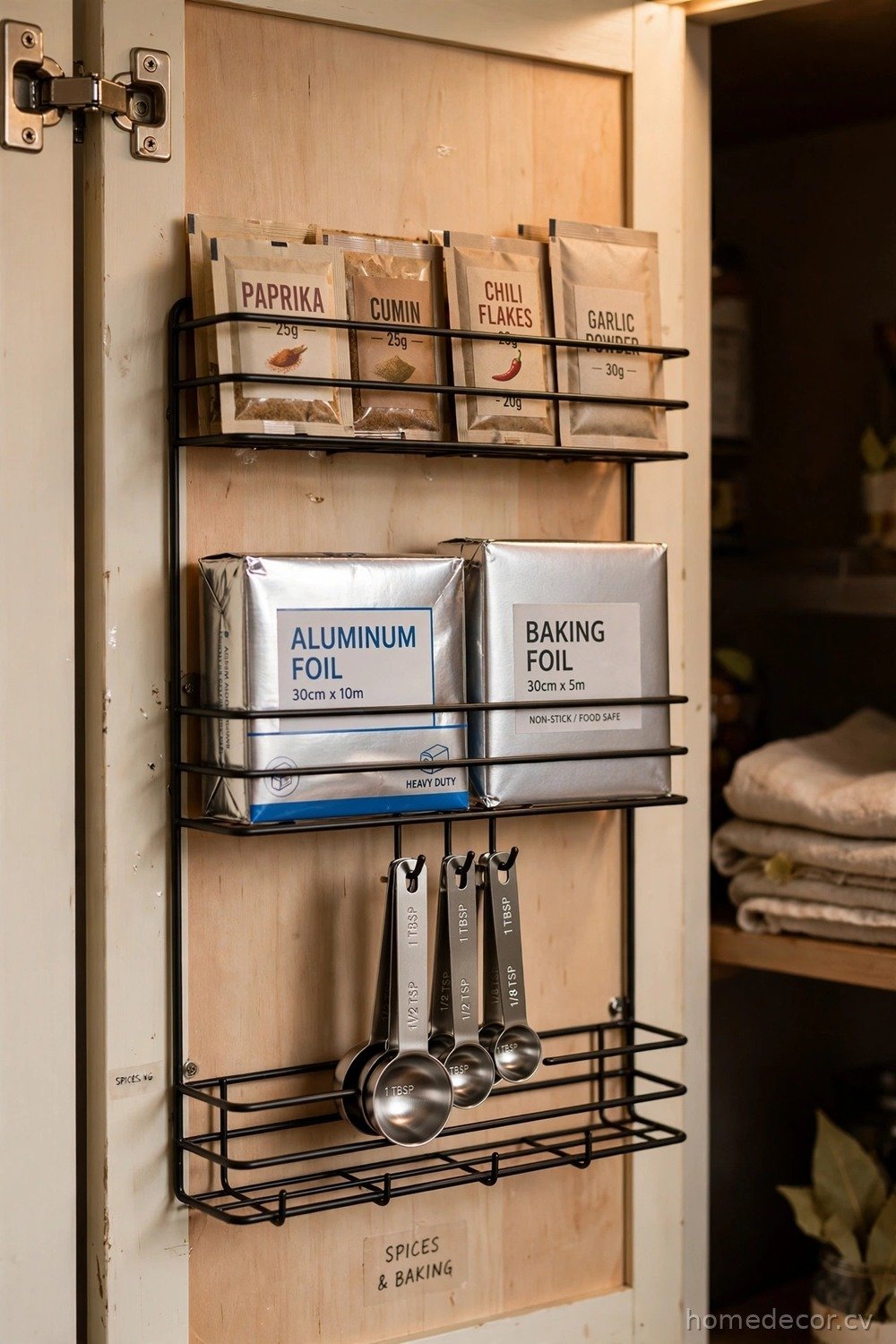
The inside of a cabinet door is prime real estate that most small kitchens completely ignore. Slim door-mounted racks can hold spice packets, foil and wrap boxes, measuring spoons, pot lids, and cleaning cloths right where you need them. Use over-the-door hooks or adhesive racks if you cannot drill, and keep the load light so hinges do not strain. Under the sink, a door caddy keeps sponges and brushes off the counter and out of the damp base. This trick adds storage without stealing a single inch of shelf space, which matters enormously when every single cabinet in your kitchen is already completely full.
Be careful about clearance before you commit to any door rack. Close the door slowly and check that bottles and lids do not crash into shelves or stored items inside. Shallow racks work best for doors above counters, while deeper caddies suit under-sink doors. Put the things you grab daily, like foil, cling wrap, and favorite seasonings, on the most accessible door near your prep zone. Wipe door racks weekly, because kitchen grease builds up quietly. Done well, door storage feels like finding a secret extra cabinet you never knew your small kitchen had all along, and guests never even see it.
Organize Spices on a Tiered Rack You Can Actually See
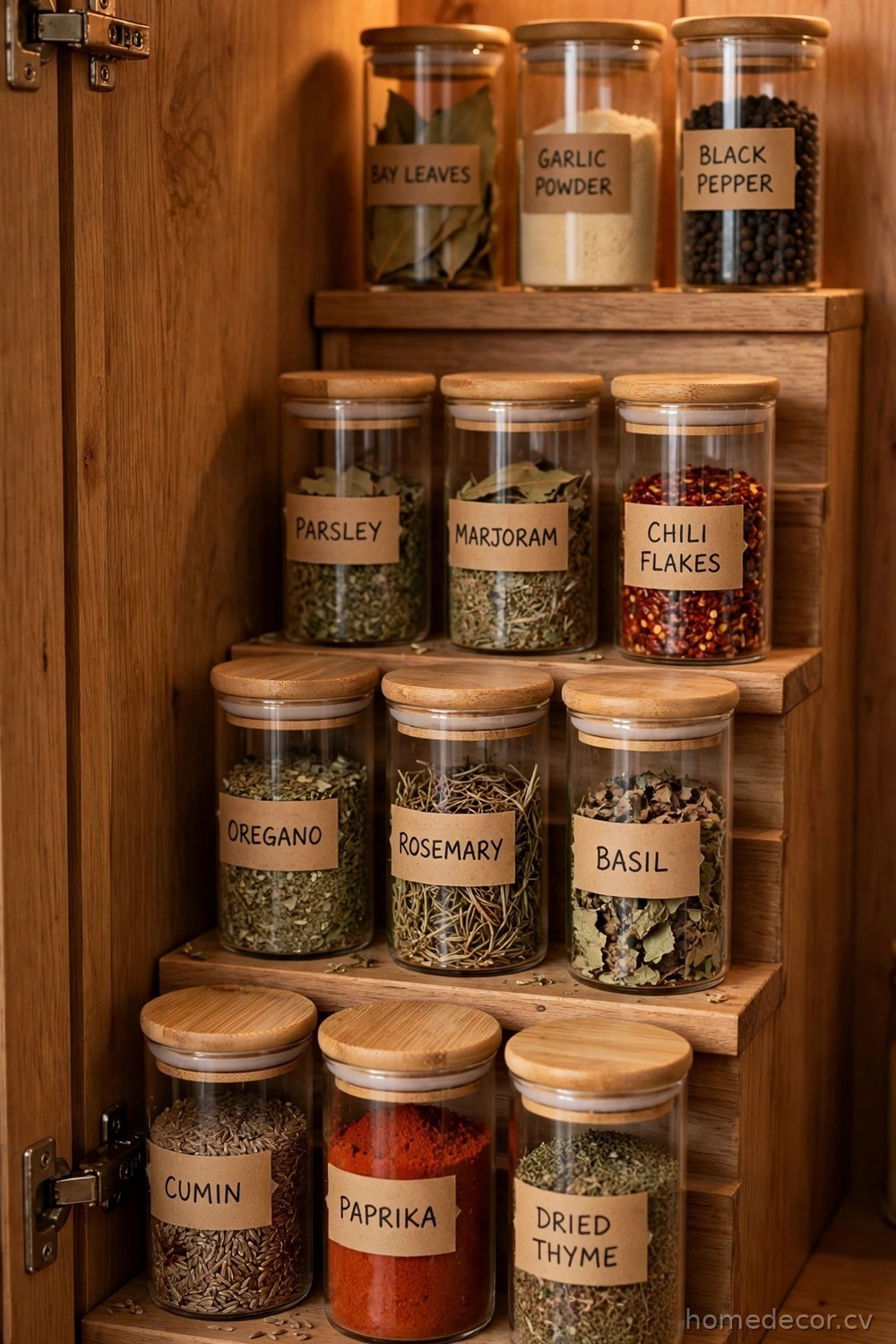
Spices piled in a dark cabinet guarantee one thing: you will buy a third jar of paprika while the first two hide in the back. A tiered spice rack lifts every jar into view like stadium seating, so labels face forward and nothing gets buried. Turntables work well in corner cabinets, while narrow pull-out spice racks suit skinny spaces beside the stove. Decant messy packets into small matching jars only if you will maintain them, otherwise keep original containers neatly rowed. Group spices by how you cook, keeping everyday blends together and baking spices in their own little zone nearby.
Take everything out and check expiry dates before you reorganize, because old spices lose flavor and waste precious cabinet room. Arrange the tiered rack so the tallest jars sit at the back and the smallest at the front, and leave a fingertip of space so jars lift out easily. If cabinet space is truly tight, a door-mounted spice rack or a shallow drawer insert can hold a surprising collection flat and visible. The same visibility rule helps with small pantry organization ideas, where seeing everything at a glance stops overbuying and makes weeknight cooking calmer, easier, and noticeably faster every time.
Fix the Corner Cabinet With a Lazy Susan or Pull-Out
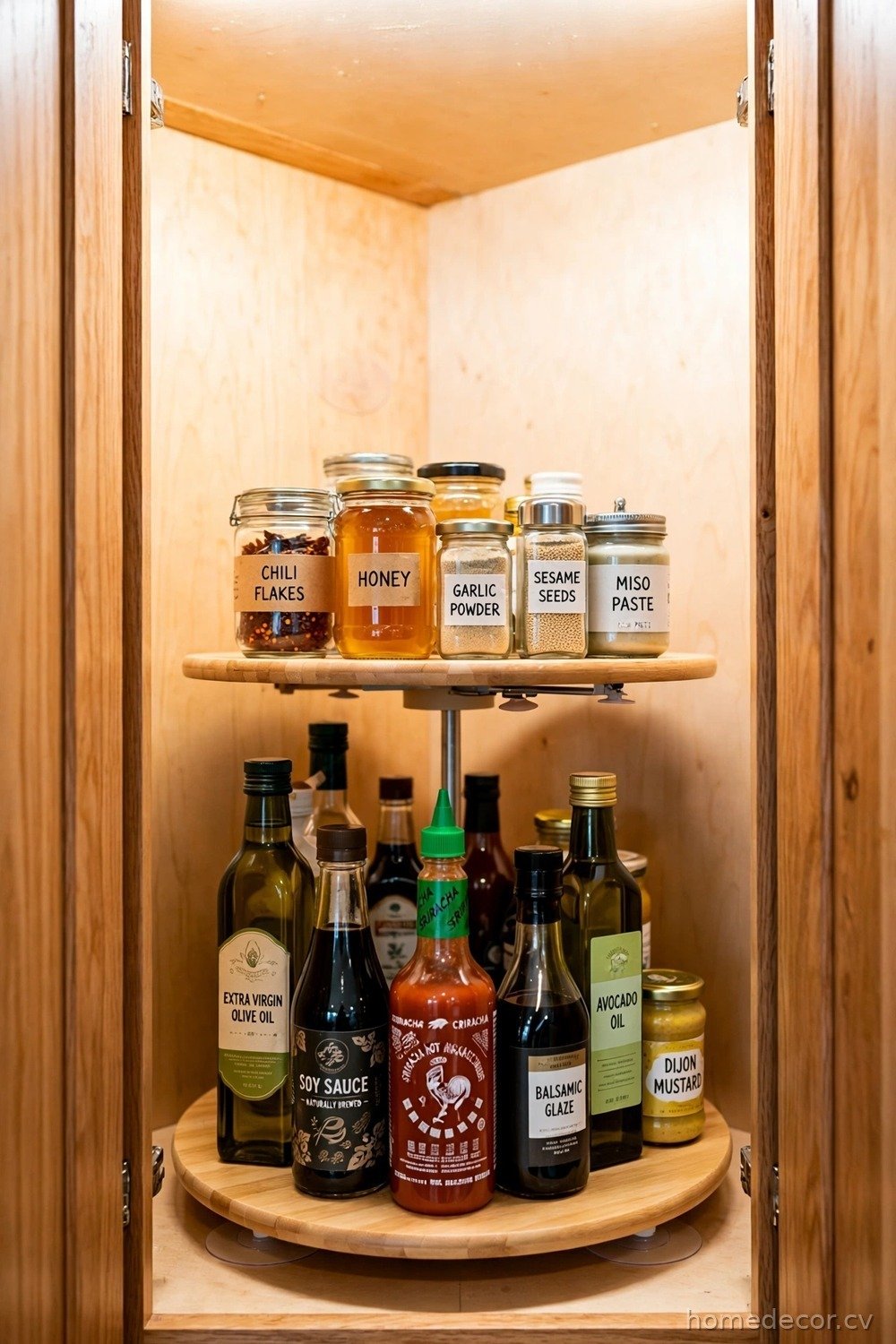
Corner cabinets swallow storage, because their deep dark angle hides everything pushed beyond arm’s reach. A large lazy Susan turntable brings that lost zone back into daily use, spinning oils, sauces, or baking supplies to the front with one flick. For blind corners, a pull-out corner organizer with sliding baskets is pricier but transforms dead space into two fully accessible, easy-to-use shelves. Keep only sturdy, non-perishable items here, and avoid stacking fragile glass where it can topple while turning. With the right insert, the most frustrating cabinet in your kitchen can quietly become one of the most useful and satisfying.
Measure the corner opening and door swing carefully, because turntables need clearance to rotate without scraping. A two-tier lazy Susan doubles capacity for smaller jars and cans, while a single large tray suits pots and mixing bowls better. Do not overload the edges, or items will jam against the cabinet walls. Every few months, spin everything out for a quick wipe, since crumbs and oil drips love corners. If you are on a tight budget, even two rectangular bins you can slide in and out will tame the corner, proving that access, not expensive hardware, is the real secret here.
Create an Under-Sink System That Works Around the Pipes
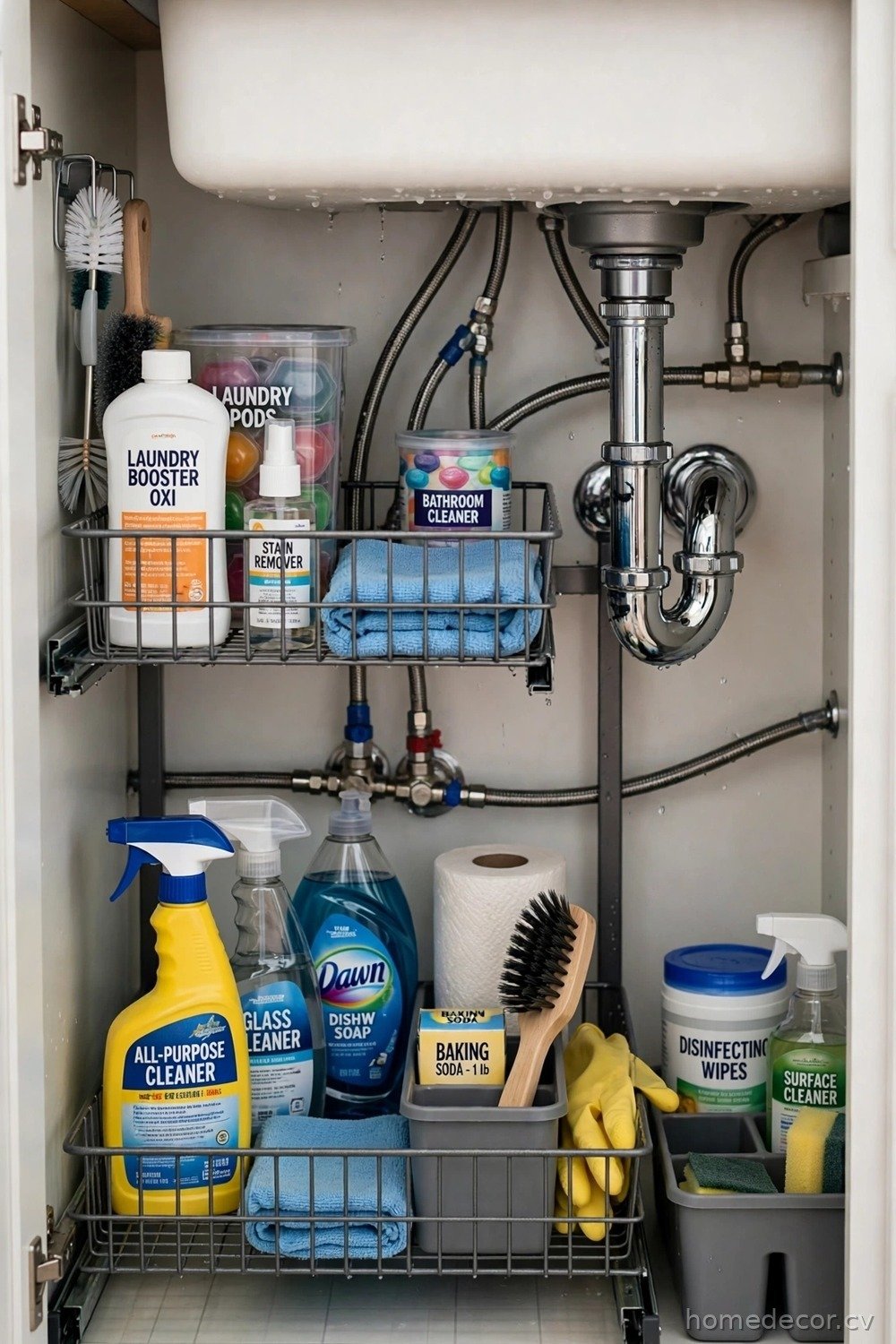
The under-sink cabinet is awkward, damp, and usually a jumble of bottles tipped around pipes, yet it can hold all your cleaning supplies neatly. A two-tier sliding organizer or stackable under-sink shelf works around plumbing while lifting bottles into clear view. Keep daily items like dish soap refills and sponges in front, and store backup supplies behind them. Add a small waterproof mat to catch drips and protect the cabinet base from leaks you might otherwise miss. Group products in caddies by task, so one grab brings everything you need for the sink, the counters, or the floors throughout your whole home.
Safety matters most in this cabinet, especially in homes with kids or pets. Keep harsh chemicals in a latched bin at the back, and never store food or pet treats under the sink. A tension rod fitted across the upper space lets spray bottles hang by their triggers, freeing the floor for bins below. Check for slow leaks whenever you reorganize, because early spotting saves expensive cabinet damage. This hardworking zone pairs well with tidy counters above, and our guide to kitchen counter organization ideas shows how to keep that cleared space looking calm, open, and genuinely easy to clean every day.
Store Baking Sheets and Boards Vertically Like Files
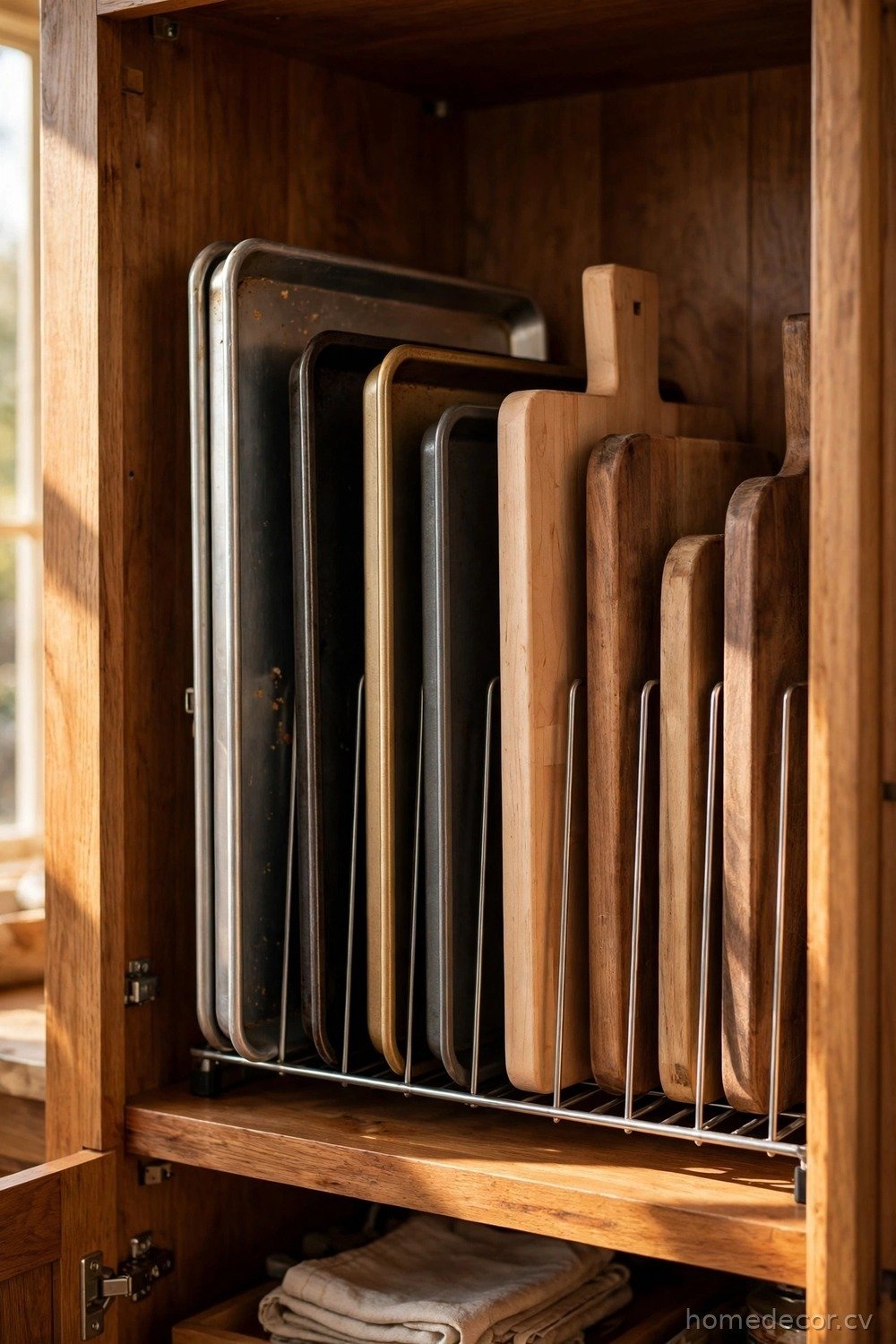
Flat items like baking sheets, cutting boards, and trays waste huge space when stacked, because you must lift everything to reach the one at the bottom. Storing them vertically in a file-style rack or between tension-rod dividers means each piece slides out on its own in seconds. Fit the rack inside a deep base cabinet, above the fridge, or in that narrow gap beside the oven. Keep your everyday sheet pan and board at the front, and move specialty roasting pans behind them. This simple flip from stacking to filing saves space, time, and a surprising amount of daily kitchen frustration.
If you do not want to buy a rack, a sturdy file organizer from an office store or a repurposed dish rack does the same job beautifully. Make sure dividers are tall enough to stop boards tipping, and add felt pads where metal edges meet cabinet wood. Avoid storing wet boards vertically until they are fully dry, or moisture will get trapped between them. This vertical thinking works for lids too, which can stand in a shallow rack on a shelf or door. Once flat items stand upright, you will often free a whole shelf for food storage, small appliances, or mixing bowls instead.
Decant Dry Goods Into Clear, Stackable Containers
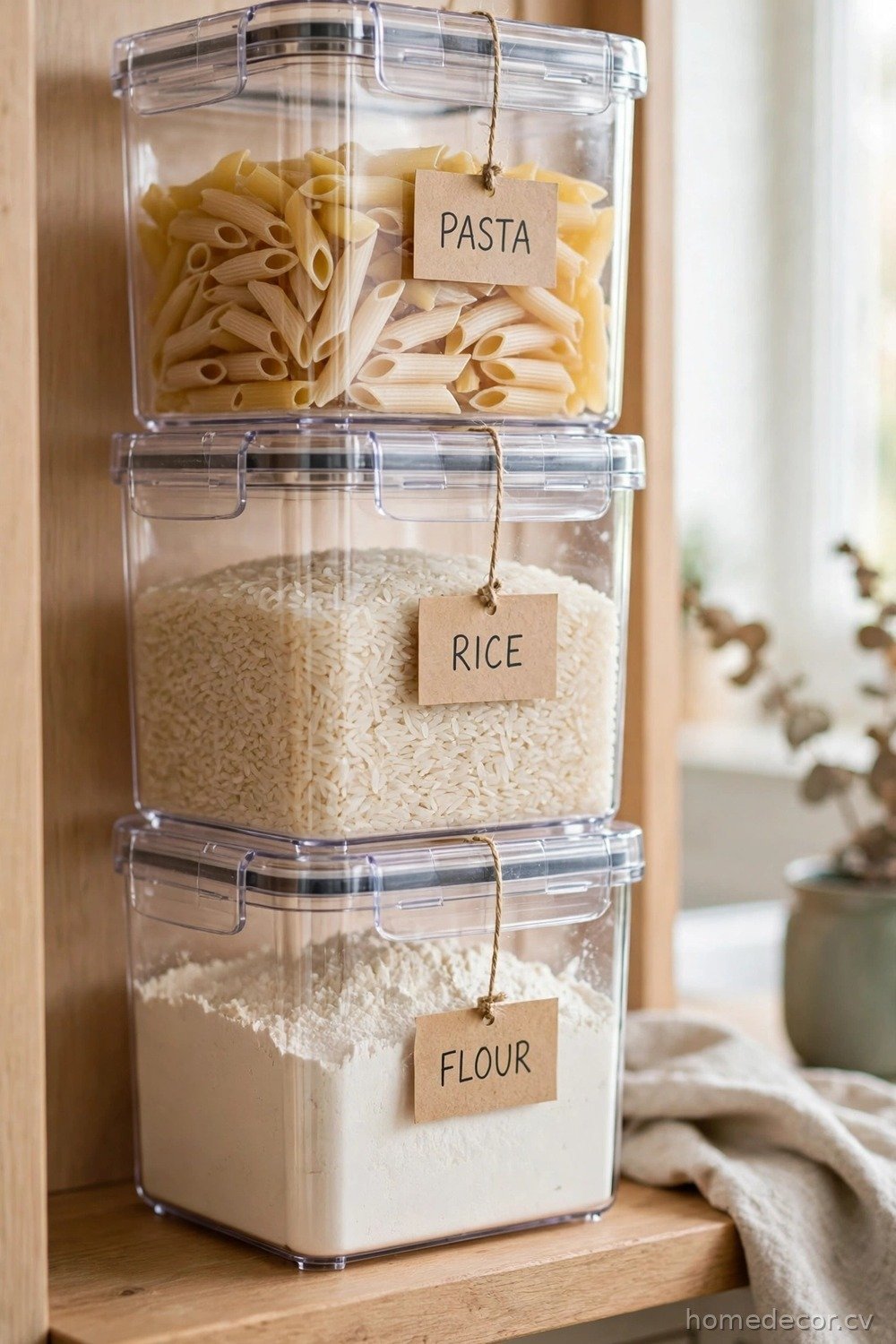
Half-open bags of flour, rice, and pasta make cabinets messy, stale, and impossible to stack, while clear containers turn the same shelf into a calm, store-like display. Choose square or rectangular airtight containers because they sit flush and waste no curved-corner space. Label each one with the contents and expiry date on painter’s tape, and keep a small scoop inside staples you use daily. Stack by height, tallest at the back, so you can see every level at a glance. Your cabinet will look prettier, food will stay fresher longer, and you will always know exactly what needs restocking before shopping day arrives.
Start with your top five staples instead of decanting everything at once, because containers cost money and cabinet sizes vary. Measure shelf height before buying, leaving room to lift lids comfortably. Keep the original cooking instructions taped to the back of each container if times matter, like for rice or grains. Store backup bags in a separate bin so the pretty shelf never gets overcrowded. This system shines in open cabinets and glass-front doors, where neat rows feel decorative too. Over time, cooking becomes faster because ingredients are visible, measured easily, and no longer spill every time you reach for something else nearby.
Divide Drawers and Cabinets by Task Zones
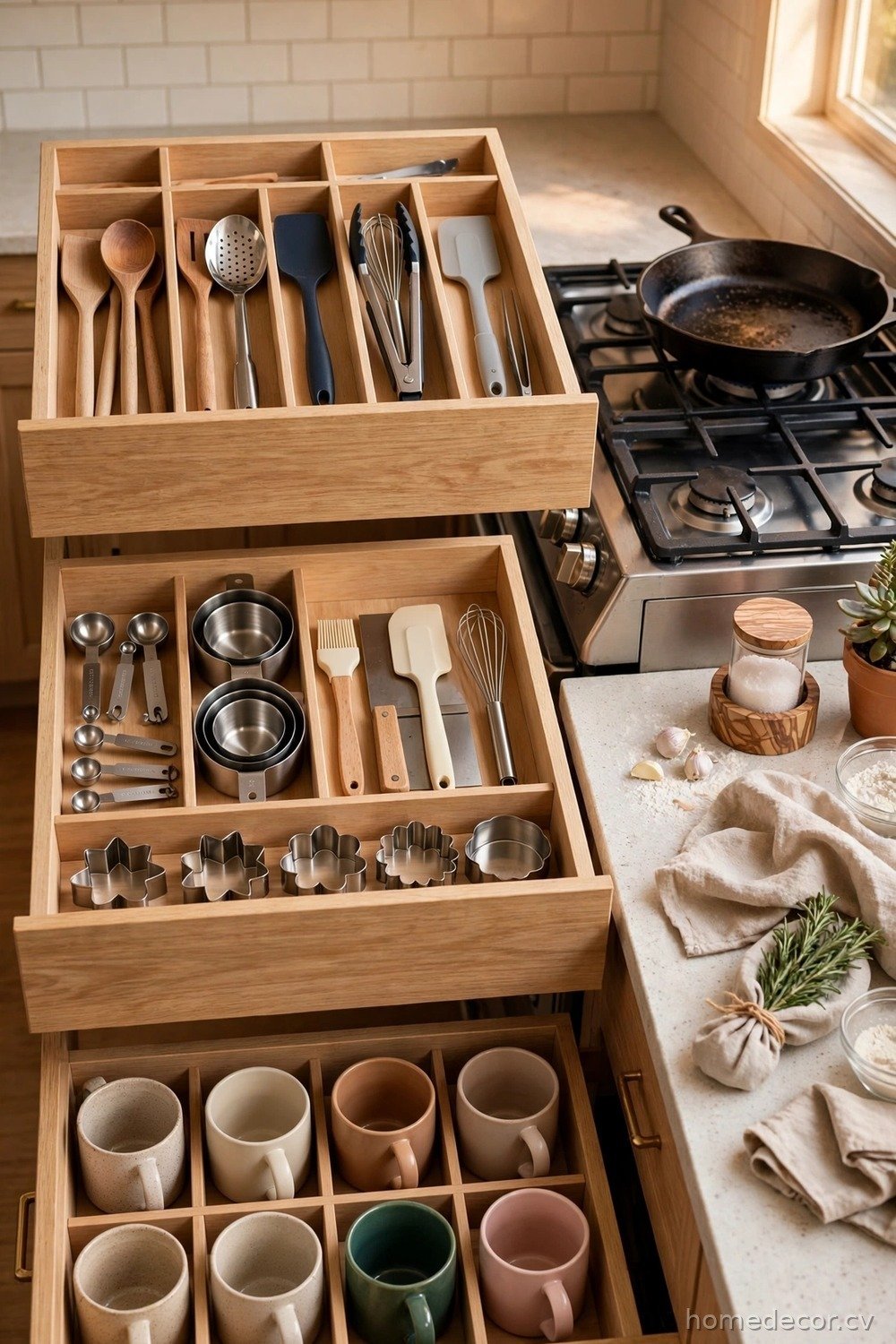
Random storage creates daily friction, because your peeler ends up with the baking tools and your coffee filters hide behind the pots. Zoning fixes this by giving every cabinet one clear job: a cooking zone near the stove, a prep zone near the counter, a baking zone, and a drinks zone for mugs and coffee. Use drawer dividers, small bins, and shelf labels to hold each boundary in place. When everything has a home near where it is used, cooking flows smoothly and tidying takes minutes, because putting things away finally feels obvious instead of like a guessing game after every meal.
Begin by mapping how you actually move while cooking your three most common meals, then place tools along that path. Keep knives, boards, and mixing bowls within one step of your main prep surface, and oils and spices within reach of the stove. Move rarely used gadgets to the highest shelf or deepest corner without guilt. Tell everyone in the house the zone plan, or take a quick photo guide for the inside of a door. Zones also reveal duplicates fast, helping you declutter honestly. A small kitchen does not need more space nearly as much as it needs clearer decisions about what lives where.
Use Clear Bins to Corral Small and Messy Items

Loose packets, lids, batteries, and tiny gadgets turn shelves into clutter soup, but clear bins corral them into tidy, grab-and-go groups. Choose bins with handles that match your shelf depth, so the whole container slides out like a drawer and nothing hides behind it. One bin can hold baking bits, another lunch-packing supplies, and another all those stray sauce packets and twist ties. Because the bins are clear, you see contents instantly without labels, though a small label still helps family members return things correctly. This is one of the cheapest, fastest upgrades any small cabinet can get this weekend.
Avoid bins that are too big, because oversized containers simply become new junk drawers with nicer walls. Measure before buying and leave a little breathing room so bins lift out without scraping the shelf above. Wash bins whenever you restock them, since crumbs collect quietly in corners. Keep one small ‘use first’ bin for opened items nearing expiry, which cuts food waste noticeably. In upper cabinets, lightweight bins are safest, because you will lift them down one-handed. For heavier cans, stick to lower shelves. With bins doing the corralling, even a packed cabinet can look calm, intentional, and surprisingly spacious at first glance.
Hang Measuring Tools and Lids Inside the Cabinet

Measuring cups, spoons, and pot lids are awkward shapes that tangle in drawers and rattle around shelves, yet they hang beautifully inside cabinet doors. Small adhesive hooks or a slim rail let cups nest in a row where you can grab the exact size instantly. A lid organizer rack mounted on the door keeps lids upright, visible, and matched to their pots without eating shelf depth. Keep the heaviest lids low on base cabinet doors, and check hinge strength before loading. This hidden hanging system frees an entire drawer or shelf in many small kitchens, which feels like pure magic.
Plan the layout with the door closed test: hang one item, close gently, and confirm nothing knocks into shelves behind it. Put measuring tools on the door nearest your baking zone, and lids beside the cabinet holding their pots. Stainless hooks with removable adhesive suit renters, while screwed rails hold more weight for owners. Add a tiny printed conversion chart inside the same door for extra usefulness. Wipe hooks monthly, because steam and grease loosen adhesive over time. Small changes like this add up quickly, turning wasted vertical surfaces into hardworking storage while keeping counters beautifully clear for actual cooking and serving.
Make the Most of the Space Above and Below Cabinets
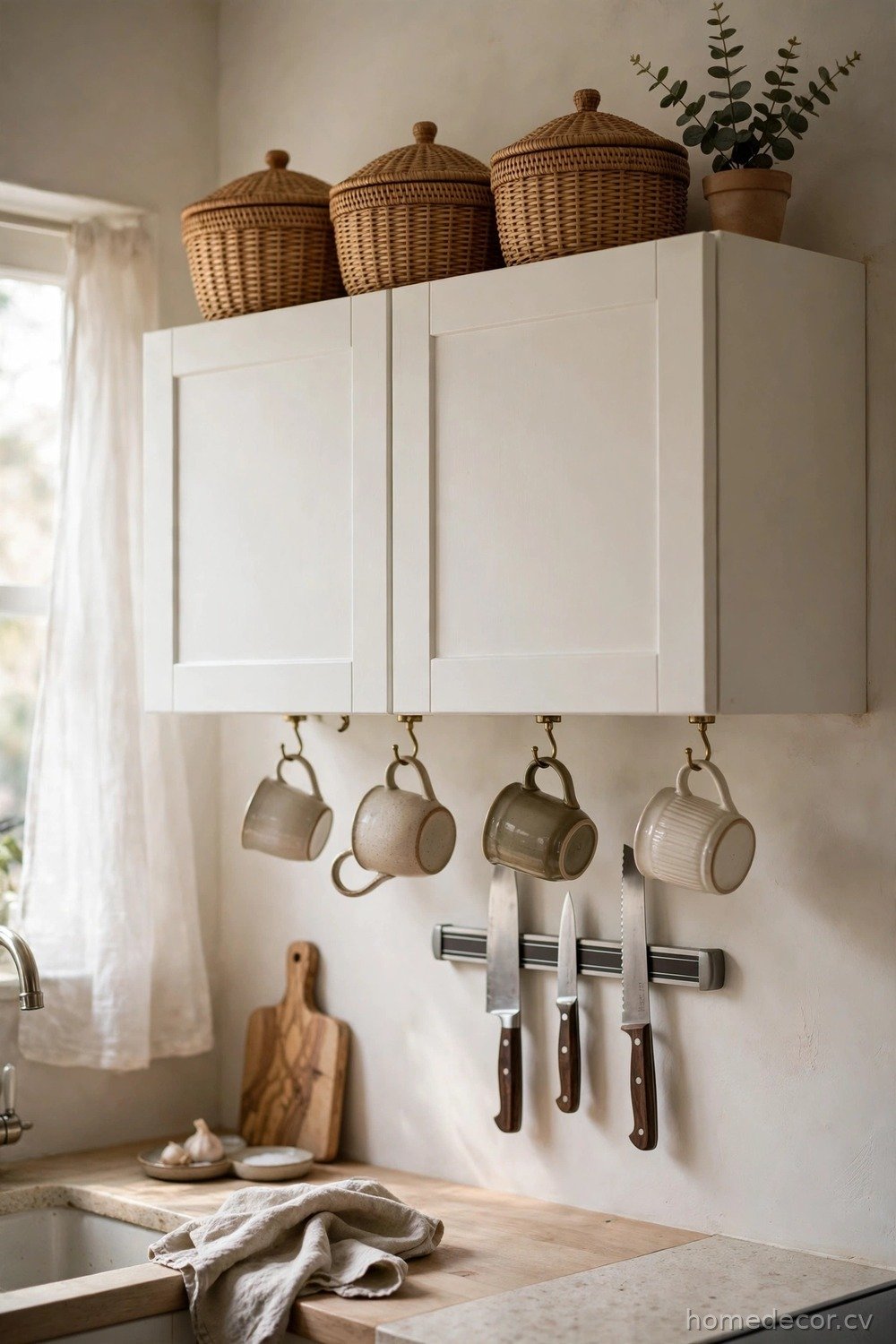
Forgotten inches above wall cabinets and below them can quietly solve storage overflow in a small kitchen. Below cabinets, adhesive hooks hold mugs, a magnetic strip grips knives safely off the counter, and slim under-cabinet baskets stash foil, fruit, or cleaning cloths. Above cabinets, matching baskets or pretty boxes store rarely used serving pieces, seasonal items, and bulk backups in a tidy row that looks intentional rather than dusty. Keep a sturdy step stool nearby so those high spots stay safe and reachable. Using this vertical fringe means your main cabinets can breathe, holding only what you truly use every week.
Dust is the honest trade-off up top, so choose lidded boxes or baskets you can lift down and wash easily. Never store heavy items overhead, and keep anything heat-sensitive away from the warm air above the fridge or oven. Under-cabinet additions must clear your tallest counter appliances, so measure before mounting that mug row. Battery lights under cabinets also help here, brightening prep space while making stored items easier to see. Treat these fringe zones as slow storage, not daily storage, and they will serve you well. The result is a kitchen where every single inch, high and low, finally earns its keep.
Do a Monthly Ten-Minute Cabinet Reset

Even the best system drifts, because life is busy, groceries get shoved in, and lids wander off to live with the mugs. A monthly ten-minute reset keeps small cabinets working without ever facing a huge, dreaded overhaul again. Set a timer, pick just two cabinets, pull everything out, wipe the shelves, toss expired or stale items, and return things to their zones. Check your ‘use first’ bin, refill containers, and note what is running low. This tiny habit protects all the effort you put into organizing and keeps your kitchen feeling freshly done all year, not just the week you organized it.
Make the reset easier by keeping a small donation bag in a closet, so duplicates and unused gadgets leave the house instead of creeping back onto shelves. Photograph your tidy cabinets once, and use that picture as your target whenever things slide. Involve family members by assigning each person one cabinet to maintain. If a zone keeps failing, that is useful information, not a personal failure: move the items to where people naturally put them. Systems that match real habits survive, while pretty systems that fight habits collapse. With gentle monthly care, your small cabinets stay calm, functional, and genuinely pleasant to open every morning.