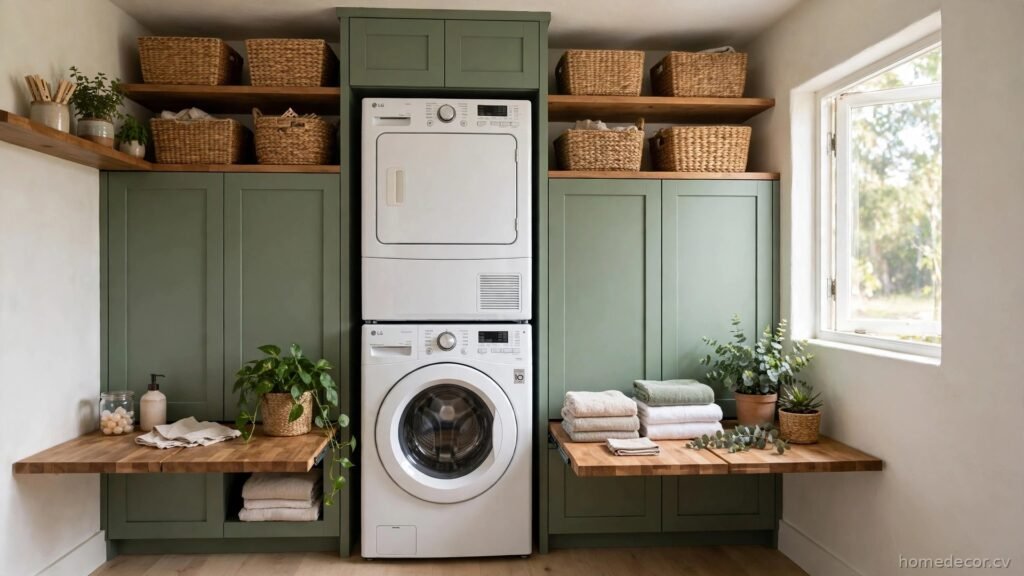
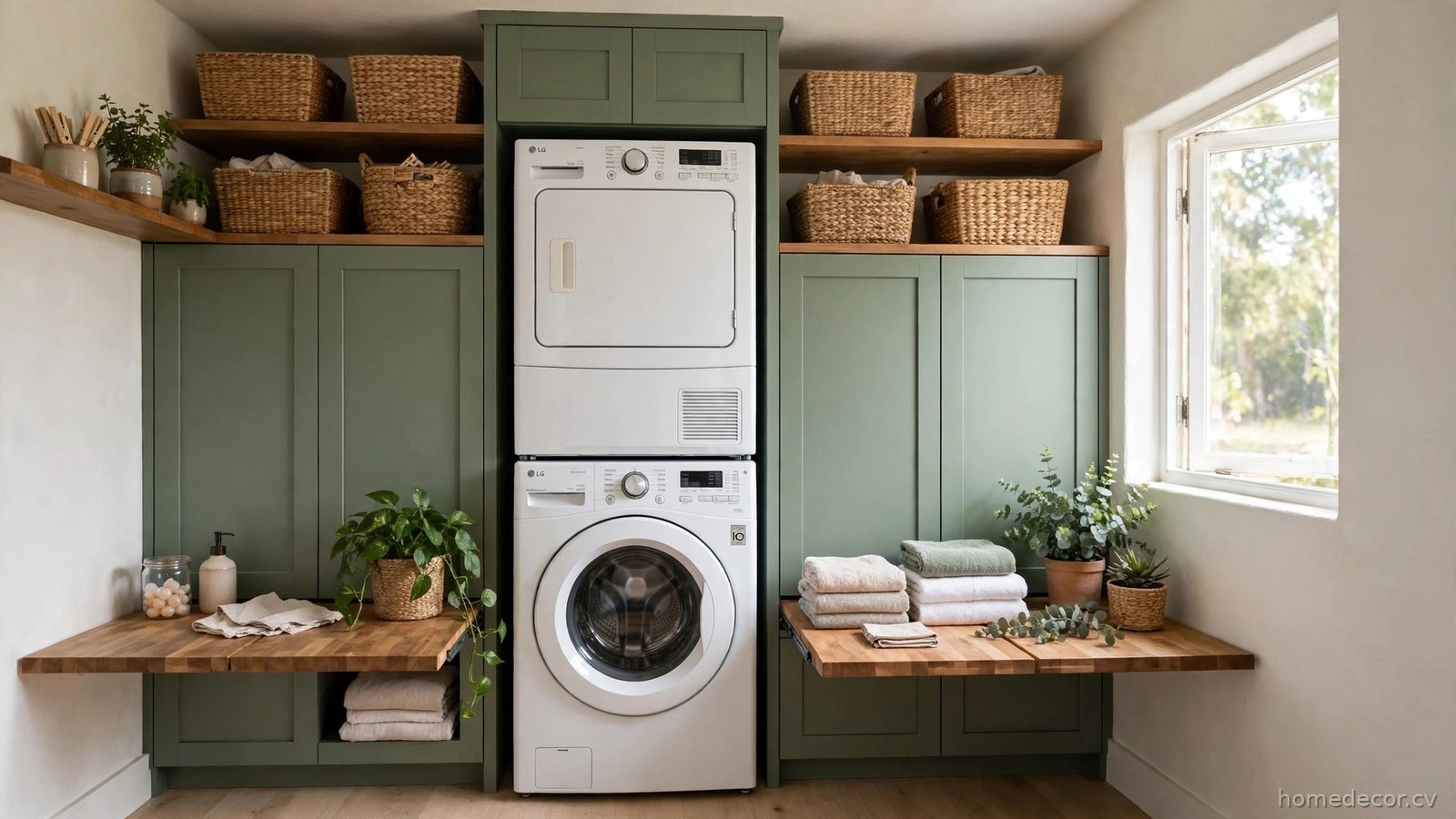
Stacking your washer and dryer is the smartest move you can make in a small laundry space, but the machines alone do not finish the job. Without shelves, a folding spot, and homes for detergent and baskets, even a clever stack still feels cramped and chaotic. The lovely news is that a stacked setup frees up wall, floor, and closet space you can turn into real storage and style. These stacked washer and dryer ideas cover closets, bathrooms, kitchens, and tiny laundry rooms, with practical layouts and pretty finishes mixed together. Get ready to build upward, think vertically, and make laundry day feel surprisingly calm and easy.
Build Tall Cabinets Around the Stack for a Built-In Look
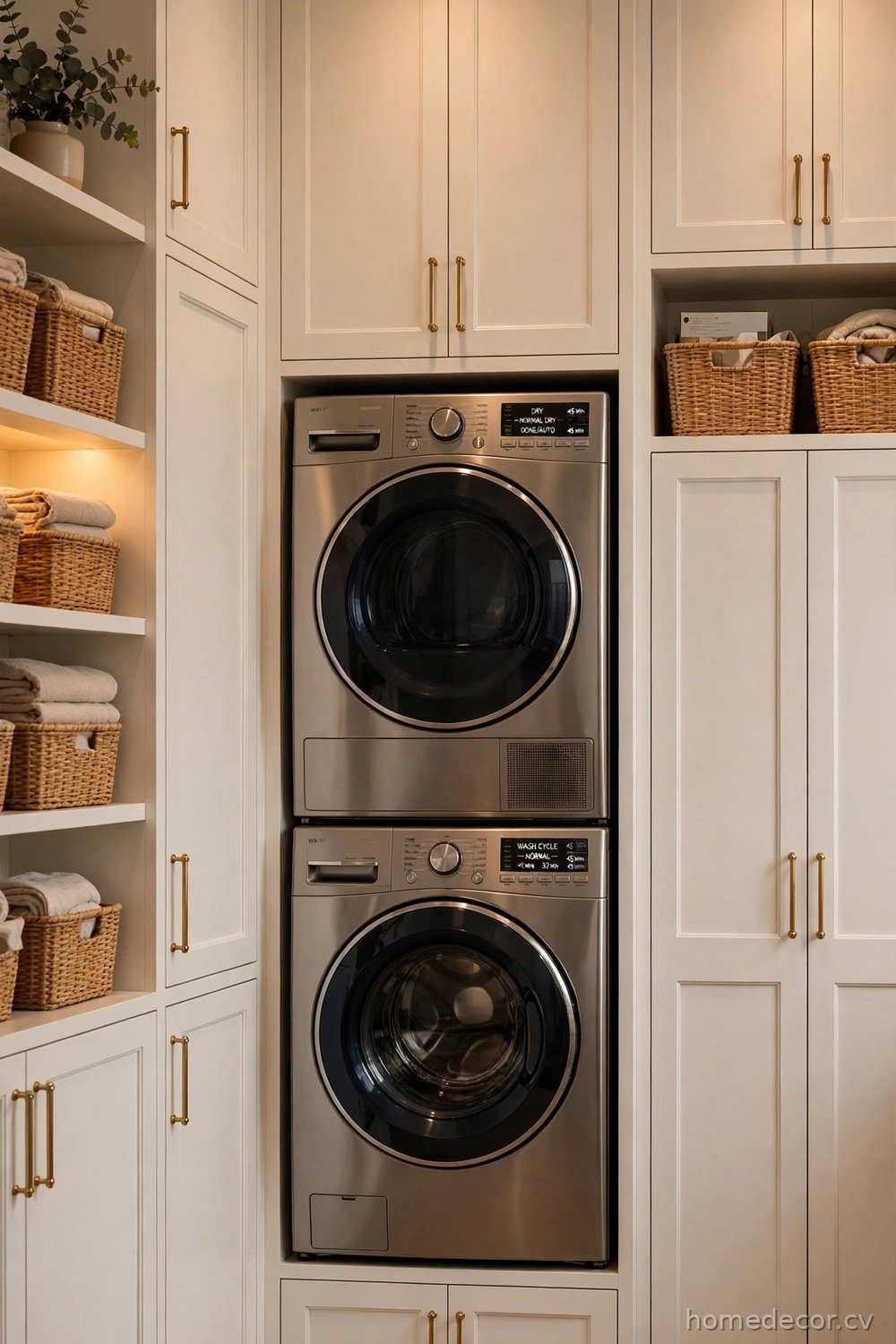
Framing a stacked washer and dryer with tall cabinets instantly makes the setup look intentional, like furniture rather than appliances awkwardly squeezed into a plain corner. Floor-to-ceiling side cabinets hide bulk detergent, cleaning sprays, paper towels, and the iron, while a cabinet above the dryer holds rarely used supplies. Choose simple shaker doors in white, sage, or warm wood to match the room, and leave proper ventilation and service clearance behind the machines. This built-in approach works in laundry rooms, hallways, and even wide closets. It also adds serious storage without stealing any extra floor space from your small home.
I spend far too much time saving home ideas.
If you'd like the best ones, I'll send a short email once or twice a month.
Plan the cabinet layout before ordering anything, measuring machine width, door swing, hose space, and vent position twice. Keep everyday detergent in the easiest cabinet at waist height, not above your head where heavy bottles become risky. Add one open shelf or basket cubby among the closed doors, so towels and daily items stay grab-and-go. Soft-close hinges keep the space feeling calm and premium. If custom cabinets stretch the budget, flat-pack tall units trimmed with molding give a similar built-in effect for far less. Either way, surrounding the stack with storage turns a utility corner into a polished, hardworking laundry wall.
Add Shelves Above the Dryer for Baskets and Supplies
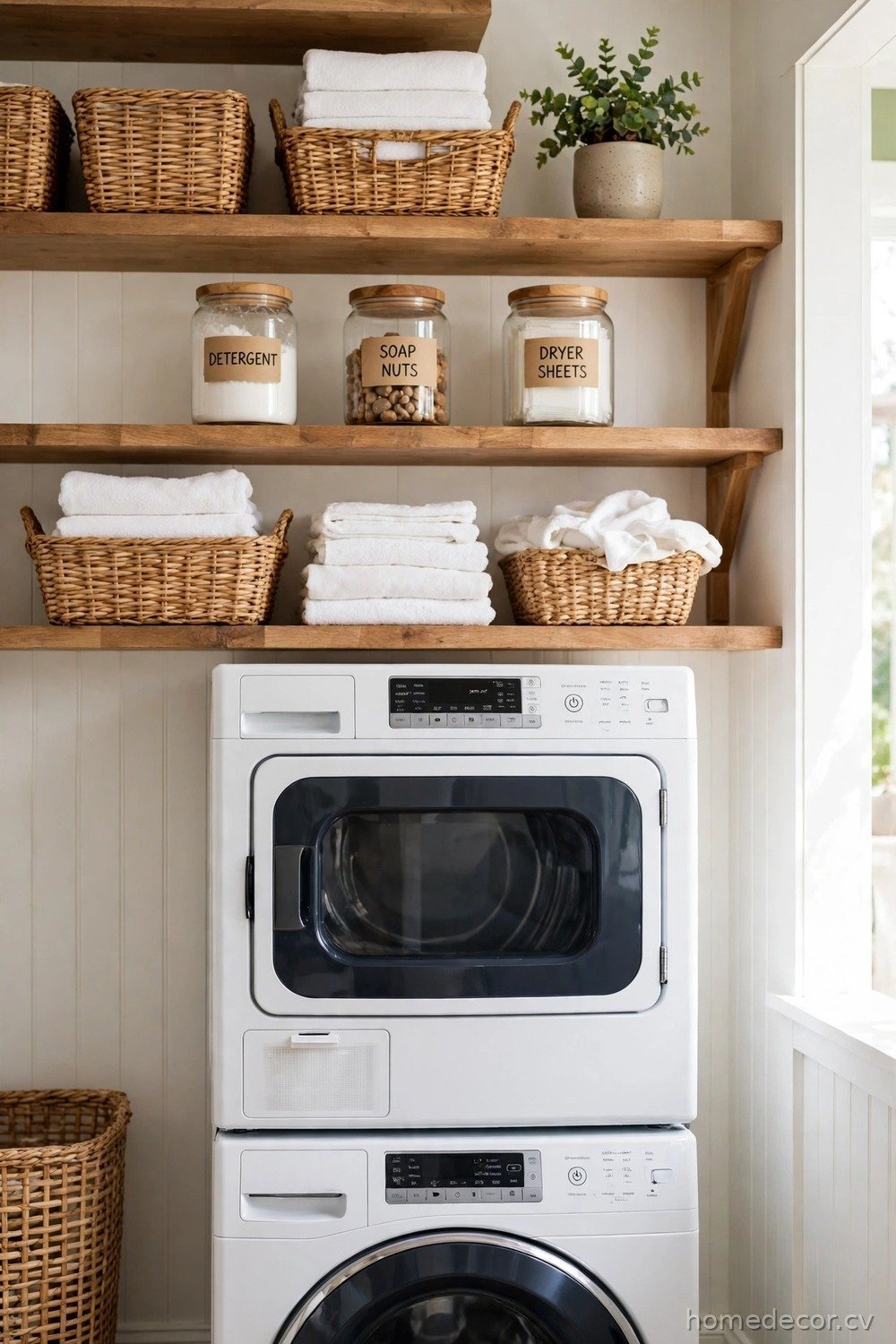
The wall above a stacked dryer is valuable storage that many homes leave completely empty, even while detergent crowds the floor. One or two sturdy shelves, fitted about a foot above the machine top, hold labeled baskets for cloths, dryer sheets, stain treatments, and spare towels. Woven or fabric baskets keep the view soft and pretty, while clear bins suit anyone who wants to see contents instantly. Keep the lowest shelf for weekly items and reserve higher space for seasonal or backup supplies. This simple vertical move clears floor clutter and makes the whole laundry zone feel taller, lighter, and far more organized.
Anchor shelves into studs wherever possible, because full detergent bottles are heavier than they look. Leave enough clearance to open the dryer door fully and reach the lint trap without stretching awkwardly. A small rail or lip on the front edge stops baskets sliding forward when the dryer vibrates. Style the shelves lightly with a plant or folded neutral towels so the space feels finished, not purely functional. Step stools matter here: keep a slim folding one nearby rather than climbing on machines. With shelves doing the heavy lifting above, the floor beside your stack stays free for hampers, sorting, and easy movement.
Slide a Slim Rolling Cart Into the Gap Beside the Machines

That awkward six-to-ten-inch gap beside a stacked washer and dryer is perfect for a slim rolling cart, and wasting it is almost a crime in a small laundry space. Narrow tiered carts hold detergent, stain remover, dryer sheets, and a lint roller in one pull-out tower that disappears when you push it back. Choose a cart with smooth wheels and a height just below counter or shelf level. Because everything lives on the cart, you can roll it to the machine, load up, and tuck it away in seconds. It is renter friendly, cheap, and instantly makes a tight laundry closet feel thoughtfully planned.
Measure the gap at its narrowest point, including baseboards and hose bumps, before buying any cart. Metal carts handle heavy bottles best, while bamboo or wood styles warm up a visible laundry nook. Keep liquids on the bottom tier to lower the center of gravity, and lighter items like cloths up top. Clean the cart monthly, since detergent drips collect quietly. This same slim-gap thinking helps elsewhere too, much like the tight-space tricks in our small pantry organization ideas, where a few found inches can hold a surprising amount of everyday storage without any renovation work at all, ever.
Hide the Stack Behind Doors, Curtains, or a Sliding Panel
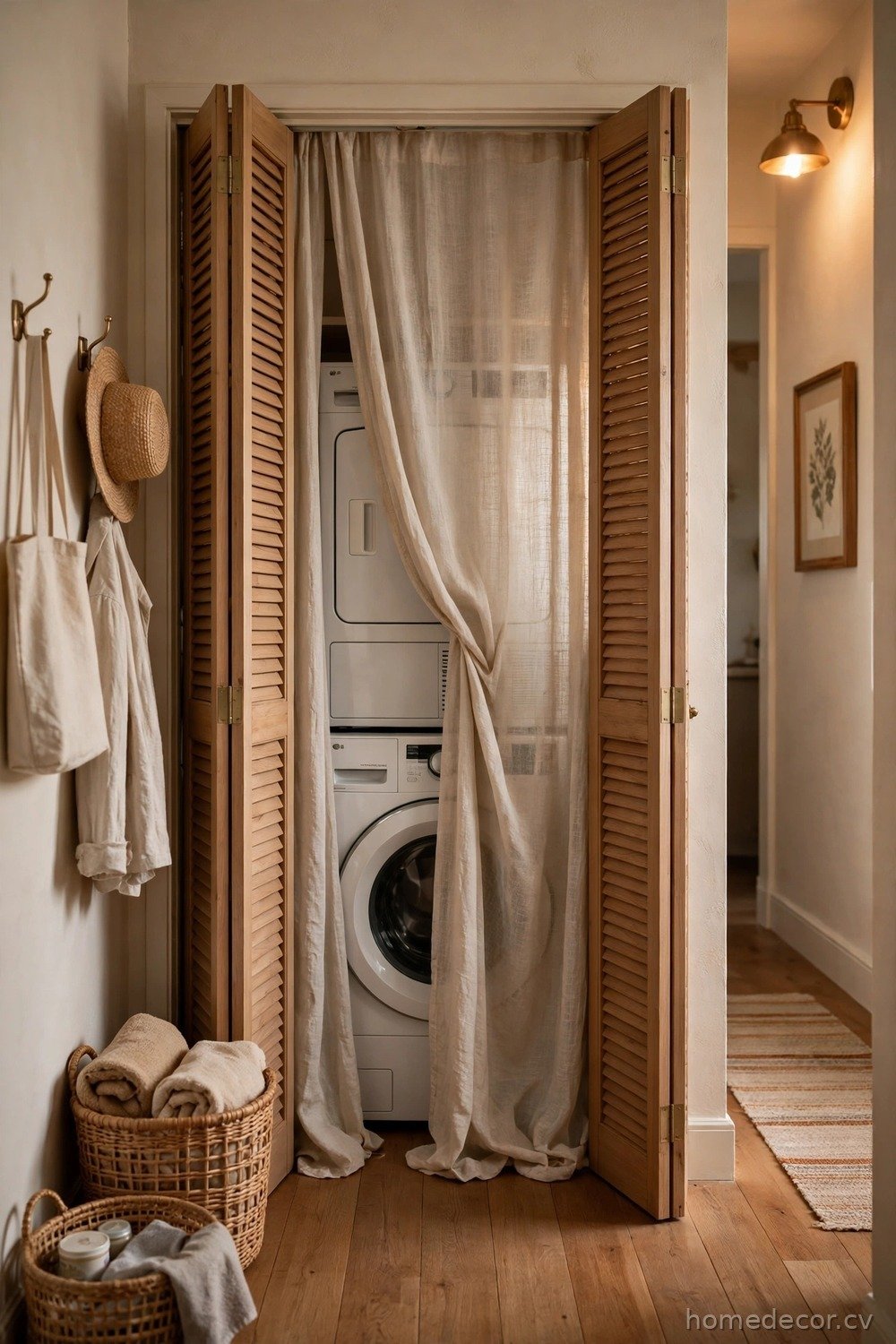
When your laundry lives in a hallway, bathroom, or living area, hiding the stack keeps the whole home feeling calmer. Bifold or louvered doors suit closets and allow airflow, while a linen curtain on a tension rod softens a rental nook for almost no money. Sliding barn-style panels add charm in wider openings and never block the walkway when open. Inside, add a motion light so the space stays bright even when doors frame it like a little room. Always respect dryer ventilation and never seal a gas dryer into an airtight box, because safety always outranks prettiness in laundry design.
Choose the closure based on how you actually live, not just how it photographs. Curtains are fastest for renters and easy to wash, but doors give better sound dampening during spin cycles. If noise travels, add a washable rug and door seals to soften vibration. Keep handles and door swings clear of nearby furniture, and test full machine door opening before final fitting. A hidden stack also protects machines from bathroom steam and kitchen splashes when zones are shared. When guests visit, one gentle slide or fold closes the laundry away, and your hallway or bathroom instantly returns to feeling like living space again.
Create a Folding Counter Beside or Across From the Stack

Stacking frees exactly the floor space you need for the luxury every laundry deserves: a real place to fold. A counter beside the stack, or across a narrow galley laundry, gives warm clothes a landing spot instead of the bed or sofa. Butcher block feels warm and forgiving, while laminate or stone-look surfaces wipe clean after sorting muddy sports kits. Below the counter, slide in hampers, a stool, or a pet bed. Above it, a short shelf holds a folding basket and a small plant. With a dedicated folding zone, laundry stops migrating around the house and finishes in one calm, contained place.
Set counter height around standard kitchen worktop level so folding feels comfortable for your back. If space is extremely tight, a wall-mounted drop-leaf counter folds flat when not in use and still beats folding on the machine top. Keep a small tray on the counter for pocket finds, loose change, and lone socks awaiting partners. Good lighting above the counter matters more than people expect, because it helps you spot stains before folding. This station pairs beautifully with a hanging rail nearby, letting you fold basics on the counter while shirts go straight onto hangers, cutting ironing time dramatically over the whole year.
Hang a Rail or Rod for Clothes Straight From the Dryer
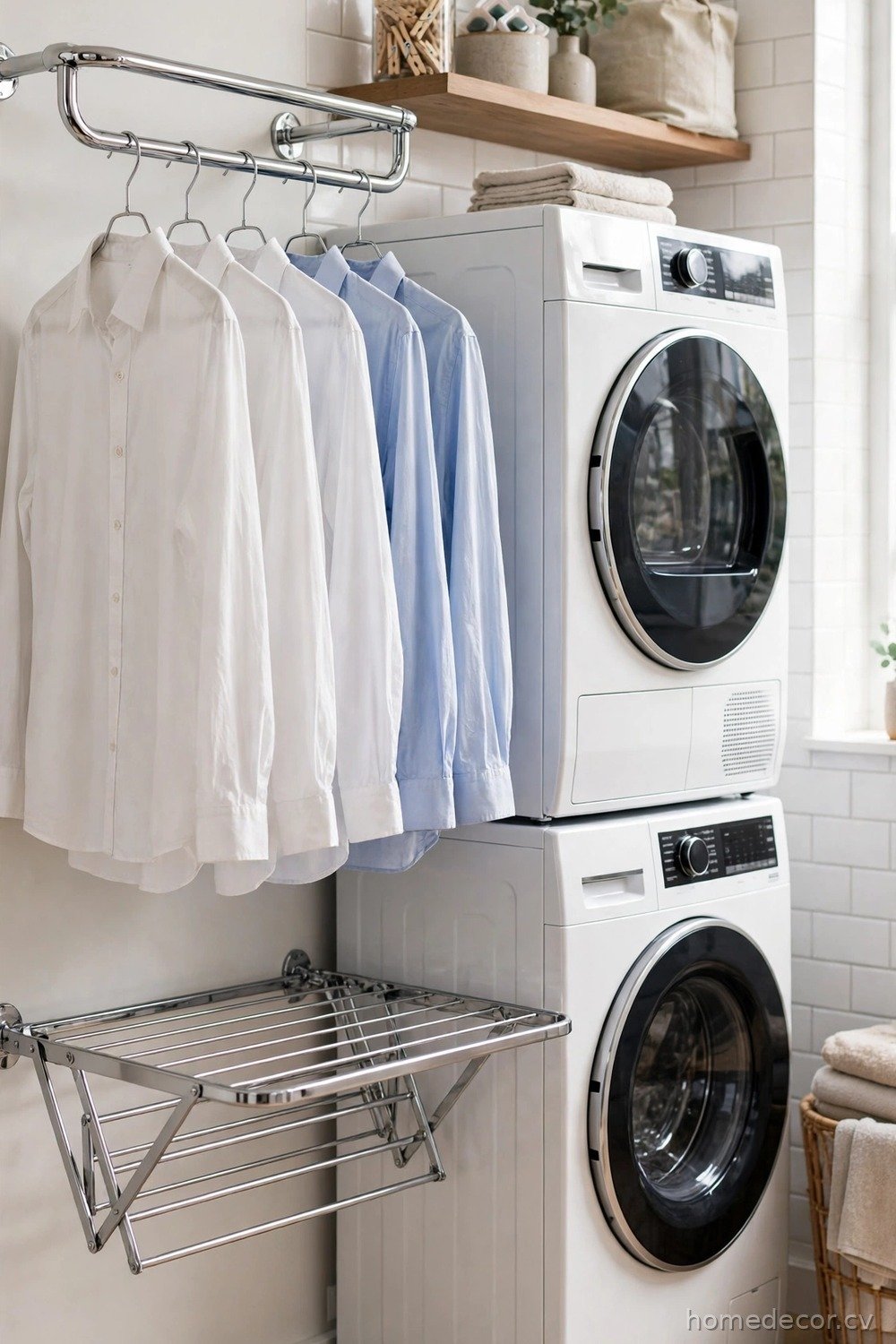
A simple hanging rail is the small upgrade that changes laundry day the most, because shirts and dresses can go straight from dryer to hanger without creasing on a chair. Mount a sturdy rod under a shelf or cabinet beside the stack, or use a tension rod inside a laundry closet frame. Keep a small stash of hangers living permanently on the rail so there is never an excuse to drape clothes over doors. Position the rail close enough that transferring items takes seconds, but clear of the dryer door swing. This habit alone can nearly eliminate ironing for work clothes and school uniforms.
Choose a metal rod rated for real weight, because wet clothes are surprisingly heavy, and anchor it into studs or solid cabinet sides. In humid bathrooms, stainless steel or coated rods resist rust best. Leave a few inches between hanging clothes and the wall so air circulates and fabrics dry fully if slightly damp. A fold-down drying rack below or beside the rail handles delicates and swimwear that should never meet dryer heat. Together, rail plus rack create a complete air-dry station in barely two feet of wall. It is practical, pretty with matching hangers, and one of the most satisfying small laundry upgrades.
Fit a Small Utility Sink Next to the Stack

Stacking your machines can free just enough room for a compact utility sink, and once you have one you will wonder how you managed without it. A sink beside the stack is perfect for soaking stains, hand-washing delicates, rinsing muddy shoes, and filling mop buckets without using the bath. Slim wall-hung or narrow cabinet sinks suit tight rooms, while a deeper laundry tub works if you bathe small pets or soak sports gear. Add a gooseneck faucet for clearance and a small shelf above for soaking powders and brushes. This turns a laundry corner into a true utility zone that serves the whole household daily.
Plumbing is the deciding factor, so place the sink on the same wall as the washer connections whenever possible to keep costs and pipe runs low. Choose moisture-proof cabinetry or a simple metal stand in damp rooms, and seal edges where water splashes daily. Keep a hand towel hook and a caddy within reach so the sink area stays tidy rather than becoming a dumping ledge. If a full sink will not fit, even a large removable soaking basin stored under the counter helps. Thoughtful utility touches like this raise how functional a small home feels far beyond their modest footprint and budget.
Style Open Shelves With Baskets, Jars, and Greenery
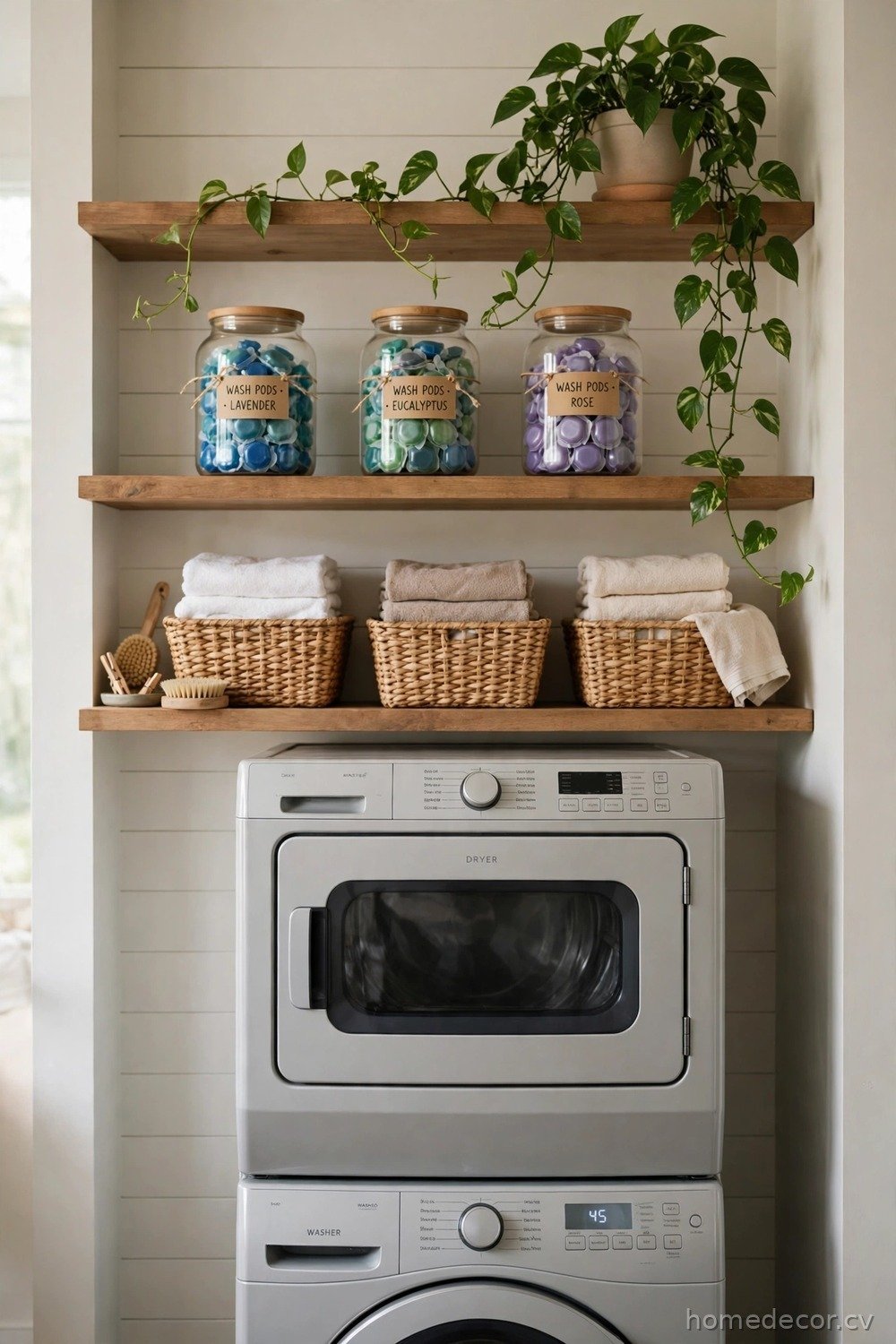
A stacked laundry does not have to look purely practical, and a little styling makes the chore far more pleasant. Open shelves above or beside the machines look lovely holding matching baskets, glass jars of washing pods, folded white towels, and one trailing plant that loves humidity. Stick to a calm palette of two or three colors so the small space feels cohesive rather than busy. Decant detergent into a pretty dispenser only if you will keep labels and safety information stored nearby. When laundry looks good, you keep it tidier, and that gentle psychology genuinely works in busy family homes.
Balance beauty with honesty about your habits: if open shelves in your home collect clutter, choose lidded baskets that forgive a messy toss inside. Keep pretty jars for safe, low-risk items and store strong chemicals in original containers inside a closed cabinet, especially around children. Borrow display tricks from your bathroom, like the layered styling in these bathroom shelf decor ideas, because laundry shelves follow the same rules of grouping, height, and breathing room. Refresh the styling seasonally with a different towel color or plant, and this hardworking corner will keep feeling new without any big spending or renovation.
Use the Back of the Door and Wall Space You Forgot
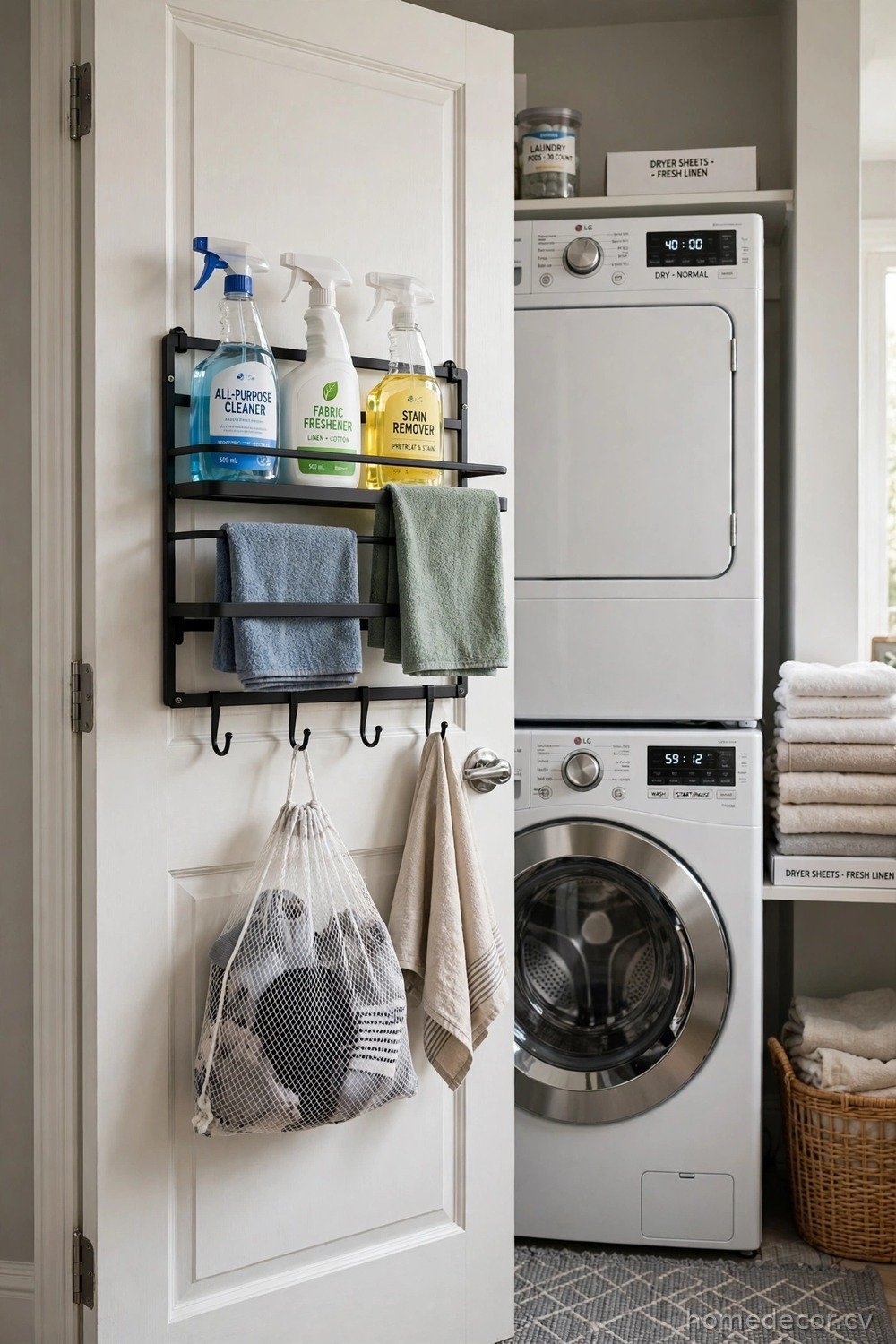
In a laundry closet or tiny room, the back of the door is a full storage wall waiting to be used. Over-door racks hold spray bottles, dryer sheets, and cloths, while slim hooks take the ironing board, a dustpan, or a mesh bag for odd socks. Shallow wall-mounted pockets beside the stack keep stain sticks and lint rollers at perfect grabbing height. Even the narrow wall strip above the door can hold a shelf for bulk backups. Using these forgotten surfaces keeps shelves and counters clear, which makes a small laundry feel bigger every time you step inside to start a load.
Check door clearance carefully, because over-door hooks can stop a door closing fully or scratch the frame, so add felt pads and test before loading up. Keep heavy items off door racks to protect hinges, and reserve them for light, flat supplies instead. In rental homes, removable adhesive systems protect your deposit. Label pockets and hooks until the system becomes habit for everyone doing laundry, not just you. These micro-zones reward you daily in seconds saved hunting for the stain remover. Small laundry spaces succeed through exactly this kind of layered thinking, where every surface, seen and unseen, quietly earns its place.
Choose Compact or Ventless Machines for Tricky Spots
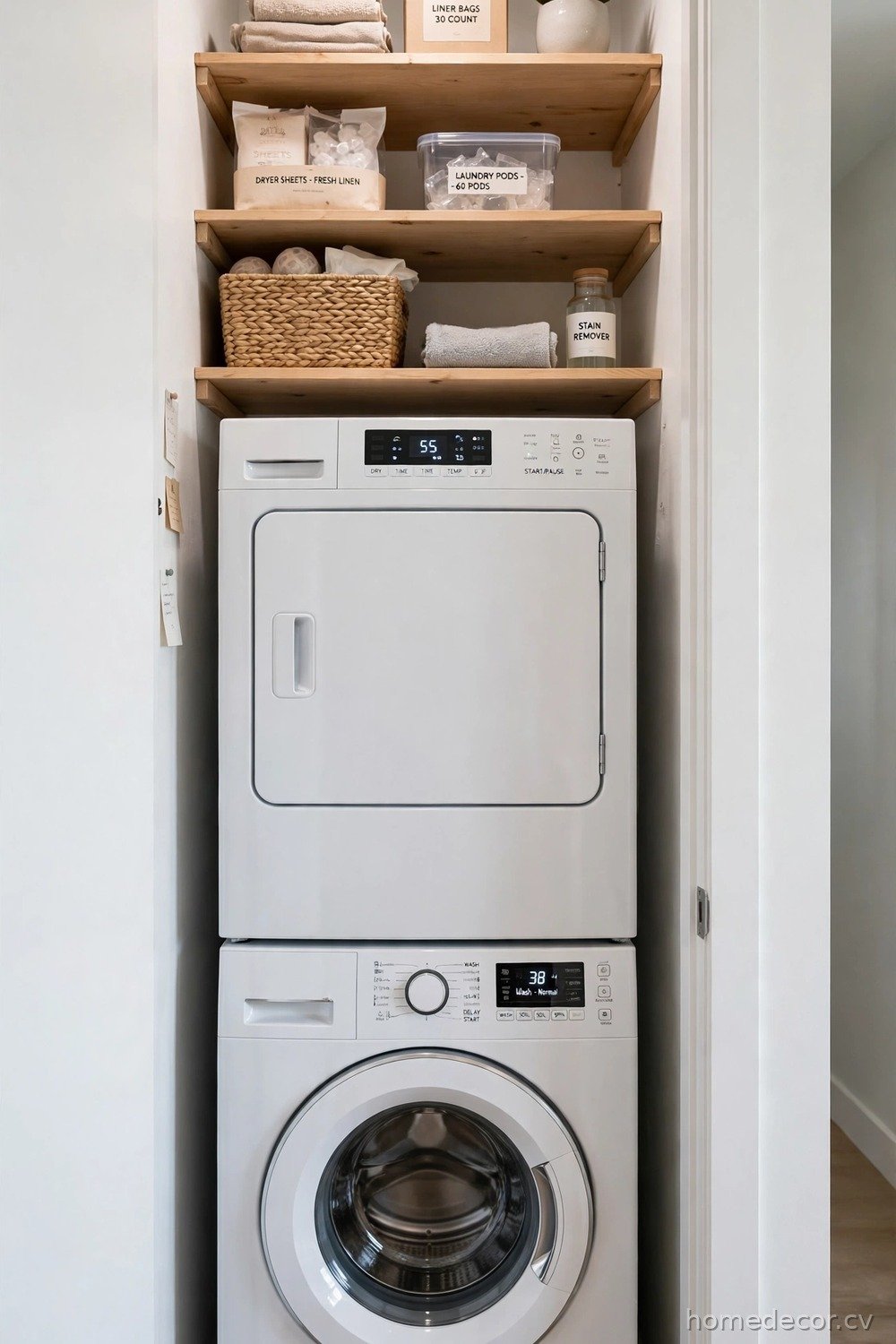
Not every home has a vent, a drain where you want it, or even a dedicated laundry room, and modern compact machines solve exactly that problem. A twenty-four-inch compact stack fits closets under twenty-nine inches wide, while ventless heat pump dryers work in interior closets and apartments without exterior ducting. All-in-one washer-dryer units suit studios where even a stack feels too tall, though loads run smaller and slower. Measure doorways and stair turns before ordering, because getting the machine into the room is sometimes the hardest part. The right appliance choice unlocks laundry in kitchens, bathrooms, and hallway closets beautifully.
Be realistic about capacity when downsizing machines, since compact drums mean more frequent, smaller loads for families. That rhythm suits many households fine and uses less water and energy per week. Check electrical requirements early, because some compact dryers run on standard outlets while others need dedicated circuits. Read the manual’s clearance rules before building cabinets around any unit, especially ventless models that need airflow to dry efficiently. Stacking kits matter too: always use the manufacturer’s kit rather than balancing machines freestyle. Chosen carefully, compact appliances deliver full laundry freedom in spaces that previously offered none, which feels like gaining a whole new room.
Add Lighting and a Pretty Backdrop to Lift the Whole Space
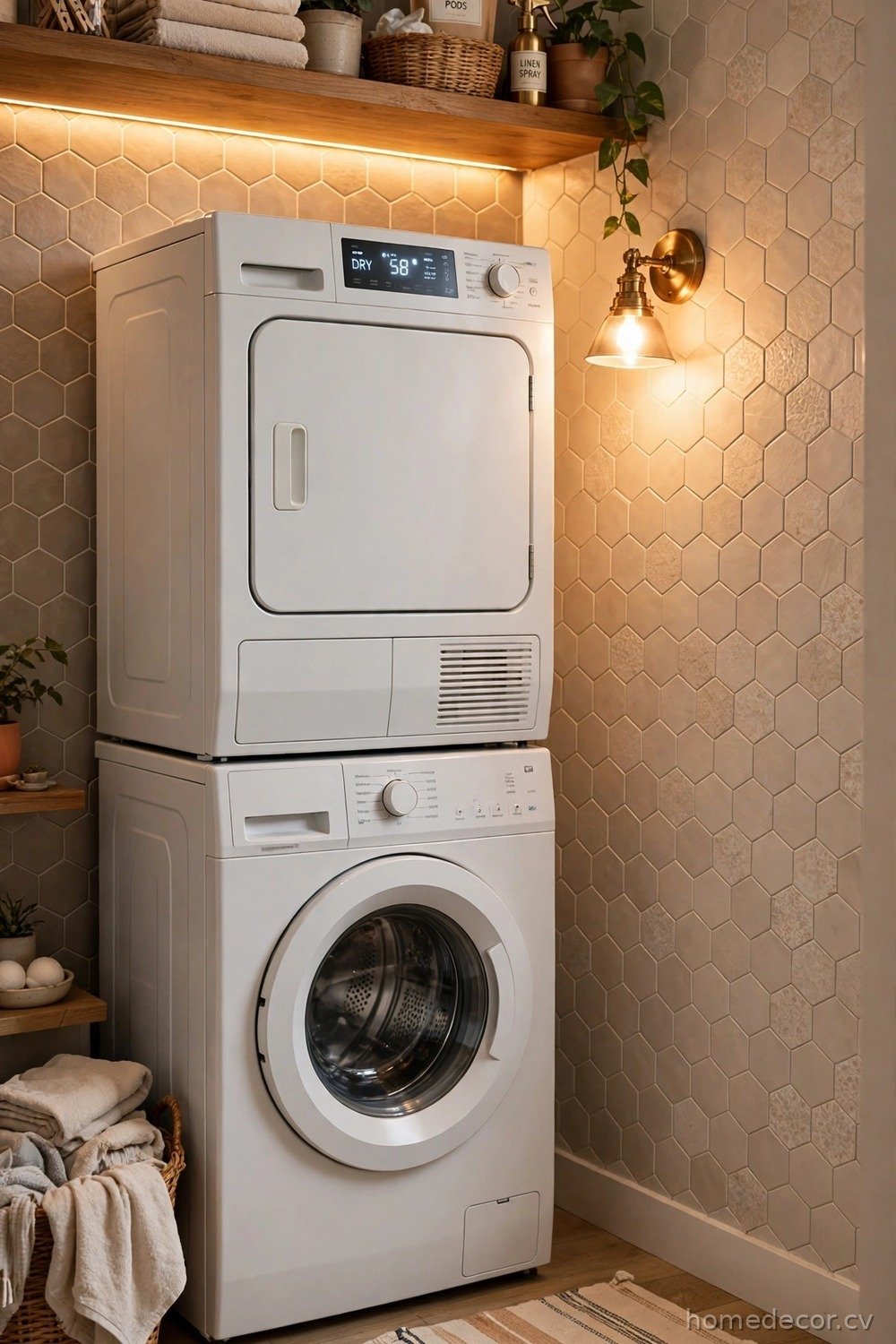
Laundry corners are often dim, and dim spaces always feel smaller and gloomier than they really are. A bright ceiling light, battery LED strips under shelves, or a warm sconce beside the stack makes sorting, stain-spotting, and folding dramatically easier. Behind the machines, peel-and-stick tile, beadboard, or washable paint in a soft color turns a utility stack into a styled feature. Renters can use removable wallpaper on the closet walls for personality that leaves with them. When a laundry nook looks cheerful, the chore genuinely feels lighter, and the space photographs beautifully for all your home-loving friends and family too.
Choose moisture-resistant finishes anywhere steam and splashes reach, and keep electrics safely away from water sources with professional help where needed. Light colors reflect brightness best in windowless closets, while one deeper accent wall can add depth in a larger laundry room. Under-shelf lighting aimed at the folding counter removes shadows exactly where you inspect clothes. Add a small washable runner to soften sound and protect floors from drips. These finishing touches cost little compared with appliances, yet they decide whether the laundry feels like a forgotten cupboard or a designed part of your home that you are quietly proud to open.
Build a Sorting and Hamper Station That Keeps Floors Clear
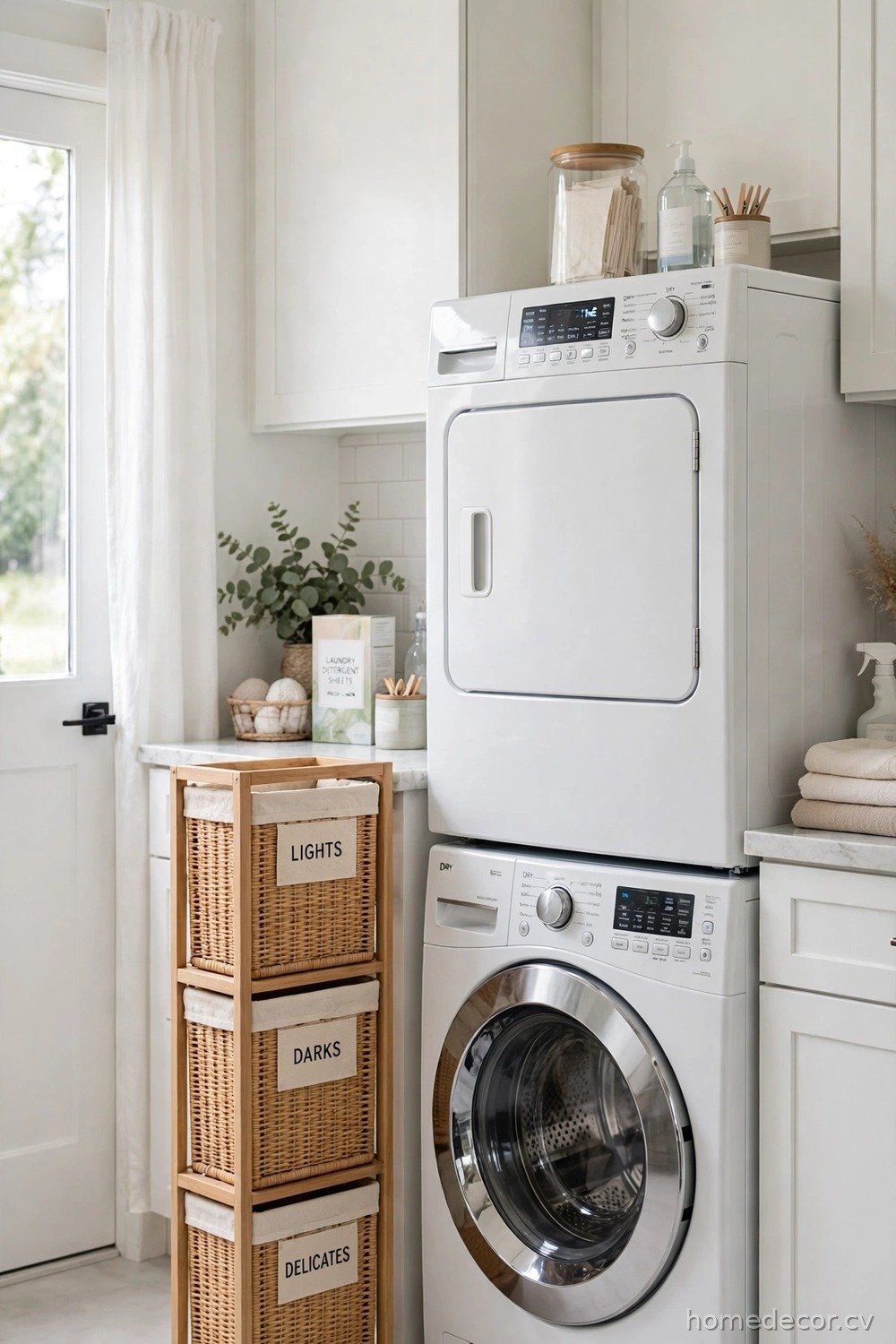
Piles of clothes on the floor are what make small laundry spaces feel chaotic, so give sorting its own slim station beside the stack. A narrow three-section hamper, labeled baskets on a low shelf, or bags hanging on wall hooks let everyone pre-sort lights, darks, and delicates as they undress. When wash day comes, you simply grab a section and load, with no floor excavation required. Place the station on the route people naturally walk, ideally between bedrooms, bathroom, and laundry. Clear floors make the room feel twice as big and far safer when carrying heavy baskets of wet washing.
Match hamper capacity to your machine size, so one full section equals one sensible load rather than an overstuffed drum. Ventilated baskets or washable fabric bags stop damp towels from smelling while they wait their turn. Label sections with simple words or colors so kids can sort correctly without a lecture. Keep one tiny basket for items needing stain treatment, and check it before every wash. If floor space is zero, hang sorting bags on the closet door or wall instead. A calm sorting system quietly removes the visual mess that makes laundry feel endless, leaving your stacked setup looking neat, capable, calm, and completely under control every single day.