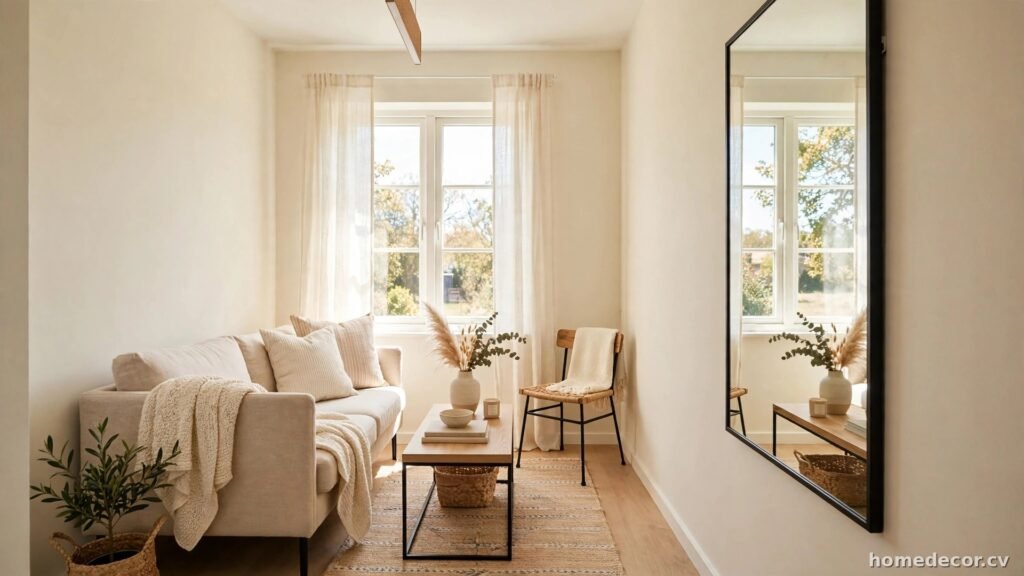
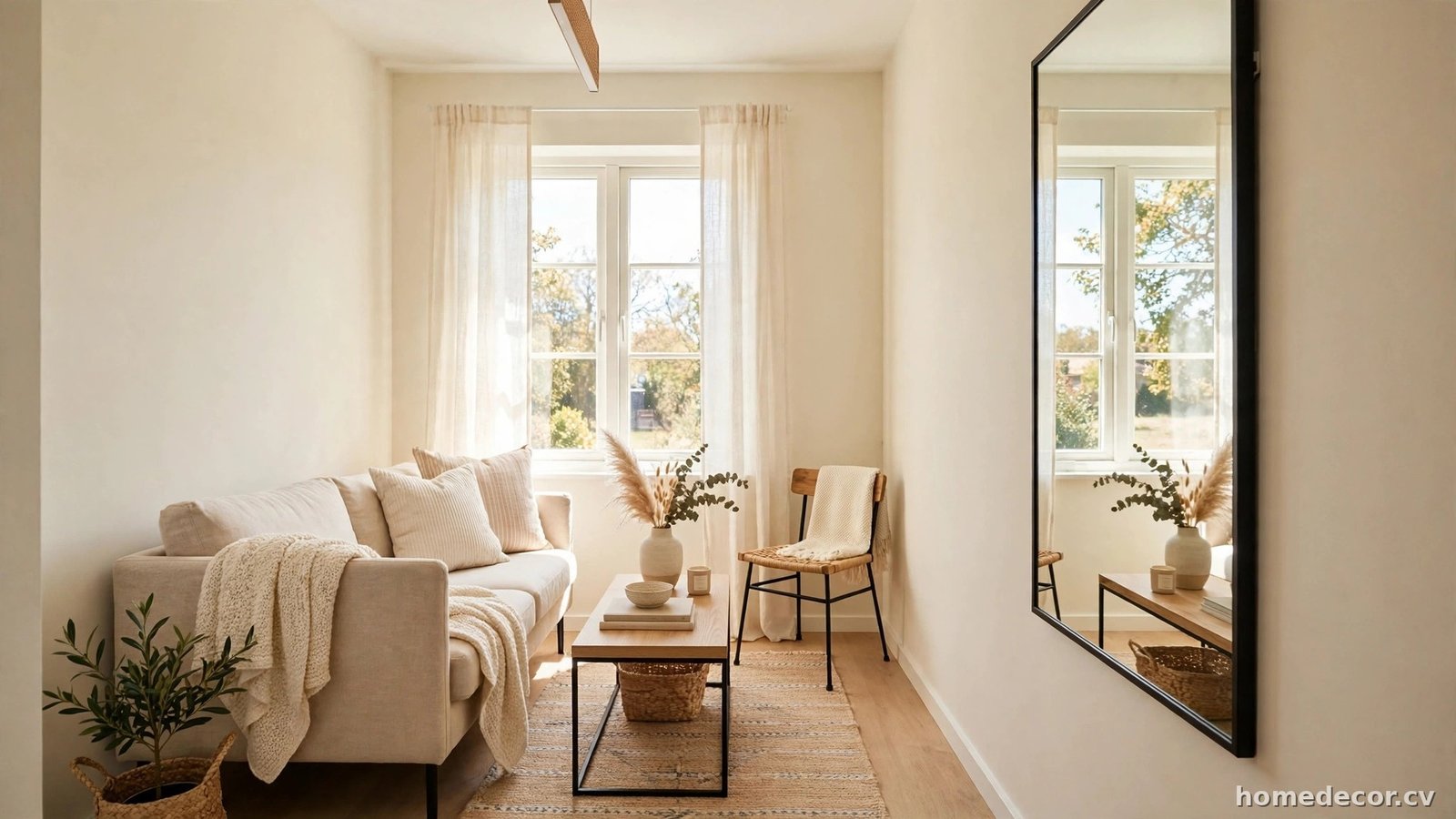
A long, narrow living room can feel like a bowling alley if you decorate it wrong — or like a cozy, stylish retreat if you decorate it right. These fifteen ideas use layout tricks, smart furniture choices, and visual illusions to make your skinny space feel twice as generous.
Start with a Light, Airy Color Palette

Color is the fastest way to change how big a narrow living room feels, so start with walls in soft whites, pale greys, or warm creams. Light colors reflect natural light deeper into the room instead of absorbing it, which visually pushes the walls outward. This does not mean your room has to feel cold or sterile — layer in warmth through natural wood tones, creamy textiles, and soft metallic accents. If you crave color, keep the walls light and bring saturated hues in through easily changeable things like throw pillows, artwork, and a single accent chair. Painting the ceiling the same color as the walls is another designer trick that erases the boundary between them and makes the ceiling feel higher. Avoid dark, heavy colors on the long walls, since they emphasize the tunnel effect you are trying to escape.
I spend far too much time saving home ideas.
If you'd like the best ones, I'll send a short email once or twice a month.
Once your light base is set, use contrast strategically rather than avoiding it altogether. A darker rug or a deep-toned sofa can actually anchor a light room beautifully, as long as the surrounding walls stay bright. The key is ratio: roughly seventy percent light surfaces to thirty percent deeper tones keeps the airy feeling while adding depth. If your narrow room gets limited natural light, choose warm whites over cool ones — cool whites can turn grey and gloomy in shadow, while warm whites stay inviting. Test paint swatches on both long walls and observe them at different times of day before committing. The right light palette will make your narrow living room feel like it gained several invisible feet overnight.
Choose Slim-Profile Furniture

Bulky furniture is the enemy of a narrow living room, so swap deep, overstuffed pieces for slim-profile designs with clean lines. Look for sofas with narrow arms — or no arms at all — since chunky rolled arms can eat up six precious inches on each side. A sofa that is seventy-two inches wide instead of eighty-four makes a dramatic difference in how much floor you see. Choose pieces with exposed legs rather than skirts, because visible floor underneath furniture tricks the eye into perceiving more space. Mid-century modern and Scandinavian designs are goldmines for small rooms, since they were literally created for compact post-war apartments. Measure your room and tape out furniture footprints on the floor before you buy anything.
Scale matters just as much as style when every inch counts. A loveseat paired with two slim accent chairs often fits a narrow room better than one sprawling three-seat sofa, and it gives you flexible seating for guests. Skip the oversized recliner in favor of a sleek lounge chair with a matching ottoman that tucks away when not needed. Coffee tables should be narrow rectangles rather than big squares — leave at least eighteen inches between the table and the sofa for comfortable legroom. When shopping, carry your room dimensions on your phone and be ruthless about anything that does not fit the tape outline. Slim furniture does not mean sacrificing comfort; it means choosing comfort that respects your square footage.
Float Furniture Away from the Walls
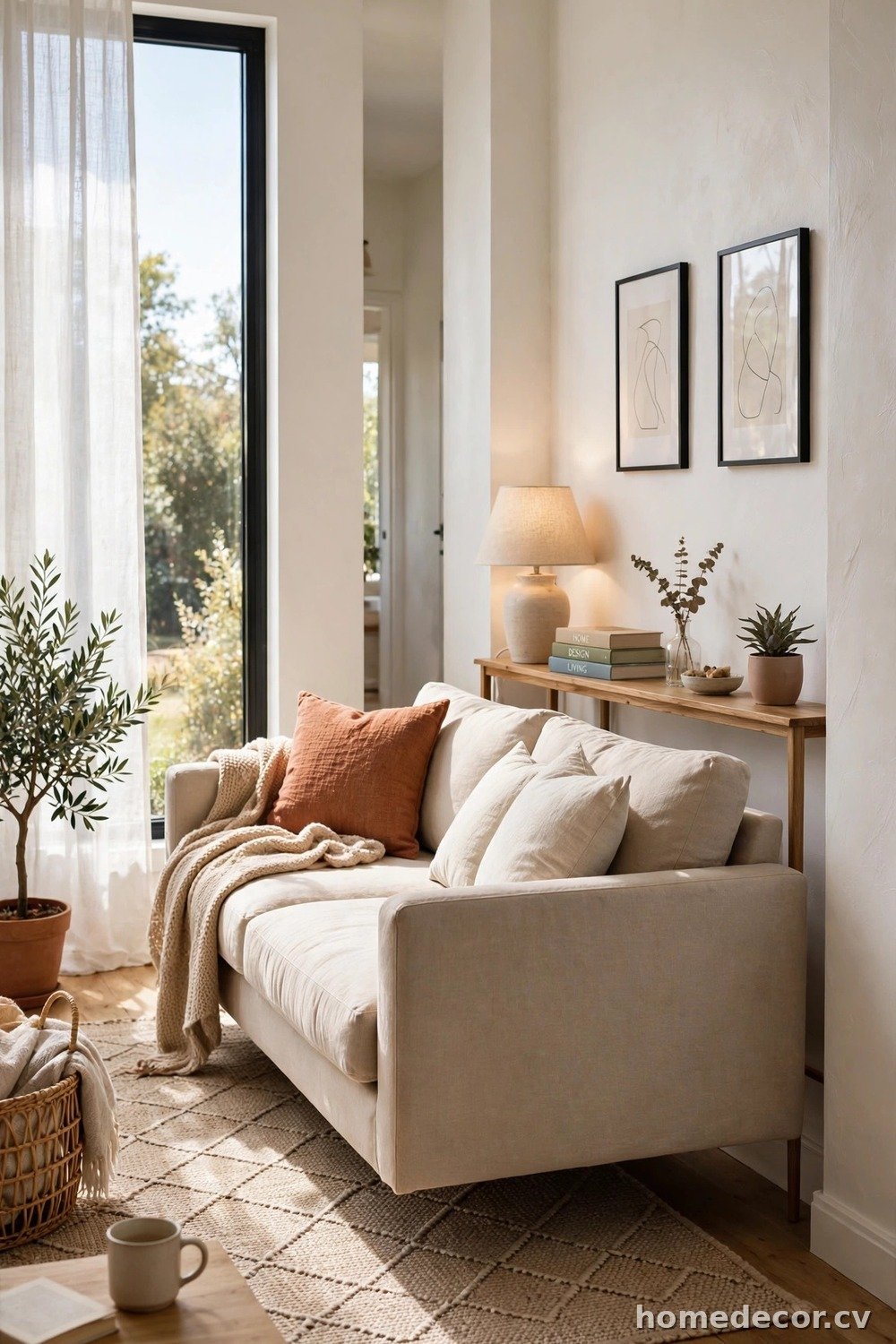
Pushing every piece of furniture against the walls is the most common mistake in narrow living rooms, and it actually makes the room feel smaller. When you float your sofa even six inches off the long wall, you create a shadow gap that gives the wall visual breathing room. Try pulling the sofa toward the center and placing a slim console table behind it — suddenly you have a styled surface for lamps and books instead of a dead wall. Floating furniture also improves traffic flow, since people can move around pieces instead of squeezing past them. In a very narrow room, angle one chair slightly rather than lining everything up like soldiers; the slight diagonal breaks the bowling-alley feeling instantly. This one change costs nothing and transforms the room more than almost any purchase.
The trick to floating furniture successfully is anchoring it so the arrangement still feels intentional. A properly sized area rug is the secret weapon here — place the front legs of your sofa and chairs on the rug to visually group them into a conversation zone. Without a rug, floated furniture can look like it is drifting aimlessly in the middle of the room. Keep pathways clear: you need about thirty inches for a comfortable walkway behind floated pieces. If your room is extremely narrow, float just one key piece, like the sofa, and keep smaller items against the walls. The goal is a room that feels arranged rather than lined up, and floating even a single piece starts that transformation.
Use Mirrors Strategically
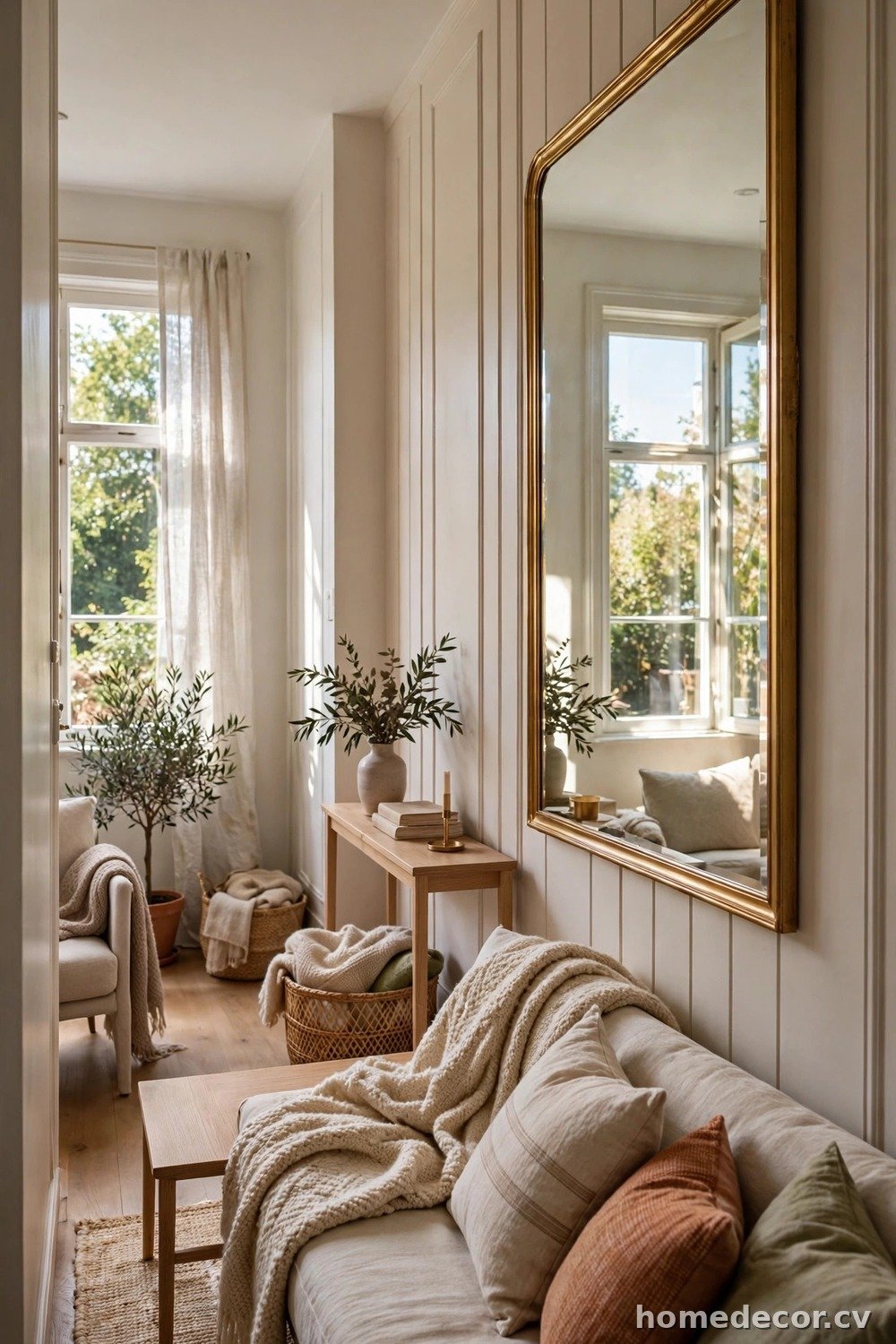
Mirrors are the oldest visual trick for small spaces because they genuinely work, doubling light and views in a narrow living room. Hang one large mirror on a long wall to reflect the opposite side of the room, which creates the illusion that the space continues beyond the glass. For maximum effect, position the mirror where it catches a window — it will bounce daylight deep into the room and make the whole space glow. A gallery of smaller mirrors in mixed shapes adds the same expanding effect with more personality. Lean a tall floor mirror in a dark corner to dissolve the boundary and add depth where the room feels pinched. The bigger the mirror, the bigger the impact, so do not be shy about scale.
Placement matters as much as size when you use mirrors in a narrow room. Avoid hanging a mirror directly opposite clutter, since it will double the mess along with the space — style the reflected view first. A mirror above the mantel or console draws the eye up and makes ceilings feel taller, which counteracts the tunnel effect. If you love the look, try mirrored furniture accents like a small side table; they reflect light while visually disappearing. Keep mirror frames slim and simple so the reflective surface does the talking. One well-placed large mirror outperforms three small decorative ones, so invest your effort in position over quantity. Your narrow living room will feel brighter, deeper, and far more expensive.
Go Vertical with Storage
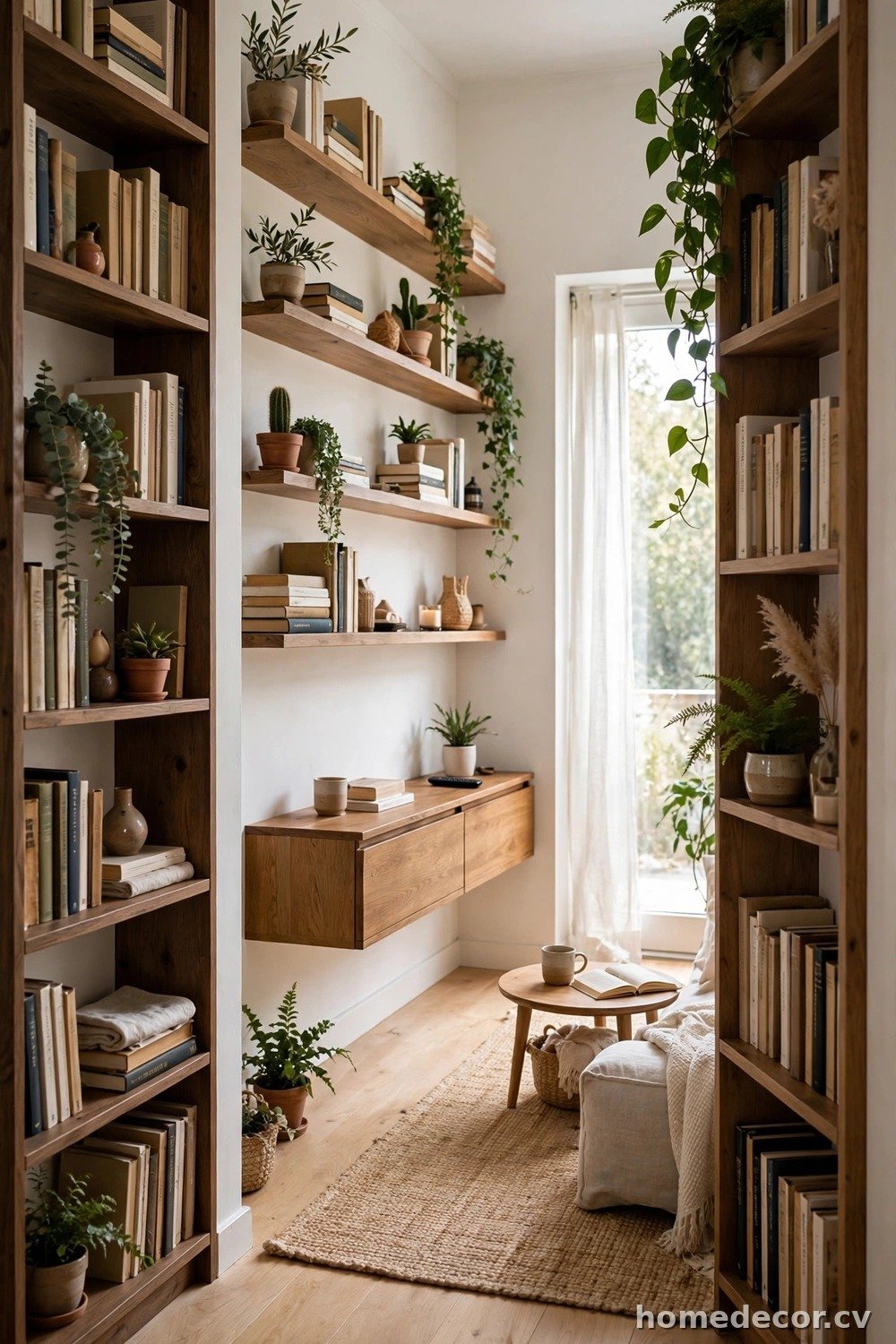
In a narrow living room, the walls are your most underused asset, so take storage vertical instead of letting it sprawl across precious floor space. Tall, narrow bookcases draw the eye upward and make ceilings feel higher while holding as much as a wide low unit. Floating shelves above the sofa or beside windows display books and decor without consuming a single square inch of floor. A wall-mounted media console keeps electronics off the ground and makes cleaning underneath effortless. Even the backs of doors can host slim organizers for remotes, chargers, and small essentials. When storage climbs instead of spreads, your floor stays open and the room breathes — which is exactly what a narrow space needs most.
The key to vertical storage is keeping it visually light so tall pieces do not loom over the room. Choose open shelving or glass-front cabinets over solid closed towers, which can feel like walls closing in. Style shelves with breathing room between objects rather than cramming every inch; negative space is what keeps vertical storage feeling airy. Anchor tall bookcases in pairs flanking a window or fireplace for symmetry that feels intentional. If you need closed storage, pick pieces in the same color as your walls so they recede visually. For more small-space organization wisdom, these [closet organization ideas](https://homedecor.cv/closet-organization-ideas/) use the same vertical thinking. Going up instead of out is the single smartest move for a narrow living room.
Pick Multipurpose Pieces

Every piece of furniture in a narrow living room should earn its footprint twice, so prioritize multipurpose designs that work harder for you. A storage ottoman serves as a footrest, extra seating, and a hiding place for throws and remotes all at once. Choose a coffee table with a lift-top that becomes a work surface, or drawers that swallow clutter. A daybed or a sleeper sofa turns your living room into a guest room without dedicating space to a rarely used bed. Nesting tables are brilliant here: pull them out when you entertain, then tuck them together into one compact footprint. When each piece does double duty, you need fewer pieces overall, and fewer pieces mean more open floor.
Shopping multipurpose is a mindset shift from asking what a piece looks like to asking what a piece does. Before buying anything new, list the jobs it must perform — if it only does one thing, keep looking. A console table behind the sofa can hold lamps, charge devices, and display decor while defining the seating zone. Storage benches under windows create a cozy reading spot with hidden blankets inside. Even your seating can multitask: a pair of small ottomans works as footrests daily and extra chairs when friends visit. The fewer single-purpose items you own, the more spacious your narrow room feels. Smart small-space living is really just ruthless efficiency disguised as good design.
Define Zones with a Rug

A narrow living room often feels like one long corridor, but a well-chosen rug can carve it into inviting zones that make the space feel designed. Place a rug under your main seating arrangement with the front legs of the sofa and chairs on it — this instantly creates a conversation area with clear boundaries. The rug’s edges tell your brain where one zone ends, which paradoxically makes the whole room feel larger because it reads as multiple purposeful spaces. Choose a rug that is big enough: in most narrow rooms, a five-by-eight or six-by-nine works, while a tiny four-by-six floating in the middle looks lost. A rug with a subtle pattern adds interest without overwhelming, and low-pile weaves keep the floor feeling open. This single addition does more for coziness than almost anything else.
Rug placement in a narrow room follows a few simple rules that prevent common mistakes. Never push all the furniture legs completely off the rug — floating rugs disconnect the seating and make the room feel scattered. If your room is extremely long, consider two smaller rugs to define separate zones, like a reading corner at one end and the main seating at the other. Keep the rug’s long side parallel to the room’s long walls to reinforce the layout rather than fighting it. Light-colored rugs brighten and expand, while a rug with a border pattern can visually widen the floor. Layer a smaller textured rug over a larger flat one for depth without bulk. With zones defined, your narrow living room stops feeling like a hallway and starts feeling like home.
Hang Curtains High and Wide
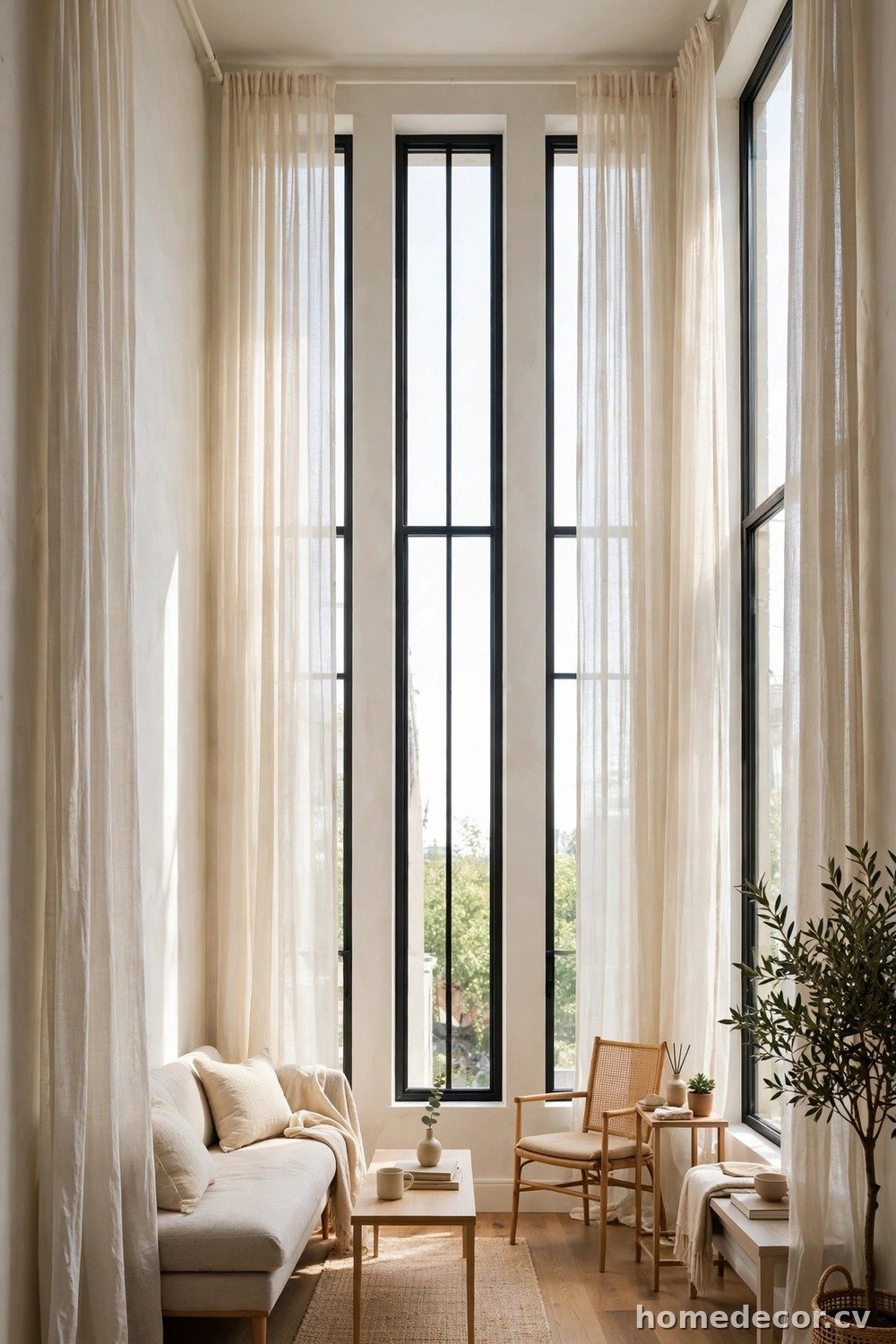
Curtains hung the wrong way can shrink a narrow living room, but hung correctly they make windows — and the whole room — feel grander. Mount your curtain rod four to six inches above the window frame and extend it six to twelve inches beyond each side. This tricks the eye into seeing a much larger window, which floods the room with an impression of light and airiness. Use floor-length panels that just kiss the floor; short curtains chop the wall visually and emphasize low ceilings. Choose fabrics in colors close to your wall paint so the curtains blend in and extend the wall rather than creating a harsh contrast line. Sheer panels are wonderful in narrow rooms because they filter light beautifully while keeping the space feeling open and breezy.
The hardware you choose matters as much as the fabric in a small space. Slim rods in finishes that match your other metals keep the look cohesive and uncluttered. Avoid heavy valances or ornate tiebacks, which add visual bulk exactly where you need lightness. If privacy is a concern, layer sheers with blackout panels on a double rod — you get function without sacrificing the airy look during the day. For very narrow windows, a single wide panel pulled to one side can look more modern than two skimpy panels that barely cover the glass. When curtains frame your windows generously, the whole wall feels wider and your narrow living room gains an elegant, finished quality that no other single change delivers.
Choose Armless Seating
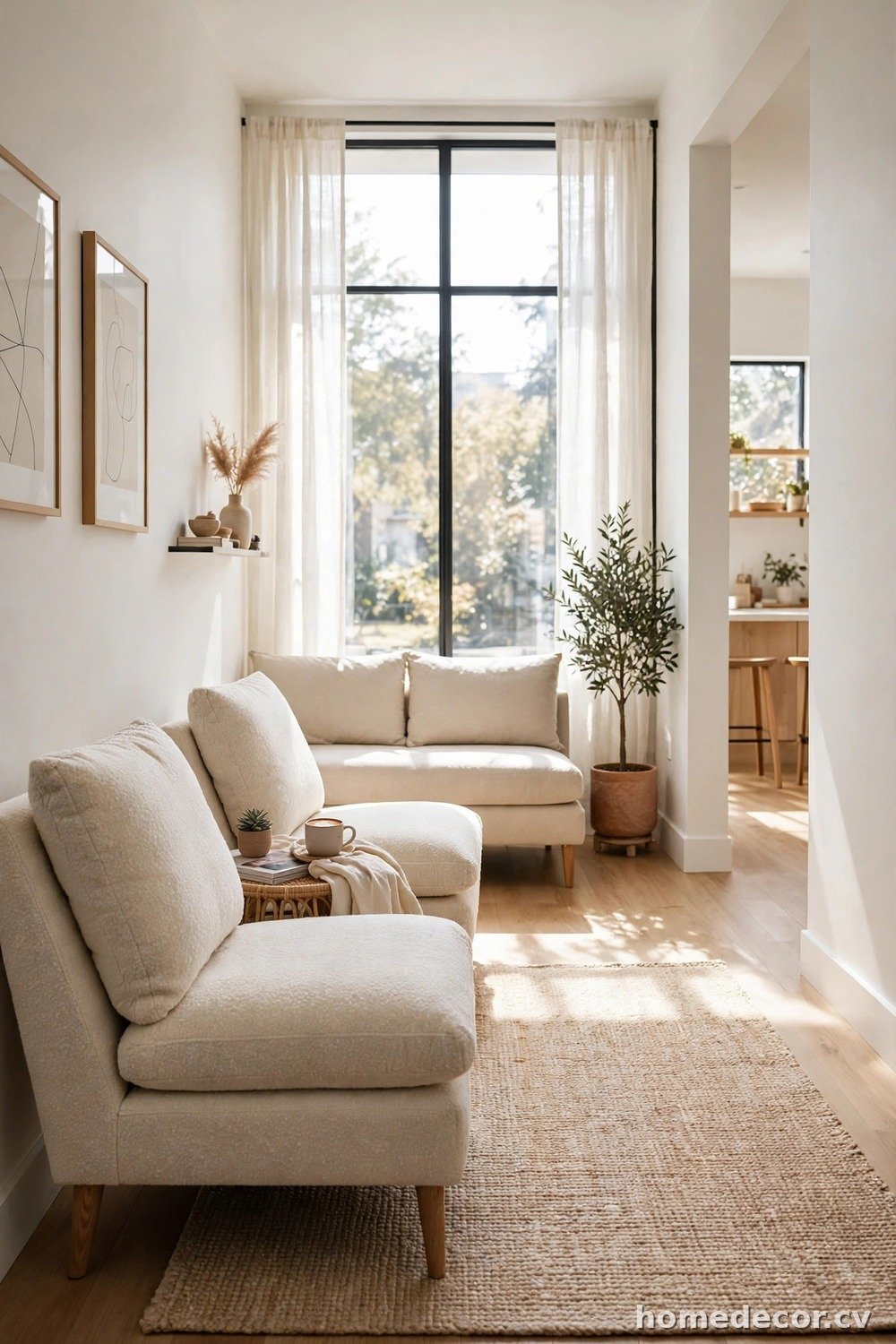
Chair arms devour space in a narrow living room, so choosing armless seating instantly frees up precious inches. A slipper chair or an armless accent chair has nearly the same seat width as its armed cousin but a much smaller overall footprint. Without bulky arms, chairs tuck neatly under console tables or into corners when not in use. Armless designs also keep sightlines open across the room, which is critical in a narrow space where every blocked view makes the walls feel closer. Pair two armless chairs opposite your sofa for flexible seating that does not crowd the walkway. You will be amazed how much airier the room feels when the furniture stops shouting for attention.
Comfort does not have to suffer when you skip the arms — look for chairs with deep seats, supportive backs, and plush cushions. Barrel chairs and rounded slipper styles cradle you without needing armrests for support. If you truly love the look of arms, compromise with a single statement armchair and keep the rest of your seating armless. Position armless chairs at slight angles to encourage conversation while keeping traffic lanes clear. They are also lighter visually and physically, making it easy to rearrange for movie nights or gatherings. In a narrow living room, the armless chair is the unsung hero that delivers seating without the spatial tax that traditional armchairs charge.
Use Glass and Lucite Accents
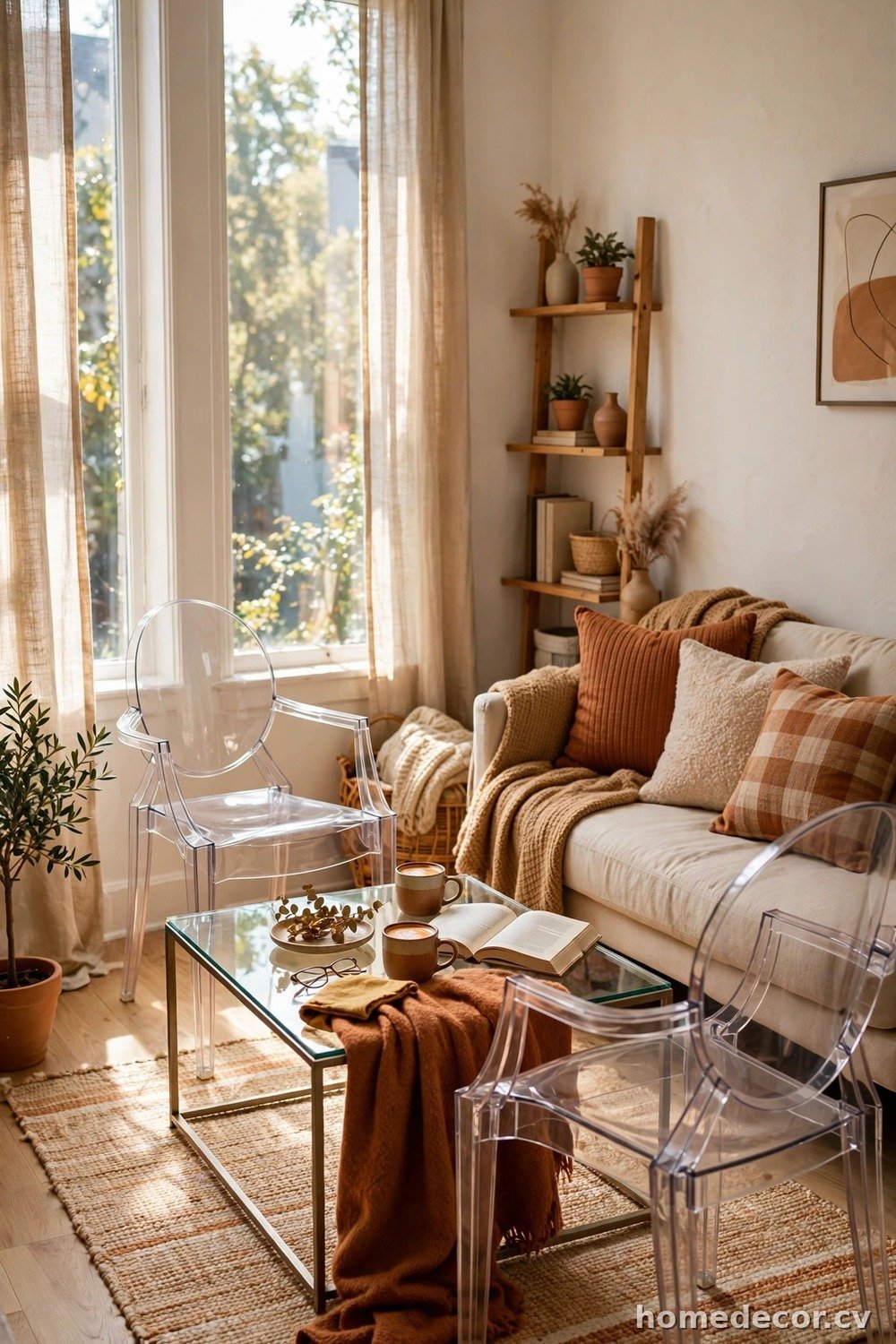
Furniture you can see through barely registers visually, which makes glass and lucite accents perfect for narrow living rooms. A glass-top coffee table provides full function while letting your eye travel straight through to the rug and floor beyond. Lucite side chairs or a ghost chair in the corner offers seating that practically disappears. Even small touches count: a glass vase, a lucite tray on the ottoman, or acrylic picture frames all lighten the room’s visual weight. These transparent pieces reflect light beautifully, adding sparkle without adding bulk. The effect is almost magical — the room holds everything you need, yet it feels like it holds much less.
Balance is important because a room full of only transparent pieces can feel cold and unfinished. Pair your glass and lucite accents with warm textures like a nubby throw, a wood side table, or linen pillows to keep the space inviting. One statement transparent piece per zone is plenty — a glass coffee table in the seating area and perhaps lucite dining chairs if your living room flows into an eating space. Keep glass surfaces clean, since smudges show immediately and undo the airy effect. If full lucite furniture feels too modern for your taste, try pieces that mix materials, like a wood table with a glass top. Transparency is a designer secret for making narrow rooms feel boundless, so use it wherever you can.
Mount Your Lighting
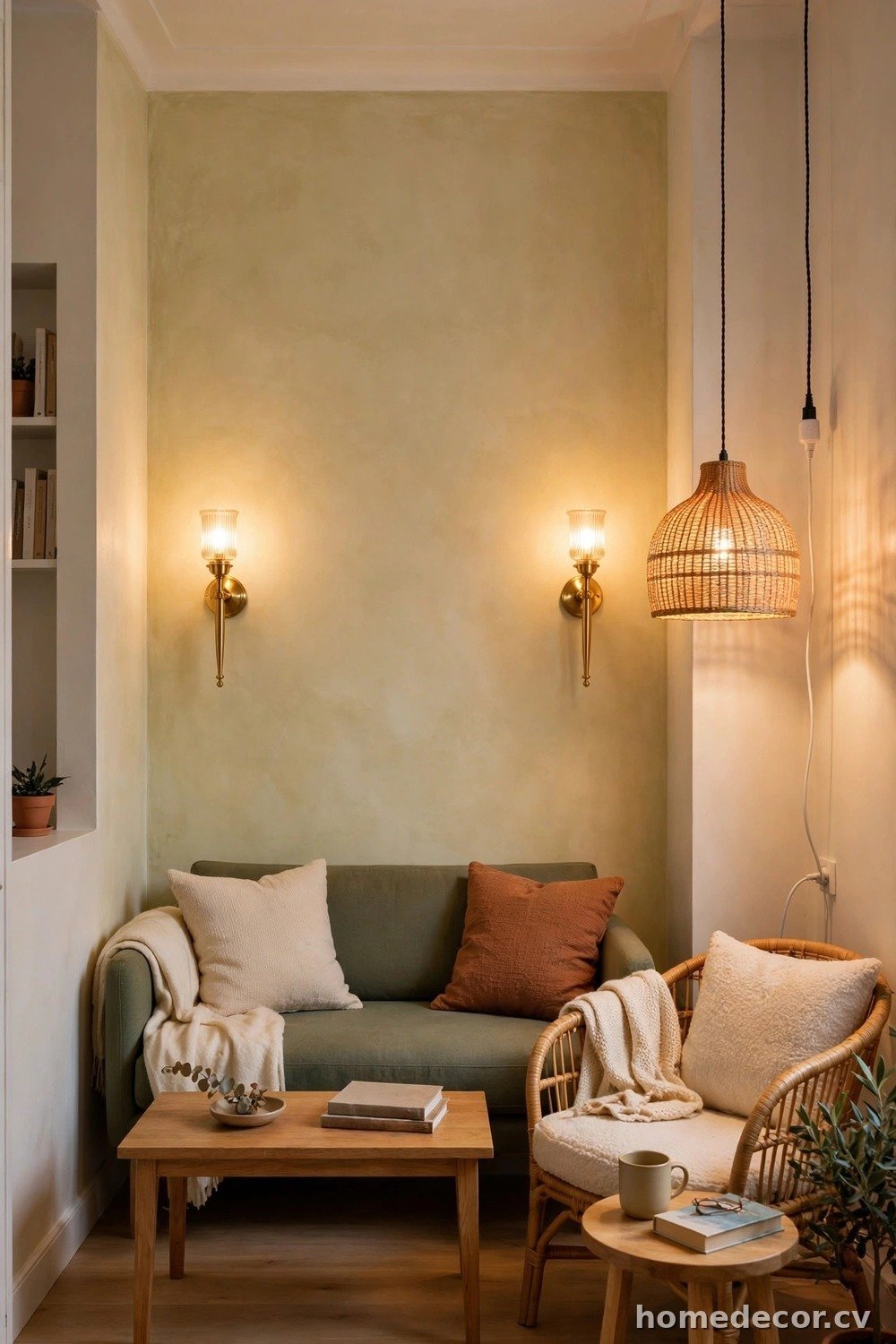
Floor lamps and bulky table lamps steal floor and surface space in a narrow living room, so mount your lighting instead. Wall sconces flanking the sofa or artwork free up side tables for books and drinks while drawing the eye upward. A plug-in pendant hung in a dark corner creates a cozy reading nook without a floor lamp’s footprint. Picture lights above art do double duty, illuminating your gallery wall and adding ambient glow. Even string lights or LED strips tucked behind a media console add warmth with zero footprint. Mounted lighting keeps every surface clear and every corner usable, which is exactly what a tight room demands. Plus, light at multiple heights makes the room feel layered and professionally designed.
Layering is the real goal, so aim for three types of light in your narrow room: ambient, task, and accent. An overhead flush-mount or semi-flush fixture provides general illumination without hanging low enough to crowd the space. Sconces or mounted reading lights handle task lighting beside seating. Accent lighting — like a small spotlight on a plant or art — adds the depth that makes rooms feel finished. Choose warm white bulbs around twenty-seven hundred kelvin for a cozy glow rather than harsh daylight tones. Dimmers are worth every penny in a small room, letting you shift from bright daytime to intimate evening with one slide. When lighting floats on walls instead of cluttering floors, your narrow living room feels calm, open, and beautifully lit.
Keep the Floor Visible
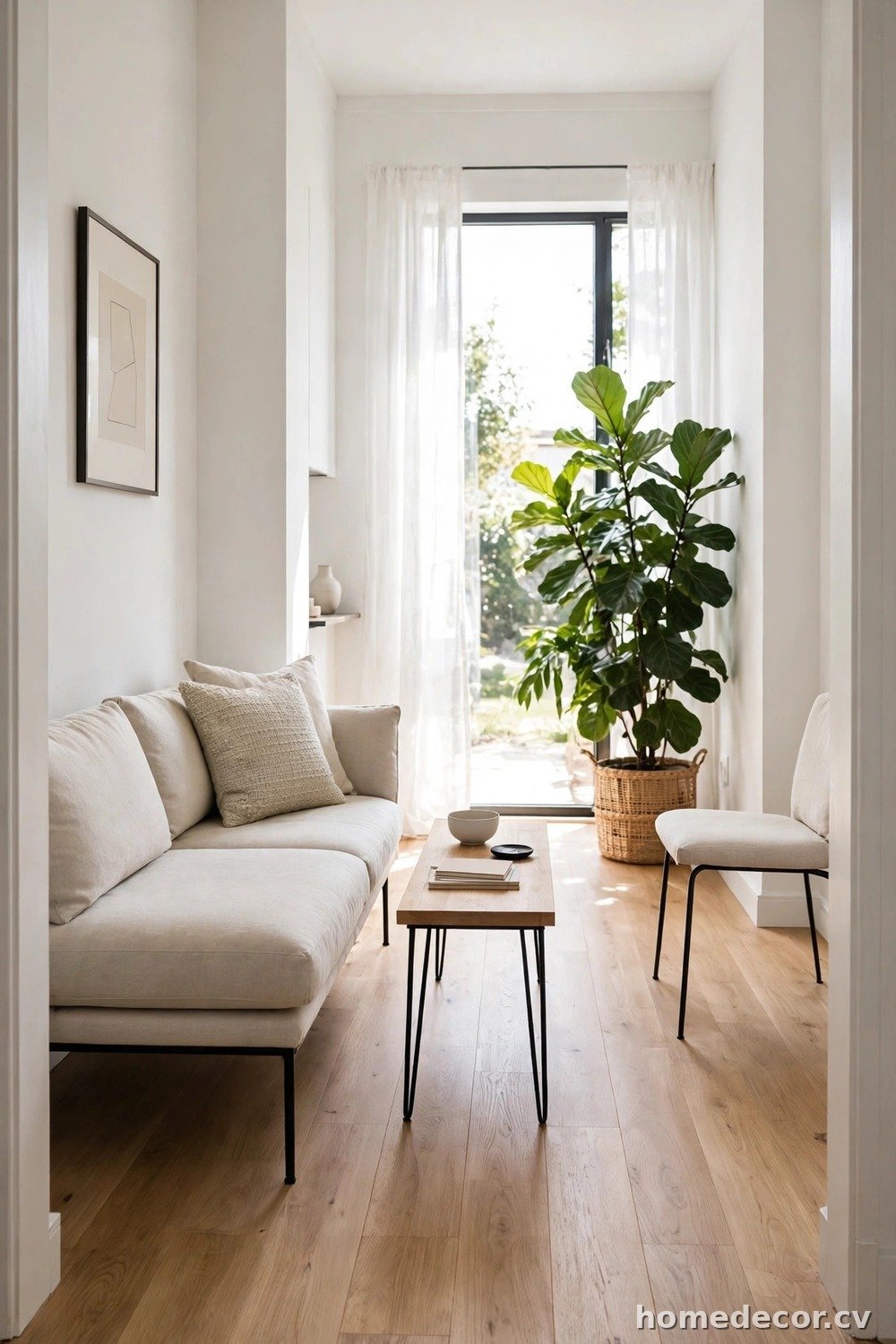
The more floor you can see in a narrow living room, the larger it feels — it is that simple. Choose furniture with exposed legs so light and sightlines pass underneath rather than hitting a solid block. Avoid wall-to-wall clutter like too many small side tables, baskets, and plant stands crowding the perimeter. A clear pathway down the center or along one side gives the room a sense of flow instead of an obstacle course. Even your rug choice matters: a rug that leaves a border of visible floor around it defines the seating area while showcasing the flooring. Every square inch of visible floor tells your brain the room is bigger than its measurements suggest.
This principle extends to how you arrange what stays on the floor. Group small items onto trays so three scattered objects read as one tidy vignette. Choose one larger plant instead of five tiny ones that dot the floor like obstacles. Keep cords and cables hidden with cord covers or routed behind furniture, since visual clutter on the floor shrinks a room fast. If you have beautiful flooring, let it shine — it is an asset that makes the whole space feel more generous. Resist the urge to fill every empty floor corner; negative space is a design element too. In a narrow living room, restraint on the floor translates directly into a feeling of spaciousness everywhere else.
Edit Ruthlessly
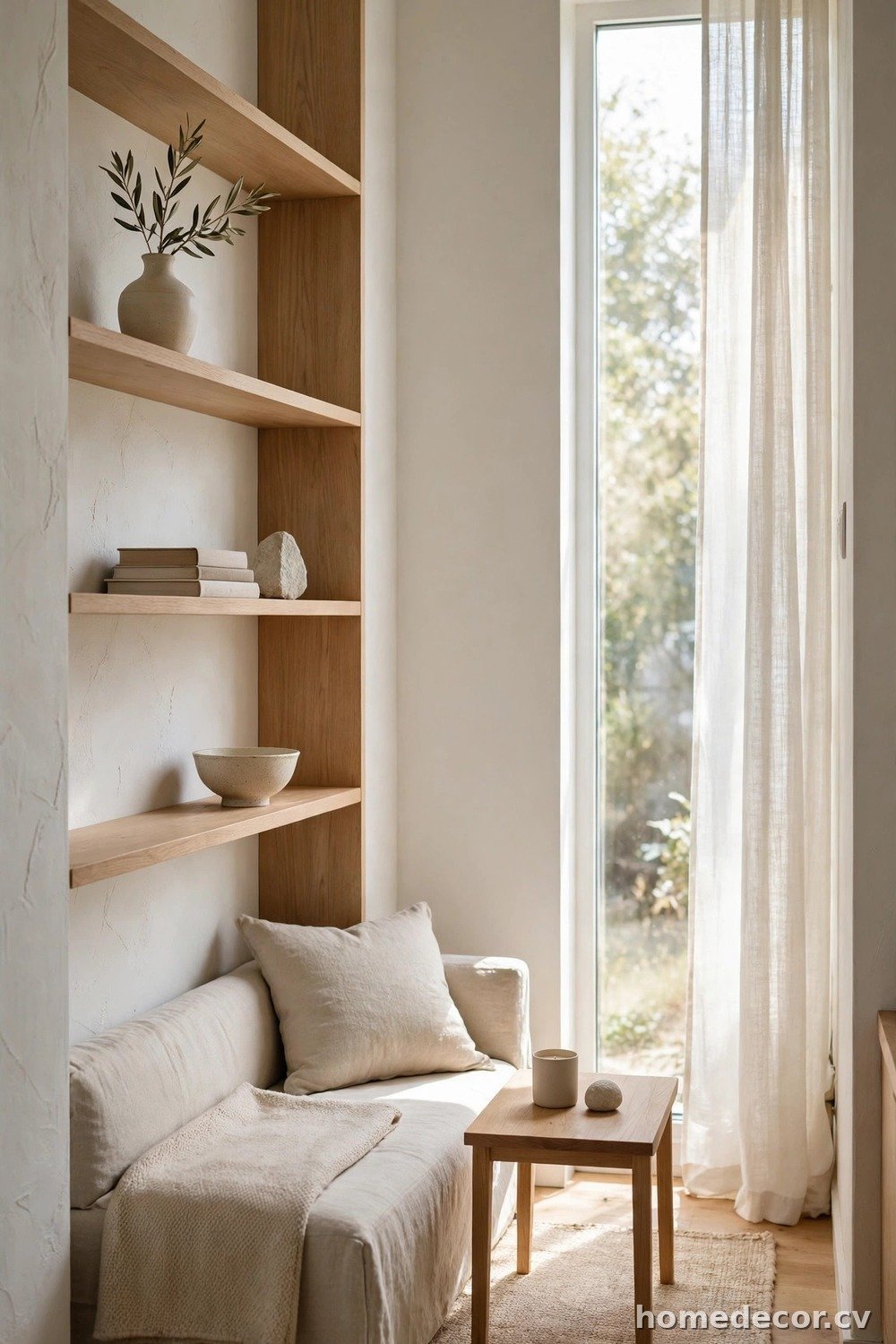
Narrow living rooms punish clutter more than any other space, so editing ruthlessly is non-negotiable. Walk into your room with fresh eyes and remove everything that does not serve a purpose or bring genuine joy. That stack of magazines, the third throw blanket, the decorative boxes holding nothing — they all silently shrink your room. Aim for surfaces that are styled but not crowded: a coffee table needs only a tray, a candle, and one beautiful object. Bookshelves look bigger and calmer when you leave breathing room between groupings instead of packing every shelf. Adopt a one-in-one-out rule going forward so the room never creeps back toward chaos. Less truly is more when your square footage is limited.
Editing is not about living in an empty white box — it is about making room for what matters. Keep the pieces you love most and give them space to shine rather than competing with lesser items. Rotate seasonal decor instead of displaying everything at once; your [small apartment Christmas decor](https://homedecor.cv/small-apartment-christmas-decor/) will feel more special when it is not fighting everyday clutter. Use closed storage for the practical stuff so open surfaces stay serene. Take a photo of your room and study it — the camera reveals clutter your eyes have learned to ignore. A ruthlessly edited narrow living room feels calm, intentional, and surprisingly spacious, proving that what you remove matters as much as what you keep.
Use a Long, Low Console

A long, low console is the perfect furniture shape for a narrow living room because it hugs the wall without jutting into your walkway. At just twelve to fourteen inches deep, it provides display space, storage, and style while barely sipping floor area. Place one behind your sofa to hold lamps and create a finished look from every angle. Run one along the long wall under your gallery wall or television for a media setup that does not protrude. Style the top with a simple formula: something tall at one end, something low in the middle, and a small stack of books at the other. The horizontal line of a low console actually emphasizes the room’s length in a good way, making it feel graciously proportioned rather than cramped.
Choose a console with open shelving or glass-front cabinets so it does not become a heavy visual block. A slim console in the entry zone of an open-plan space can even define where the living room begins — pair it with inspiration from these [hallway table decor ideas](https://homedecor.cv/hallway-table-decor-ideas/) for a cohesive look. If you need the storage, look for consoles with drawers that hide remotes, chargers, and games. Keep the styling minimal: three to five objects total, with varying heights for interest. A long mirror or art hung above the console doubles its impact and bounces light around. In a narrow room, the long low console is the hardest-working piece you can own, delivering function and beauty in one slim package.
Embrace the Cozy
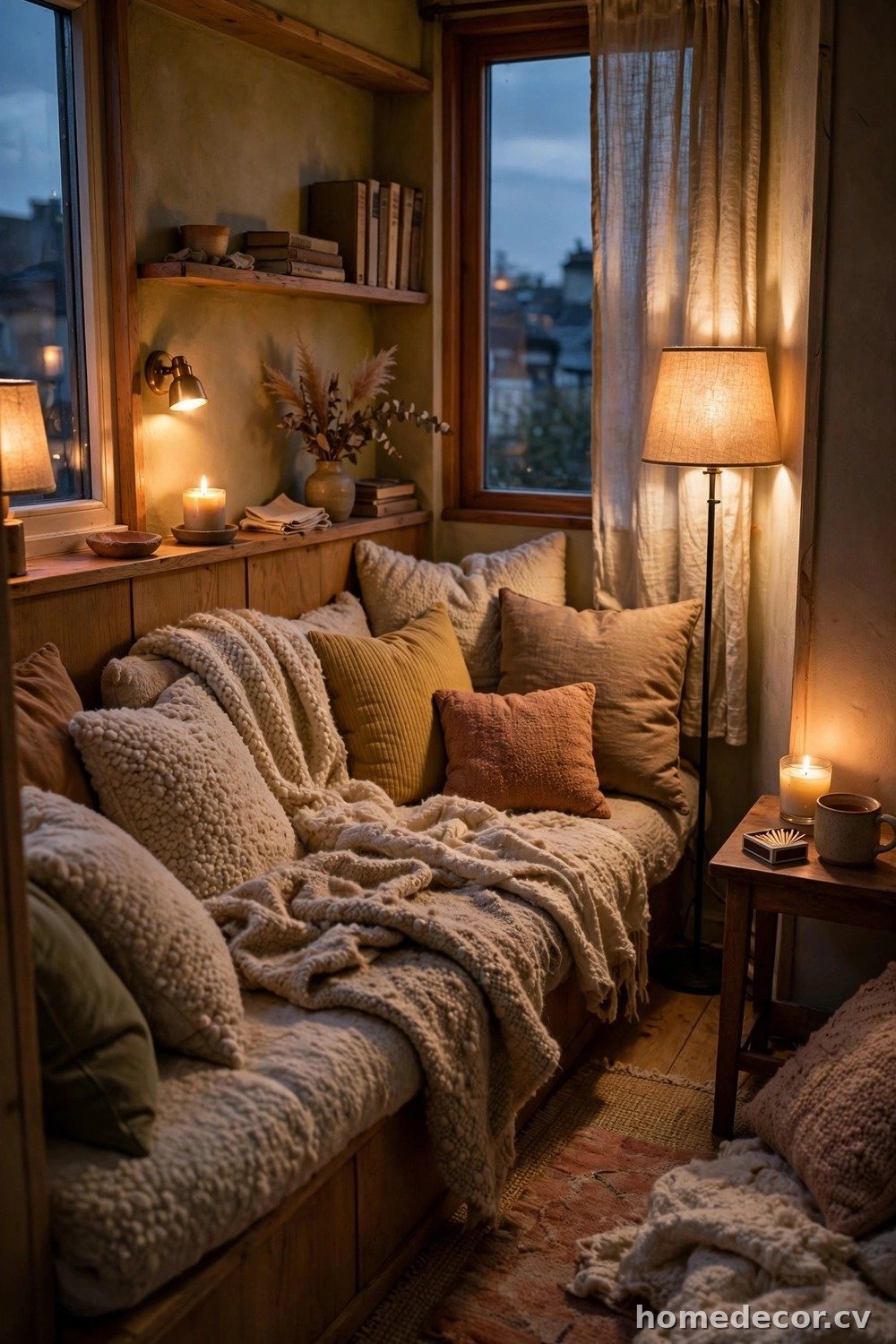
Here is the mindset shift that changes everything: stop fighting your narrow living room’s coziness and start celebrating it. A long, snug room will never feel like a grand loft, but it can feel like the most inviting spot in your home — think English cottage snug or a chic Parisian salon. Lean into intimacy with layered textiles: a soft rug, nubby throws, and cushions in varying textures make narrow feel enveloping rather than tight. Warm lighting at multiple heights, a candle or two, and a small side table within arm’s reach of every seat complete the cocoon. When a room embraces its scale instead of apologizing for it, guests feel wrapped in comfort rather than squeezed. Cozy is not a consolation prize; it is a design superpower.
The secret to successful cozy is keeping it intentional rather than cluttered. Choose a tight, harmonious color palette so the layers feel curated, not chaotic. Every seat should have a surface nearby for a drink and a light source within reach for reading — these small comforts make a narrow room feel luxurious. Add one personal, storied element like a vintage find or family photo to give the coziness soul. Keep the air fresh with a plant or two, since stuffy kills cozy instantly. When you stop wishing your narrow living room were bigger and start making it the coziest room in the house, you will find it becomes everyone’s favorite spot. Small and narrow is not a flaw to fix — it is a feeling to perfect.