The cabinet under the kitchen sink is where organization goes to die. Pipes snake through the middle, bottles leak, and everything you toss in there disappears into a dark, damp jumble. But these under kitchen sink organization ideas can turn that dreaded cabinet into one of the most functional spots in your kitchen — in a single afternoon, with no tools beyond a measuring tape.
The trick is working with the pipes instead of around them: stacking upward, using the doors, and containing everything so a leak never becomes a disaster. Here’s how to do it, step by step.
Dealing with chaos in other kitchen zones? Learn 13 Ways to Organize Small Pantry Deep Shelves (No More Lost Cans) next, and these 12 Kitchen Counter Styling Ideas That Look Expensive keep the visible surfaces just as calm.
Build Upward: Stacking and Sliding Around the Pipes
The pipes steal the middle of the cabinet, so the only direction left is up. These ideas create tiers of usable storage in the awkward space around the plumbing.
1. Add stackable shelves to create two levels
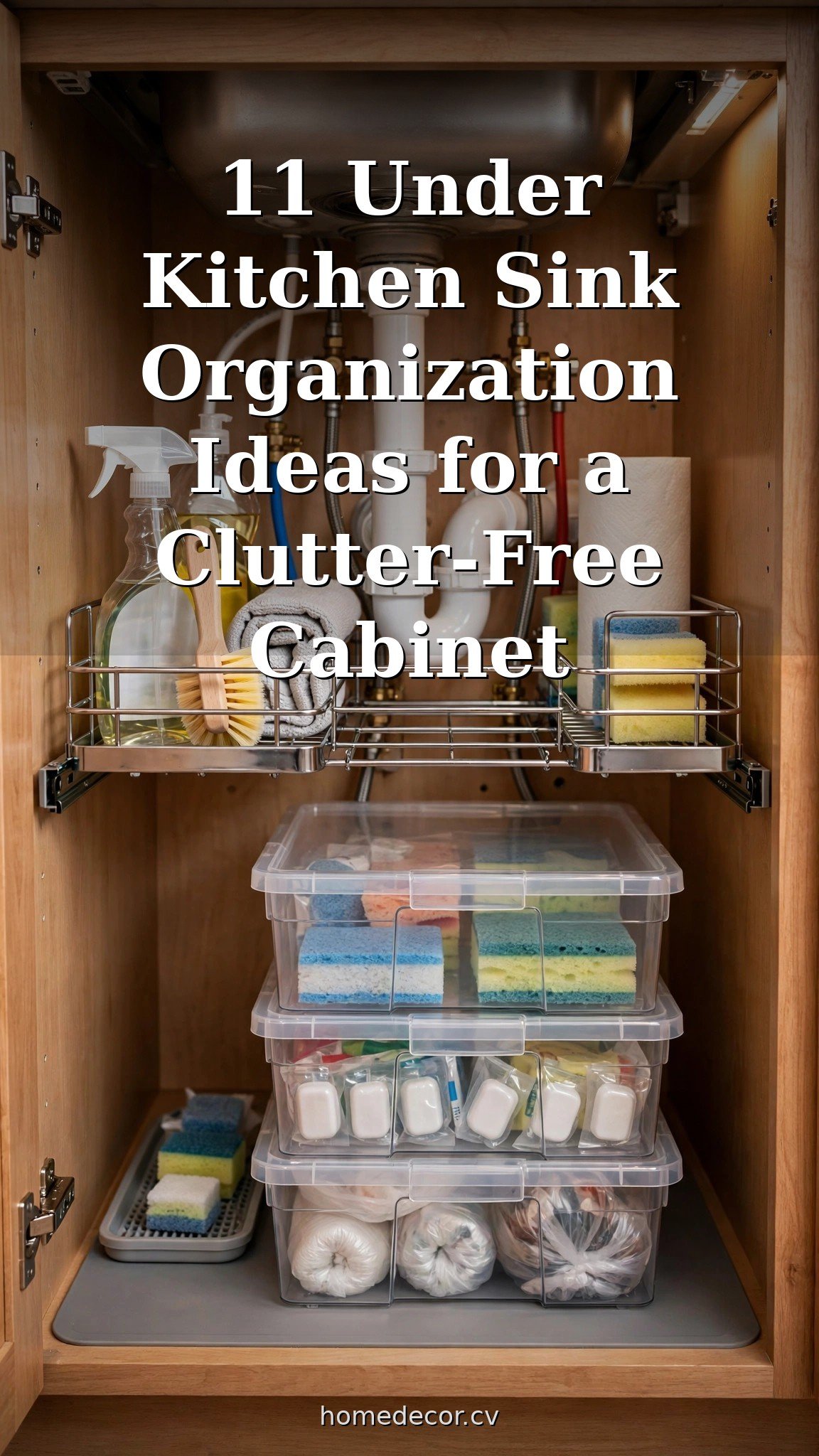
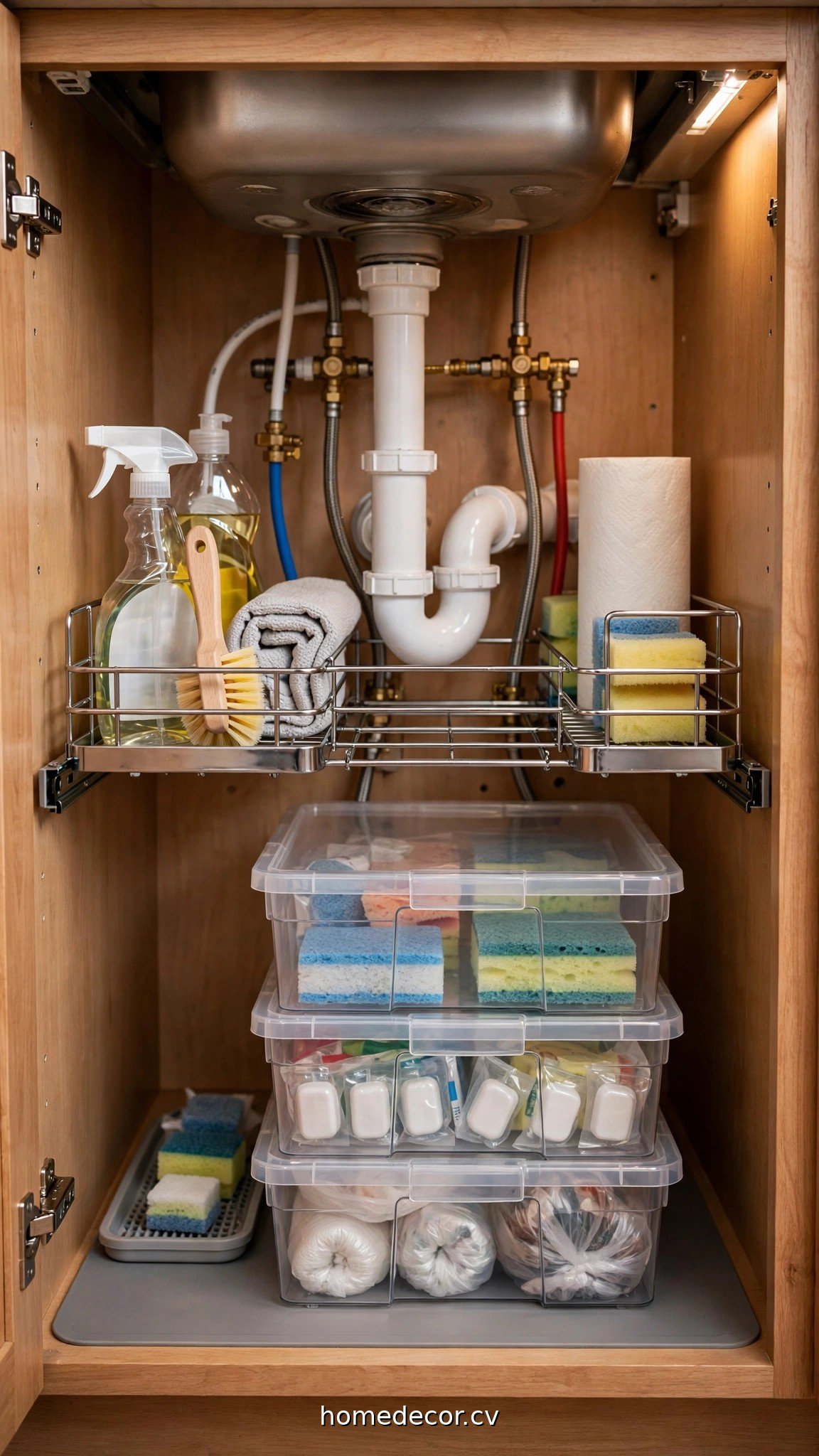
A simple under-sink stackable shelf unit (two tiers with an open middle for pipes) instantly doubles your usable area. Cleaning supplies live on top, dish soap and sponges below, and the pipes pass through the open center untouched.
Practical tip: Measure the height from the cabinet floor to the lowest pipe before buying — most under-sink shelves are adjustable, but you need to know your clearance to set them right.
2. Use a pull-out caddy for daily cleaning supplies
A narrow pull-out caddy or basket on a track lets you slide your most-used supplies — dish soap, all-purpose spray, sponge — out into the light instead of kneeling and reaching into the dark. It’s the single biggest usability upgrade for this cabinet.
Practical tip: Keep the caddy light and limited to true dailies. Overloading a pull-out track makes it stick and sag; heavy bulk bottles belong on a fixed shelf.
3. Hang spray bottles from a tension rod
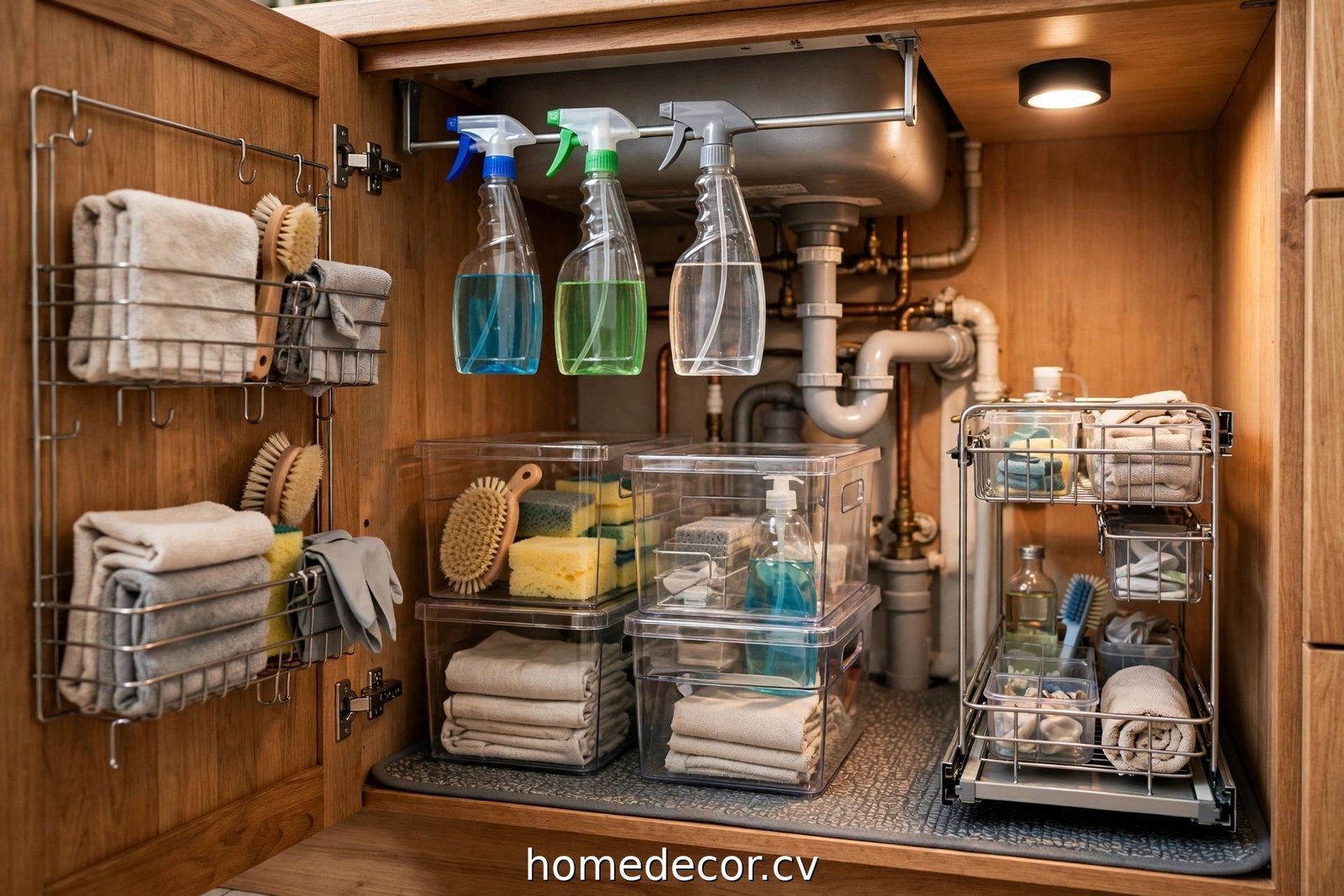
A spring-loaded tension rod mounted across the cabinet (above the pipes, below the top) turns dead air into a hanging rack. Spray bottles hang by their triggers, freeing the entire cabinet floor beneath them.
Practical tip: This is a renter’s dream — no screws, no holes, fully removable. Just make sure the rod is rated for the weight and seated firmly against both cabinet walls.
4. Place a small turntable in the front corner
A compact lazy susan in the most accessible corner holds the odds and ends — dishwasher pods, disposal cleaner, scrub brushes — where one spin brings any of them forward. No more knocking three bottles over to reach the fourth.
Practical tip: Choose a turntable with a non-slip surface or raised edge. Under-sink cabinets get damp, and smooth plastic turntables let bottles slide into a pile.
Use the Doors and Contain Everything
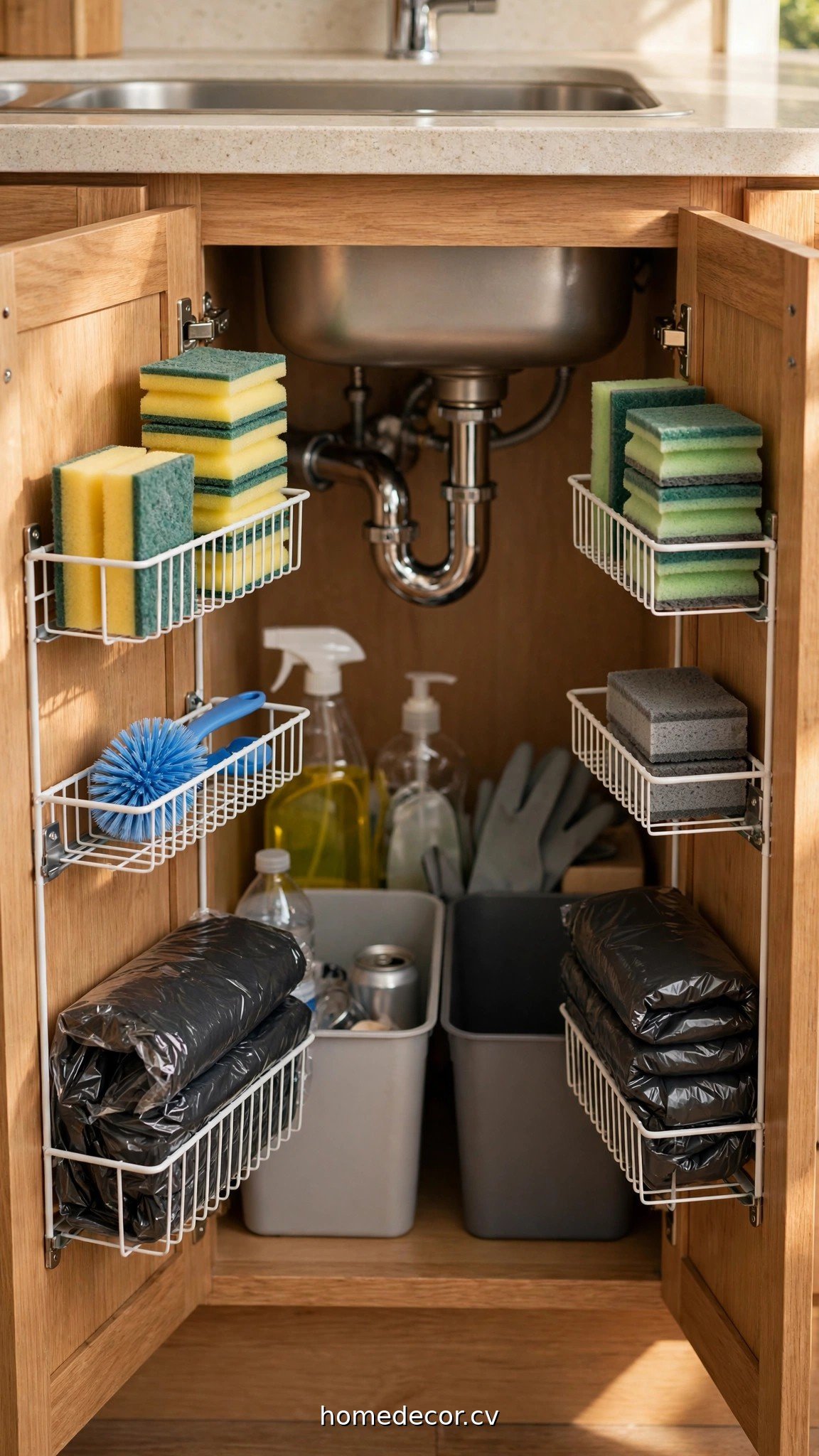
The doors are free storage, and containment is leak insurance. These ideas handle both.
5. Mount wire racks or caddies on the cabinet doors
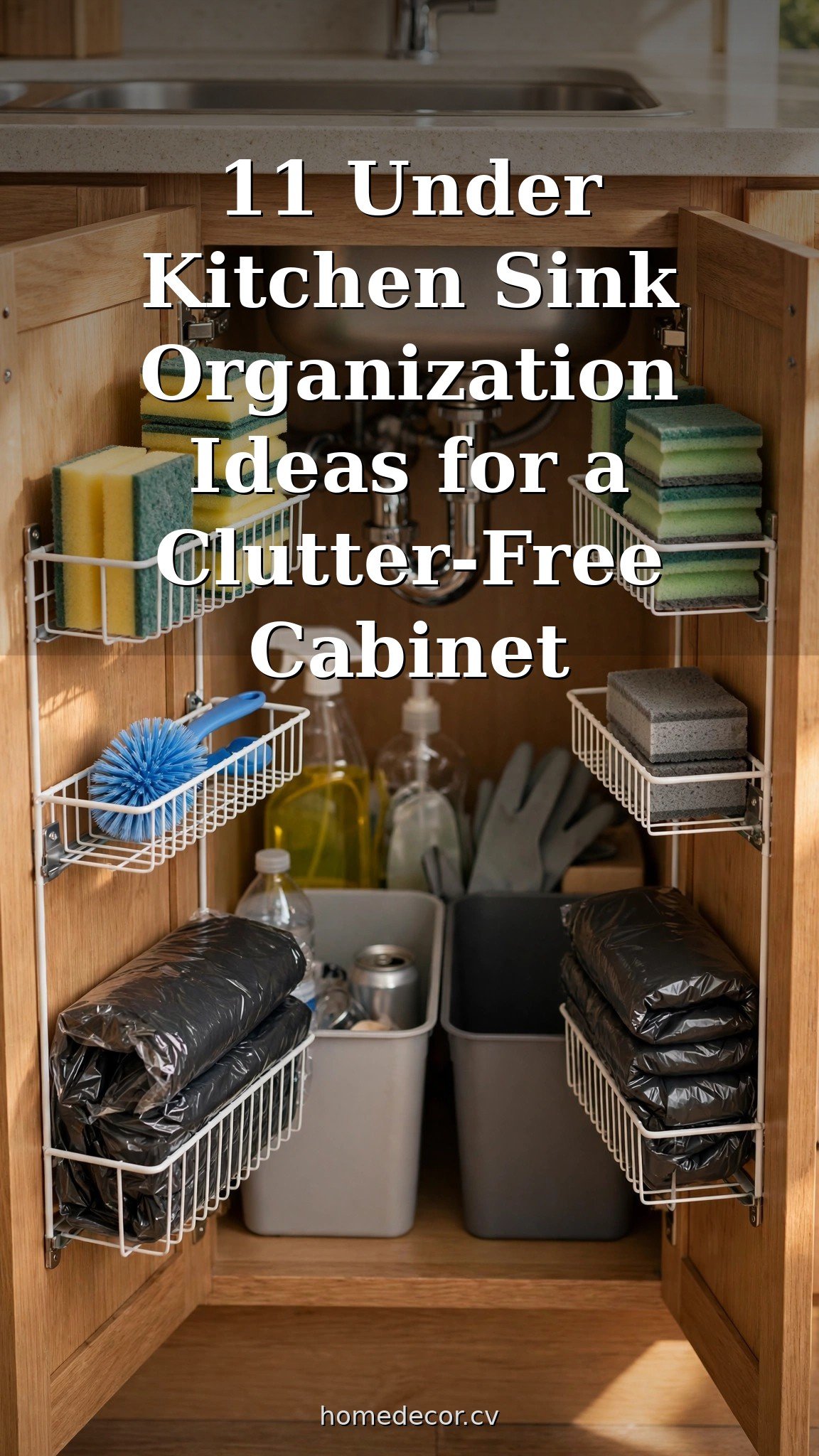
Slim over-door or screw-mounted wire racks hold sponges, trash bags, gloves, and small brushes on the inside of each door. It moves a surprising amount of small stuff out of the main cabinet and puts it exactly where you grab it.
Practical tip: Keep door storage shallow so doors close fully, and avoid mounting anything that drips — wet sponges belong in a ventilated holder, not pressed against the door.
6. Sort supplies into labeled bins by job
One bin for dish care, one for surface cleaning, one for trash bags and extras. Labeled bins mean you grab the whole category at once, and anyone else in the house can find things (and put them back) without a guided tour.
Practical tip: Clear bins let you see supply levels at a glance so you never run out of dishwasher tablets mid-cycle. Label the bin, not the lid, so the label stays visible when stacked.
7. Line the cabinet floor with a waterproof mat
This is the cheapest insurance in the kitchen. A waterproof mat or tray under everything catches drips, leaks, and the slow seep of a bottle with a cracked cap — protecting the cabinet floor from the water damage that ruins kitchens.
Practical tip: Choose a mat with a raised lip (like a boot tray) so spills stay contained instead of running off the edge. Wipe it down monthly when you check for leaks.
8. Store trash bags on a wall-mounted dispenser or rod
A small tension rod or adhesive-mounted holder inside the cabinet (or on the door) holds a roll of trash bags where you actually need them — right above the trash can zone. No more digging through a crumpled heap of loose bags.
Practical tip: If you use drawstring bags, thread the roll onto the rod so bags pull off one at a time, like paper towels. It feels oddly satisfying every single time.
Maintenance Habits That Keep It Working
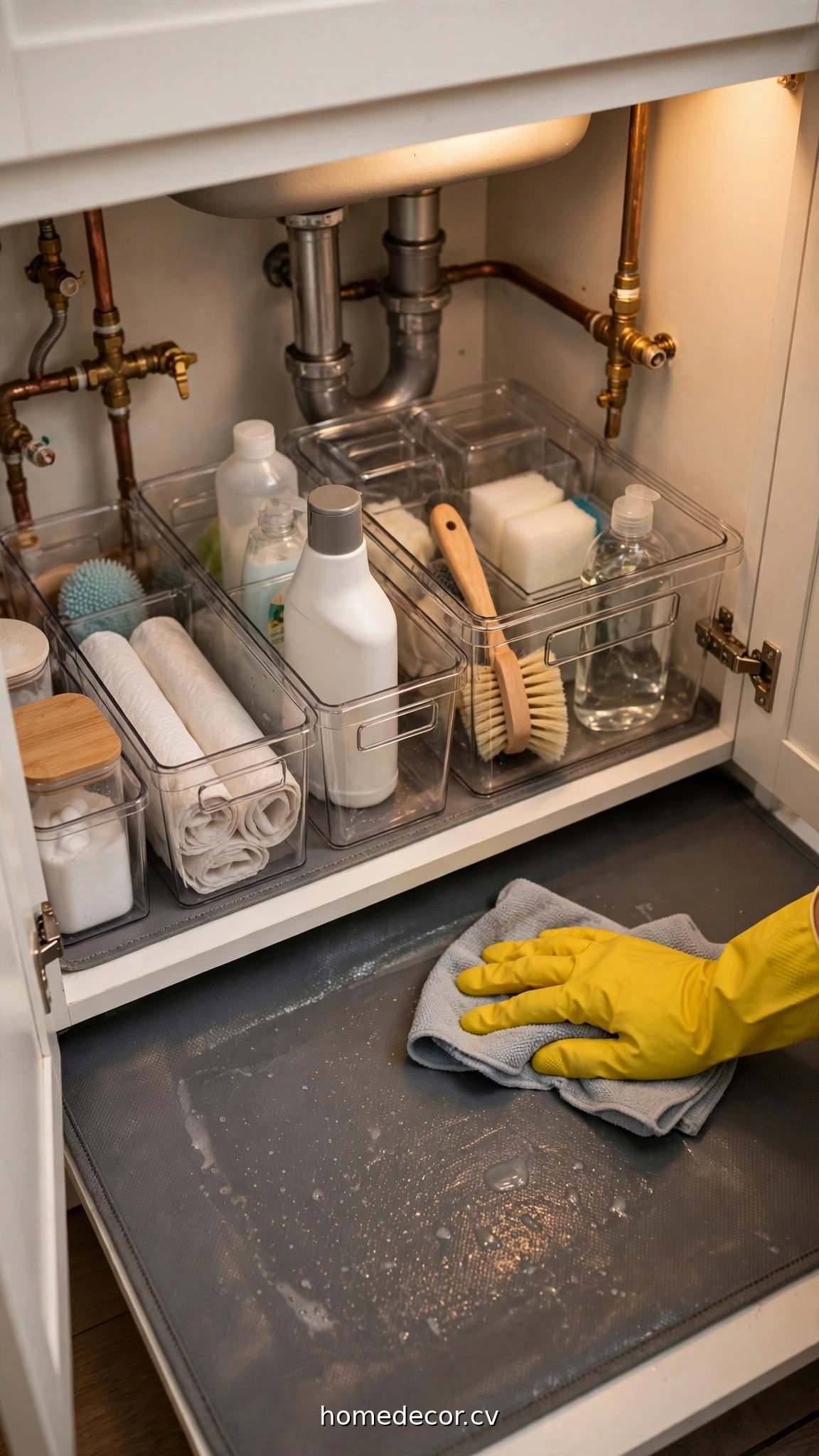
Organization under the sink only lasts if the system survives leaks, drips, and real life. These habits protect your work.
9. Do a monthly two-minute leak check
Once a month, pull the front bins forward and look at the pipes, valves, and supply lines with a flashlight. Feel the mat for dampness. Catching a slow drip early is the difference between wiping up a puddle and replacing a cabinet floor.
Practical tip: Pair the check with trash day or your monthly pantry reset — habits attached to existing routines are the ones you actually keep.
10. Decant bulk cleaners and ditch duplicates
You don’t need three half-used bottles of the same all-purpose spray. Consolidate duplicates into one working bottle, store bulk refills elsewhere (laundry room, garage), and keep only what you actively use under the sink. Less stuff means less clutter and fewer leak sources.
Practical tip: When you buy a bulk refill, pour it into the working bottle immediately and store the jug out of the kitchen. The under-sink cabinet is prime real estate — don’t waste it on warehouse storage.
11. Keep a small absorbent mat or towel at the very front
Tuck a washable absorbent mat or an old hand towel at the front edge of the cabinet to catch the drips from wet hands grabbing the dish soap. It’s the highest-traffic drip zone, and a washable mat there saves constant wipe-downs.
Practical tip: Toss the mat in with your regular kitchen laundry weekly. A damp mat left for weeks becomes the mildew problem you were trying to prevent.
Keep Exploring
Love these ideas? Here are a few more you might enjoy:
- 13 Ways to Organize Small Pantry Deep Shelves (No More Lost Cans)
- 14 Small Bathroom Organization Ideas That Maximize Every Inch
- 12 Kitchen Counter Styling Ideas That Look Expensive
Frequently Asked Questions
How do I organize under the kitchen sink with pipes in the way?
Work around them, not through them: use stackable shelf units with an open middle that the pipes pass through, hang spray bottles from a tension rod above the pipes, and mount storage on the cabinet doors. Pull-out caddies in the front corners give you easy access without reaching past plumbing.
How do I prevent water damage under the kitchen sink?
Line the cabinet floor with a waterproof mat with a raised lip, store bottles in bins rather than loose, and do a quick monthly leak check with a flashlight. Catching a slow drip early prevents the cabinet floor damage that leads to expensive repairs.
What should (and shouldn’t) be stored under the kitchen sink?
Keep daily cleaning supplies, dish soap, sponges, trash bags, and the trash can if it fits. Don’t store food, anything that can’t handle moisture, or bulk refills — the cabinet is damp and cramped, so it’s for working supplies only, not warehouse storage.
Are tension rods strong enough for under-sink storage?
Yes, for light loads like spray bottles hung by their triggers. Choose a rod rated for the weight, seat it firmly against both cabinet walls, and don’t hang heavy jugs from it. For heavier items, use stackable shelves or bins on the cabinet floor instead.
One Afternoon to a Calmer Cabinet
The cabinet under your kitchen sink doesn’t have to be the scary place you avoid. Stack upward around the pipes, borrow the doors, contain everything in bins, and protect it all with a waterproof mat — then keep it honest with a two-minute monthly check. Do it once, and every time you reach for the dish soap you’ll wonder why you waited so long. For more kitchen order, explore our Kitchen & Bathroom Decor category.